
Pallet Stops Make All the Difference for Safe Storage in the Carolinas


Why Pallet Stops Should Be a Core Part of Your Rack System Strategy
Pallet racking delivers a compact, efficient solution for industrial storage needs—but it’s the built-in safety features that keep these systems stable under intense weight and external stress. While most attention is placed on guarding the aisle side of racks where forklifts pose frequent risks, it’s just as important to secure the back of the system. Overlooking this area can lead to shifted pallets, dropped goods, or blocked flue space—all serious hazards in any warehouse environment.
Flue space refers to the open vertical area either behind single-deep racks or between rows placed back-to-back. According to National Fire Protection Association (NFPA) standards, warehouses must maintain at least 6 inches of clearance behind pallet racks. This gap is essential for allowing smoke and heat to rise, helping slow the spread of fire and improving emergency response outcomes.

Single-Sided Offset Flue Protector
To keep pallets from encroaching on the flue area—and to maintain stability throughout the racking system—several types of load stops are available. The best option depends on the specific racking style and how it’s laid out within your facility.
Common Load Stop Solutions for Traditional Pallet Racking
- Backstop beams
- Flue space guards
- Wire mesh barriers
- Rack safety straps
- Protective netting
- Solid steel paneling

Backstop Beams
Installed between uprights and positioned 6 to 12 inches above the shelf beam, backstop beams act as a barrier to stop pallets from intruding into the flue space. For rack setups where pallets sit flush against the back of the bay, a flush-mounted backstop beam is the right fit. If your system allows for a slight overhang—typically around 3 inches—an offset backstop beam will be more appropriate.
Flue Space Guards
Also known as flue guards, these are steel stops around 6 inches wide that attach directly to the rear beam of the rack. The style of flue guard you need depends on your rack layout. Choose a single-sided option for stand-alone rack rows or a double-sided version for racks placed back-to-back. Both dimensions and offset requirements will differ based on the rack brand and model.
Want a deeper understanding of how transverse and longitudinal flue spaces function? Explore our full blog on the topic for more insight.
Wire Mesh Backstops
These vertical wire panels are installed at the rear of the rack to help keep hand-stacked items from falling off the shelves. For maximum hold, full-length backstops can be suspended from the level above and anchored at the bottom. Partial units that clip onto the base are also available for lighter applications. The right option depends on the type of inventory you’re storing and how high it’s stacked. For more advice on organizing hand-stacked items efficiently, take a look at our dedicated blog post.
Rack Safety Straps
Made from heavy-duty polyester or stretchable webbing, these straps attach to the rack uprights using metal end fittings. They’re simple to install, easy to adjust, and can be added or removed as your storage needs shift. These flexible barriers also allow for up to 6 inches of pallet overhang while maintaining a secure flue space.
Safety Netting
Netting systems are secured to pallet rack uprights and beams—whether at the front, rear, or even beneath the bays—to catch falling items and prevent accidents. Made from high-strength polypropylene or nylon, the netting is custom-fitted to match the exact dimensions of your racking setup, providing flexible coverage where it’s needed most.
Wire Mesh Panels
These containment panels come in modular sizes, typically in single- or double-bay widths. Constructed from welded steel wire mesh, they are mounted to the rear of the rack system in either a flush alignment or with an offset, depending on your pallet overhang needs and system configuration.

Pallet Stops in High-Density Rack Configurations
High-density racking setups come with their own set of pallet stop requirements, often tailored to the design of each lane.
Push-Back Rack Systems
In push-back systems, pallets rest on nested carts that roll along sloped rails. Operators load from the aisle, pushing each new pallet backward into the lane. There are two primary options for integrating load stops in these systems:
- Built-In Rail Stops: The rails can be fabricated with welded steel stops at the back end, acting as a hard stop to prevent the last cart from overshooting the lane.
- Rear Stops on Top Cart: The uppermost cart can be designed with a raised back edge to hold the pallet in place and prevent it from shifting off the back during loading or unloading.
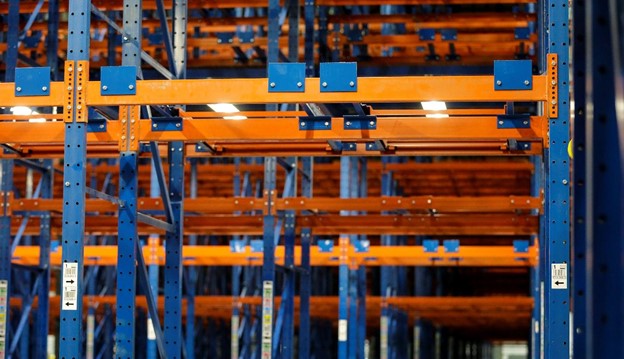
Drive-In Rack Systems
Drive-in racking offers dense storage by allowing pallets to be loaded deep into lanes, which rest on rails along both sides. To keep pallets from slipping off the end—especially on upper levels—rail-end stops are welded in place, providing a reliable safeguard against accidental drops.
Pallet Flow Rack
This gravity-fed system uses pitched rails or rollers to move pallets from the loading side to the opposite picking aisle. At the discharge end, ramp stops are installed to catch and hold pallets until they’re ready to be removed. These stops are typically made of steel to absorb the impact and weight of heavy pallet loads without deformation.
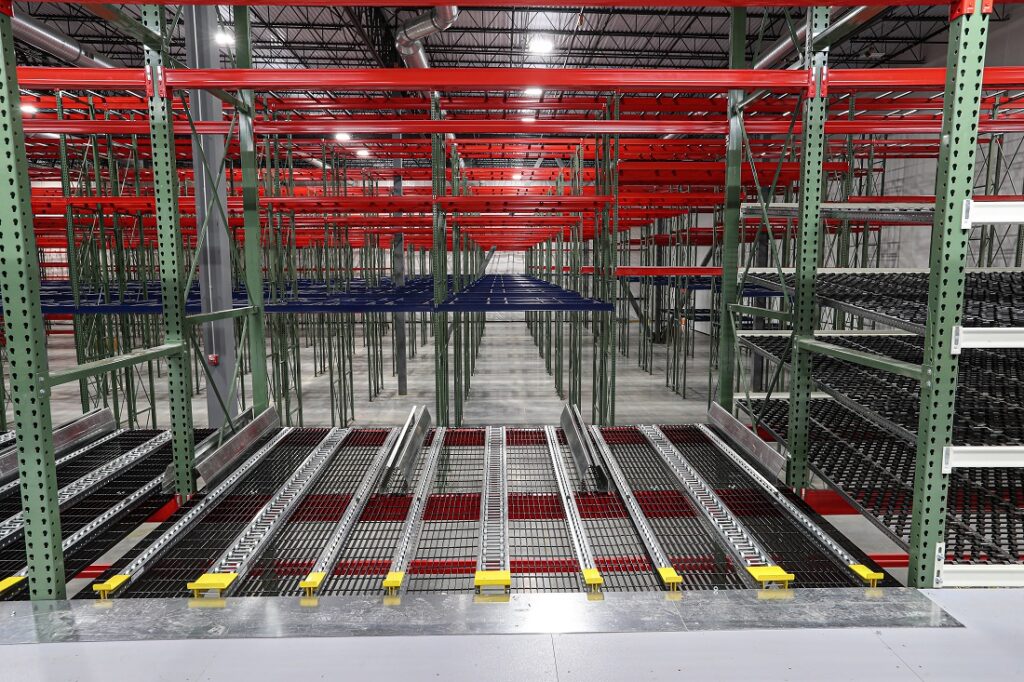
Pallet Stops (yellow) at the Discharge Aisle
Safety Is Always Top Priority at Apex
At Apex, warehouse safety is built into everything we do. From engineering durable racking systems to ensuring expert installation, we focus on protecting your team and keeping your operation running efficiently for the long term. Our Apex PROs also provide in-depth rack audits and warehouse safety inspections to identify risks and optimize performance. Reach out today for fast, reliable support and smart solutions tailored to your warehousing, distribution, or fulfillment needs.
