

CANTILEVER RACKING - SPACE SAVING STORAGE FOR LONG & BULKY INVENTORY
Designed for storing long, bulky items such as lumber, piping, or textiles, cantilever racking is the go-to storage rack for differently-sized and shaped inventory. Cantilever rack gets inventory off the warehouse floor or yard and into organized, easy to access shelves.
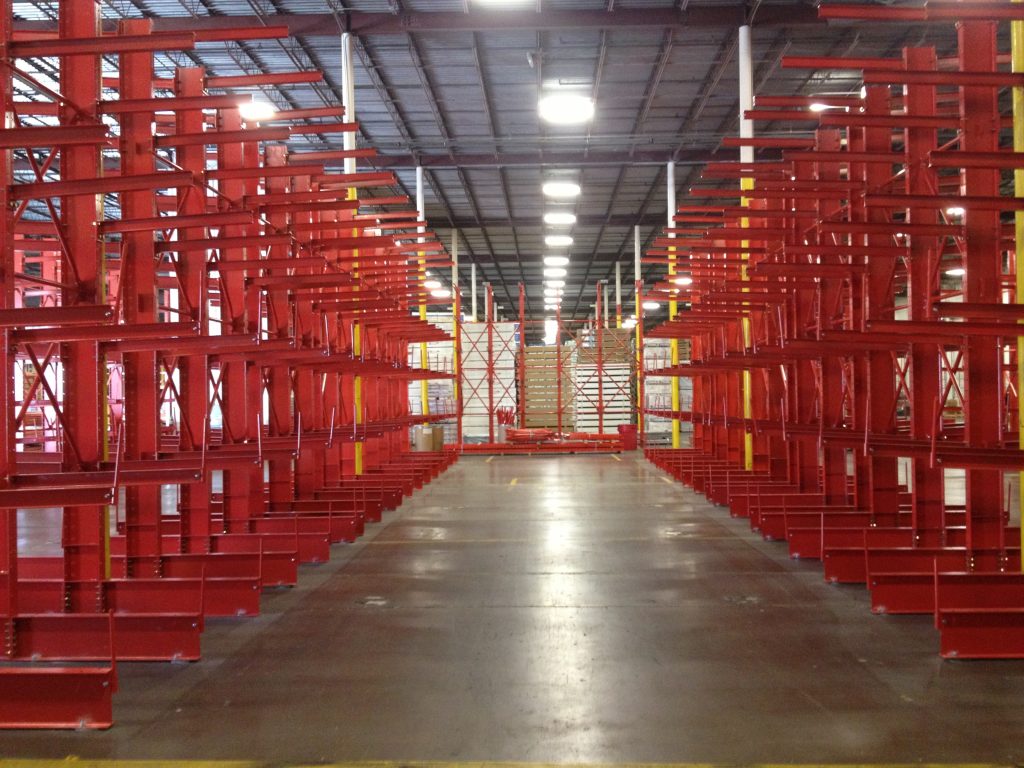
Cantilever rack is a series of vertical columns fitted with sturdy arms that cantilever out at a slight angle to support the load. The arms bolt to the columns for easy installation and repositioning in the event of inventory changes. Arm height is customizable to accommodate the unique size and quantity of your load.
Advantages | Considerations
- Light, medium, and heavy-duty system design
- Adjustable arm positioning along the column
- Configure for single or double-sided use
- Easy access to inventory - No front column obstruction
- Make use of vertical warehousing space
- Decking options available
Are you interested in learning more about cantilever racking? Give Apex a call. Our team of storage experts will work with you to design the best solution for your uniquely shaped inventory. We love a warehouse challenge, and we look forward to speaking with you.
Design Considerations for Cantilever Racking
While cantilever rack looks relatively simple, there are important design considerations to address before ordering your rack system.
Design Considerations for Cantilever Rack
- Choose roll-formed or structural steel columns and arms
- Determine rack height
- Select arm style based on inventory specs
- Decide on punch increments for adjusting arms
- Establish the number of arms needed to support the load and avoid deflection
- Calculate arm length for proper load placement
Once customized to your needs, the cantilever system will provide efficiency and cost savings for decades if properly maintained.
Cantilever Rack Arms
Depending on your inventory, you will select the arm style that will safely secure your stock. Note that you can use different style arms in the same system making it easy to configure and highly customizable. Arms simply bolt onto the columns allowing for easy installation and repositioning due to inventory changes.
There are three arm types for cantilever rack.
Types of Cantilever Racking Arms
- Straight - used for flat products, i.e., wood, sheet metal, and construction materials. They typically mount with a two to four-degree incline and hold 250
- Inclined - used for round inventory like tubing, PVC, and cylindrical items. The arms have an upward slope forcing stock to rest near the connection between the column and arm to secure the load.
- Axle - allow rollers to connect at the endpoints to easily roll material off the arms as needed for carpeting, fabric, and wrapping.
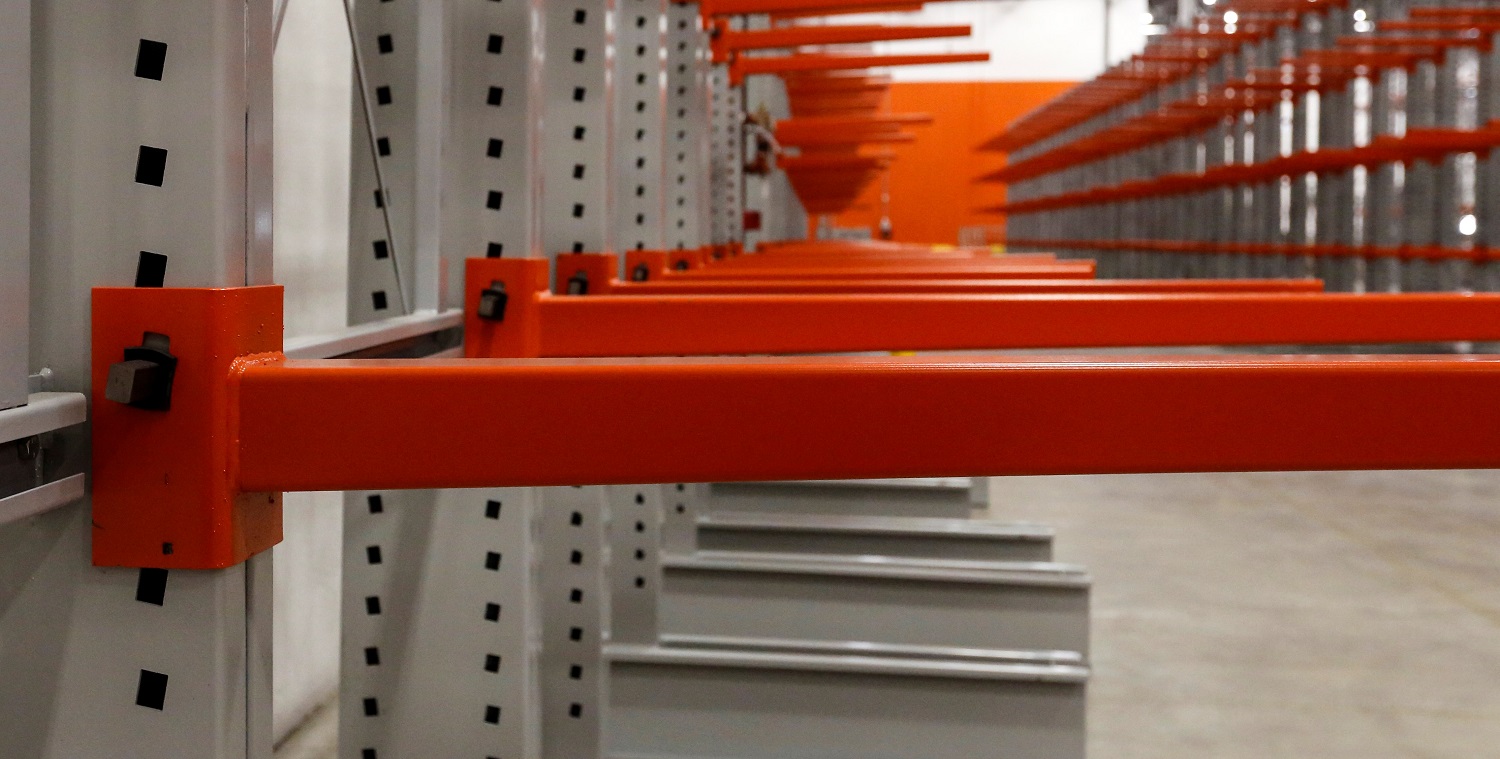
Lastly, pipe stops can be mounted to the end of the arms to add an extra measure of security and hold the inventory in place.
Let’s talk about your storage and fulfillment needs. Call the Apex team today for expert advice and systems design support. We are a full-service material handling service provider… from design to engineering, installation, equipment, and repair! Apex makes it seamless and easy.
The Solutions You Need to boost warehouse productivity
automation solutions
The right tech applied for optimal efficiency
Warehouse Storage Equipment
Extensive variety – system design & install
Rack Audit & Repair
Quick Ship Inventory

industrial fans
Warehouse Airflow Solutions
FREQUENTLY ASKED QUESTIONS
What is cantilever racking used for?
Cantilever racking is designed to store long, bulky, or irregularly shaped materials that do not fit well on standard pallet rack. Its open-front design uses horizontal arms extending from vertical columns, allowing forklifts to load and retrieve products without front uprights blocking access. It is commonly used for lumber, pipe, steel bar, tubing, furniture, and building materials. Proper arm spacing, load capacity, and product support should be considered during system design.
What types of products can be stored on cantilever racking?
Cantilever racking is best suited for long, oversized, or irregular products that are difficult to store on pallets. Common applications include lumber, steel tubing, pipe, bar stock, sheet materials, furniture, carpet rolls, and fabricated components. The ideal configuration depends on product length, weight, and how inventory is handled. Materials should be adequately supported across multiple arms to reduce deflection and promote safe storage.
Is cantilever racking better than pallet racking for long materials?
Yes, cantilever racking is typically a better choice than pallet racking for storing long materials because there are no front columns restricting access. This allows forklifts to load and retrieve products such as pipe, lumber, and steel more efficiently while reducing the risk of product damage. Standard pallet rack remains the better solution for palletized inventory, cartons, and operations requiring high SKU selectivity.
Can cantilever racking be customized for different load sizes?
Yes, cantilever racking can be configured with different arm lengths, column heights, arm spacing, and load capacities to match specific products. The appropriate design depends on the length, weight, and handling method for the materials being stored. Future inventory changes should also be considered during layout planning so the system remains effective as product profiles or storage requirements evolve.
What type of forklifts work with cantilever racking?
Cantilever racking is commonly served by counterbalance forklifts, side loaders, multidirectional forklifts, or other equipment designed for handling long materials. The best choice depends on aisle width, product length, ceiling height, and throughput requirements. Matching lift equipment to the rack layout helps improve operator safety, reduce product damage, and maintain efficient material flow throughout the warehouse.
Can cantilever racking be installed outdoors?
Yes, cantilever racking can be installed outdoors when it is engineered for the environment and protected with an appropriate finish, such as hot-dip galvanizing. Outdoor systems are commonly used to store lumber, steel, pipe, and other long materials and may be installed with or without a protective canopy or roof, depending on the application and level of weather protection required. Local weather conditions, drainage, wind exposure, snow loads, and foundation design should all be evaluated to support long-term structural performance.
How do you determine the right cantilever rack capacity?
Cantilever racking capacity is determined by evaluating the weight, length, and distribution of the stored material along with arm capacity, column strength, and foundation requirements. Load ratings apply to individual arms as well as the complete rack system, so evenly supporting products is essential. A professional layout review helps ensure the system safely matches both current inventory and future storage needs.
When is cantilever racking not the right storage solution?
Cantilever racking is not usually the best choice for standard palletized inventory, high-SKU warehouse storage, or operations focused on maximum pallet density. Selective pallet rack provides better accessibility for individual pallets, while push-back, drive-in, or pallet flow systems often improve storage density for palletized products. The right solution depends on inventory characteristics, product dimensions, and operational workflow.
Can existing cantilever racking be expanded as storage needs grow?
Yes, cantilever racking can often be expanded by adding additional bays or extending the storage layout, provided the existing system is compatible and the building layout can support the expansion. Any modification should verify load capacities, seismic requirements where applicable, and available forklift access to maintain safe and efficient operation as inventory grows.
Contact Us To Get Started
Fill out the form below to speak with one of our experts.
