

Professional Installation For Warehouse And Industrial Fans
HVLS fans improve air movement, comfort, and temperature consistency across large warehouse and industrial spaces, but only when they’re installed in the right place, the right way.
Apex plans each installation around the fan model, your building structure, and mounting conditions, following the manufacturer’s requirements throughout. Our factory-trained crews handle the work while keeping disruption to your operation to a minimum.
Watch our crew install a Vindus HVLS fan from start to finish.
Why Fan Placement And Mounting Matter
A fan only delivers its intended airflow when properly located with your facility layout. As part of every airflow plan, Apex evaluates the factors below to catch potential conflicts early and make sure fan selection, spacing, mounting location, and installation all work together.
Structure and Mounting Location
A suitable mounting point at the right height for effective airflow and coverage.
Racking and Storage Layout
Rack configurations and stored product that affect airflow.
Overhead Systems and Obstructions
Lighting, sprinklers, and mechanical equipment that could conflict with the fan.
Clearances and Work Below
Required blade clearances, safe access, and ongoing operations beneath the fan.
Planning a fan project?
Preparing For HVLS Fan Installation
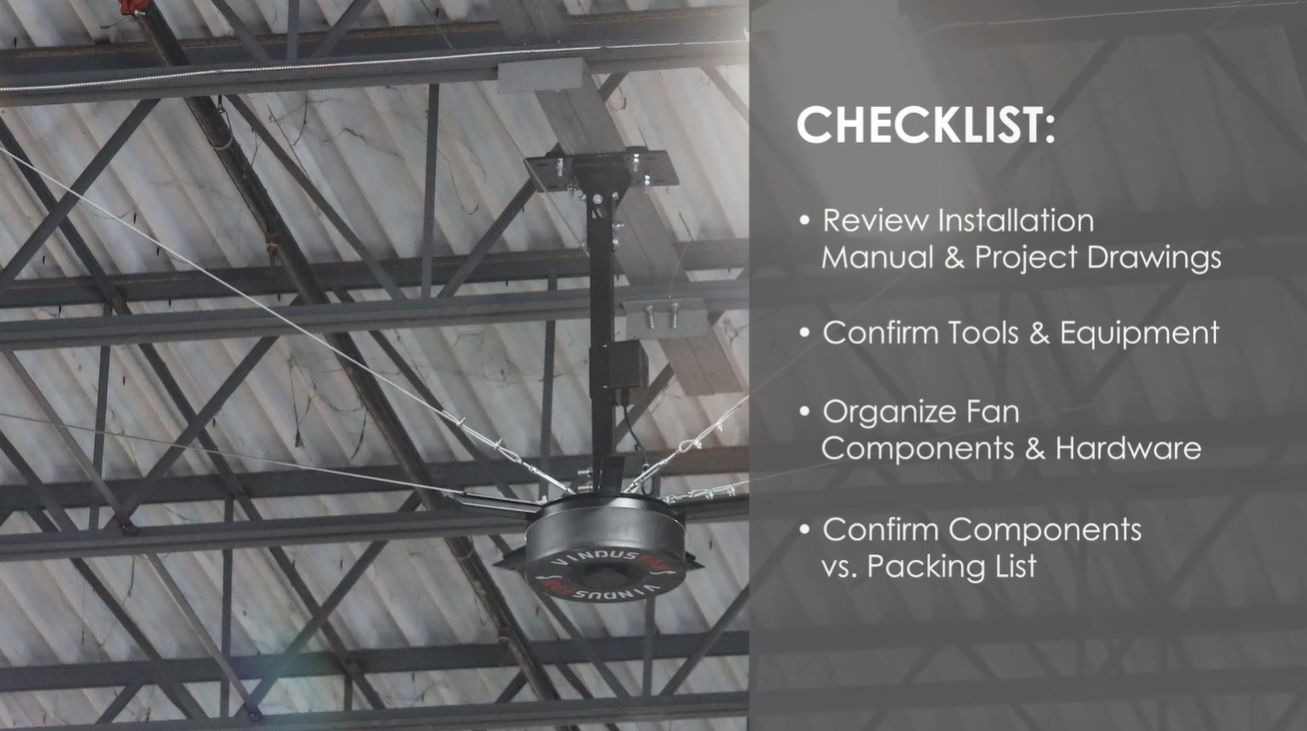
Ready On Day One
HVLS fans involve large components that must be positioned, assembled, and secured overhead, so preparation matters. Our crews arrive with everything the job requires: hand and power tools, a torque wrench, manufacturer-specified mounting hardware, and a scissor lift or other suitable access equipment.
We plan tools, materials, and personnel around the fan manufacturer’s requirements and your site conditions, so work can start on time and stay on track.
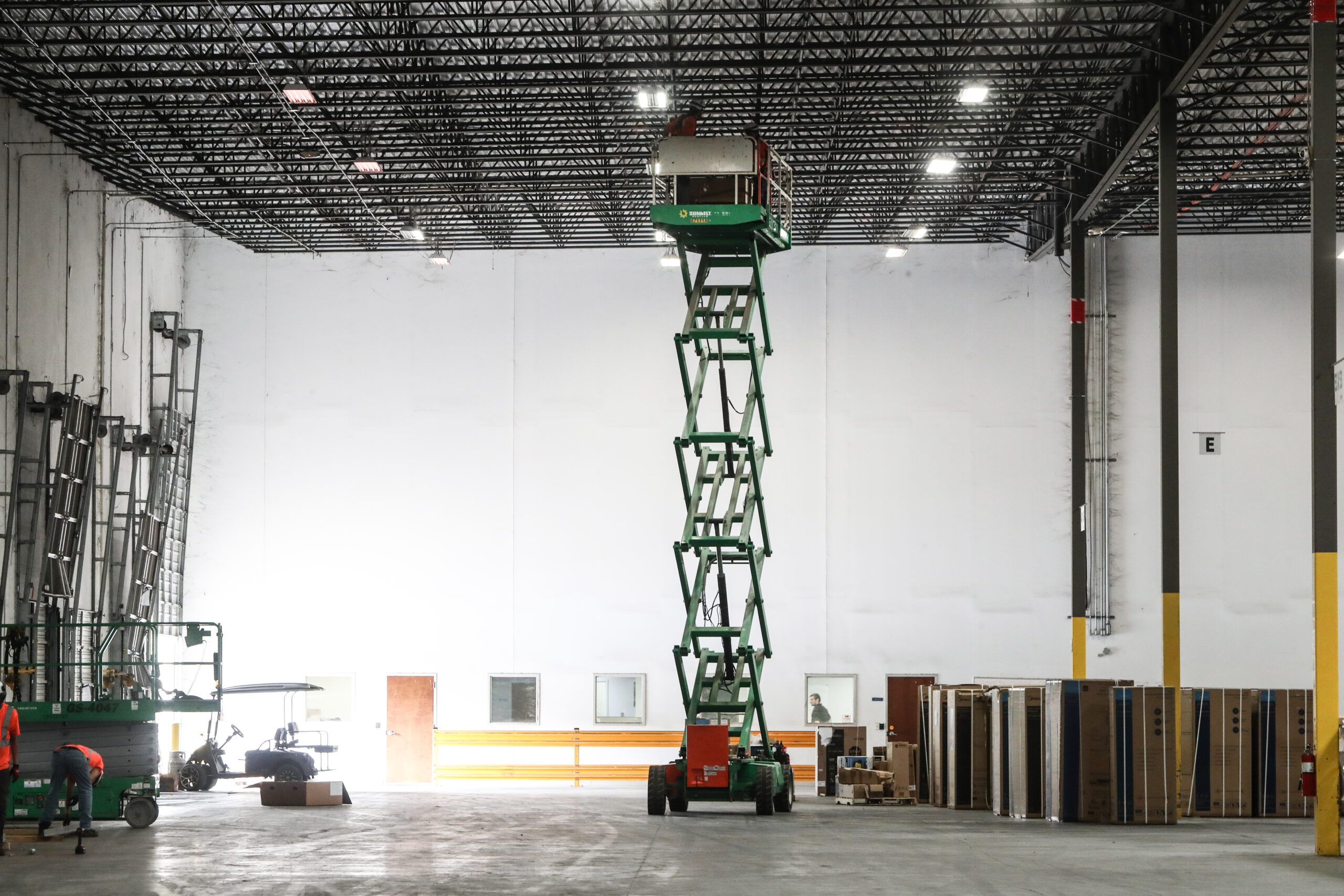
Working Safely At Height
Scissor lifts give our crews access to elevated mounting locations, and using them safely takes planning and training. Before work begins, we inspect the lift and work area, confirm equipment capacity and stability, identify overhead hazards, and control activity around the installation zone.
Our operators are trained and follow the lift manufacturer’s instructions and applicable scissor lift safety requirements.
Final Installation Checks
Before startup, we inspect every fan against the manufacturer’s installation requirements, including:
✓ Mounting hardware and connections
✓ Drop tube and motor alignment
✓ Safety cable attachment
✓ Guy wires and stabilization components
✓ Required fastener torque
✓ Blade connections
✓ Required clearances
✓ Overall fan alignment and stability
Planning An HVLS Fan Installation?
Whether it’s one fan or a full facility, we’ll help you figure out placement, plan the install, and get it done around your schedule.
Frequently asked questions
How long does a typical HVLS fan installation take?
A mechanical install for a single fan takes between 3-6 hours. If multiple fans are installed on a project, a cadence can be reached where they can be installed in a little over 2 hours.
Will any areas need to be cleared or shut down?
Directly under the fan required physical access for the scissor lift and any areas to reach that space. Recommendation is about 10’ in each direction from center of fan.
What does Apex need from the customer before installation?
Ceiling details, power connection location, fire alarm requirements.
How does Apex handle structural requirements or additional support needed for the fan?
The fans are designed as a point load and the lightweight nature allows them similar to hanging lights or other items from the joists. Apex provides the material necessary to support the fan to the structural members of the ceiling.
What factors can affect installation time or cost?
Electrical installation cost is ~3x mechanical and can increase depending on length of wiring needed.
What are the most common site conditions that make an installation more difficult or take longer?
If the site if fully operational and installation of the fan impedes operations, this can make a site difficult.
Do HVLS fan installations typically require permits or inspections, and does Apex handle that when required?
This is considered per local jurisdiction. Apex can handle permitting with customer providing sign offs.
Is there anything customers are commonly surprised by during an HVLS fan installation?
How easy it is and the drastic effect before and after install.
