

Dynamic, High-Density Pallet Flow Storage Racking
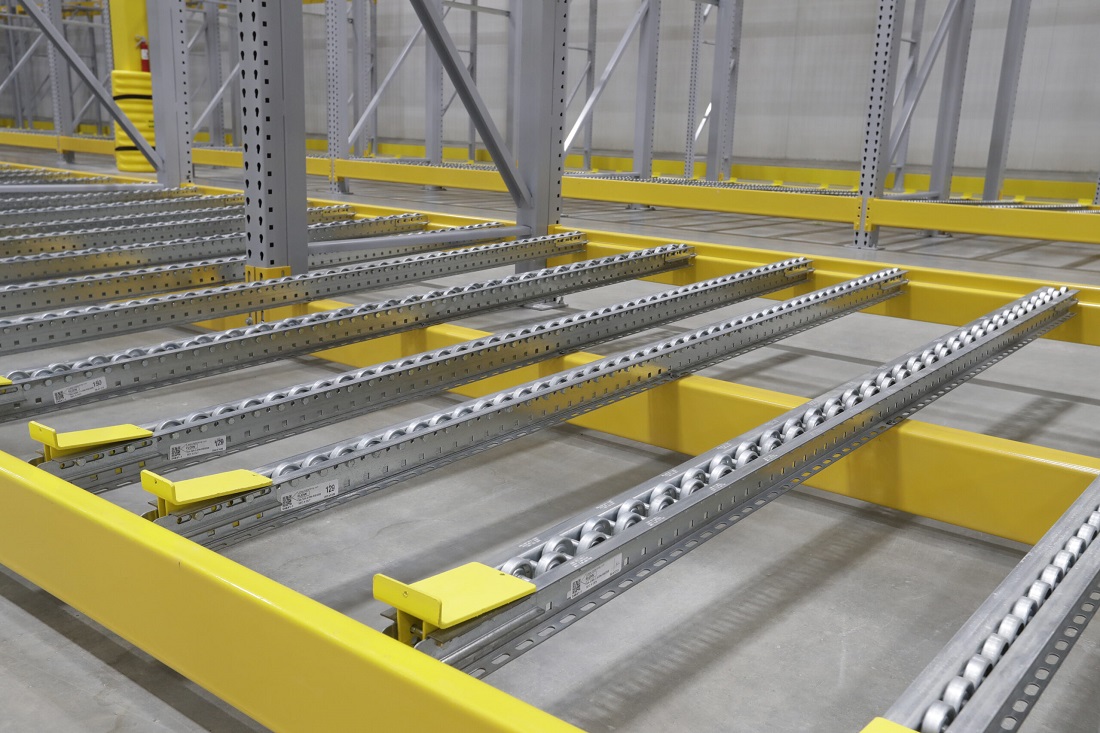
Pallet flow rack provides superior storage density over all other rack systems with a First-In/First-Out (FIFO) inventory flow. It is best suited for inventory with a limited number of high-volume SKUs. The system design is tightly configured, packing in a high number of pallets in a condensed space. Flow lanes have wheeled or roller rails installed on a slight pitch to automatically flow pallets from the load side to the pick aisle, helping you minimize travel time and associated labor and equipment costs.
Save with Pallet Flow Rack
- Double storage capacity over static rack systems
- Save up to 75% in labor & equipment costs
- Reduce utility expenses with condensed storage
Pallet flow racking is also often beneficial for ergonomic case picking. The application provides dense reserve storage and an automatically replenished pick face when the empty pallet is removed. Speak with the Apex systems design experts for custom gravity flow rack applications to enhance your team’s productivity.
Advantages | Considerations
- Double the capacity vs. conventional pallet rack storage
- More productive – less travel time between aisles
- Lane depth 2- to 10-pallets deep
- FIFO inventory rotation – ideal for dated goods
- Higher cost per pallet position
- Additional height required per level
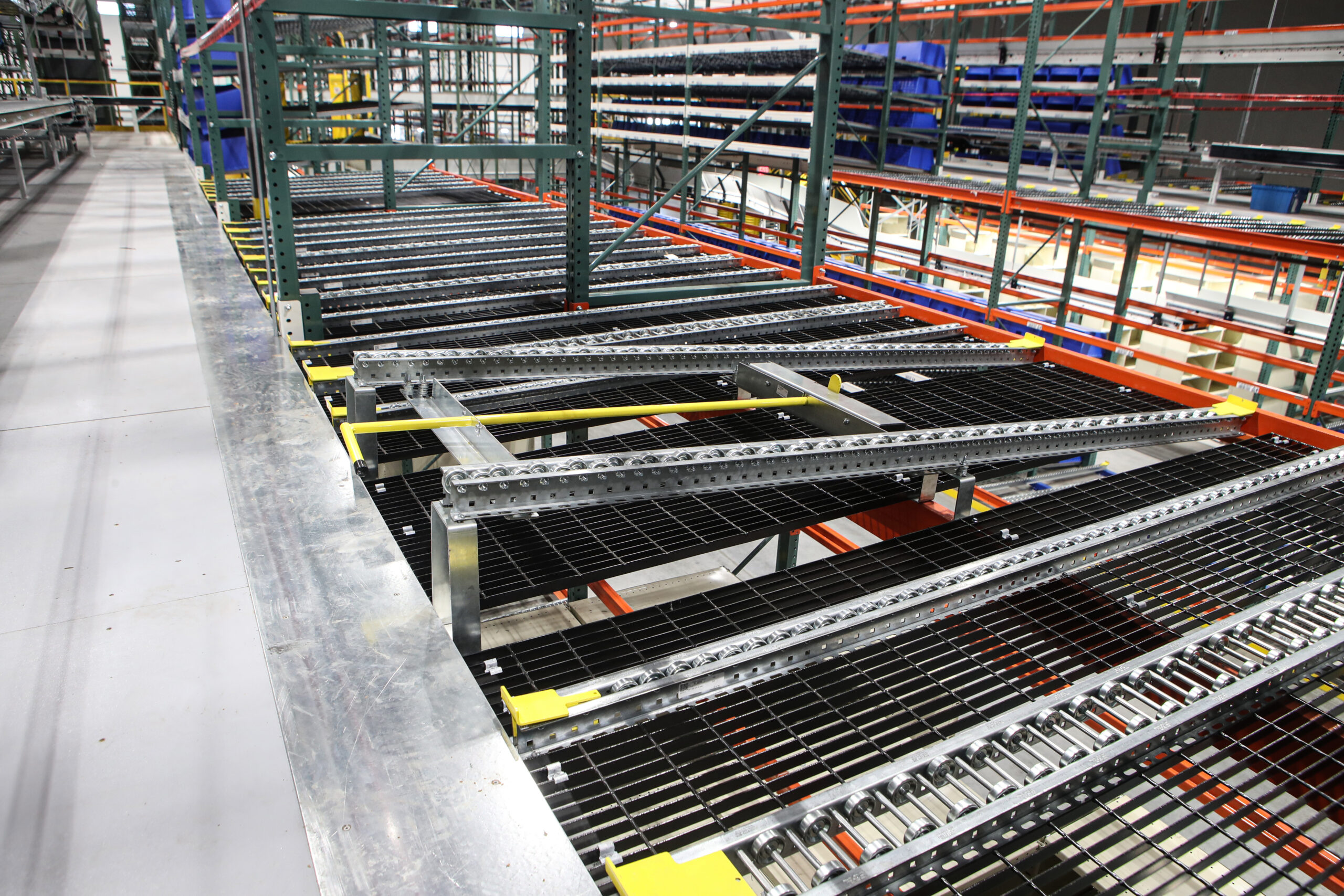
How Does Pallet Flow Rack Work?
Pallet flow rack is most often configured using opposite aisles for pallet loading and extraction. This system design supports FIFO inventory rotation.
- The forklift operator loads pallets from the rear of the system.
- Pallets flow forward to the opposite aisle.
- The forklift extracts the pallet at the pick face.
- Rear pallets begin flowing automatically to replenish the empty pallet position
Rails are easily mounted to standard pallet racking systems; however, choosing the best pallet flow lane design will depend heavily on inventory specs and pallet material.
What are your pallet & inventory specs?
Standard GMA-style wooden pallets are most often suited for wheeled pallet flow rails.
Plastic pallets, metal containers, footed pallets, and crates typically do better in roller pallet flow.
The goal is sufficient contact between the flow rails and the bottom of the pallet, container, or crate.
Call Apex to work with an experienced gravity flow rack design team. Let’s deliver the productivity and space-saving goals that you need to compete.
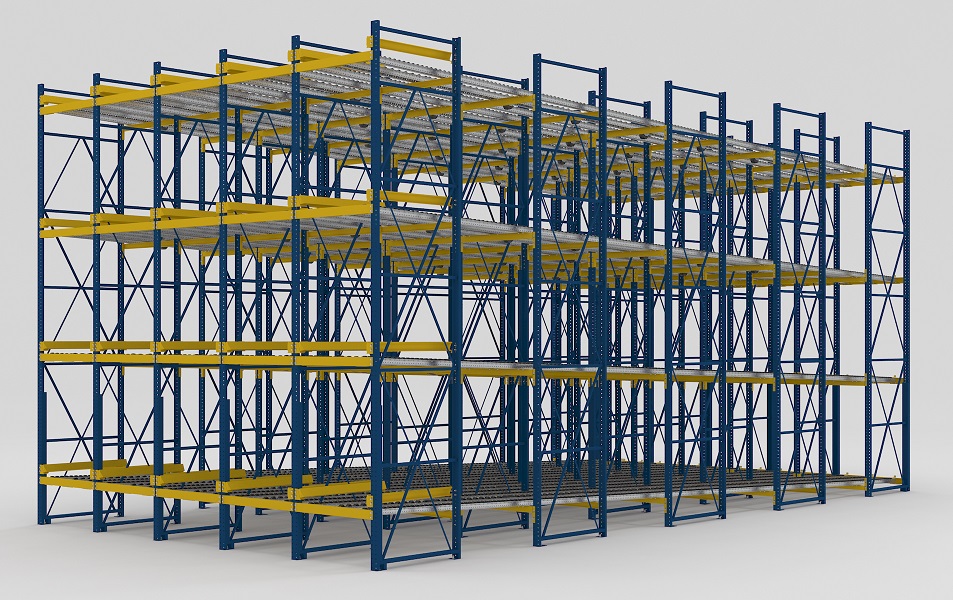
Watch Productivity in Action with Pallet Flow Rack
Watch our short animated pallet flow simulation and see how this space-saving, dynamic storage solution will maximize your warehouse space while increasing picking efficiency.
Does pallet flow look like a good fit for your warehousing needs? Give the Apex team a call to discuss the best way to maximize your warehouse space and meet faster turn rate objectives.
The Solutions You Need to boost warehouse productivity

automation solutions
The right tech applied for optimal efficiency
Warehouse Storage Equipment
Extensive variety – system design & install

Rack Audit & Repair
Quick Ship Inventory

industrial fans
Warehouse Airflow Solutions
FREQUENTLY ASKED QUESTIONS
What types of warehouses benefit most from pallet flow rack?
Pallet flow rack is best suited for warehouses storing large volumes of the same SKU that require First-In, First-Out (FIFO) inventory rotation. The system works well in food and beverage, cold storage, manufacturing, and distribution environments where inventory turnover is high and product dating matters. Because lanes are dedicated to individual SKUs, pallet flow rack is typically less effective for operations with high SKU variety or frequent slotting changes.
How does pallet flow rack maintain FIFO inventory rotation?
Pallet flow rack uses gravity-fed roller or wheel lanes installed on a slight incline so pallets automatically move from the loading aisle to the picking aisle. As the front pallet is removed, the remaining pallets advance to the pick face without additional forklift travel. This design maintains FIFO inventory rotation while improving throughput. Proper lane design depends on pallet dimensions, load weight, and pallet construction to ensure reliable and controlled pallet movement.
What pallet types work best with pallet flow rack?
Pallet flow rack performs best when the flow rails are matched to the pallet style. Standard GMA wood pallets typically work well with wheel-style lanes, while plastic pallets, metal containers, footed pallets, and custom loads often require full-width or split roller lanes for consistent support. The correct rail configuration depends on pallet construction, bottom deck design, load weight, and inventory characteristics, making application-specific engineering an important part of system design.
Is pallet flow rack better than push-back racking?
Neither system is universally better because they solve different storage challenges. Pallet flow rack is designed for FIFO inventory rotation with separate loading and picking aisles, making it a strong choice for dated or high-turn inventory. Push-back racking uses a single aisle for both loading and picking, supporting a LIFO (last-in, first-out) inventory flow. Whether it’s the right choice depends on your SKU count, pallet volume, inventory rotation, available floor space, and throughput goals.
How deep can pallet flow rack storage lanes be?
Pallet flow rack lanes are commonly designed between 2 and 10 pallets deep, although deeper configurations are possible for specialized applications. The appropriate lane depth depends on inventory volume, pallet weight, throughput requirements, and available building space. As lanes become deeper, additional flow controls such as speed controllers and pallet separators may be required to maintain safe, reliable pallet movement and consistent picking performance.
What should be considered before installing pallet flow rack?
Successful pallet flow rack installations begin with proper planning. Inventory velocity, pallet consistency, load weights, forklift access, ceiling height, and SKU profile all influence system performance. Because pallets move by gravity, the rails, lane pitch, and safety accessories must be engineered for the specific application. Operations with highly variable pallets or frequent SKU changes may benefit from evaluating other storage systems before making a final decision.
What safety features are commonly included in pallet flow rack systems?
Pallet flow rack systems often include speed controllers, pallet separators, entry guides, and ramp stops to help manage pallet movement safely. These components regulate pallet speed, maintain proper spacing, improve loading accuracy, and keep pallets contained within each lane. The required accessories depend on lane depth, pallet weight, load characteristics, and operating conditions, so safety features are typically selected during the engineering process rather than added later.
Can pallet flow rack be used in cold storage warehouses?
Yes. Pallet flow rack is commonly used in refrigerated and freezer warehouses because its FIFO inventory rotation supports product dating while reducing forklift travel inside temperature-controlled spaces. High-density storage also minimizes the building volume that must be refrigerated, which can improve space utilization. System components, pallet specifications, and operating conditions should be evaluated to ensure reliable performance in cold storage environments.
Can pallet flow rack support case picking as well as full pallet storage?
Yes. Pallet flow rack can be configured for both full pallet storage and floor-level case picking. In case-pick applications, operators pick directly from the front pallet while gravity advances the next pallet into position as inventory is depleted, helping maintain continuous product availability with minimal replenishment delays. The right design depends on SKU velocity, pallet quantities, pick frequency, replenishment strategy, and overall warehouse workflow. Some operations also combine pallet flow rack with carton flow rack to optimize picking across different product types.
Contact Us To Get Started
Fill out the form below to speak with one of our experts.
