
Where Are Pallet Shuttle Systems Used? 6 Warehouse Applications

How To Match Pallet Shuttle Systems To Your Operation
Warehouses evaluating pallet shuttle systems often need to increase pallet storage density without creating a bottleneck in pallet movement. These systems use powered shuttles to move pallets within deep storage lanes, combining high-density storage with more efficient storage and retrieval.
Inventory profile, pallets per SKU, product flow, throughput requirements, facility conditions, and other operating factors all affect whether shuttle storage makes sense. Here are six common applications where the combination of storage density and efficient pallet movement can make this system worth evaluating.
Key Takeaway
Pallet shuttle systems are worth evaluating when an operation needs more pallet storage density and the inventory, movement requirements, and facility can support deep-lane storage. Look beyond total pallet volume: pallets per SKU or lot, lane utilization, peak pallet movement, inventory rotation, building constraints, and required access all affect whether the shuttle is a good fit.
Common applications include cold storage, high-volume SKU storage, production and process buffers, high-volume pallet movement, seasonal inventory, and space-constrained facilities.
1. Cold Storage And Freezer Warehouses
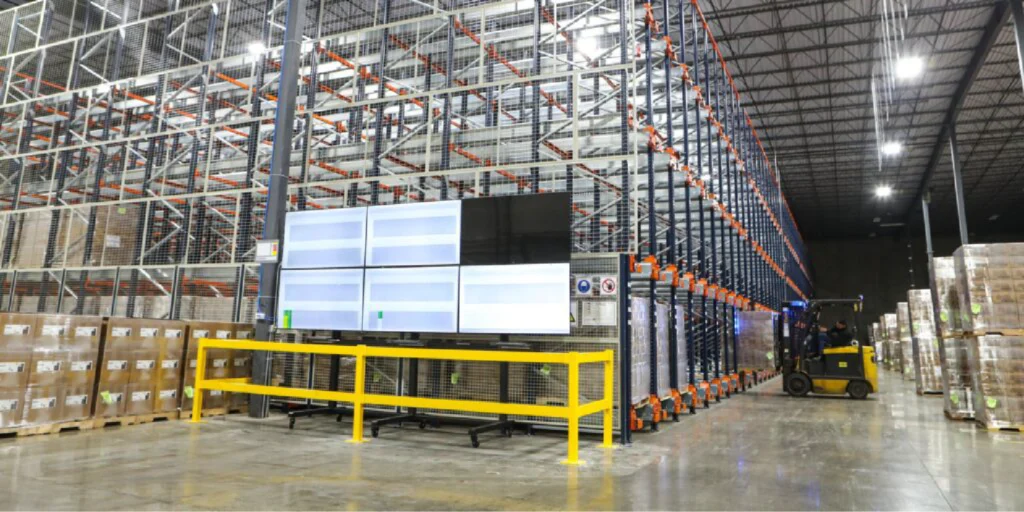
Cold storage and freezer space is expensive to build, cool, and maintain, making storage density especially important. Pallet shuttle systems reduce the number of lift-truck aisles required for pallet access, allowing more of that costly refrigerated or frozen space to be used for storage.
What Makes Cold Storage A Stronger Shuttle Application?
Look for a combination of:
- Substantial pallet quantities of the same SKU or lot
- Enough pallet depth per SKU or lot to keep deep lanes well utilized
- FIFO or LIFO inventory flow that can be supported by the layout
- Equipment and operating procedures designed for refrigerated or freezer conditions
The inventory profile matters just as much as the temperature. A freezer with substantial pallet quantities of relatively few SKUs may use deep lanes very effectively. An operation with many low-volume SKUs requiring frequent access to individual pallets can leave deep lanes partially occupied, reducing usable storage capacity.
Pallet shuttle systems can accommodate either FIFO or LIFO inventory flow. In a LIFO layout, pallets are loaded and retrieved from the same side of the lane. A FIFO layout provides access at both ends: pallets enter from one side and are retrieved from the opposite side. FIFO or LIFO requirements influence the system layout but do not, by themselves, determine whether the system is a fit.
Cold conditions add another design layer. Shuttle equipment, batteries, controls, sensors, charging strategy, and service procedures must be appropriate for the actual operating environment.
For a closer look at how pallet shuttle operation applies to temperature-controlled food and beverage operations, see Pallet Shuttle Systems for Food & Beverage Manufacturing.
2. High-Volume SKU Storage
Shuttle solutions are particularly well-suited to operations that hold large quantities of the same SKU or lot. The reason is straightforward: deep lanes work best when there are enough pallets of a product to keep those lanes well utilized.
Look At Pallets Per SKU—Not Just Total Pallet Volume
A warehouse can have a large inventory and still be a poor fit for deep-lane storage if that inventory is spread across hundreds or thousands of SKUs with only a few pallets of each.
Start by looking at:
- Typical and peak pallet quantities by SKU or lot
- How consistently those quantities can fill the proposed lane depths
- Lot, batch or date requirements that may further divide inventory
- How frequently individual pallets or SKUs need to be accessed
- Which inventory may require a more selective storage method
Lane depth should follow the inventory—not the other way around. In one Apex food manufacturing project, for example, the same facility required a 74-deep pallet shuttle system for cooler storage and a 46-deep system for dry finished goods. The dry area also included double-deep rack for inventory that needed a different storage approach.
That mix illustrates an important point: maximizing lane depth isn’t the goal. The system should create useful storage capacity for the inventory actually being stored. If deep lanes are routinely left partially occupied because there aren’t enough pallets of a SKU or lot to fill them, some of the density gained by reducing aisles is lost to unused pallet positions.
For operations with a varied inventory profile, the answer may be a combination of storage systems rather than putting every pallet into shuttle storage.
3. Production And Process Buffer Storage
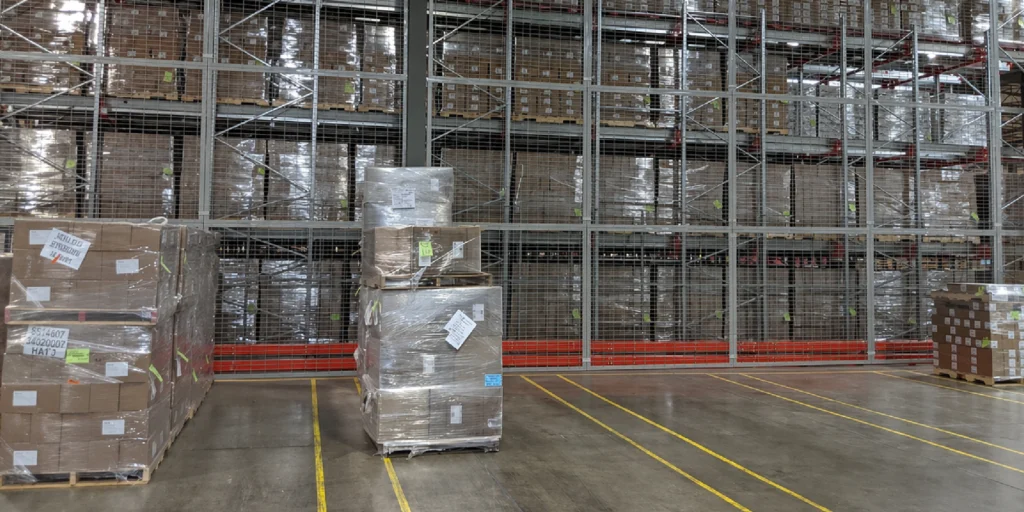
Production processes rarely run at exactly the same rate. A packaging line may temporarily fall behind production, finished pallets may accumulate faster than they can be shipped, or incoming materials may arrive before the next process is ready for them. Without dedicated buffer capacity, those pallets can quickly consume floor, staging, or active work space.
Pallet shuttle systems can provide dense temporary storage between those processes, allowing pallets to accumulate until the downstream operation is ready for them.
Size The Buffer For What Actually Accumulates
A useful buffer isn’t simply extra pallet positions. It needs enough capacity and handling capability to absorb the expected buildup without becoming the next bottleneck.
Start with:
- How many pallets can accumulate during normal operation and peak conditions?
- How long will pallets typically remain in the buffer?
- How quickly can the upstream process add pallets?
- How quickly will the downstream process need them released?
- Does product need to leave the buffer in a specific sequence?
For example, if production continues while a downstream packaging line is stopped for changeover or maintenance, the buffer needs enough usable capacity to absorb that production without forcing the upstream process to stop. When packaging resumes, the system also needs to release pallets at the rate required to keep that operation supplied.
The same principle applies to finished goods awaiting shipment, raw materials awaiting processing, or palletized WIP moving between production steps. The goal is to keep temporary inventory under control and out of areas needed for active work, while maintaining the required flow on both sides of the buffer.
Buffer storage can also accommodate partially picked pallets. When cases are removed from a wrapped pallet, the remaining load may be less stable and unsuitable for return to elevated storage without additional securing. In systems designed for this application, partially picked pallets can be returned to designated ground-level buffer positions, where they remain available for subsequent picks. Inventory controls can prioritize picking from these partial pallets before retrieving another full pallet of the same SKU, helping ensure remaining inventory is used before a new pallet is opened.
For a deeper look at this application, see Apex’s ASRS Systems For WIP Buffering In Manufacturing.
4. High-Volume Pallet Movement
Some warehouses need more than dense pallet storage. They also need to move a significant number of pallets into and out of storage throughout the day. Pallet shuttle systems can support these higher-volume operations by taking over the horizontal movement of pallets within deep storage lanes.
Design Around Peak Pallet Movement
Daily pallet volume alone doesn’t tell you how much throughput the storage system needs to handle. When those pallet moves occur matters.
An operation moving pallets steadily across multiple shifts has a different requirement than one receiving or shipping a large portion of its daily volume within a few hours. Production schedules, truck arrival times, order cutoffs, and shift patterns can all create periods when storage and retrieval demand is much higher than the daily average.
When evaluating pallet movement requirements, look at:
- Required pallet moves during peak operating periods
- The balance of inbound and outbound pallet movement
- How many storage lanes may need to be serviced at the same time
- The number of shuttles and lift trucks available to support those moves
- Travel between the shuttle system and docks, staging, production or other warehouse areas
- Other transfer points that could limit how quickly pallets reach or leave storage
This is why throughput should be evaluated across the complete pallet-handling process. Automating movement inside a 40- or 50-pallet-deep lane provides limited benefit if pallets then wait at the rack face because the lift truck, staging area, or downstream process cannot keep up.
As pallet movement requirements increase, the shuttle configuration becomes part of the throughput decision. In a semi-automated pallet shuttle system, lift trucks still move pallets to and from the rack face and reposition the shuttle between storage lanes. A four-way pallet shuttle system can travel both within and between storage lanes, reducing those manual transfers and allowing pallet movement to be coordinated across a larger portion of the storage system.
That added automation can be valuable when an operation needs more simultaneous pallet movement or wants to reduce lift-truck involvement in storage and retrieval. It also changes the system around the shuttle: lifts, conveyors, transfer points, controls, and warehouse software may all become part of the material flow. The appropriate configuration depends on required inbound and outbound rates, layout, inventory flow, and how pallets need to move between storage and the rest of the facility.
There isn’t a universal pallet-per-hour threshold that determines when an operation should move from a semi-automated to a more automated shuttle system. The better question is whether the system can consistently meet peak pallet movement requirements without creating a bottleneck elsewhere in the operation.
For a closer look at semi-automated, four-way, and other pallet shuttle configurations, see Apex’s pallet shuttle configuration guide.
5. Seasonal And Peak Inventory Storage
Seasonal demand can create a temporary need for significantly more pallet storage. Food and beverage production cycles, holiday inventory, promotional builds, and other predictable peaks may require an operation to accumulate finished goods well before they are shipped.
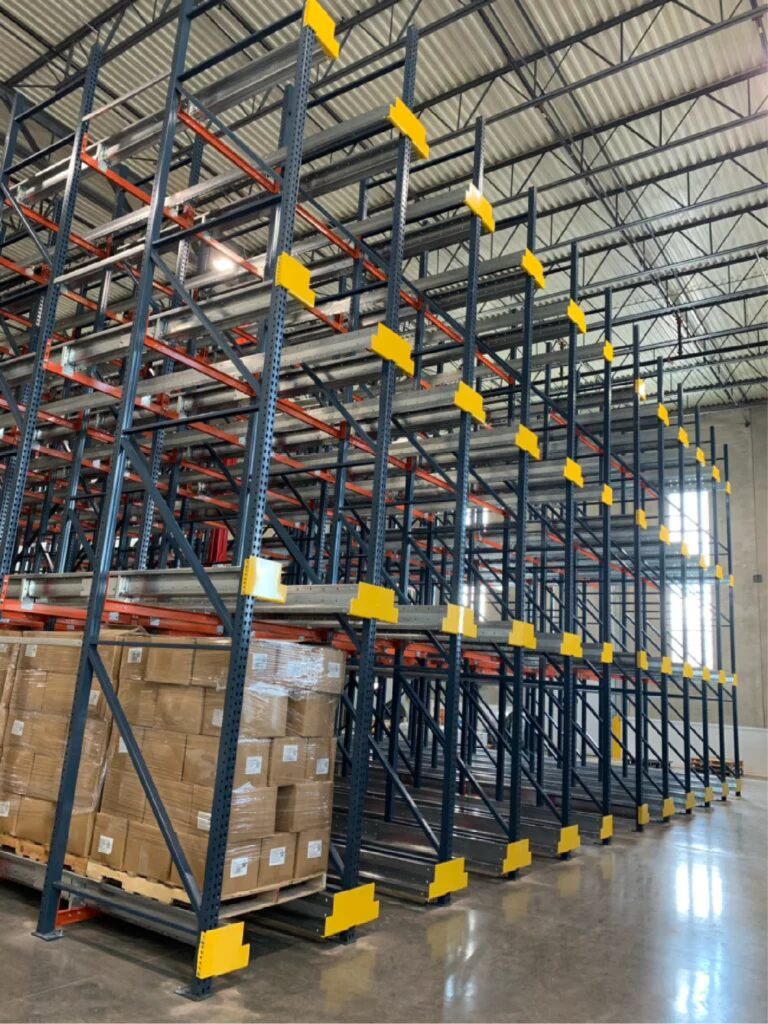
Pallet shuttle systems can help accommodate those inventory builds by concentrating large quantities of palletized product in deep storage lanes rather than expanding the number of lift-truck aisles needed for storage.
Plan For The Peak—And What Happens After It
Seasonality alone doesn’t make pallet shuttle automation a good fit. The inventory added during the peak still needs to match the characteristics of deep-lane storage.
Evaluate:
- Which SKUs or product groups drive the seasonal increase
- Peak pallet quantities compared with normal inventory levels
- How long the additional inventory remains in storage
- Whether seasonal inventory can be grouped efficiently into deep lanes
- How quickly inventory needs to move into storage during the build and out during the drawdown
- How the shuttle capacity will be used outside the peak season
That last question matters. Designing enough dedicated storage to accommodate a short annual peak can leave a significant amount of capacity underused for the rest of the year.
A better design may allow lanes or storage zones to be reassigned as inventory levels change, or incorporate other storage methods for products that do not have the pallet quantities or access requirements suited to shuttle storage.
For predictable seasonal operations, the objective is not simply to maximize peak capacity. It is to provide enough capacity for the inventory build without creating a storage system that no longer fits the operation once demand returns to normal.
For more on planning storage capacity around seasonal inventory increases, see Apex’s peak inventory planning guidance.
6. Space-Constrained Warehouses
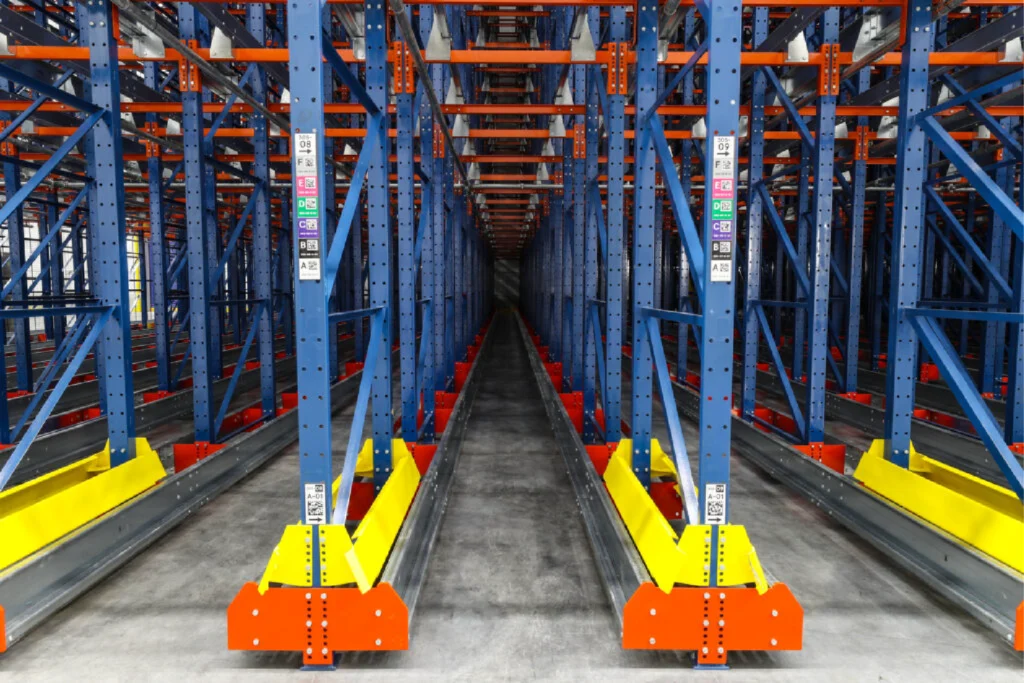
When a warehouse is running short on pallet positions, adding more building space isn’t always the first or best option. Pallet shuttle systems can increase storage density within the existing footprint by replacing some lift-truck aisles with deep storage lanes.
That can make the shuttle worth evaluating in facilities approaching capacity, buildings with limited expansion options, or operations trying to delay the cost and disruption of an expansion or move.
Look Beyond The Pallet Position Count
The highest theoretical pallet count isn’t necessarily the best storage design. What matters is how much of that capacity the operation can actually use while maintaining the access and pallet movement it requires.
Start with:
- Existing space consumed by storage and lift-truck aisles
- Building clear height and usable rack height
- Columns, doors, docks, fire protection and other building constraints
- Pallet dimensions, weights and load characteristics
- Inventory quantities and how well they align with deep-lane storage
- Required pallet access and movement rates
- How future inventory growth or SKU changes could affect lane utilization
Building geometry can have a significant effect on the result. Deep lanes may reduce aisle requirements, but lane depth, rack height, and system layout still have to work around the actual building and material-handling equipment.
The same is true of inventory. A layout may show a large increase in physical pallet positions, but that doesn’t mean every position will remain usable as SKU quantities change. If inventory is spread across many low-volume SKUs, partially filled lanes can reduce the effective capacity of a deep-lane system.
For that reason, a space study should compare more than how many pallet positions each storage option can physically fit. It should also consider usable capacity, selectivity, pallet movement, equipment requirements, and how well the design can accommodate expected changes in the operation.
Pallet shuttle solutions make the strongest case when the additional density can actually be used without compromising the access and movement the operation needs.
Which Pallet Shuttle System Fits The Application?
Once the pallet shuttle solution is identified as a potential fit, required storage density, peak pallet movement, inventory characteristics, facility layout, and integration requirements help determine the appropriate configuration and level of automation.
For the next stage of research, The Ultimate Guide To Pallet Shuttle Systems: Features, Benefits And Applications compares 2-way, 4-way, and mother-child systems.
Match Pallet Shuttle Technology To The Application
The best pallet shuttle design starts with the operation, not the technology. Inventory quantities, SKU and lot profiles, peak pallet movement, rotation requirements, pallet specifications, facility constraints, and future growth all help determine whether shuttle storage makes sense and how the system should be configured.
Apex evaluates those requirements against available storage and material handling options to develop a system that fits how the facility actually operates.
Contact our team to discuss your pallet storage requirements and determine whether a pallet shuttle system is right for your storage strategy.
FAQs
Can Different SKUs Be Stored In A Pallet Shuttle System?
Yes. A pallet shuttle system can store multiple SKUs across the system, with individual storage channels typically assigned according to SKU, lot, batch, or inventory rotation requirements. The important consideration is how effectively the available inventory can use those channels.
Operations with large pallet quantities of the same SKU or lot generally make better use of deep lanes than operations with many SKUs and only a few pallets of each. SKU quantities, lane depth, rotation requirements, and required pallet access should therefore be evaluated together.
How Is Pallet Shuttle Lane Depth Determined?
Lane depth should be based on the inventory and facility rather than simply making each lane as deep as possible. Pallets per SKU or lot, available building dimensions, inventory rotation, required access, pallet movement rates, and the overall rack layout all influence the appropriate depth.
A deeper lane may increase physical storage density, but it does not necessarily increase usable capacity. If SKU quantities regularly leave portions of deep lanes empty, some of those additional pallet positions may provide little operational value.
Can Pallet Shuttle Systems Support FIFO And LIFO Inventory?
Yes. Pallet shuttle systems can be designed for either first-in, first-out (FIFO) or last-in, first-out (LIFO) inventory flow.
In a LIFO layout, pallets are loaded and retrieved from the same end of the storage lane. FIFO requires access from opposite ends so pallets can enter from one side and be retrieved from the other. Rotation requirements therefore affect rack layout, aisle requirements, and how pallets are assigned within the system.
What Determines Pallet Shuttle Throughput?
Pallet shuttle throughput depends on more than shuttle travel speed. Peak storage and retrieval requirements, lane depth, number of active lanes, number of shuttles, lift-truck resources, pallet transfer points, and travel between storage and other facility areas can all affect how quickly pallets move through the operation.
For semi-automated systems, lift trucks and operators remain part of the handling process. More automated configurations can reduce some of those manual transfers. Throughput should therefore be evaluated across the complete pallet path rather than based on the shuttle alone.
When Might Another Pallet Storage System Be A Better Fit?
Pallet shuttle automation may not be the best choice when an operation needs frequent direct access to many individual SKUs, has too few pallets per SKU to use deep lanes effectively, or has operating requirements better served by another storage method.
Selective pallet rack, double-deep rack, push-back rack, pallet flow rack, and other high-density or automated storage options provide different combinations of density, selectivity, rotation, and handling characteristics. In some facilities, a combination of storage systems is the better solution because different inventory groups have different requirements.
