
Pallet Flow Rack Maintenance & Operation: What You Need To Know

Pallet Flow Rack Maintenance & Operation Guide
Pallet flow rack is a high-density storage system designed to store multiple pallets deep in SKU-designated lanes. Pallets are loaded from an aisle on one side of the rack and retrieved from a separate aisle on the opposite side.
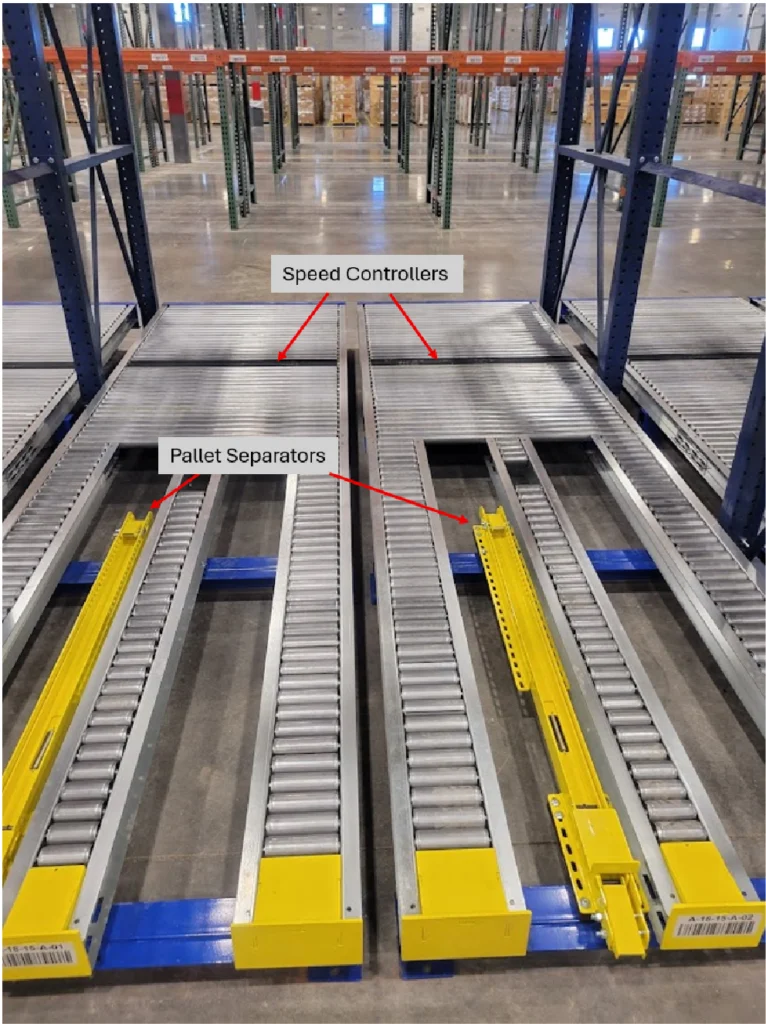
Each pitched lane extends between these two aisles and is fitted with wheels or rollers. The lane slopes downward from the charge (loading) side toward the discharge (pick) side, allowing gravity to move pallets forward as inventory is removed. Depending on the system design, accessories such as speed controllers and pallet separators may also be used to control pallet movement and spacing.
Keeping that system operating as designed requires both routine maintenance and proper operation. That means inspecting the rack and flow components, loading and unloading pallets correctly, and knowing how to respond when a pallet doesn’t flow as expected. Let’s walk through the pallet flow rack maintenance and operating practices your team should know.
Key Takeaway:
Routine maintenance, proper operation, and the right response to pallet hang-ups help keep pallet flow rack performing safely and reliably.
Pallet Flow Rack Maintenance Starts With Routine Inspections
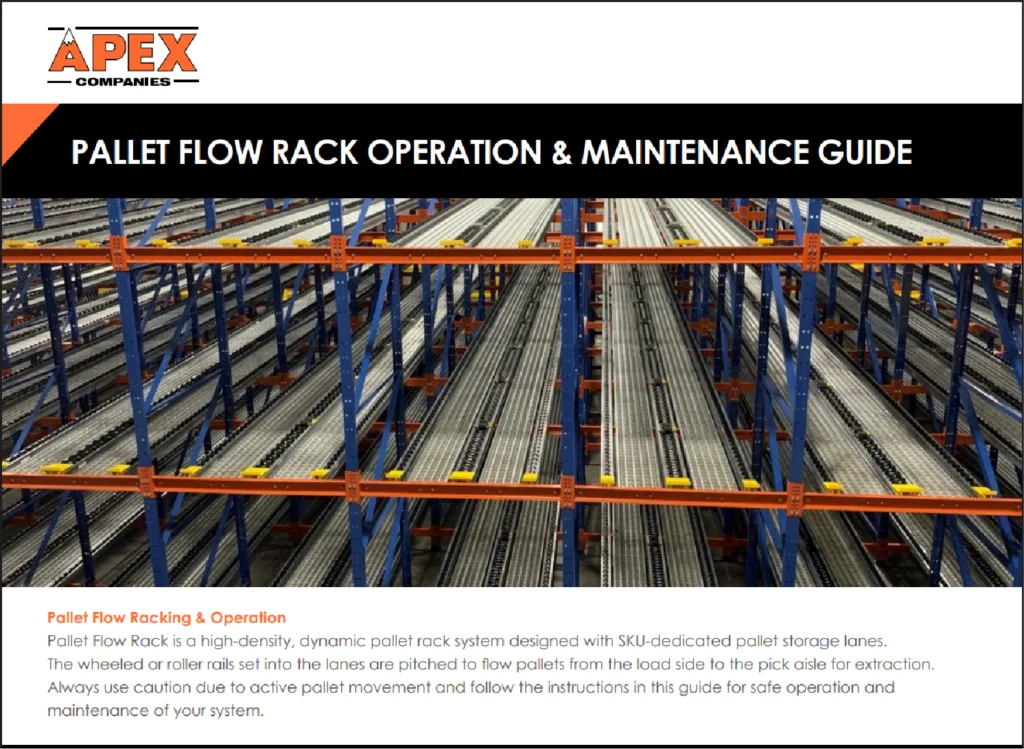
Pallet flow racking should be inspected regularly for structural damage, worn or malfunctioning flow components, debris or obstructions, and signs of system misuse. Establishing a maintenance schedule and documenting inspections also makes it easier to identify recurring problems before they become larger operational issues.
How often you inspect your pallet flow rack system depends on use, facility conditions, previous damage, and your facility’s maintenance and safety requirements. The important thing is to establish a regular inspection schedule and document what you find.
The Apex Pallet Flow Rack Operation & Maintenance Guide is a downloadable resource your team can keep on hand for pallet flow inspection, maintenance, operation, and troubleshooting. We’ll walk through those key practices here as well, starting with what to inspect.
Organize your inspection around four areas:
Rack Structure
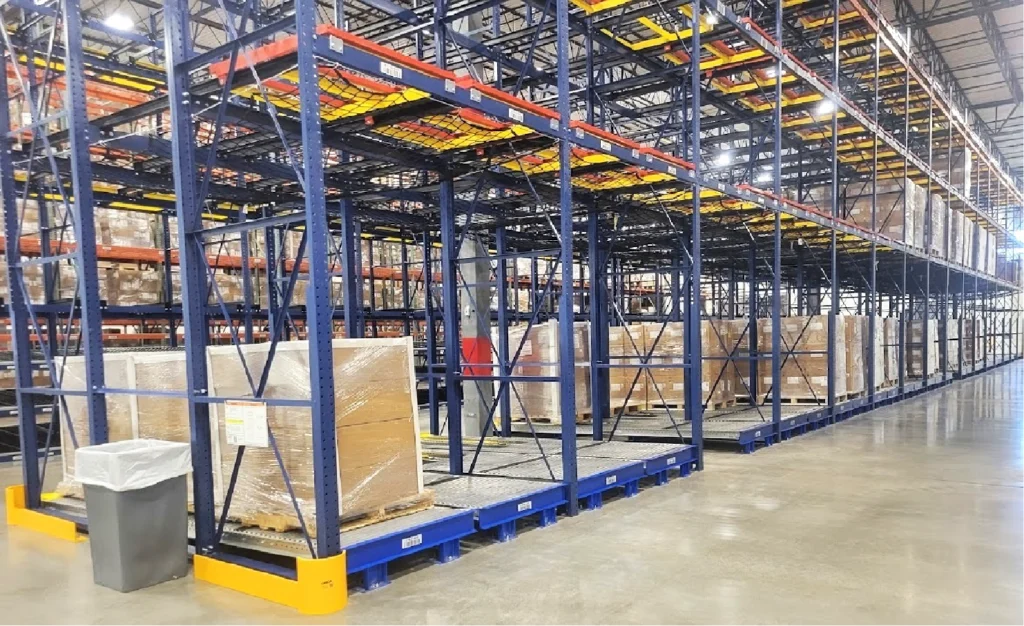
Inspect the pallet rack uprights, beams, connections, row spacers, and floor anchors. Look closely for signs of forklift impact or other structural damage, particularly in high-traffic areas.
Pay additional attention to previously repaired areas and locations with a history of impact.
Pallet Flow Lanes
Inspect flow rails and their connections to the beams or mounting tabs. Check wheels and rollers for damage or missing components, particularly in impact zones, and make sure the lane is free of debris that could obstruct pallet travel.
Pallet flow wheels and rollers are pre-lubricated and generally should not require additional lubrication under normal operating conditions. Facilities exposed to excessive moisture, corrosives, or dust may require additional cleaning or maintenance.
Flow-Control And Lane Components
Inspect the flow lane components for damage, wear, or anything that could interfere with pallet movement.
Depending on the system design, pallet flow lanes may also include accessories such as speed controllers, pallet separators, and entry guides.
If present, these components should be included in routine inspections:
- Check speed controllers for damage and proper resistance. During operation, watch for pallets that surge, slow abruptly, or produce unusual noise.
- Test pallet separators to verify that the mechanism operates properly and releases as designed.
- Inspect entry guides for damage and secure connections.
Finally, document inspections, damage, and completed repairs. If the same lane or component repeatedly requires attention, that maintenance history can help identify a larger system or operational problem.
Proper Pallet Flow Operation Helps Protect The System
Check Pallet Condition Before Loading
Step one is monitoring what you are placing into the system. Pallet condition and compatibility directly affect how loads travel through flow lanes. Before loading, operators should watch for damaged pallets, including missing or broken boards, protruding nails, uneven repaired surfaces, or damaged plastic pallet runners.
Pallets also need to match the size, style, material, configuration, and load-weight parameters used to design the system. Changing pallet types or configurations can change how the load interacts with the flow rails and any accessories installed in the lane.
Even a well-maintained pallet flow system can experience problems if pallets aren’t loaded and unloaded correctly.
Operators should be trained on the specific system and understand how pallet movement is supposed to occur before working with it.
Loading Pallet Flow Rack
Pallet flow rack uses gravity to move pallets through pitched flow lanes. The lanes slope downward from the charge/load side of the rack to the opposite discharge/pick aisle. When a pallet is loaded into the lane, it travels toward the pick face on wheels or rollers, with speed controllers used in some systems to help control the rate of travel.
Because the system relies on the pallet traveling properly through the lane, pallet condition, placement, and forklift technique are important to safe, consistent operation.
To load the system:
- Square the forklift with the pallet flow lane at the charge side.
- Raise the pallet approximately 3 to 4 inches above the flow rails, watching the height of the rack level above.
- Center the pallet in the lane and slowly lower and tilt it onto the rails, keeping it square with the front beam. Never toss or drop a pallet onto the flow rails.
- Once the pallet begins to flow away from the forks, slowly back out of the lane.
- Confirm that the pallet advances down the lane as expected before loading the next pallet.
Operators should not load visibly damaged pallets or loads that exceed the system’s rated capacity.
Unloading Pallet Flow Rack
At the pick face, square the forklift with the lane and engage the front pallet. Raise it approximately 3 to 4 inches to clear the flow rails, front beam, and ramp stop, then slowly back away.
As the front pallet is removed, the pallets behind it should advance toward the pick face. The forklift operator controls their advancement by slowly backing away from the system.
If the rear pallets do not advance, stop and reload the front pallet. A pallet that doesn’t flow as expected needs to be addressed before unloading continues. Here’s what to do when a pallet hangs up.
What Should You Do When A Pallet Doesn’t Flow?
A pallet that stops or fails to restart can have several causes. Damaged pallets, debris, settling, pallet weight, damaged wheels or rollers, and flow-control components can all affect movement.
The pattern can provide useful clues.
Random hang-ups throughout a system often point to pallet condition, pallet type, or load-weight issues. Repeated hang-ups at the same location may indicate debris, damaged wheels or rollers, or a problem with a speed controller.
Whatever the suspected cause, employees should never climb into a loaded pallet flow lane to free a pallet.
Addressing A Pallet Hang-Up
If a pallet does not advance properly, first check for an obvious cause such as pallet damage, debris, or a problem with the flow lane. If nothing is apparent, follow the appropriate hang-up procedure.
Plugging the Pallet Flow Lane
For a lane without pallet separators, the forklift operator can first try plugging the lane. From the discharge/pick side, engage the front pallet and gently push it back to engage the pallets behind it. Then slowly back away with the front pallet to see if the rear pallets begin flowing toward the pick face.
Important: Never plug a pallet flow lane equipped with pallet separators. Pushing pallets back against a separator can damage the separator mechanism and create additional problems in the lane.
Adding A Pallet
If plugging does not release the hung pallet, another pallet may be added from the charge/load side to help move the stalled pallet forward. If the pallet still does not flow, stop rather than continuing to add pallets to the lane. The cause should be evaluated by trained personnel before the lane is returned to normal operation.
Never enter a loaded pallet flow lane to clear a hang-up. If the cause isn’t readily apparent or there are concerns about the condition of the rack or flow components, an Apex rack inspection can help identify damage, component issues, and other conditions that may be contributing to the problem.
A Tipped Or Shifted Pallet Requires A Controlled Response
A pallet that is tipped, shifted, or seriously misaligned inside a pallet flow lane is different from a routine hang-up.
First, isolate the affected area and inspect the rack for visible damage. If beams, uprights, connections, or other structural components appear damaged, keep the area out of service until the rack can be properly evaluated.
For shallow pallet flow systems, trained personnel may be able to access a pallet from outside the rack. Deep-lane systems require a more controlled response because personnel access is limited, and stored pallets may be exerting significant pressure within the pitched lane.
Never enter the jammed lane. If access is required for a deep-lane recovery, the adjacent lane should be unloaded and secured to create the appropriate working area, with trained personnel following required PPE, fall-protection, equipment, and facility safety procedures.
See our complete guide, How To Fix A Tipped Pallet In Storage Racking, for pallet-flow-specific recovery procedures and guidance for other rack systems.
Recurring Pallet Flow Problems Need A Closer Look
Clearing a pallet hang-up solves the immediate problem. It doesn’t necessarily solve the cause.
Pay attention when:
- Multiple pallets hang up in the same location.
- Pallets repeatedly surge or travel faster than expected.
- Pallets slow abruptly in a particular part of the lane.
- A pallet separator doesn’t engage consistently.
- Wheels, rollers, or speed controllers repeatedly become damaged.
- Pallet flow changes after introducing new inventory or pallets.
These patterns can indicate damaged or obstructed components, incorrect pallet specifications, improper load weights, loading problems, or a system that no longer matches the application.
Before Changing Pallets Or Loads
Pallet flow lanes are designed around specific pallet and load characteristics. Before introducing a change, review:
- Pallet size and style
- Pallet material
- Load weight
- Inventory dimensions
- Stacking configuration
Changes to any of these factors can affect how the pallet travels through the lane and interacts with system components.
Keep Pallet Flow Rack Operating As Designed
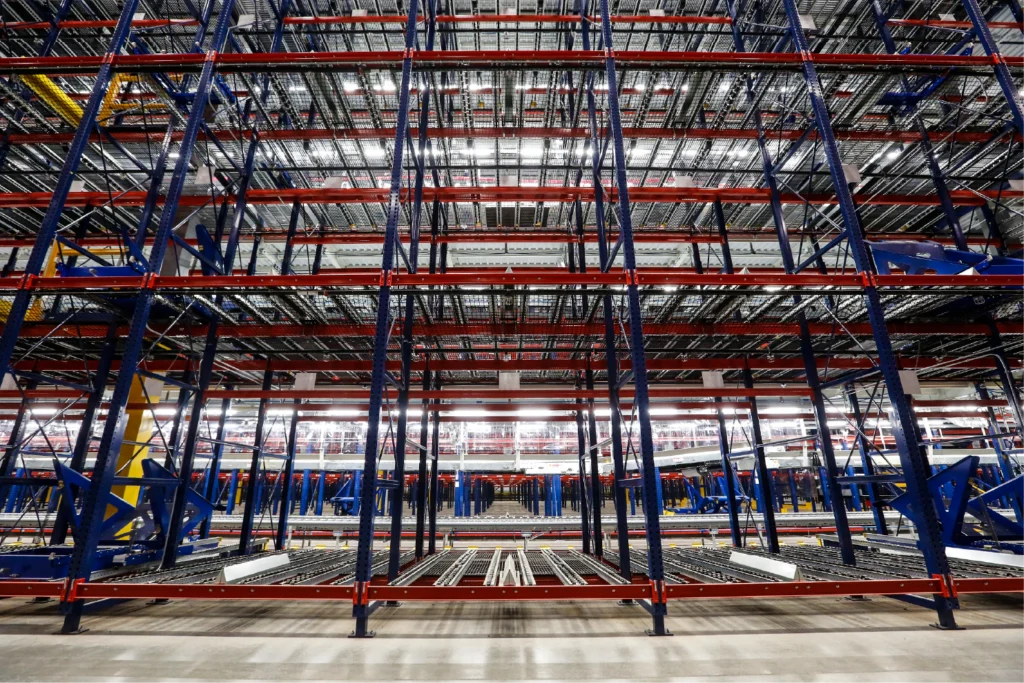
Pallet flow rack maintenance doesn’t have to be complicated, but it does need to be consistent. Routine inspections, compatible pallets, properly functioning flow components, trained forklift operators, and documented procedures for pallet hang-ups all contribute to reliable system performance.
Just as important, pay attention when the system behaves differently. A pallet that repeatedly hangs up, surges, tracks incorrectly, or fails to engage a separator is telling you something. Identify and correct the cause rather than making the workaround part of normal operation.
Apex can help inspect existing pallet flow racks, troubleshoot recurring flow problems, evaluate damaged components, and determine whether changes in pallets, inventory, or operating requirements require modifications to the system.
Talk To An Expert about your pallet flow rack operation and maintenance needs.
