
What Are the Best Warehouse Storage Solutions for Retail Distribution?

Explore These Warehouse Storage Solutions to Maximize Your Distribution Efficiency
Retail distribution is under more pressure than ever. With rising e-commerce demand, expanding SKU counts, labor shortages, and customer expectations for lightning-fast delivery, the challenges are many—but the solution can be as clear as choosing the right warehouse storage solutions for every step of the distribution process.
That’s where application-driven warehouse storage systems and warehouse automation solutions make all the difference. By maximizing vertical space, organizing SKUs by velocity, and streamlining pick-and-pack processes, retailers can dramatically increase throughput while reducing errors and operating costs.
What Makes Retail Distribution Unique?
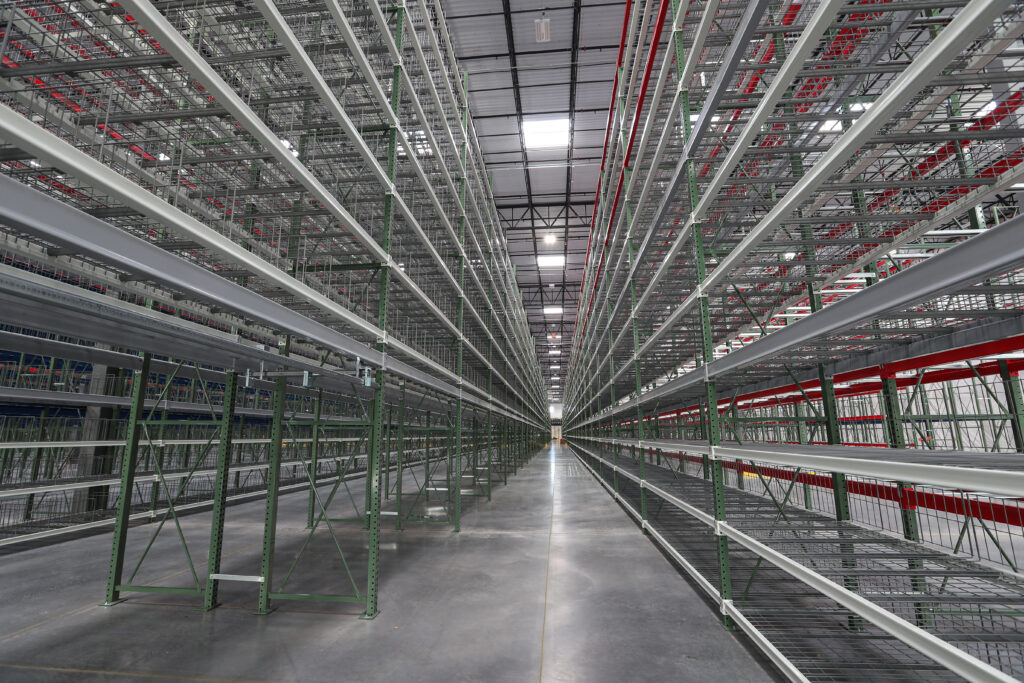
Retail warehouses don’t operate like traditional storage facilities—and they shouldn’t be designed like one either. Today’s retail distributors often face the dual challenge of fulfilling orders for brick-and-mortar stores alongside individual direct-to-consumer (DTC) shipments. These distinct fulfillment models place unique demands on storage systems, requiring a more strategic and responsive approach.
Here’s what sets retail operations apart:
- High SKU Counts
Retailers often manage thousands of individual SKUs, from fast-moving products to niche items, that require flexible storage systems that support dense organization without sacrificing access.
- Fast Turnover & Replenishment
The speed of retail moves fast—especially in direct-to-customer (DTC) fulfillment. Inventory needs to flow in and out quickly to meet daily order cycles, making accessibility and pick efficiency top priorities.
- Seasonal Surges
Holiday spikes and promotional campaigns can flood a facility with temporary stock. Systems need to scale and adapt without disrupting daily operations.
- Pick-and-Pack Operations
Unlike bulk shipping, retail often requires individual item picking. That means storage must support streamlined pick paths, ergonomic access, tracking, and accurate order fulfillment.
These conditions mean that general-purpose storage falls short. Apex designs warehouse storage solutions that align with the fast, fluctuating nature of retail distribution—ensuring your operation is always ready for what’s next.
Key Warehouse Storage Solutions for Retail Operations
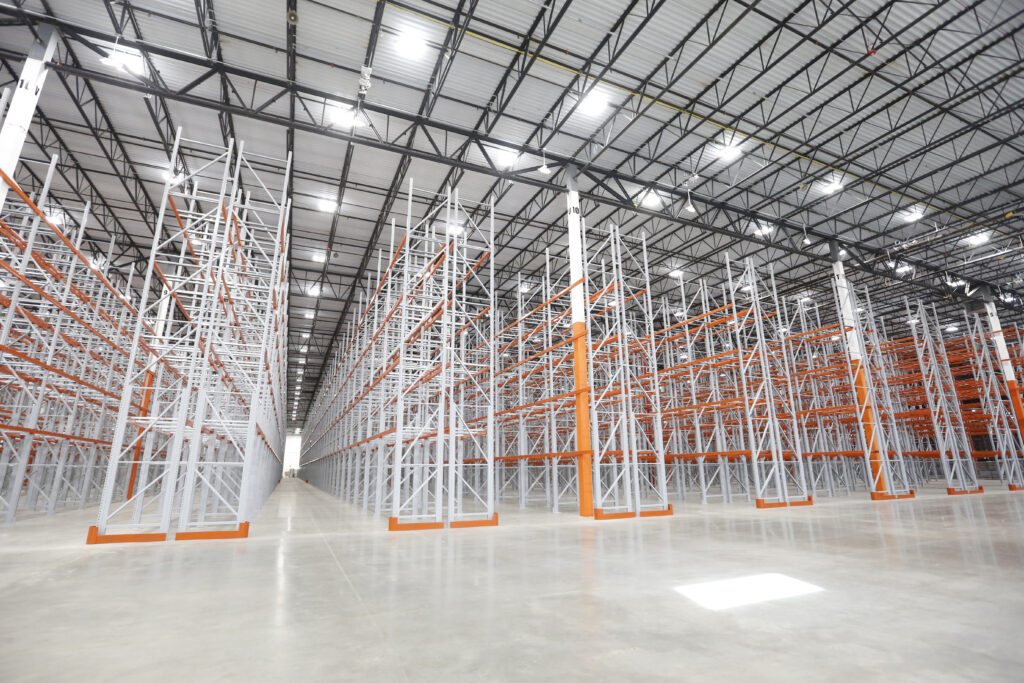
Retail distribution models vary widely, but successful ones are built on storage systems tailored to their specific fulfillment demands. From pallet racking and modular shelving to automation-ready configurations, the right setup turns operational complexity into streamlined, high-performance flow.
Let’s explore the most effective warehouse storage solutions supporting today’s retail distribution environments:
Pallet Racking Systems
Versatile and scalable, pallet racking forms the backbone of most warehouse storage layouts. For retail distribution, the key is selecting rack types based on inventory movement:
Selective Racking
Selective racking is a straightforward solution for full pallet storage. It is low-cost, high-capacity, and compatible with standard forklifts. It stores a single pallet deep and offers easy access to inventory. The floor-level and lower shelves can be used for picking eaches and cases from shelving or directly from pallets if properly equipped.
- Double-deep racking doubles capacity by storing two pallets deep but requires a deep-reach forklift with pantograph extension.
Narrow Aisle Racking
These systems are high-density variations of selective racking, designed to maximize both vertical and horizontal warehouse space. By reducing aisle widths—narrow aisle systems to as little as 9 feet, and very narrow aisle (VNA) systems to just 4–6 feet—facilities can fit more rack rows within the same footprint.
Narrow aisle racking is well-suited for case picking directly from pallet locations using specialty equipment such as turret trucks or order pickers. These vehicles access tall racking levels with precision, enabling high-throughput picking in a condensed space.
- Increases storage capacity without expanding footprint
- Supports both pallet storage and case picking
- Ideal for high-SKU inventory mix
- Requires specialty reach vehicles for access
Concentrated Pick Zones for Case or Each Pick Fulfillment
Concentrated pick zones are essential for meeting ambitious picking and fulfillment goals. These systems are designed to minimize travel time, improve accuracy, and support rapid, repeatable processes.
Pick Modules
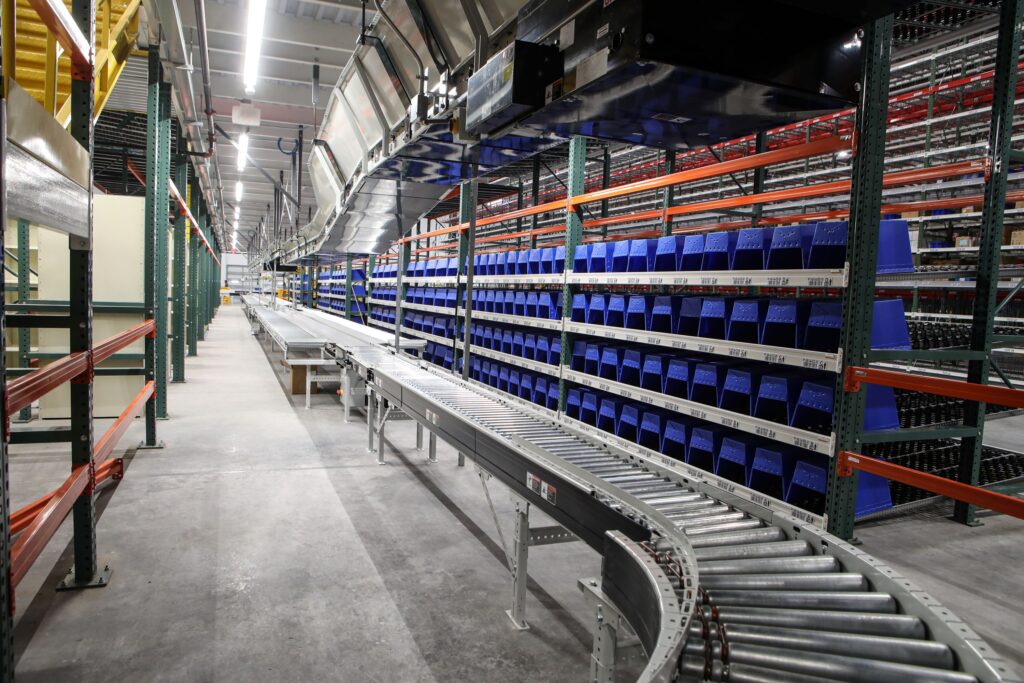
Pick modules are custom-engineered systems that integrate racking, shelving, flow racks, and conveyors to create optimized pick zones. Designed for fast, high-volume, multi-line fulfillment, these systems centralize SKU access and streamline the order picking process.
By incorporating automation technologies like pick-to-light, voice picking, and real-time tracking, you can virtually eliminate mispicks, accelerate throughput, and enhance customer satisfaction.
How they work:
- Eaches and cases are stored in carton flow rack or shelving to concentrate the pick area. For medium-throughput case picking, shallow pallet flow rack may be used at the floor level.
- The rack is loaded from the outside aisles to keep the center aisle free from forklift traffic.
- Optional conveyors can bring totes in or transport picked items out, streamlining the flow to packing and shipping areas.
- WMS and scanning systems guide pick paths and ensure inventory accuracy throughout the process.
Benefits include:
- Centralized, high-density SKU storage
- Concentrated pick area, minimal travel
- Seamless integration with inventory tracking system and conveyors
- Scalable for growth
Retailers handling thousands of daily orders benefit most from this type of solution.
Pick Tunnels
 |
 |
| Pick Tunnel Design |
Pick Tunnel Application |
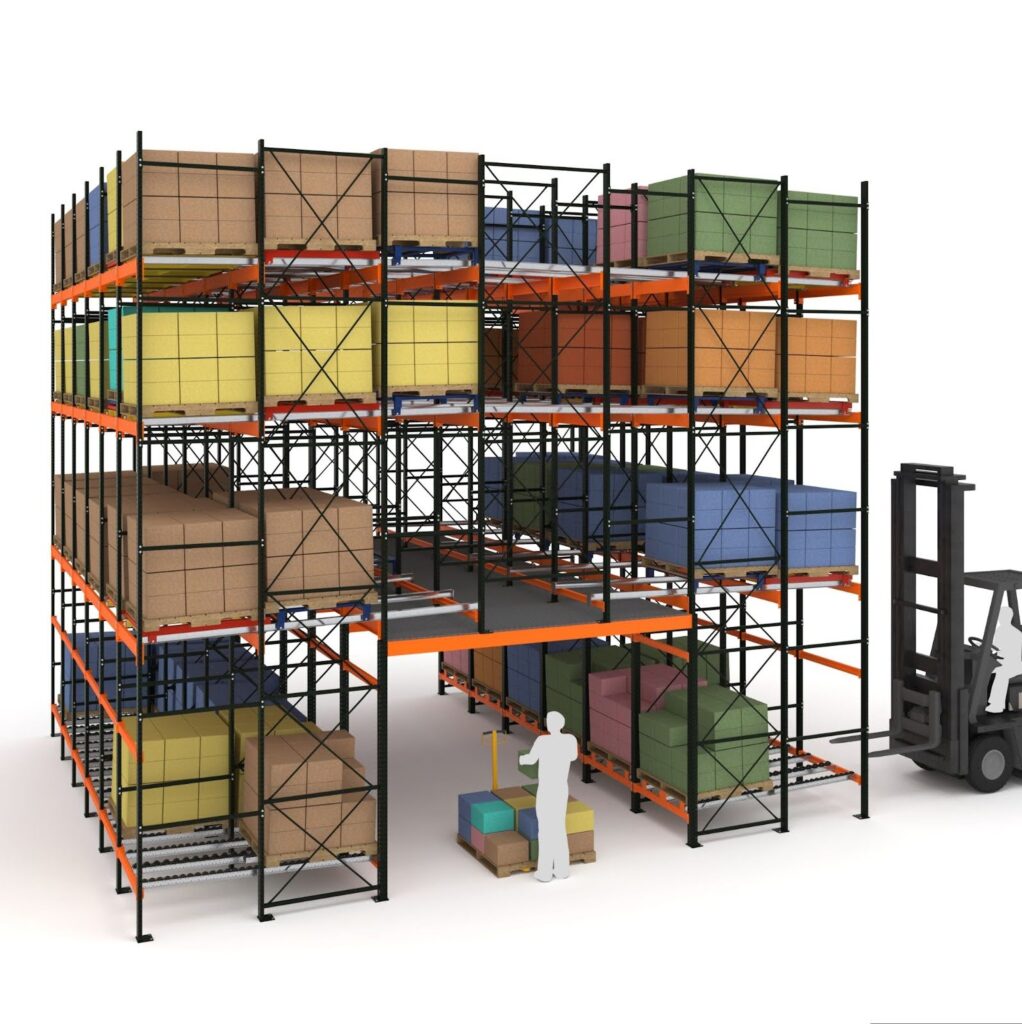
Pick tunnels are standalone fulfillment zones that combine ground-level case picking with palletized reserve storage above. This consolidated design packs productivity into a compact footprint—ideal for high-volume operations.
Typically, shallow pallet flow lanes are installed at the floor level for case picking from the front pallet. At the same time, push-back racking above holds replenishment stock—the result: reduced travel time, better access, and faster throughput.
How they work:
- Cartons are picked from the center aisle within the tunnel
- Upper-level push-back racks hold reserve stock to feed the pallet flow lanes belowForklifts replenish inventory from the outside aisle, safely away from the workers inside
Key benefits of pick tunnels:
- Maximize vertical cube with multi-level design
- Separate pick and load aisles for concurrent activity
- Minimize travel and forklift interference
- Boost productivity in high-throughput zones
Both pick modules and pick tunnels are ideal for fast-moving SKUs and can be tailored to fit your specific SKU profiles, order volumes, and facility layout.
Mezzanines
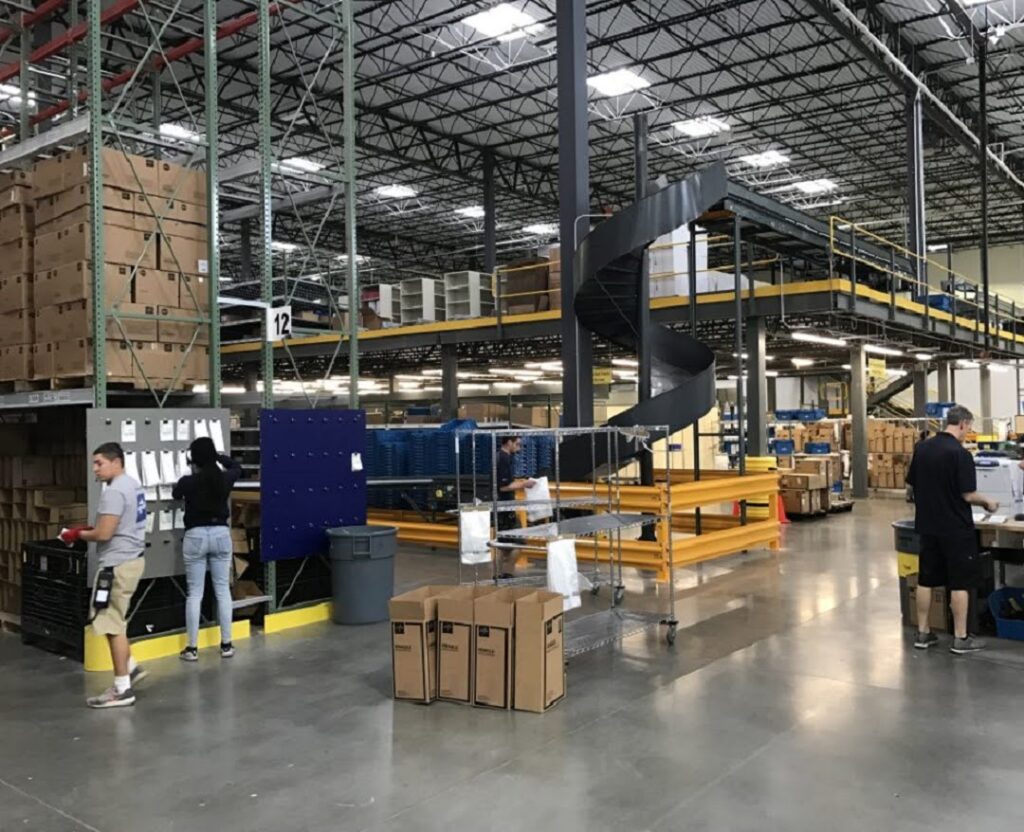 Mezzanine-Level Pick Module
Mezzanines are elevated platforms that optimize vertical space and create dedicated zones for packing, sorting, office space, or automation support—keeping key operations off the busy warehouse floor.
How They Work
- Single- or multi-level designs maximize warehouse space
- Multi-purpose platforms support storage, picking, kitting, and moreInventory is loaded via vertical reciprocating conveyors, forklifts, or integrated conveyor systems—depending on layout and application
Key Benefits
- Expands usable space without new construction
- Separates work zones to reduce congestion
- Customizable and scalable to fit your layout
Apex designs and installs custom industrial mezzanines engineered for safety, efficiency, and long-term performance.
Storage Systems for Carton, Case, and Specialty Item Picking
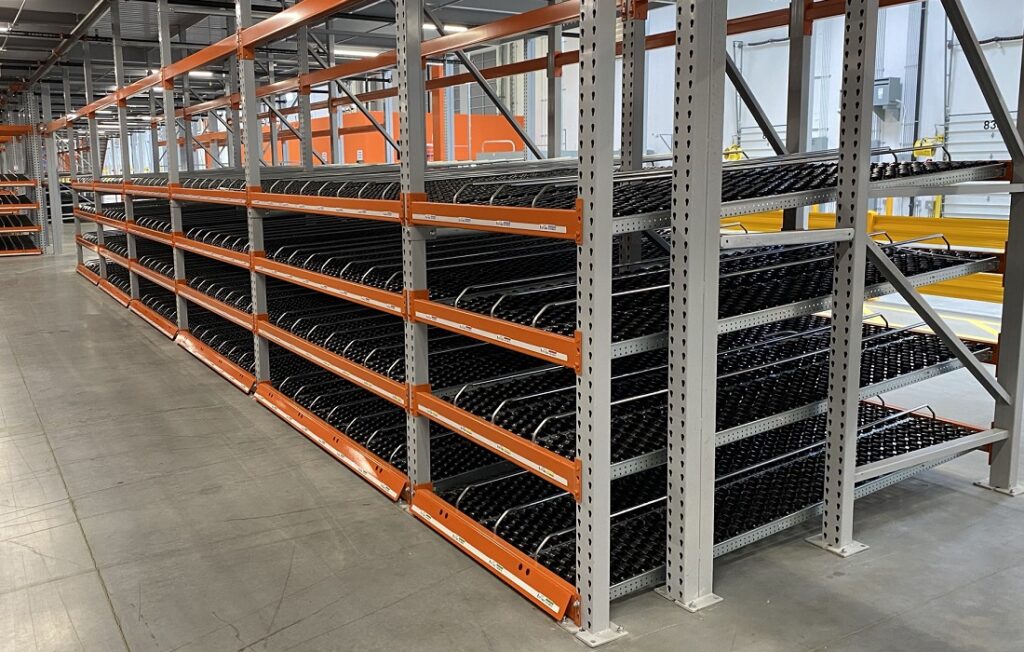
Carton Flow Rack with Lane Dividers
Now, let’s break down each system individually to explore how they function—and highlight specialty configurations built for unique retail inventory challenges.
Carton Flow Racking
Carton flow systems are high-performance solutions for full- and split-case picking in high-volume retail environments. These high-density racks use pitched roller lanes or wheeled tracks to automatically advance inventory from the load side to the pick face—keeping products front-facing and ready to pick, while minimizing restock delays.
Engineered for FIFO (first-in, first-out) inventory rotation, carton flow systems allow safe, simultaneous replenishment and order picking with separate load and pick aisles. Ideal for fast-moving SKUs, these systems thrive in e-commerce zones, pick modules, and multi-level operations.
How It Works
- Inventory is loaded from the load side and flows forward to the pick aisle
- Items remain front-facing and self-replenish as product is picked
- Separate load and pick aisles ensure uninterrupted replenishment and picking
- Mobile cart setups for flexible, on-the-go workflows
- Easily integrates with automation systems such as:
- Light-duty conveyors for zone-to-zone movement
- AMRs (autonomous mobile robots) for tote transfer
- Automated picking technologies for speed and accuracy
Key Benefits:
- Accelerates pick rates
- Reduces picker travel time
- Enhances picking accuracy
- Supports automation and scaling across zones
Whether implemented as a standalone solution or within a larger pick module, carton flow racking streamlines operations and supports higher order volumes with fewer touches.
Bin Storage (Dynamic Hanging Systems)
Ideal for high-SKU-count inventory like accessories, soft goods, or electronics, bin-style hanging storage systems make use of vertical space with suspended storage cells that hang within pallet rack frames.
- Consolidates hundreds of SKUs into a small footprint
- Provides ergonomic, front-facing access
- Reconfigures easily as inventory needs shift
These systems are especially valuable in e-commerce, apparel, and promotional item environments where SKU density and speed of access are top priorities.
Industrial Shelving
Industrial shelving provides a durable and economical solution for storing slower-moving SKUs, supplies, or returned goods. These modular units can be configured in open or closed styles, with optional dividers and support bins, boxes, or loose stock.
- Ideal for organized backstock or specialty items
- Supports manual picking and restocking
- Easy to label, clean, and re-slot as needed
Industrial shelving is commonly integrated into pick areas, staging zones, and quality control stations for added flexibility and functionality.
Garment on Hanger (GOH) Storage
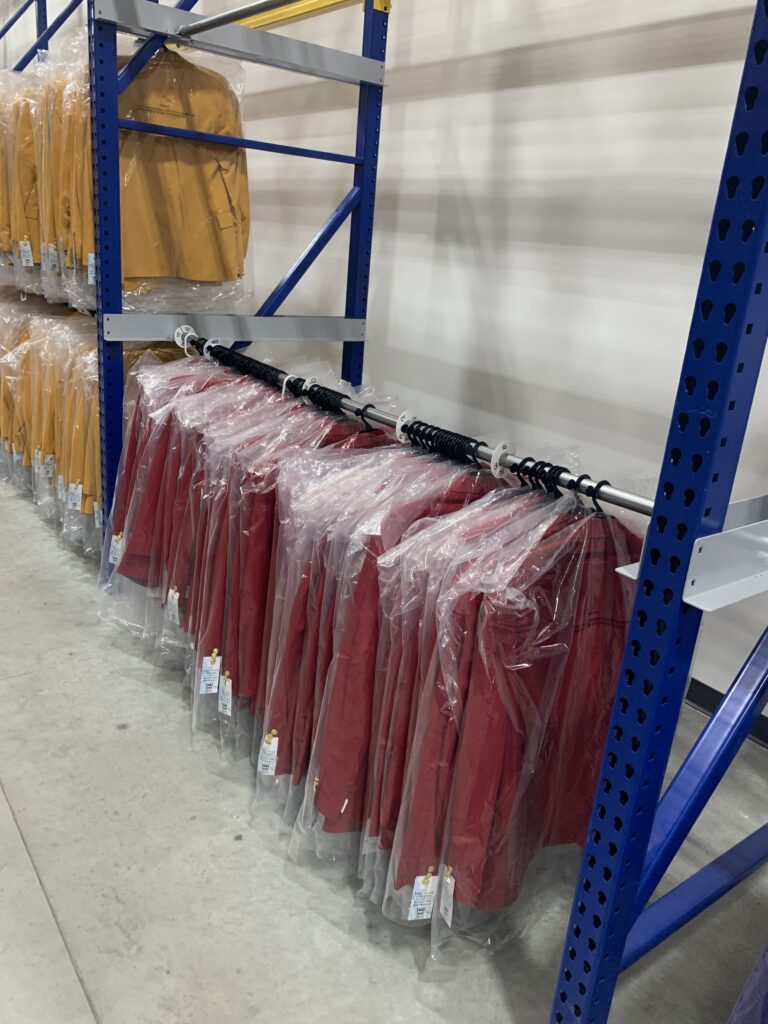
Explicitly designed for apparel distribution, GOH systems store garments wrinkle-free and ready to ship. Using overhead tracks or rack-mounted bars, these systems keep hanging inventory organized and easily retrievable.
- Maximized vertical space usage
- Quick visual identification and retrieval
- Reduced handling time compared to folded apparel
GOH systems integrate smoothly into racking, preserving garment quality.
Retail-Focused ASRS: Fast, Accurate, and Scalable Picking Automation
Automated Storage and Retrieval Systems (ASRS) boost picking speed, inventory accuracy, and space efficiency by using robotic systems to store and retrieve inventory from high-density racking. Ideal for high-volume, small-item fulfillment, ASRS reduces labor demands and supports around-the-clock operation.
Key system applications for retail include:
Mini-Load ASRS for Retail Fulfillment

Mini-Load ASRS Storage Solution
Mini-load systems are ideal for storing and picking smaller, lightweight items in retail and e-commerce operations. They use fast-moving cranes or robotic arms to handle totes or trays stored in tall, narrow aisles—maximizing vertical space and throughput.
How They Work
- Items are stored in totes, trays, or cartons within dense racking
- Robotic shuttles or cranes automatically retrieve items and deliver them to pick stations
- WMS integration directs item location, movement, and replenishment
Key Benefits of Mini-Load ASRS:
- Speeds up order fulfillment with rapid tote delivery
- Ideal for high-SKU-count, small-item inventory
- Minimizes footprint while maximizing storage density
- Integrates easily with WMS and picking automation
Autonomous Mobile Robots Tackle Retail Demand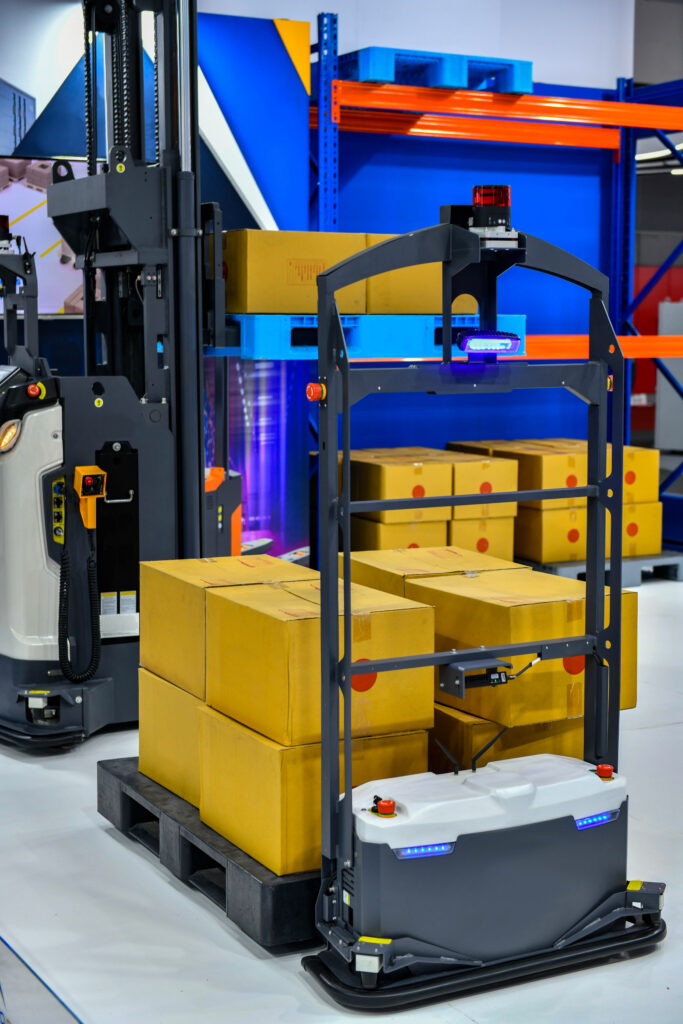
AMRs are flexible, intelligent transport systems that operate without the need for fixed infrastructure. In high-SKU, high-throughput retail operations, AMRs accelerate order fulfillment by adapting in real time to traffic, workflows, and shifting demands.
These systems are scalable and ideal for supporting human pickers—reducing walking time and boosting productivity without disrupting layout.
How They Work
- AMRs are guided by maps, sensors, and onboard intelligence—not fixed paths
- They transport goods between zones: picking, packing, replenishment, etc.
- Integration with WMS ensures real-time coordination and task prioritization
Key Benefits of AMRs:
- Improves speed and accuracy of order movement
- Reduces picker travel and fatigue
- Scales easily with demand—no infrastructure changes needed
- Ideal for fast-moving, multi-zone operations
Apex deploys AMR solutions as part of integrated automation strategies, optimizing flow across picking, replenishment, and pack-out zones.
Every retail distribution operation is different, but they all benefit from storage solutions designed with purpose. Apex engineers tailor-fit systems that align storage with strategy—so you’re not just storing inventory, you’re moving it smarter and faster.
Q & A – Matching Storage Solutions to Retail Distribution Examples
Your distribution model determines SKU behavior, order patterns, and picking requirements, so aligning your storage solutions is critical. Here are three common retail distribution models and how Apex can tailor storage strategies to match:
High-Volume E-Commerce Fulfillment
Q: How can e-commerce facilities optimize order picking for small, mixed-SKU orders?
A: In high-volume e-commerce operations, speed and efficiency are critical. To meet demand, fast-moving SKUs should be stored close to the picking area, replenishment processes must be seamless, and storage systems should be designed for high-pick accuracy with minimal travel time.
Ideal solutions include:
- Pick Modules – Integrated storage and conveyor systems that consolidate high-demand SKUs into optimized pick zones
- Carton Flow Racks – Provide FIFO inventory rotation and keep pick faces continuously stocked
- Mini-load ASRS or tote-based shuttle systems – Ideal for dense SKU storage and automated retrieval
- WMS Integration – Guides pick paths and inventory levels in real time, reducing errors and improving productivity
High-volume e-commerce operations can benefit from ASRS to reduce picker travel, accelerate order fulfillment, and improve inventory control—especially in tightly packed or labor-constrained environments.
Omnichannel Retail Distribution
Q: What storage challenges do omnichannel retail distribution centers face?
A: Retailers fulfilling both in-store replenishment and direct-to-consumer (DTC) orders must manage full pallet loads and individual picks simultaneously. Their storage systems need to support both workflows efficiently without slowing down either.
Recommended systems include:
- Selective Racking – Enables efficient inventory management for store replenishment
- Dynamic Pick Faces – Carton flow or shelving integrated at ground level for e-commerce order picking
- Conveyor or Automation Integration – Links storage zones and streamlines multi-channel order assembly
- Tote-based ASRS – For retailers handling large volumes of DTC small-item orders alongside bulk shipping
Integrated systems with automated sortation, goods-to-person technology, or ASRS can accelerate order consolidation while allowing bulk storage and individual picking to coexist in a single, optimized layout.
Seasonal or Specialty Retailers
Q: What storage systems work best for seasonal or specialty retailers?
A: Retailers handling frequently changing product lines, promotional items, or seasonal demand spikes need highly adaptable storage systems. With constantly shifting SKU counts and product sizes, flexibility is essential to keep operations running smoothly.
Best-fit solutions include:
- Modular Shelving – Adjustable shelves that can be re-slotted or moved as needed
- Mobile Carts & Workstations – Allow quick reconfiguration of pick lines or staging areas
- Bin Storage Hanging Systems – Compact storage for small items, accessories, or soft goods with fast visual access
These solutions provide agility without sacrificing organization—helping teams adapt quickly between seasonal peaks.
Your Warehouse Storage Strategy Starts Here
Whether you’re managing a high-volume e-commerce operation, balancing omnichannel fulfillment, or navigating seasonal inventory swings, the right warehouse storage solutions can transform your distribution performance.
At Apex, we don’t just sell racking or shelving—we design fully integrated solutions tailored to your workflow, space, and growth goals. From in-depth facility analysis and CAD design to equipment installation and long-term support, we deliver solutions that work now and scale with you later.
Let’s talk about how we can help you:
- Improve space utilization
- Increase order accuracy and speed
- Enhance safety and workflow efficiency
- Future-proof your distribution center
Contact the Apex team today to schedule your warehouse assessment or explore more about our Storage Solutions and Warehouse Design Services.
