
How to Improve Warehouse Efficiency with Gravity Flow Rack Solutions

Gravity Flow Rack: Get to Know Pallet Flow and Carton Flow
When productivity and SKU organization are priorities, gravity flow rack systems deliver efficient, power-free storage solutions. These dynamic, high-density systems rely on gravity to guide stock down SKU-segmented lanes, arriving at the forward aisle ready for seamless extraction, thereby supporting a First-In/First-Out (FIFO) inventory flow.
Whether you’re storing and moving full pallets or individual cartons and totes, gravity flow rack systems offer a purpose-built solution. Pallet flow handles heavier, high-volume loads, while carton flow is ideal for case or each-pick applications. Both system designs minimize travel time, improve pick accuracy, and maximize your warehouse footprint. But knowing when—and how—to deploy each system is key.
In this guide, we’ll walk through the most common use cases for both pallet flow and carton flow, give you layout ideas, and share spec tips that save time and money down the road.
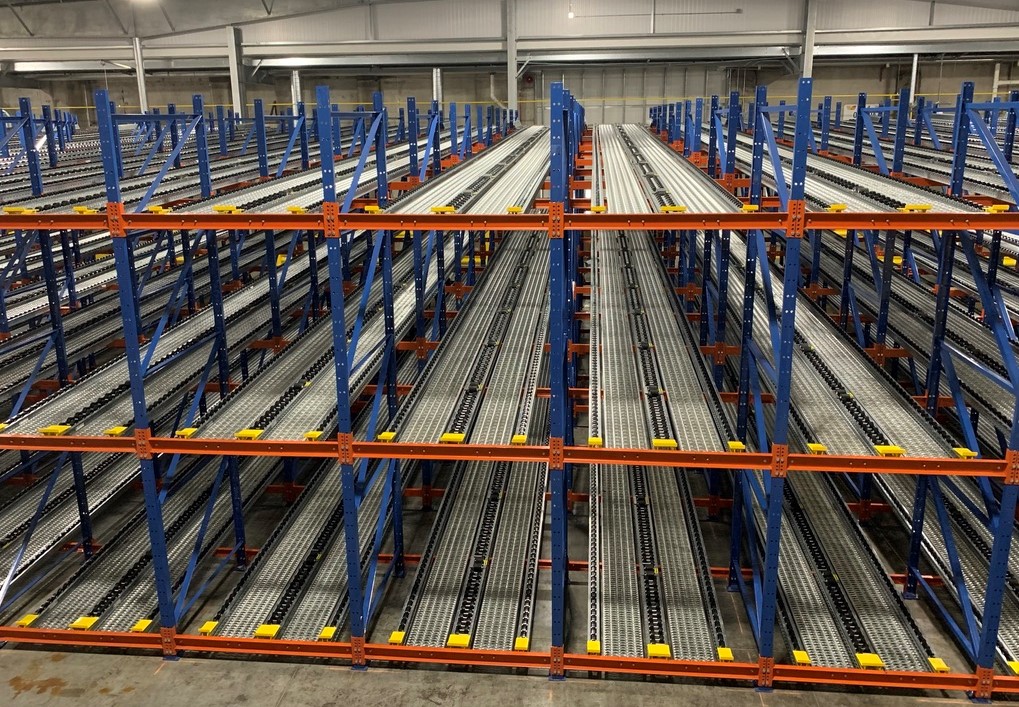 |
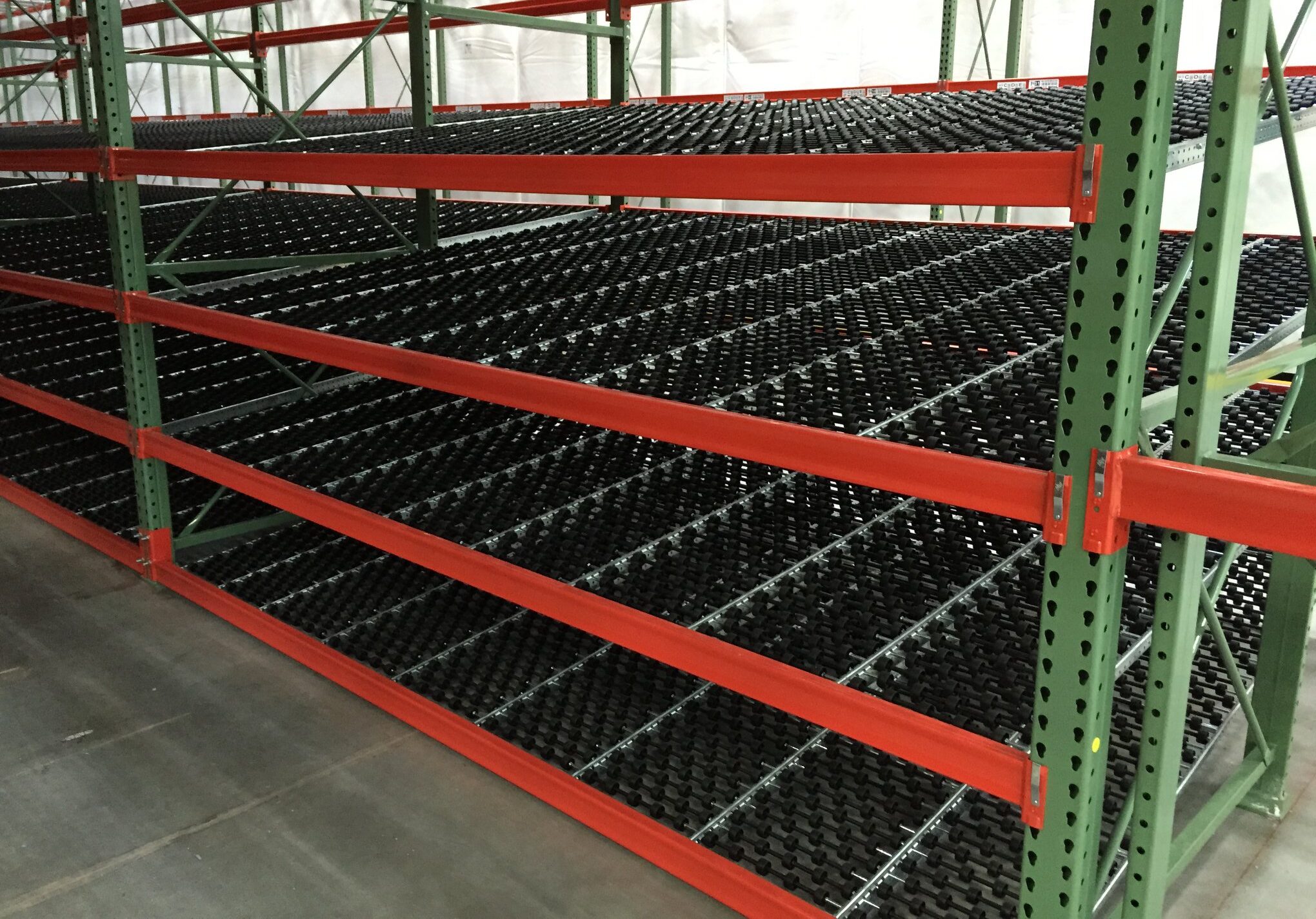 |
| Pallet Flow Rack | Carton Flow Rack |
What Is a Gravity Flow Rack System—and When Should You Use It?
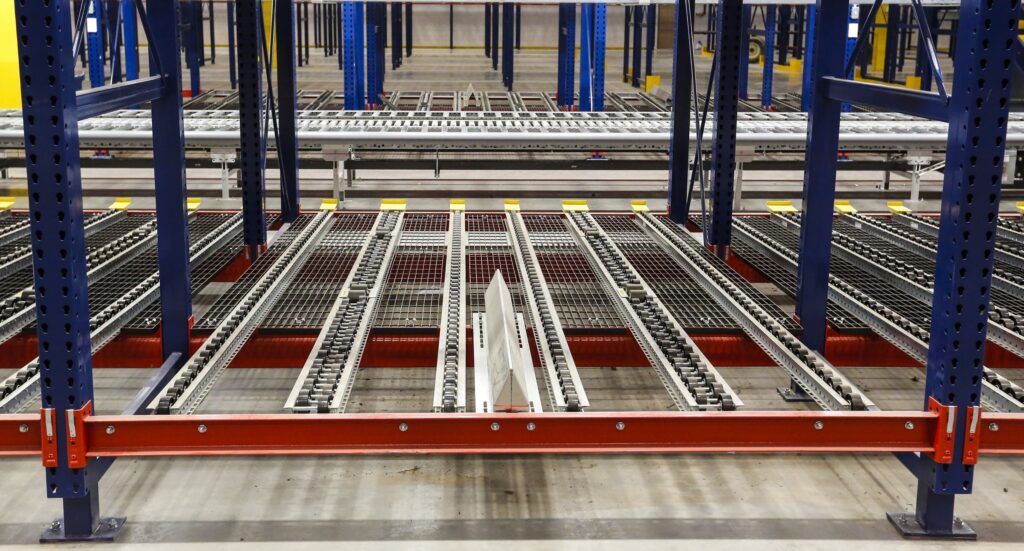
Pallet Flow for Case Picking
Gravity flow rack turns static storage into active inventory. These systems rely on a design featuring opposite load and pick aisles connected by inclined rollers or wheeled rails that automatically move inventory down to the pick face—no motors or electricity required.
Benefits of gravity flow systems:
- High-density consolidated storage with dynamic pick faces
- Power-free, low-maintenance operation
- Dedicated SKU lanes
- Separate replenish and pick aisles for concurrent activity
- Reduced travel paths for workers
Where Pallet Flow Rack Systems Deliver the Most Value
 Pallet flow systems can be designed for a variety of applications. The most common is a high-density storage system. Pallet flow lane depth (up to 20+ deep) rivals that of pallet shuttle systems, but without the automation requirement. Due to the pitched lane design, the pallets in the lane automatically advance to replenish the front pick position with each pallet extraction. Built for First-In/First-Out (FIFO) inventory management, pallet flow is ideal for high-throughput, high-turn environments with limited space.
Individual pallet flow lanes are also beneficial in full-case picking applications with fast-turn inventory and/or for mixed-SKU pallet building.
Whether you’re picking cases to put on a conveyor for packing or building a full pallet, the speed, safety, efficiency, and space use of pallet flow beats pallet stacking as an alternative.
Here are common scenarios where pallet flow wins:
-
FIFO for Date- or Code-Sensitive SKUs
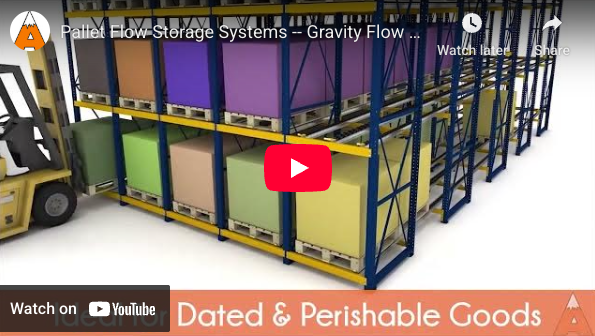
Perfect for industries where inventory rotation is critical—like food, beverage, pharma, and consumer packaged goods. Pallet flow ensures older inventory is picked first without re-handling or tracking pallets manually.
-
Shipping Lane Buffer Zones
Use shallow pallet flow lanes—2 to 4 deep—to stage outbound loads near dock doors. This decouples picking from loading, improves staging efficiency, and supports wave-based shipping strategies.
-
Assembly and Kitting Feed
Stage components or work-in-progress (WIP) pallets for manufacturing lines. Pallet flow lanes ensure FIFO delivery to assembly zones and pair well with adjacent carton flow for small-part fulfillment.
-
Cold Storage Efficiency
Deep-lane pallet flow reduces cold-room travel time. Use galvanized components and heavy-duty wheel rails designed for low-temperature environments. Built for durability and consistent flow in harsh conditions.
-
High-Velocity Case-Pick
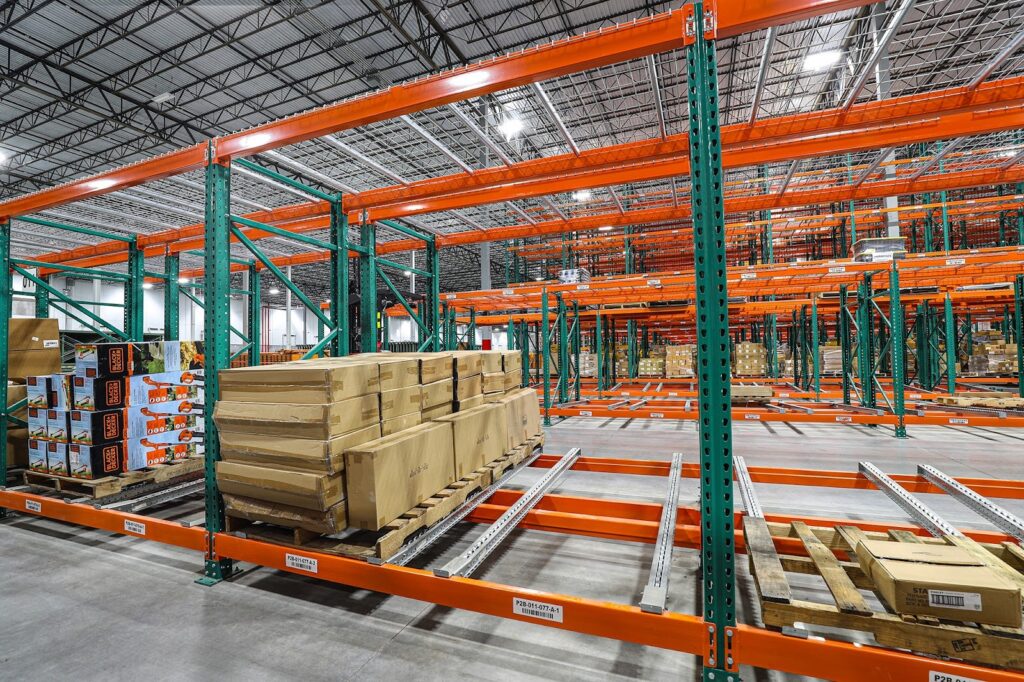
Case Pick from Pallet Flow
Pallet flow is a great fit for case picking. The pitched lane design continuously feeds product to the pick face from reserve inventory in the lane, helping avoid replenishment slowdowns.
You’ll also often find shallow pallet flow lanes mixed within pick modules to streamline inventory flow for the faster movers, while carton flow handles the medium-turn case picking and slower-turn each picks. Pallet flow lanes can be equipped with lift tables or ball transfer mats to facilitate easier task management for workers.
-
Mixed-SKU Pallet Building/Layer Picking
Pallet flow lanes can support high-turn inventory used to build mixed-SKU pallets or to perform layer picking. Compatible with forklift layer-picking attachments and overhead cranes, these setups streamline order consolidation and replenishment for retail, club stores, or route-based distribution.
(Caption: Layer Pick with Pallet Flow Lanes)
-
LIFO Pallet Storage
Pallet flow systems can be configured for single aisle access to load and pick inventory. This push-back flow rack design offers several benefits over traditional push-back cart systems. Push-back flow rack lanes can extend to 12 pallets, compared to 5 in conventional setups. They also allow for pallet variation within the lane, which is restricted in the cart systems.
Pallet Flow Design Considerations
- Set lane depth based on SKU turns
- Use accessories such as:
- Speed controllers – maintain safe speed and tracking.
- Pallet separators – create a small space between pallets in deep lanes.
- Entry guides – help forklift operators center the pallet within the lane.
- Define pallet specs (e.g., GMA, bottom deckboards, wood/plastic)
- Use appropriate safety guards to protect the system and workers
Explore our pallet flow rack gallery.
Why Use Carton Flow Rack Systems in Your Warehouse
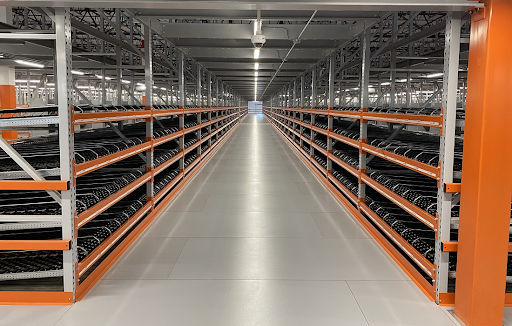
Carton flow rack systems create high-density shelving for cartons, totes, or cases. With separate load and pick aisles, carton flow supports simultaneous work and keeps workers away from forklift traffic. The pitched design automatically replenishes pick faces as product is removed, while deep shelves hold ample reserve inventory to reduce restocking downtime.
This dynamic system brings inventory to the picker, improving picking speed and accuracy while reducing labor demands.
Here are the benefits you can achieve with carton flow rack:
-
Faster Picks, Less Walking
Carton flow consolidates inventory into high-density pick zones, presenting items at the pick face and minimizing the need to reach, walk, or search. Pickers stay in the zone, and productivity goes up—especially when integrated near pack-out or coordinated with conveyors to advance inventory to pack zones.
-
Concurrent Picking and Restocking
Because carton flow separates replenish and pick aisles, you can restock from the back while picking continues at the front—keeping workflows moving without congestion.
-
Supports FIFO Inventory Control
The gravity-fed design ensures first-in/first-out product rotation. That’s critical for perishable goods, date-sensitive SKUs, and regulatory compliance in food, beverage, pharma, and cosmetics.
-
Improves Ergonomics and Safety
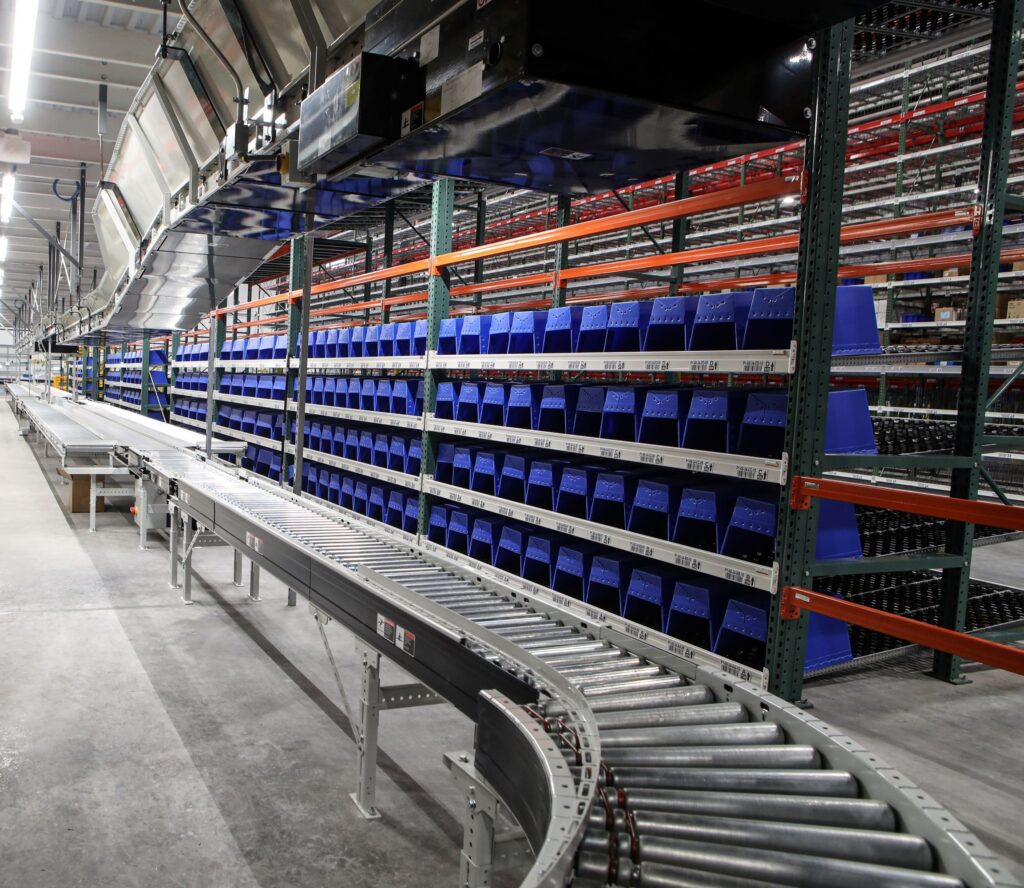
Products are presented at ergonomic heights, reducing bending, reaching, and physical strain. That leads to fewer injuries and more sustainable pick rates over time.
-
More Slots, Better Space Use
Carton flow offers more pick faces per bay than static shelving, and keeps items in order in SKU-designated lanes, increasing slotting efficiency and picking accuracy.
(Caption: Carton Flow Pick Aisle with Tote-Stored Inventory )
-
Adaptable for Split-Case and Full-Case Picks
From each-pick to full-case fulfillment, carton flow can be configured to match your SKU mix using either full-width rollers or wheel beds, depending on the product type.
Explore our carton flow rack gallery.
Pallet Flow vs. Carton Flow: Side-by-Side Comparison
Feature |
Pallet Flow |
Carton Flow |
| Order Profile | Full pallet or case-pick from pallet | Case-pick or each-pick from cartons or totes |
| Primary Value | High-density FIFO storage and staging | Fast, ergonomic picking with automatic replenishment |
| Best Use Cases | Date-sensitive SKUs, cold storage, pallet building, shipping buffers | E-comm, D2C, kitting, parts picking, quick-to-med-turn inventory fulfillment |
| Typical Placement | Storage, near docks, production lines, or WIP staging | Adjacent to pack-out, pick modules, or assembly zones |
| Replenishment Method | Rear-loaded by forklift | Rear-loaded by hand (cases, totes, cartons) |
Design Tips That Save You Later
- Pallet Flow:
- Confirm pallet quality – only use pallets of good or better condition in the lanes
- Consider available accessories such as speed controllers, pallet separators, and entry guides to ensure a safe flow rack design and seamless function
- Carefully establish lane pitch based on load weight & pallet style
- Carton Flow:
- Choose wheeled tracks for mixed-sized cartons/inventory
- Choose rollers for uniform loads
Consider tilt/angle trays along the pick aisle for ergonomic and visual advantages
Quick ROI Levers
- Reduced travel—pickers stay put while product flows
- Fewer touches—less expired stock or rework
- Higher pick rates—automatic pick face replenishment, deep lane reserves
- Lower energy use—no motors, minimal maintenance
- Faster re-slotting—SKU-designated design adapts easily to reslotting
See the Difference with Apex Gravity Flow Systems
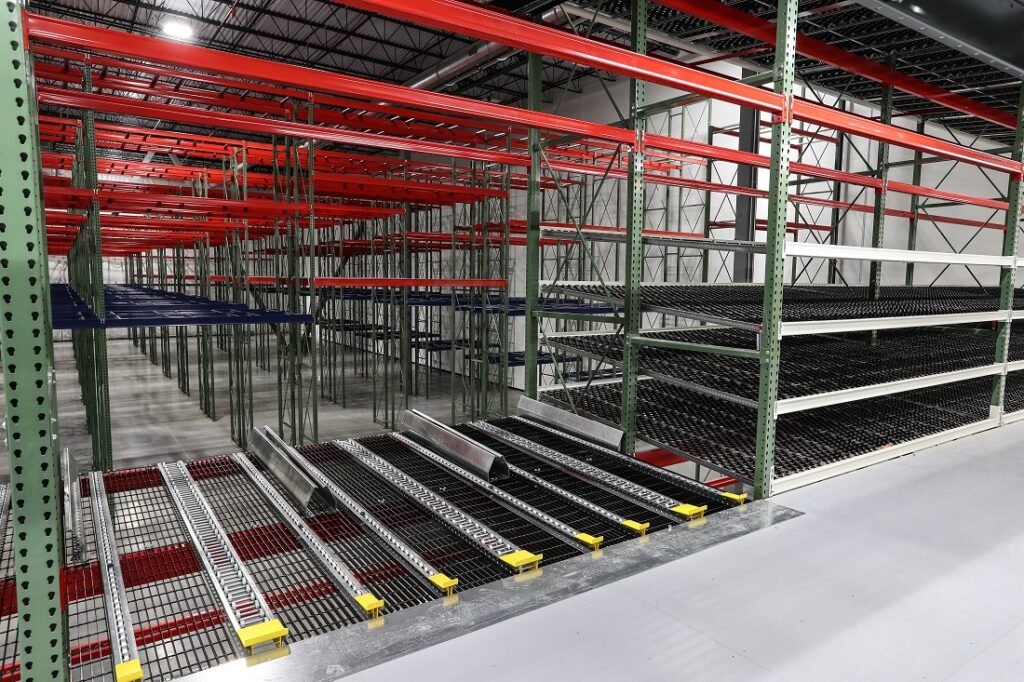
Pick Aisle: Pallet Flow Left/Carton Flow Right
From smarter slotting to streamlined picking, gravity flow rack systems help you do more with less. Whether you’re building a new system or optimizing an existing one, our team can help you design a flow strategy that supports safety, speed, and SKU control.
📌 Check out our Pallet Flow and Carton Flow Systems
Book a Site Walk-Through – We’ll verify your specs, map your FIFO lanes, and build a customized plan to help you meet your operational goals.
