
Using ASRS Systems to Streamline JIT Parts Storage

How To Evaluate ASRS Solutions For Efficient, Reliable JIT Parts Storage
Just-in-time (JIT) manufacturing minimizes inventory by delivering materials and components only as they are needed for production. However, success depends on having the right parts available at exactly the right time. When labor capacity and storage systems can’t keep pace with production schedules, manufacturers may face stockouts, excess inventory, inefficient labor use, and costly production delays. At the same time, valuable production floor space is often consumed by shelving, racks, and staging areas needed to support extensive parts inventory.
ASRS systems can help manufacturers support JIT operations by consolidating a large number of parts into a compact, organized storage system, improving inventory accuracy, reducing travel time, and delivering components to production quickly and reliably. When properly integrated into a manufacturing environment, an automated storage and retrieval system (ASRS) can help create a more efficient flow of materials while maximizing available cube space. Selecting the right ASRS depends on your inventory profile, production workflow, and long-term operational goals—not simply the amount of inventory you store.
Key Takeaway
Automated storage and retrieval systems help manufacturers support JIT production by improving inventory accuracy, maximizing storage density, and delivering parts to production consistently and efficiently.
Benefits at a Glance
- Increase storage density without expanding the facility.
- Improve inventory accuracy and traceability.
- Deliver parts consistently to production.
- Reduce labor spent searching for and transporting parts.
- Reclaim floor space for value-added manufacturing.
What Makes JIT Parts Storage Different from General Warehouse Storage?
Storing manufacturing parts is fundamentally different from storing finished goods in a traditional warehouse. Production environments rely on a continuous flow of components, making inventory availability just as important as inventory quantity.
JIT operations often involve thousands of small SKUs stored in bins, totes, trays, and specialized containers. Components may be picked individually or in kits and replenished throughout the day to support changing production schedules. Selecting the correct component is essential because a missing or incorrect part can delay production, create rework, or disrupt downstream processes.
Reliable inventory records and traceability help ensure parts are available, located quickly, and delivered to the correct workstation or assembly process. Production teams have little tolerance for searching, mispicks, or replenishment delays, so parts storage must support consistent, accurate material flow.
Why Are ASRS Systems a Good Fit for JIT Manufacturing?
ASRS systems are well-suited for JIT manufacturing because they address many of the operational challenges associated with storing and retrieving production parts.
- High-density storage: ASRS systems use vertical cube and/or compact footprint to store a large volume of inventory. This can reduce reliance on long rows of shelving or racks and avoid the specialized lift equipment used with narrow-aisle and high-bay storage. Because the system brings stored items to the operator, manufacturers can reclaim floor space without sacrificing access to parts.
- Predictable, consistent retrieval: Instead of requiring operators to travel through the facility to locate inventory, the system automatically retrieves the required parts and delivers them to a workstation. This supports scheduled replenishment and reduces variability in material handling processes.
- Priority order flexibility: Depending on the ASRS and its inventory management software, some systems can prioritize “hot” orders when parts are needed urgently. This allows time-sensitive requests to move ahead in the queue and helps production teams respond to changing priorities without disrupting the overall workflow.
- Improved inventory visibility: Integrated inventory management software tracks storage locations, inventory movement, and transaction history in real time. Better visibility can improve inventory accuracy and support traceability requirements in regulated or quality-sensitive operations.
- Reliable replenishment to production: Whether supporting assembly lines, kitting operations, or point-of-use inventory, automated retrieval helps make components available when production needs them while reducing manual handling and unnecessary travel.
ASRS systems can also help simplify inventory replenishment within the system. Depending on the ASRS and its inventory management software, minimum and maximum inventory levels can be established to trigger replenishment requests through the host inventory system when stock runs low. Replenishment may be scheduled during system downtime or incorporated into daily operations by switching a workstation from picking to replenishment mode.
Which ASRS Systems Work Best for JIT Parts Storage?
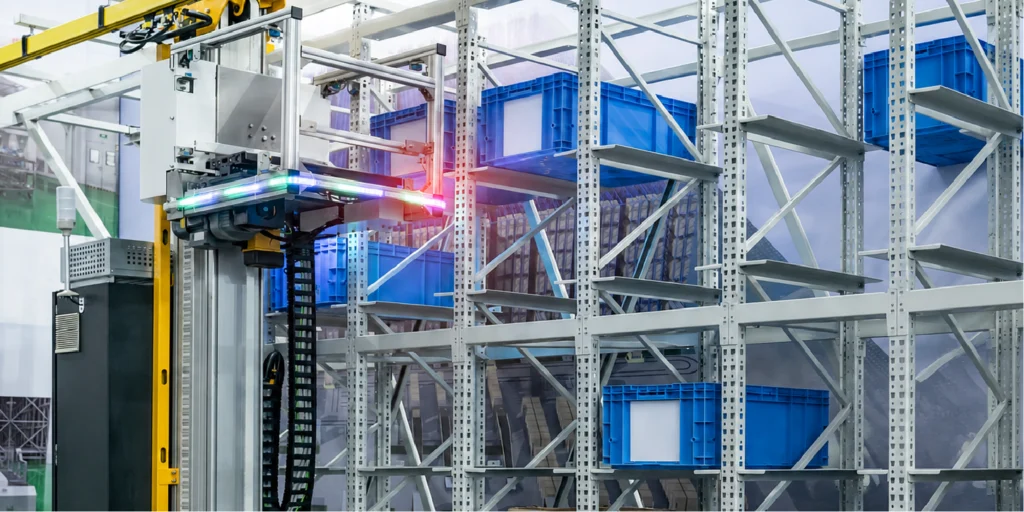
Several types of ASRS systems can support JIT manufacturing, with each designed to address different storage and workflow requirements. The right solution depends on factors such as part size, SKU count, throughput, available space, and how inventory is supplied to production. Understanding the strengths of each system helps manufacturers identify the best fit for their operation.
Vertical Lift Modules (VLMs)
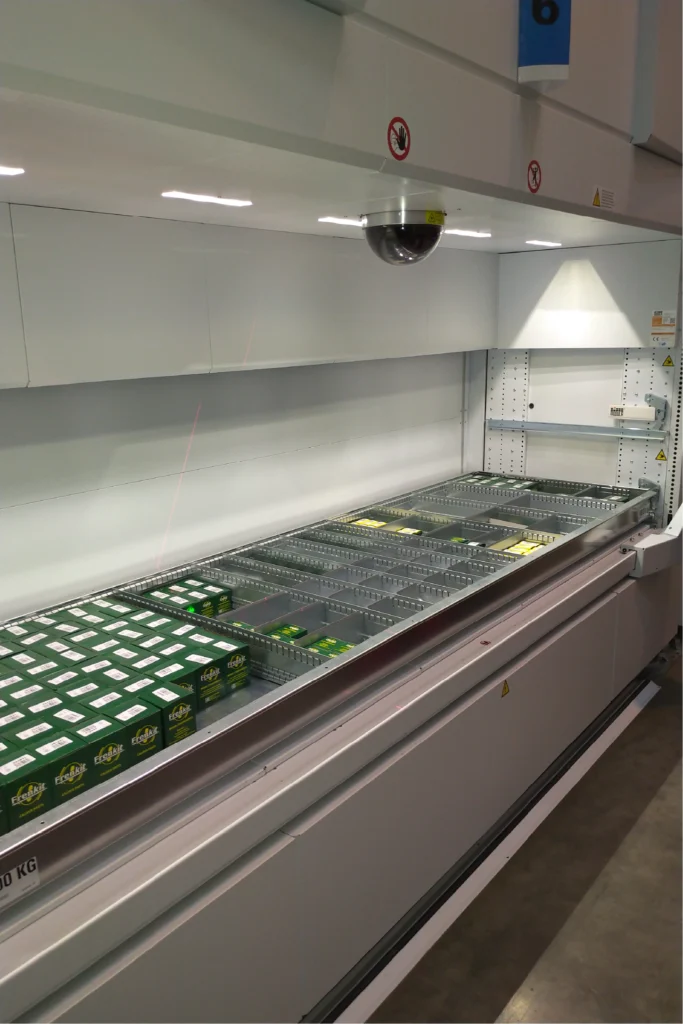
VLMs store parts in trays within an enclosed cabinet, automatically delivering the requested tray to an ergonomic access opening. They are well-suited for high-density storage of small- to medium-sized parts in facilities with limited floor space.
Best Suited for:
- Small- to medium-sized parts
- High SKU counts
- Space-constrained facilities
- Ergonomic goods-to-person picking
Strengths:
- Excellent cube utilization
- Secure storage
- High inventory accuracy
- Fast operator access
Mini-load ASRS
Mini-load ASRS systems automatically store and retrieve totes, trays, bins, and cartons, making them well-suited for manufacturing operations with high SKU counts and frequent parts replenishment. They are commonly used to support assembly operations, work-in-process (WIP), and JIT manufacturing environments where fast, accurate access to small parts is essential.
Best suited for:
- Small parts stored in totes, bins, trays, or cartons
- High SKU counts
- Assembly and kitting applications
- JIT replenishment and WIP storage
Strengths:
- High-density storage
- Fast, automated retrieval
- Excellent inventory accuracy and traceability
- Reliable production replenishment
Carousels
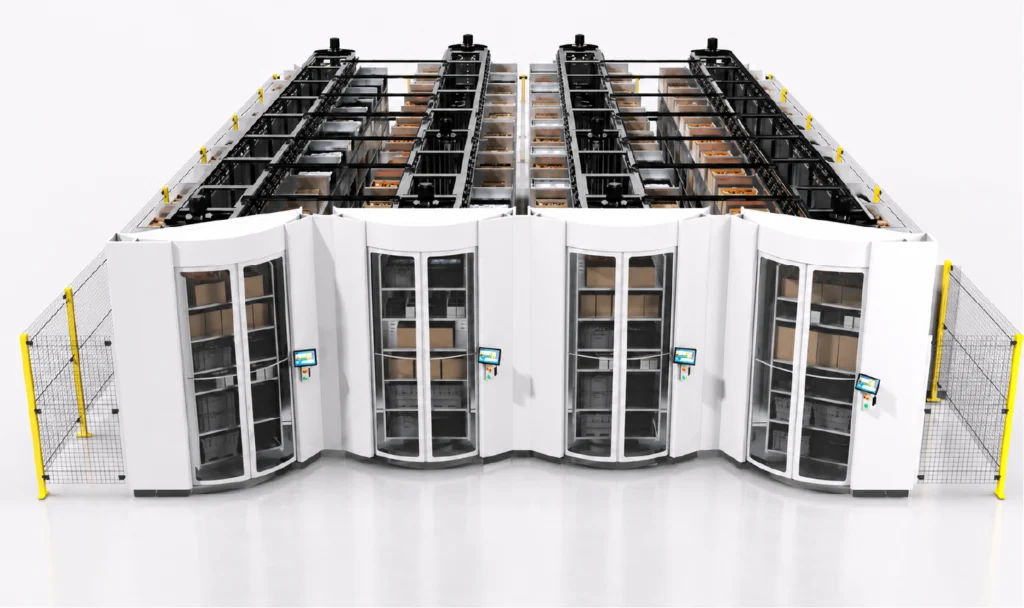
Carousels rotate shelves or carriers to bring stored items directly to the operator, reducing travel time and improving picking efficiency. They are commonly used for fast access to small parts, kitting operations, and frequently picked inventory.
Best suited for:
- Frequently picked small parts
- Batch picking
- Kitting operations
- Medium throughput applications
Strengths:
- Rapid retrieval
- Organized storage
- Efficient order fulfillment
No single ASRS technology is right for every manufacturing environment. Factors such as part dimensions, storage media, throughput, available floor space, and integration requirements should all be evaluated before selecting a solution.
In many manufacturing facilities, these technologies are also integrated with inventory management software and production workflows to improve inventory control and support timely material replenishment.
Is an ASRS the Right Fit for Your Manufacturing Operation?
While ASRS systems provide significant operational advantages, they are not the right solution for every manufacturing environment. Evaluating inventory characteristics, production requirements, and facility constraints is essential before selecting an automated storage solution.
An ASRS may be a strong fit if your operation:
- Manages thousands of part numbers or high SKU counts.
- Needs to reclaim floor space for production activities.
- Spends significant labor retrieving or replenishing production parts.
- Requires high inventory accuracy to support production scheduling.
- Expects continued growth in SKU counts or production volume.
However, an ASRS may not be the best fit if your operation:
- Has a relatively small inventory with limited storage density requirements.
- Primarily stores oversized, long, or irregularly shaped components.
- Requires direct-access storage better suited to conventional shelving or rack systems.
Choosing the Right Parts Storage Strategy
When properly matched to your operation, ASRS systems can help manufacturers support JIT production by improving parts storage, inventory accuracy, and space utilization while delivering components to production consistently and efficiently. Evaluating SKU profiles, throughput requirements, available space, and long-term growth plans is the first step in determining whether an ASRS is the right solution.
If you’re evaluating ways to improve JIT parts storage, Apex can assess your operation, compare storage strategies, and recommend the right-fit solution—whether that’s an ASRS or another approach that better aligns with your goals.
Contact our automation experts to discuss your parts storage challenges and identify the right solution for your manufacturing operation.
