
Drive-In vs. Drive-Thru Pallet Racking: Design & Applications

How Do Drive-In and Drive-Thru Pallet Racking Differ?
There are several ways to achieve high-density pallet storage, and deep-lane storage systems are an important option for warehouses looking to maximize available space. Pallet flow, push-back, ASRS, and drive-in and drive-thru pallet racking can all provide deep-lane storage capabilities, but they work differently and fit different inventory and fulfillment requirements.
Drive-in and drive-thru pallet racking are similar in design, but there is one important distinction: drive-in rack is used for last-in, first-out (LIFO) inventory, while drive-thru rack supports first-in, first-out (FIFO) inventory flow.
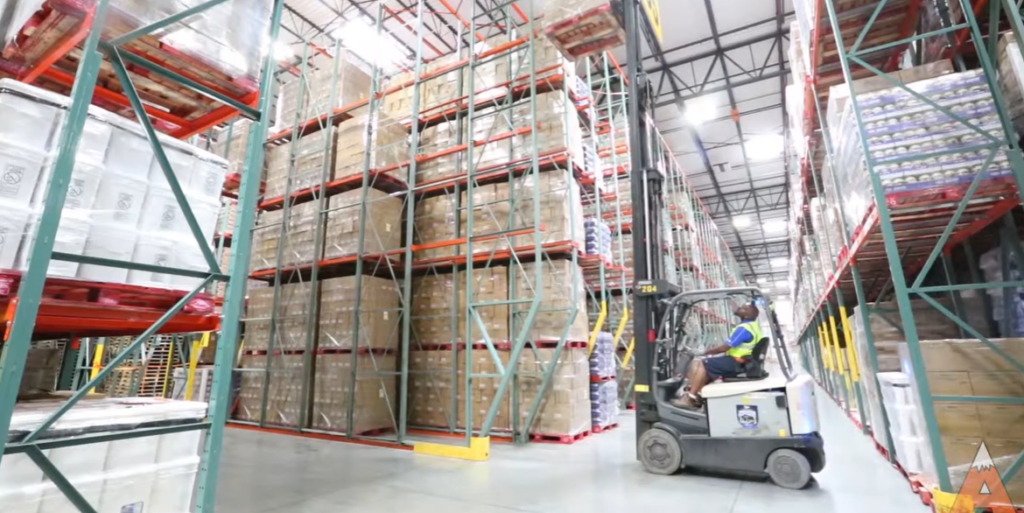
Why Use Deep-Lane Pallet Storage?
The high-density design of deep-lane systems allows for high-volume pallet storage while using less warehouse square footage for aisles. Depending on the application, this can help reduce the overall storage footprint, create room for additional warehouse operations, and reduce forklift travel for pallet loading and picking.
However, not every SKU is a good fit for deep-lane storage. SKU volume, inventory rotation, pallet characteristics, and throughput requirements should all be considered when selecting and designing the system.
How Does Drive-In Pallet Racking Work?
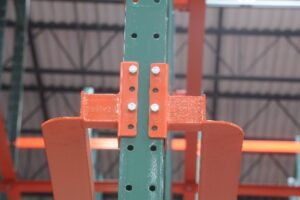
Drive-In Rails
Drive-In pallet racking is a high-density solution for high-volume storage of low-rotation or a limited number of individual SKUs. It is ideal for LIFO inventory control of long-shelf-life, non-stackable goods.
Unlike traditional selective pallet racking, where pallets are supported by horizontal beams, drive-in pallet rack uses left- and right-side rails to support pallets within the storage lane. The rails run the depth of the rack system, which can be designed to accommodate lanes 10 or more pallets deep.
Each storage lane is dedicated to a single SKU, which occupies the pallet positions from top to bottom and across the lane’s depth. This makes drive-in rack best suited for high-volume SKUs.
The system requires only one opening for the lift truck to enter and back out for pallet loading and unloading, reducing the number of aisles required. A drive-in pallet racking system can save up to 35% in square footage while storing up to 75% more pallets than a traditional rack.
How Is Drive-Thru Pallet Racking Different?
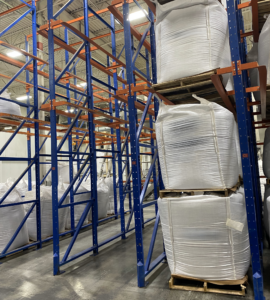
Drive-Thru Rack System
What if you need deep-lane storage for perishable or FIFO-inventoried goods?
Drive-thru pallet racking is similar in design to drive-in rack but provides access from both ends of the storage lane. Pallets can be loaded from one side and retrieved from the other, enabling FIFO inventory rotation.
Because access is required at both ends, drive-thru rack requires some additional warehouse space compared with a single-entry drive-in configuration. However, it can be a suitable deep-lane option for food and other perishable products with expiration dates.
Where Do Drive-In and Drive-Thru Pallet Racking Fit Best?
Drive-in and drive-thru systems offer several advantages for the right inventory and application:
- High-density pallet storage
- Fewer required aisles
- High-volume, low-SKU applications
- Storage of fragile or non-stackable pallet loads
- LIFO stock rotation with drive-in rack
- FIFO stock rotation with drive-thru rack
The key is matching the system to the inventory. Deep-lane storage works best when there are enough pallets of the same SKU to fill dedicated lanes, reducing empty positions (honeycombing) and maximizing storage density.
Drive-In Rack Damage and Honeycombing Considerations
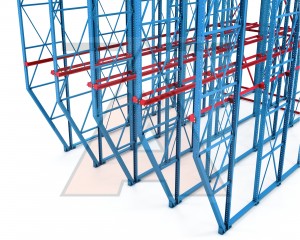
Slope Leg Front Post Design
Two important considerations for drive-in and drive-thru pallet racking are fork truck damage and underutilized pallet positions.
Because lift trucks enter the rack structure, there is greater potential for contact with the front uprights. This can be avoided by using a slope-leg frame design for the front uprights. Sweeping back the lower portion of the upright gives the truck more maneuverability around the rack, making it less likely to come into contact with the frame.
Honeycombing may sound nice, but it’s actually something to avoid. Honeycombing refers to unused pallet positions within a deep-lane storage system. If a lane is dedicated to a SKU but there isn’t enough inventory to fill the available positions, valuable storage capacity can go unused.
That’s why not every SKU is a deep-lane SKU. Lane depth and system design should reflect inventory quantities, SKU mix, product rotation, and fulfillment requirements to make efficient use of available warehouse space.
Frequently Asked Questions About Drive-In and Drive-Thru Rack
What Is the Difference Between Drive-In and Drive-Thru Pallet Racking?
Drive-in pallet racking has a single entry and exit point for the lift truck and is typically used for LIFO inventory rotation. Drive-thru pallet racking provides access from both ends of the storage lane, allowing FIFO inventory rotation.
Is Drive-Thru Pallet Racking FIFO?
Yes. Because pallets can be loaded from one side of the rack and retrieved from the opposite side, drive-thru pallet racking can support FIFO inventory rotation. This makes it an option for products where inventory age or expiration dates affect picking sequence.
What Products Are Best Suited for Drive-In and Drive-Thru Rack?
These high-density systems are generally best suited for inventory with a relatively small number of high-volume SKUs. The right configuration depends on SKU profile, inventory rotation, pallet characteristics, throughput, lift equipment, and available warehouse space.
Find the Right Deep-Lane Storage System
Choosing the right deep-lane pallet rack system depends on your inventory, product flow, available space, lift equipment, and fulfillment requirements. Drive-in or drive-thru rack may be the right fit, or another high-density storage solution may better support your operation.
Apex can help evaluate your inventory and design the right storage system for your facility and fulfillment goals. Talk to an expert to discuss your warehouse storage needs.
