
AMR Use Cases That Streamline ASRS Warehouse Workflow

How AMRs Help Extend the Value of ASRS Investments
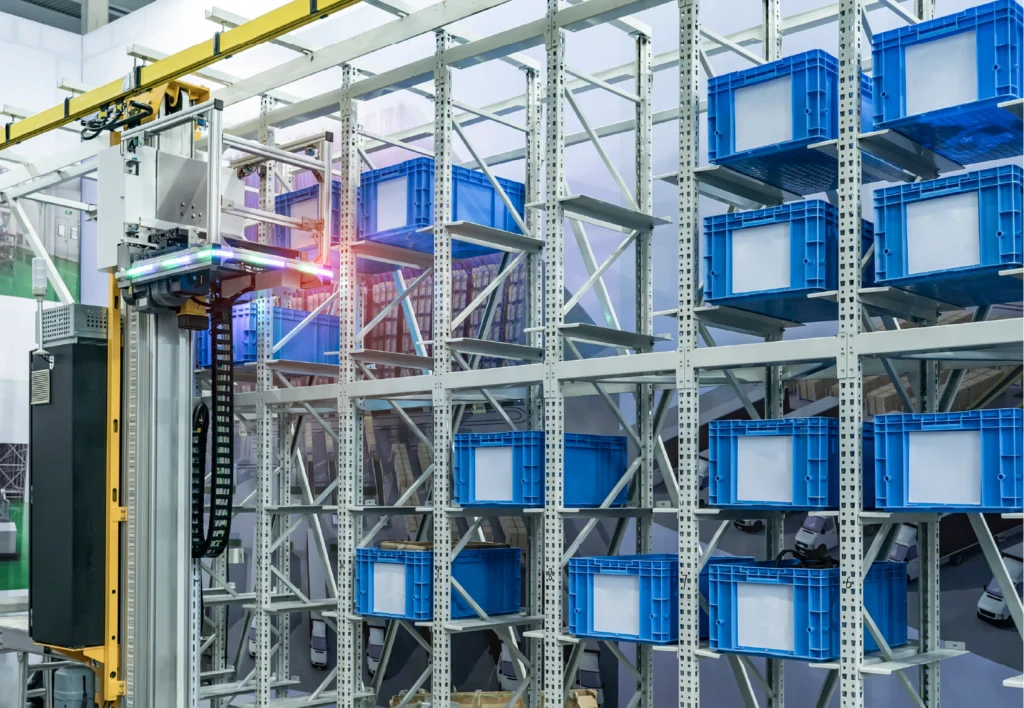
ASRS systems can transform warehouse space utilization while improving access to high-volume inventory and boosting throughput. By automating how inventory is stored, retrieved, and delivered, ASRS systems help reduce manual travel, improve accuracy, and keep fast-moving operations running more efficiently. The next opportunity for operational improvement is streamlining how that inventory moves from the ASRS system to the next stage of processing
Autonomous mobile robots (AMRs) can fill that gap. Rather than replacing what the ASRS system does, they extend it. They provide a flexible transport layer that connects the storage system to the rest of the operation. This piece covers seven practical AMR use cases that support ASRS workflows, along with guidance on when AMRs are the right fit.
Key Takeaway
Once inventory leaves the ASRS, it still has work to do. Explore practical AMR applications that connect automated storage with picking, packing, replenishment, production, and shipping.
7 AMR Use Cases That Support ASRS Workflows
Every ASRS application is part of a larger inventory flow. Some systems feed directly into pick stations or conveyor lines, while others rely on separate transport steps between storage and downstream work areas. When that next step requires additional movement, AMRs can help transport inventory between storage, picking, packing, replenishment, consolidation, staging, and shipping without requiring fixed paths for every route.
AMRs are most useful when the ASRS handoff is defined, and downstream routes vary.
1. Moving Goods from ASRS to Pick Stations
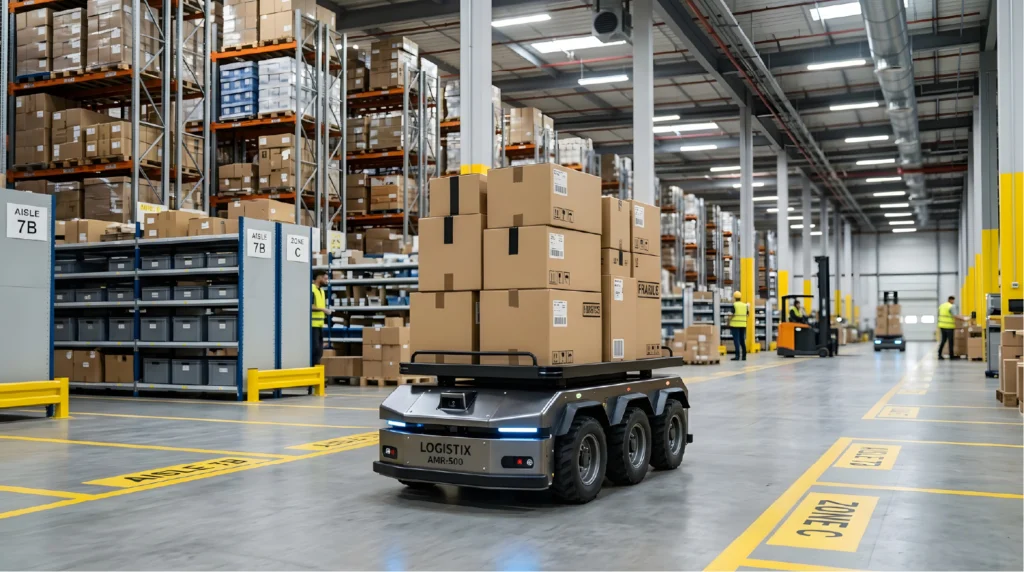
Once an ASRS system retrieves a tote, bin, carton, or case, it still needs to reach the person or workstation completing the pick. In goods-to-person (GTP) operations, when that movement relies on operators walking or pushing carts, it eats into the productivity the ASRS was designed to create.
This use case is strongest when the ASRS does not already feed the workstation directly, or when a single ASRS output point must serve multiple pick stations, consolidation areas, or order profiles.
AMRs can take over that transport leg, moving inventory from ASRS discharge points to pick stations, GTP workstations, or order consolidation areas.
Best fit for:
- E-commerce fulfillment
- Parts distribution
- High-SKU operations
- Split-case picking
- Facilities where associates walk long distances between storage and work areas
2. Replenishing Forward Pick Areas
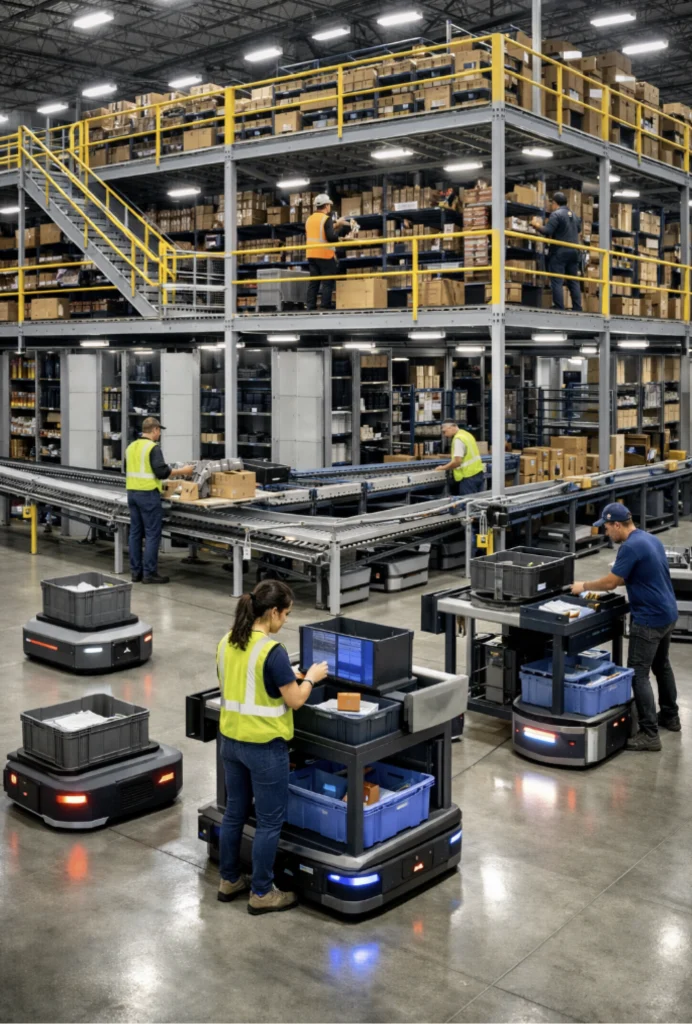
Many facilities use ASRS solutions for reserve storage, while forward pick zones (carton flow lanes, shelving, pick modules, or line-side storage) still need constant replenishment. When operators move that product manually, pick faces can run empty, and workflows slow down. Replenishment is often one of the most repetitive transport tasks surrounding the ASRS system.
AMRs can close that gap by moving product from ASRS induction or discharge points to forward pick zones on a scheduled, WMS/WES-triggered, or demand-triggered basis. The key requirement is clear replenishment logic: what triggers the move, where the product is picked up, where it is dropped, and how exceptions are handled.
Best fit for:
- Operations with frequent replenishment cycles
- Facilities with recurring stockouts at pick faces
- Warehouses using ASRS for reserve storage with separate forward pick infrastructure
3. Transporting Completed Orders to Packing and Shipping
After ASRS retrieval or picking, inventory may need to move to packing, labeling, value-added services, quality inspection, or shipping sortation. While conveyor is often an effective solution for fixed, high-volume routes, some operations require greater flexibility as orders move to different destinations based on carrier, service level, order type, or processing requirements.
In these environments, AMRs can provide a flexible transport layer between storage, packing, and outbound operations. Rather than relying on dedicated conveyor paths for every destination, AMRs can route inventory to the appropriate work area based on real-time task assignments and changing operational demands.
Best fit for:
- Facilities with multiple packing zones
- Operations that route orders differently based on service requirements
- Warehouses with changing workflows or future expansion plans
- Facilities where fixed conveyor would be difficult or costly to reconfigure
4. Supporting Returns and Reverse Logistics
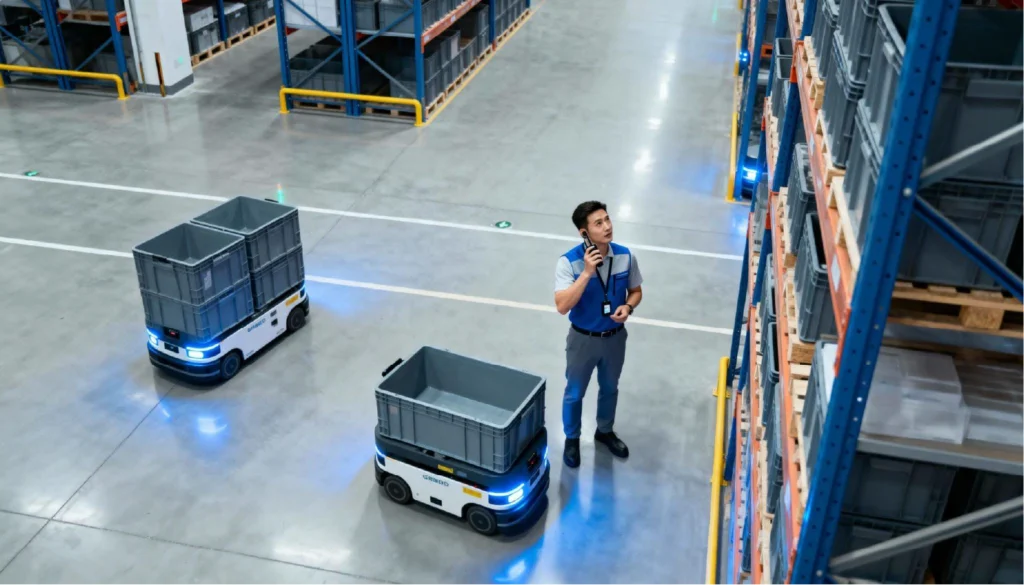
Returns rarely follow one predictable path. After inspection, an item may go to quarantine, repair, repack, restock, or ASRS induction. When that movement is handled manually, returns can quickly create congestion, misrouting, and processing backlogs.
AMRs can move returned goods from receiving and inspection to the right downstream destination based on condition-routing decisions. This is usually a stronger AMR fit when returned goods have defined disposition paths after inspection. If return decisions are highly manual or inconsistent, the workflow should be standardized before AMRs are introduced.
Best fit for:
- E-commerce returns and operations with high return rates
- Apparel, electronics, and small goods with variable return conditions
- Facilities with separate returns inspection and restock areas
5. Feeding Kitting, Assembly, or Production Areas
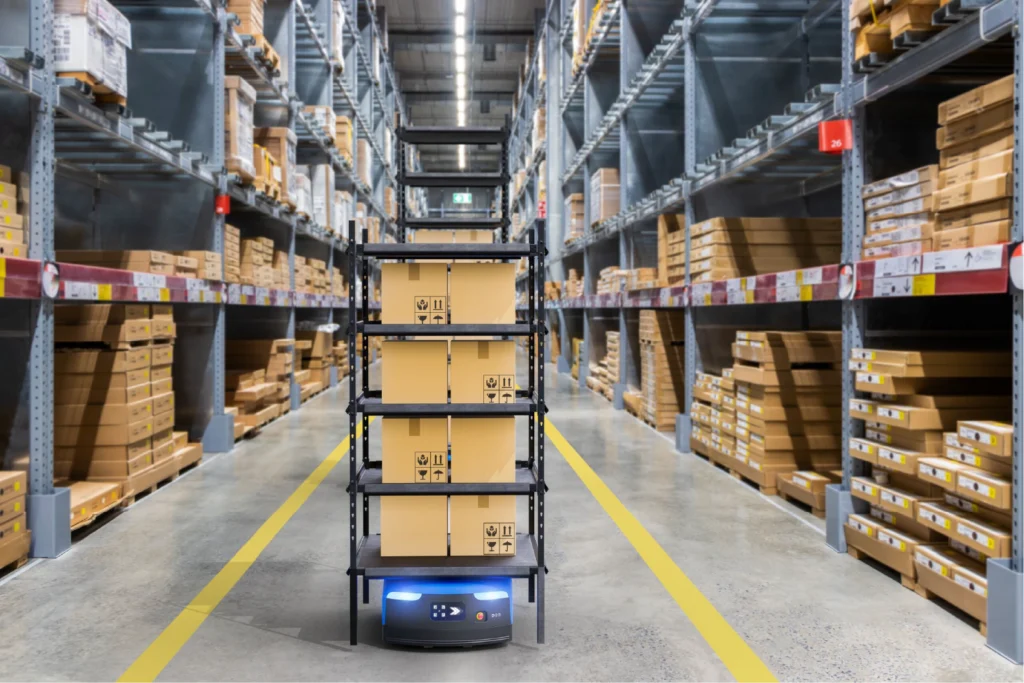
In manufacturing, maintenance, or light assembly environments, components often stay in the ASRS system until they are needed at a kitting bench, production cell, or assembly line. Moving those parts to the point of use on time can become a bottleneck when operators have to make dedicated retrieval trips.
AMRs can handle that last-leg movement from ASRS discharge areas to kitting benches, production cells, or maintenance work areas. The ASRS manages and protects the inventory, while the AMR delivers components where the work is happening.
Best fit for:
- Manufacturing support and parts or components storage
- Kitting operations with defined workstation locations
- Repetitive point-to-point delivery between ASRS and production or assembly areas
6. Rebalancing Empty Totes, Trays, and Pallets
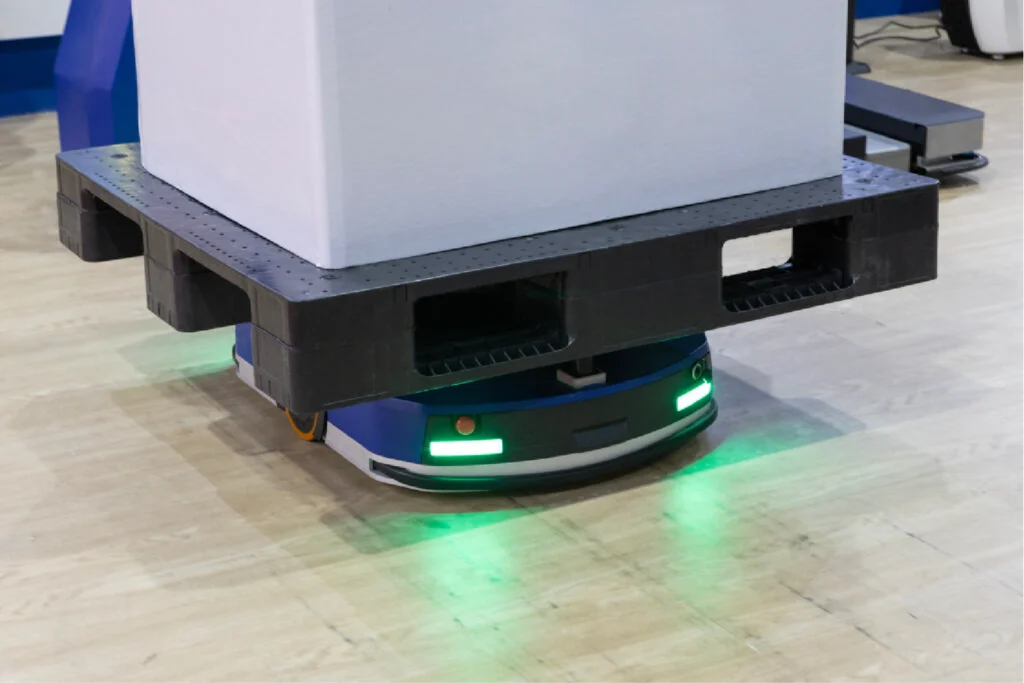
Empty container flow is an easy ASRS bottleneck to miss. Totes, carts, trays, and dunnage can pile up at pick stations and packing areas while induction points run short. When operators have to move empties back manually, that time comes out of productive picking or packing work.
AMRs can automate the return loop by moving empty totes, carts, or containers back to the points where they are needed next, such as ASRS induction, decanting, pick stations, or packing areas. This use case depends on clear container ownership, staging rules, and enough buffer space at both ends of the loop.
Best fit for:
- Tote-based and mini-load ASRS operations
- High-volume pick and pack environments
- Facilities where containers consistently pile up in the wrong areas
7. Moving Pallets Around Unit Load ASRS Systems
Unit load ASRS can store and retrieve pallets efficiently, but pallets still need to move between ASRS discharge points, staging, production areas, or conveyor handoffs.
Autonomous forklifts or pallet-capable AMRs can support these repeatable transport routes when handoff points are clearly defined. This use case needs more upfront evaluation than tote-based AMRs, as floor condition, pallet quality, payload limits, and controls integration all affect performance.
For pallet-capable AMRs and autonomous forklifts, the evaluation should also include pallet condition, load stability, fork pocket consistency, floor transitions, traffic separation, and the applicable mobile robot or driverless industrial truck safety requirements.
Best fit for:
- Repeatable pallet movement between defined handoff points
- Manufacturing buffer and cold storage applications
- High-bay pallet storage with predictable inbound and outbound staging patterns
When AMRs Are a Good Fit Around ASRS Systems
AMRs are a strong fit when the movement pattern is repeatable, but the route or destination needs flexibility. Common signs include:
- Repeatable movement with variable routing: The same transport task happens often, but destinations change by order type, condition, or real-time demand.
- Multiple destinations after ASRS retrieval: Goods need to move from the ASRS to different pick zones, packing stations, production areas, or outbound points.
- Too much operator travel: Associates spend time walking, pushing carts, moving product, or returning empty containers instead of picking, packing, or replenishing.
- Need for phased automation: The facility wants to automate transport gradually without committing to a full fixed-conveyor build-out.
- Conveyor is too rigid or costly: The operation values flexibility, reconfigurability, or lower upfront investment more than maximum fixed-path throughput.
- Clear task logic: The system can define when a move should occur, which load should move, where it should be picked up and dropped, and what happens if the load, destination, or handoff point is unavailable.
- Inventory visibility and traceability: Many AMR and ASRS workflows include barcode scanning or other automated identification steps that improve inventory accuracy and product traceability. These systems can also support routine cycle counting during production or off shifts, helping maintain accurate inventory records while making it easier to locate, quarantine, or remove specific lots when quality issues or product recalls occur.
When AMRs May Not Be the Right Fit
AMRs work best when the process, load type, route logic, and handoff points are already well defined. Watch for these red flags:
- The process is not standardized: AMRs need clear start points, end points, and task logic. If operators make case-by-case decisions, the workflow should be cleaned up before automation.
- The facility layout does not support safe movement: Uneven floors, narrow aisles, congested travel lanes, or unmapped forklift and pedestrian traffic can make AMR deployment unreliable.
- Loads are unstable or outside payload limits: AMRs are built for defined load types, such as totes, carts, or standard pallets. Irregular, poorly palletized, oversized, or overweight loads may need another handling method.
- The route is fixed and high-volume: If goods always move along the same path and throughput is the main goal, a conveyor may be more cost-effective and higher capacity than AMRs.
- Software integration is not ready: AMRs need reliable communication with the host system (WMS, WES, ERP) or ASRS controls. Without that connection, manual workarounds can quickly erase the value of automation.
- ASRS handoff points are unclear: Pickup and drop-off points must be defined by position, timing, and load state. If that interface is vague, handoff failures and system conflicts are likely.
- Safety validation is incomplete: AMRs require site-specific risk assessment, traffic rules, emergency-stop access, pedestrian interaction planning, and validation against applicable mobile robot safety standards. If those requirements are not owned by the project team, deployment risk increases.
What to Measure Before Deploying AMRs With ASRS
The strongest AMR deployments start with a clear operational baseline. Before sizing a fleet, selecting a robot type, or scoping integration, these are the data points worth gathering:
- Current travel distance
- Number of manual touches
- Pick, pack, replenishment, and put-away cycle times
- SKU velocity and order profile
- Peak versus average movement volume
- Tote, cart, case, or pallet dimensions
- ASRS induction and discharge points
- Handoff locations
- Floor condition and aisle width
- Pedestrian and forklift traffic
- WMS, WES, ERP, and controls integration
- Exception handling requirements
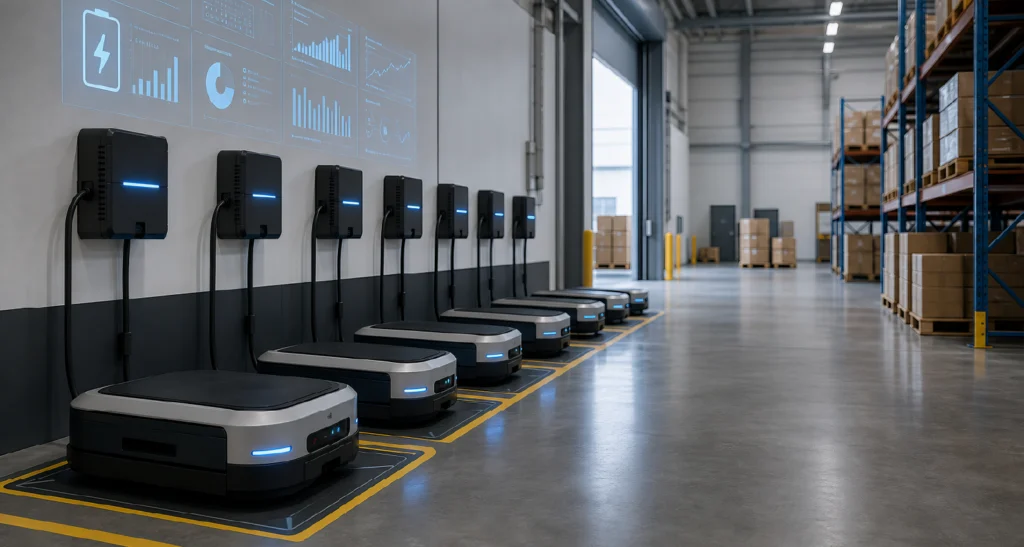
- Charging strategy
- Maintenance and service access
- Safety, egress, and traffic rules
Build the AMR Use Case Around the ASRS Workflow
AMRs can be a valuable addition to an ASRS environment. Still, the strongest deployments start with the movement problem, not the robot. The first question is: “Where does inventory travel after the ASRS retrieves it, and what does that movement cost us today?”
Once the movement problem is clear (where the manual touches are, where the delays happen, where associates spend time on transport instead of value-added work), the right automation fit becomes much easier to evaluate.
Apex Companies supports warehouse automation projects from planning and layout through systems design, installation, training, and ongoing maintenance. This full-service approach helps ensure your automated and static systems are evaluated as part of one cohesive warehouse strategy.
Talk with the Apex team about your warehouse flow, inventory profile, and automation goals.
