

Selective Pallet Racking Converts Your Vertical Space Into Valuable Floor Space
Selective pallet racking is the go-to storage system for low-volume, high-SKU inventory. It stores full pallets in single-deep rows and up multiple levels. Selective rack supports FIFO inventory rotation using single-aisle access for put-away and pallet retrieval and can be configured in back-to-back rows to consolidate aisle space.
Advantages | Considerations:
- 100% selectivity
- Low-cost storage racking
- Ideal for low volume, high-SKU inventory
- Supports FIFO inventory rotation
- Requires considerable space for aisles
- Limited pallet density per square foot
- Versatile for varying inventory specs
- Adaptable for any warehouse climate: ambient, refrigerator, cold-storage
Call Apex pallet racking and warehouse design consultants to help you make the right choice for your inventory and operational needs.

COST-EFFECTIVE & ADAPTABLE WAREHOUSE STORAGE RACKING
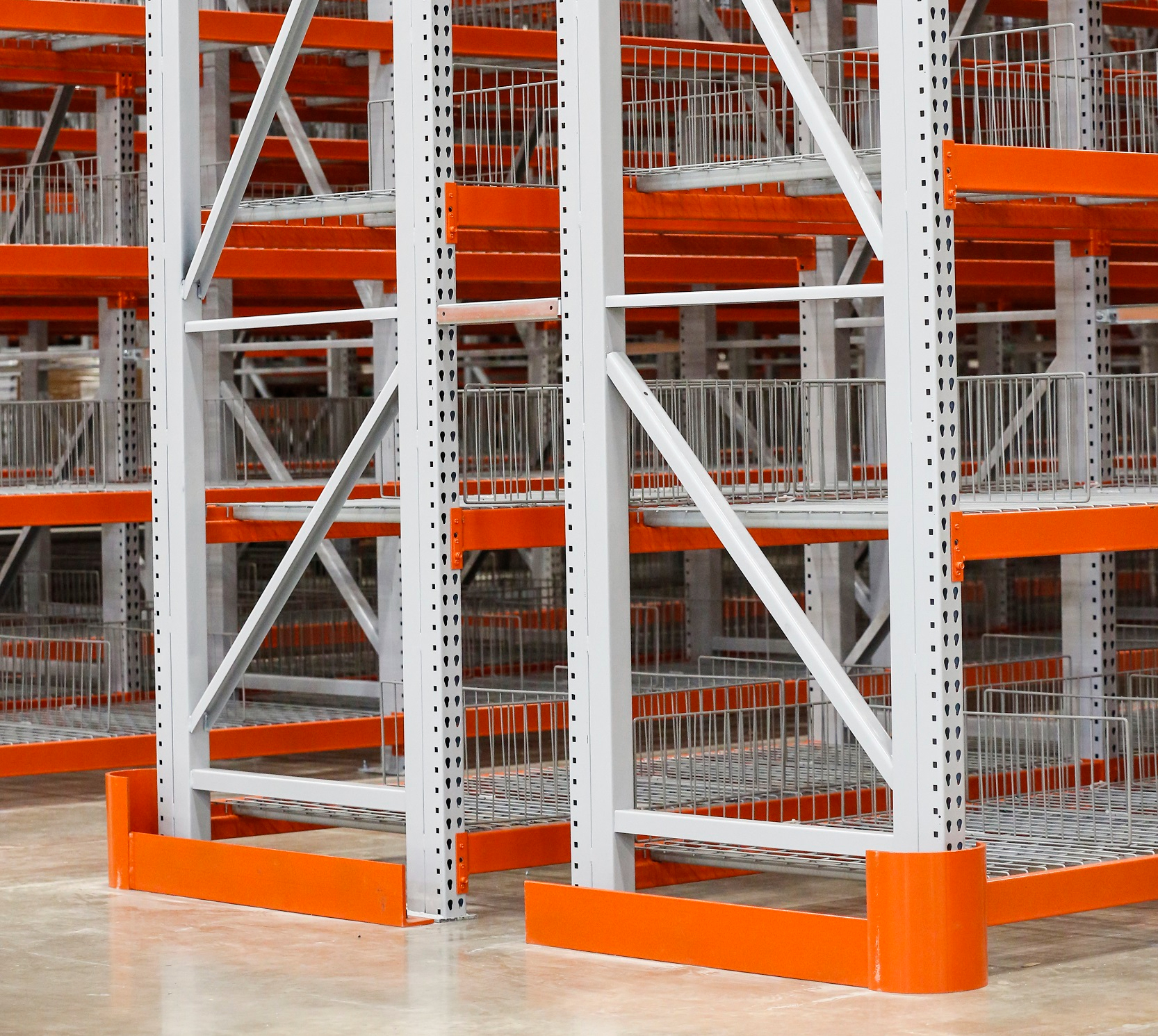
Build your selective racking system to consolidate pallet storage while maximizing vertical cube space. Selective pallet rack provides a significant advantage over floor stacking by accommodating a far greater number of SKUs per square foot. It is also adaptable for picking cartons and single items by adding wire decking or other decking materials to lower levels and converting them to store non-palletized inventory.
Depending on your inventory specs and warehouse operation, you can order your Selective pallet racking in either roll-formed or structural steel. Both systems provide strength and durability, but one may serve your needs better. Let the Apex team help you design the right pallet racking system to meet your needs. Our team will also ensure that your rack system is equipped, if needed, with safety features such as column and end-of-row guards to protect your people, equipment, and your investment.
Call our pallet rack experts and schedule a free consultation. Let’s discuss your warehousing needs and budget to make every dollar count.
Selective Pallet Racking Gets Fast-Tracked for Customers in Need
The time-lapse video makes it look easy, but it took lots of planning and expert execution to get it done. In under three weeks, the Apex installation and project management teams combined efforts to fill this waiting warehousing space with 241,000 selective pallet rack positions!
Apex offers seamless integration for design, project management, and installation. Give the Apex team a call to start your next project the right way.
The Solutions You Need to boost warehouse productivity

automation solutions
The right tech applied for optimal efficiency

Warehouse Storage Equipment
Extensive variety – system design & install

Rack Audit & Repair

Quick Ship Inventory

industrial fans
Warehouse Airflow Solutions
FREQUENTLY ASKED QUESTIONS
Is Selective Pallet Racking the Right Choice for High-SKU Warehouses?
Yes. Selective pallet racking is typically the best choice for warehouses that store many different SKUs and require direct access to every pallet. Each pallet is stored one position deep, allowing forklifts to retrieve inventory without moving other loads. This system works well for distribution centers, retail fulfillment, and manufacturing operations where inventory changes frequently. If maximizing storage density is a higher priority than pallet accessibility, systems such as push-back or drive-in racking may be a better fit.
How Does Selective Pallet Racking Support FIFO Inventory Rotation?
Selective pallet racking naturally supports first-in, first-out (FIFO) inventory because every pallet remains independently accessible from the aisle. Operators can retrieve the oldest pallet without relocating newer inventory, making the system well suited for products with expiration dates or regular stock rotation. FIFO performance still depends on inventory management practices and warehouse processes, but the rack layout provides the direct access needed to support efficient rotation.
What Forklifts Can Be Used With Selective Pallet Racking?
Selective pallet racking is compatible with standard counterbalance forklifts and reach trucks, making it one of the most versatile warehouse storage systems. Narrow aisle and very narrow aisle layouts can also be designed to increase storage capacity, although they typically require specialized lift trucks. The best configuration depends on aisle width, ceiling height, pallet dimensions, and your desired balance between storage density and travel efficiency.
Can Selective Pallet Racking Be Expanded or Reconfigured Later?
Yes. Selective pallet racking is modular, allowing additional bays, beam elevations, and storage rows to be added as inventory or operational requirements change. Many facilities expand existing systems instead of replacing them when growth occurs. Expansion should always consider floor capacity, seismic requirements, rack compatibility, and current load ratings to maintain structural integrity and long-term warehouse safety. Beam elevations or rack configurations should never be changed without approval from a qualified rack engineer, as even seemingly minor modifications can affect load capacity and system safety.
When Is Selective Pallet Racking Not the Best Storage Solution?
Selective pallet racking may not be the best option when storage density is more important than immediate pallet access. Because every storage row requires an aisle, the system typically stores fewer pallets per square foot than deep-lane storage systems. Warehouses with high pallet volumes of the same SKU often achieve better space utilization with drive-in, push-back, or pallet flow racking, depending on inventory rotation and throughput requirements.
How Is Selective Pallet Racking Designed for Different Pallet Sizes and Loads?
Selective pallet racking can be engineered with different upright capacities, beam lengths, and beam elevations to accommodate varying pallet dimensions and load weights. The appropriate design depends on pallet size, product weight, lift truck clearances, seismic requirements, and future inventory growth. Proper engineering helps maximize vertical space while maintaining safe load distribution and reliable forklift access throughout the warehouse.
Can Selective Pallet Racking Be Used in Cold Storage or Freezer Warehouses?
Yes. Selective pallet racking is commonly used in refrigerated and freezer environments because it provides direct pallet access while making efficient use of available vertical space. Material selection, protective finishes, floor conditions, and lift truck performance become more important in cold environments. The final design should account for operating temperatures, moisture exposure, and maintenance requirements.
What Safety Features Should Be Included With Selective Pallet Racking?
Most selective pallet racking systems benefit from accessories such as column protectors, end-of-row guards, wire decking, and rack protection barriers. The appropriate safety features depend on forklift traffic patterns, pallet types, rack height, and the risk of impact damage. Regular inspections and prompt repair of damaged components help maintain structural performance and support a safer warehouse operation.
Contact Us To Get Started
Fill out the form below to speak with one of our experts.
