
Pallet Flow Rack: When Does Back Pressure Become a Design Consideration?

How Lane Depth, Pallet Weight, and Load Specs Affect Forklift Operation And System Design
Pallet flow rack is a compact, deep-lane, multi-level rack system designed for high-volume pallet storage. Its unique sloped design uses gravity to advance pallets from the load aisle to the opposite pick aisle. By separating loading and picking activities and allowing pallets to advance automatically, pallet flow rack can minimize forklift travel while maximizing available warehouse cube space.
Gravity is what makes the system work—but it also creates back pressure. Pallets stored behind the pallet at the pick position exert force in the direction of flow. Back pressure is a normal operating condition in pallet flow rack, but as lanes get deeper and loads get heavier, the accumulated force can become significant enough to affect system design and pallet extraction.
So, when does back pressure become a design consideration? The answer depends on the total pallet weight within the lane, lane depth, pallet and load characteristics, lift-truck requirements, and the flow system’s design for controlling pallet movement.
Key Takeaway:
Back pressure is a normal part of pallet flow rack operation, but it becomes increasingly important as lane depth and pallet weight increase. Designing around the actual pallets, loads, and lift equipment helps ensure controlled pallet flow and reliable extraction from the pick aisle.
What Causes Back Pressure In Pallet Flow Rack?
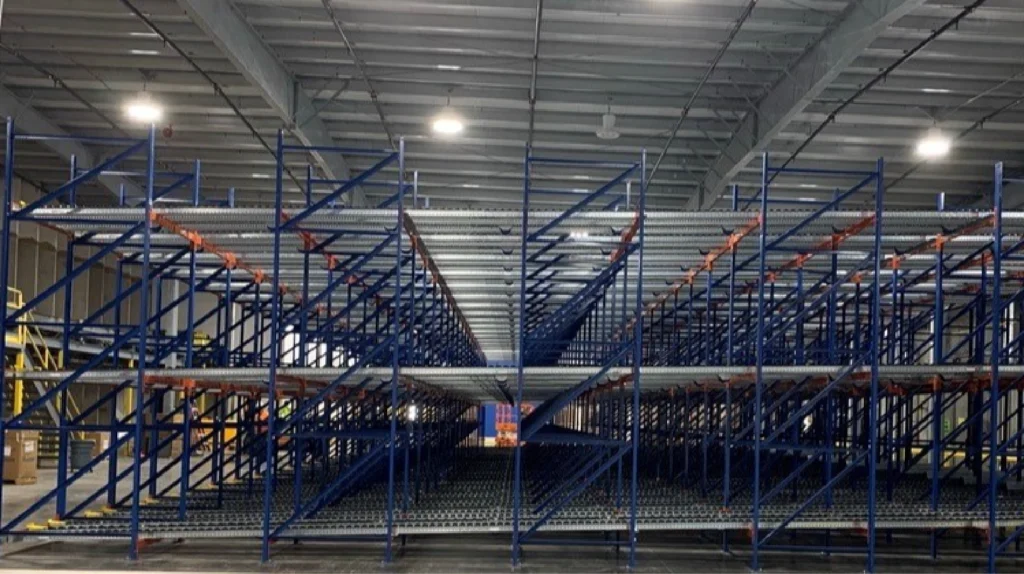
Pallet flow lanes are installed at a slight pitch so gravity can move pallets from the load aisle toward the pick aisle. As pallets accumulate in the lane, the pallets behind the pallet at the pick position continue exerting force in the direction of flow.
The greater the combined weight of those rear pallets, the greater the resulting back pressure.
Leading pallet flow rack manufacturers calculate back pressure at approximately 6% of the combined weight of the pallets behind the discharge pallet. The Rack Manufacturers Institute (RMI) also uses the 6% calculation in its guidance on pallet flow back pressure.
For example, if the combined weight of the pallets behind the front pallet is 10,000 lb:
Back pressure = 0.06 × 10,000 lb = approximately 600 lb
That 600 lb of back pressure is in addition to the weight of the pallet being extracted. In other words, the lift truck must manage the pallet load while also overcoming the back pressure exerted by the pallets remaining in the lane.
When Back Pressure Affects Pallet Extraction
Back pressure becomes particularly important when the forklift must overcome that force to extract the discharge pallet.
Consider a recent Apex pallet flow rack project involving heavy super sack loads. The 15-pallet-deep configuration created approximately 35,000 lb of combined rear-pallet load.
Back Pressure = 0.06 × 35,000 lb = 2,100 lb
That means the forklift needs to overcome approximately 2,100 lb of additional force to extract the pallet at the pick position.
That requirement became particularly important at the system’s highest pallet positions.
A lift truck’s rated capacity is not necessarily its available capacity under every operating condition. Load center, lift height, attachments, truck configuration, and other factors can affect available capacity. When significant pallet back pressure must also be overcome at an elevated position, the lift equipment and storage system need to be evaluated together.
This is a good example of why back pressure is best addressed during pallet flow rack design rather than after installation.
How Is Back Pressure Managed In Pallet Flow Rack?
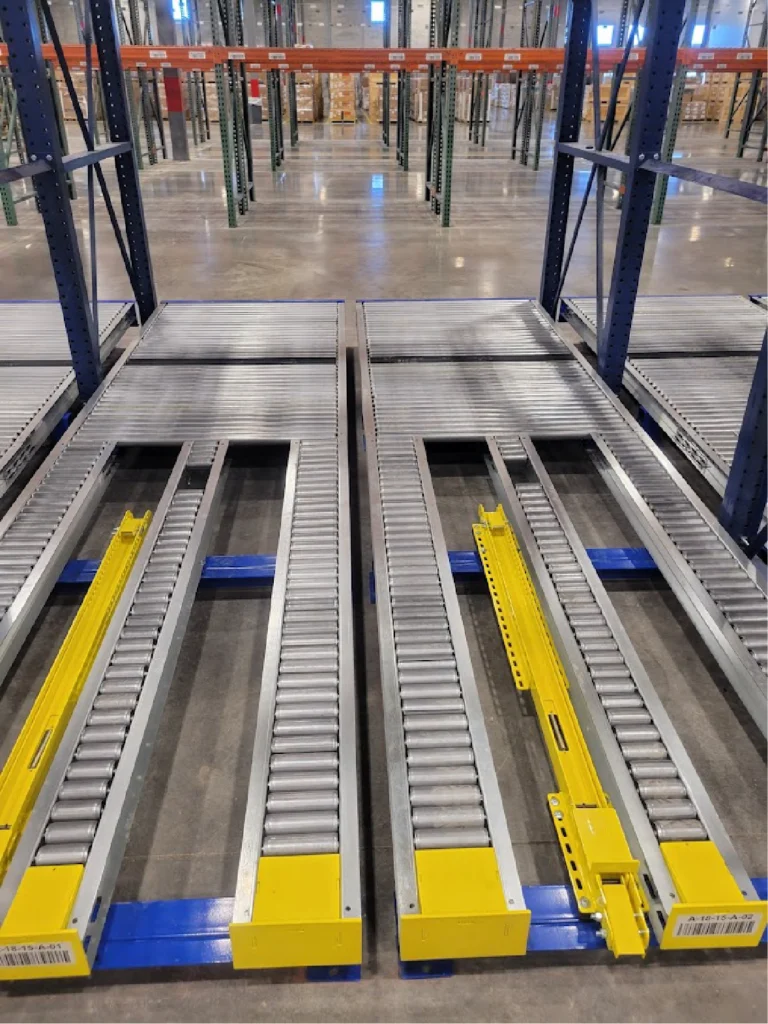
Managing back pressure in pallet flow rack starts with the lane design. Lane pitch influences the gravitational force acting on the load, while pallet separators can be incorporated to create and maintain space between pallets, effectively breaking up the accumulated back pressure within the lane.
Separators are commonly used to isolate the pallet at the pick position from the pressure of the pallets behind it. The device holds the remaining pallets back while the pick pallet is extracted, then automatically releases the next pallet to advance into position.
In deep-lane applications, separators may also be positioned upstream within the lane to maintain required flue spaces between pallet loads. These spaces can be an important part of the facility’s fire-safety compliance while also breaking up the accumulated back pressure within the lane. Separator type, number, and placement depend on lane depth, pallet loads, required flue-space clearances, and overall system design.
How Pallet Characteristics Impact Flow And Control
Reliable pallet flow depends on predictable interaction between the pallet and the flow lane, making the pallets’ quality and characteristics an important part of system performance.
- Pallet material: Wood, plastic, or steel may require different flow-lane configurations
- Pallet condition: Broken or missing bottom boards compromise flow consistency
- Load distribution: Uneven or concentrated loads may require additional support
- Load stability: Shifting or unstable loads may require design features to secure the load
The same recent super sack project also illustrates why pallet characteristics matter. Because the loads were uneven, the pallets could twist as they traveled through the lane, potentially creating intermittent contact with the braking devices. The system was designed with five flow rails per lane rather than three to provide the support and consistent contact required for the application.
Pallet flow rack should be designed using pallets and loads representative of what the system will actually handle. Pallet weight is important, but it doesn’t tell the whole story.
Does Push-Back Rack Have Back Pressure Too?
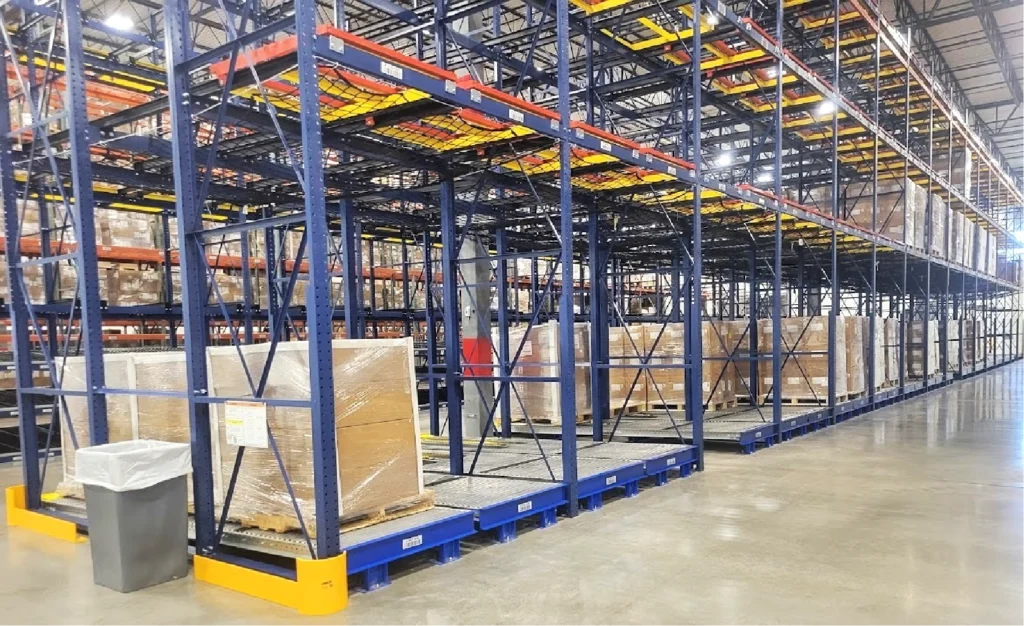
Pallet flow isn’t the only dynamic rack system where stored pallet weight creates force that the forklift must manage.
Push-back rack is also a high-density storage system, but it is loaded and picked from a single aisle. Pallets are stored on nested wheeled carts set on inclined rails. As a new pallet is loaded, the forklift pushes the previously stored pallets farther back and uphill into the lane. When a pallet is removed, gravity advances the remaining pallets toward the pick aisle.
The more weight already stored in the lane, the greater the force the lift truck may need to overcome during loading. In push-back applications, this is typically referred to as push force or lateral push force rather than pallet flow back pressure.
Pallet weight, lane depth, pitch, and system configuration can all influence push force. For a closer look at the topic, read How Do Push Forces Affect Push-Back Rack Loading & Unloading?
Frequently Asked Questions About Pallet Flow Rack Back Pressure
Why Does Back Pressure Increase In Deep-Lane Pallet Flow Rack?
Back pressure increases as more pallet weight accumulates behind the pallet at the pick position. Because deeper pallet flow lanes can hold more pallets, they can generate greater back pressure, particularly when storing heavy loads. The resulting force should be considered along with lift-truck requirements and other application-specific design factors.
Do Braking Devices Eliminate Pallet Flow Back Pressure?
No. Braking devices control the velocity of pallets traveling through a flow lane. Pallet separators perform a different function by creating and maintaining space between pallets, which can break up accumulated back pressure within the lane. Depending on the application, separators may isolate the pallet at the pick position and/or be located upstream within a deep lane.
Does Every Pallet Flow Rack System Need Pallet Separators?
No. Pallet separators are application-specific. Lane depth, pallet weights, back pressure, lift-truck requirements, and other system characteristics help determine whether separation is appropriate. The need should be evaluated as part of the pallet flow rack design rather than treated as a standard requirement for every system.
Account For Back Pressure Before Pallets Start Flowing
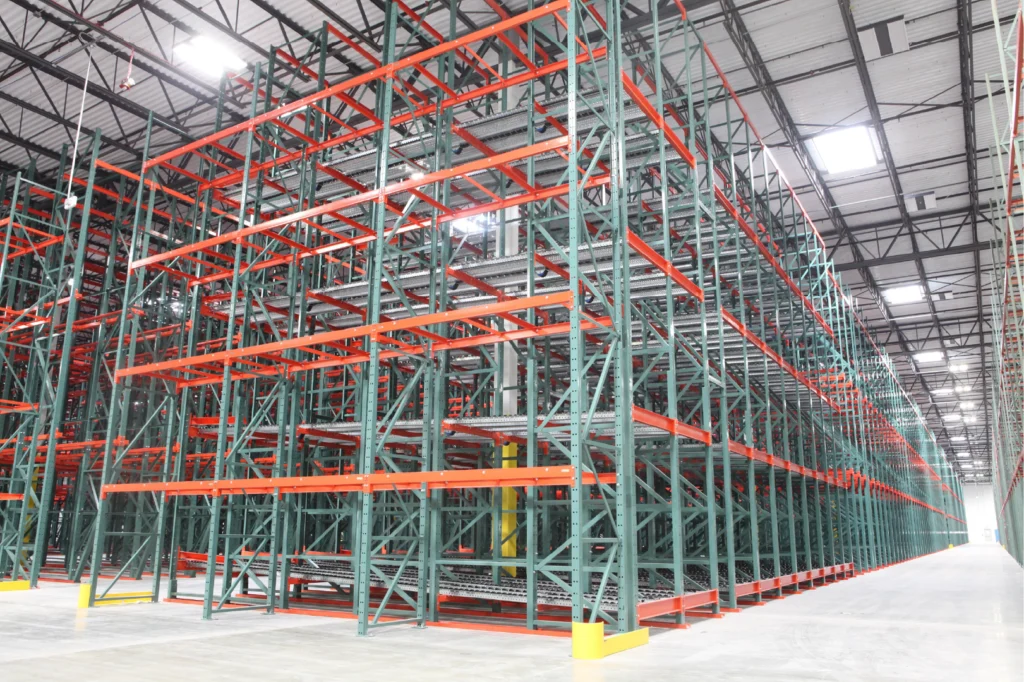
Back pressure isn’t a flaw in pallet flow rack. It’s a predictable result of using gravity to move loaded pallets through the system. In many applications, that force is readily accommodated. As lanes become deeper, loads become heavier, or operating conditions become more demanding, however, back pressure can become an important design consideration.
The key is to evaluate the actual application. Pallet and load characteristics, flow-lane design, pallet control components, and lift equipment all need to work together to provide controlled pallet movement and reliable operation.
Apex designs pallet flow rack around customer inventory and operating requirements. If you’re considering pallet flow for a new facility, expanding an existing system, or evaluating a deep-lane or unusual-load application, talk to an Apex storage expert about your inventory requirements and operational needs.
