
ASRS Systems For WIP Buffering In Manufacturing

Where Automated Buffering Helps Between Production Steps
When one production stage outpaces the next, manufacturers feel the impact fast in the form of WIP buildup, staging congestion, and harder-to-control flow. Pallets build up in staging lanes or around work cells, forklift traffic increases, and production flow becomes more difficult to manage. ASRS Systems can turn that in-between space into a managed WIP buffer that supports smoother handoffs between production stages.
In manufacturing, automated storage and retrieval systems are widely used to manage raw materials, work-in-process inventory, and finished goods, including storage buffers that hold materials until the next production step is ready.
Key Takeaway:
ASRS Systems help manufacturers create a controlled WIP buffer that supports smoother handoffs, better space use, and more consistent flow between production stages.
What WIP Buffering Does For Production Flow
WIP buffering creates a controlled holding zone between production stages. That matters when upstream and downstream processes do not run at the same speed. Instead of letting inventory spill into aisles or pile up wherever space is available, the operation creates a defined area where materials can wait.
Storage buffers temporarily hold materials for subsequent processes and help prevent delays that can halt production. The goal is to decouple adjacent production stages so a slowdown in one area does not immediately disrupt the next.
Done well, WIP buffering helps operations:
- Protect flow when adjacent processes run at different speeds
- Reduce bottlenecks between departments or work cells
- Cut staging congestion and unnecessary pallet movement
- Keep in-process inventory accessible without relying on floor stacking
- Turn buffer space into a more efficient part of the operation
Why Pallet Shuttles Are A Good Fit For WIP Buffering Between Production Stages
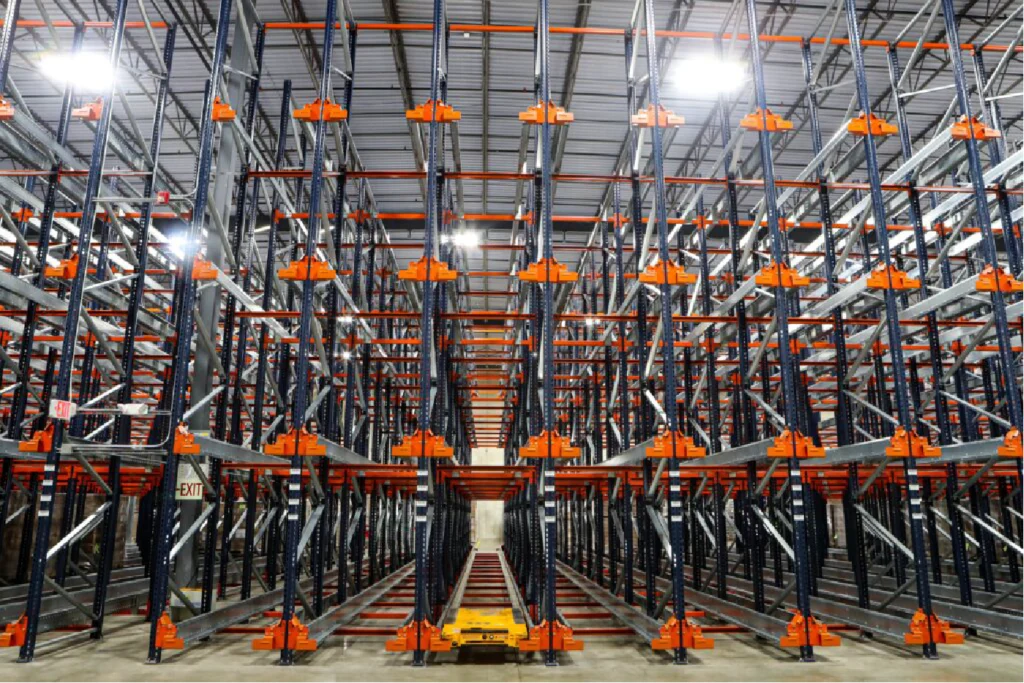
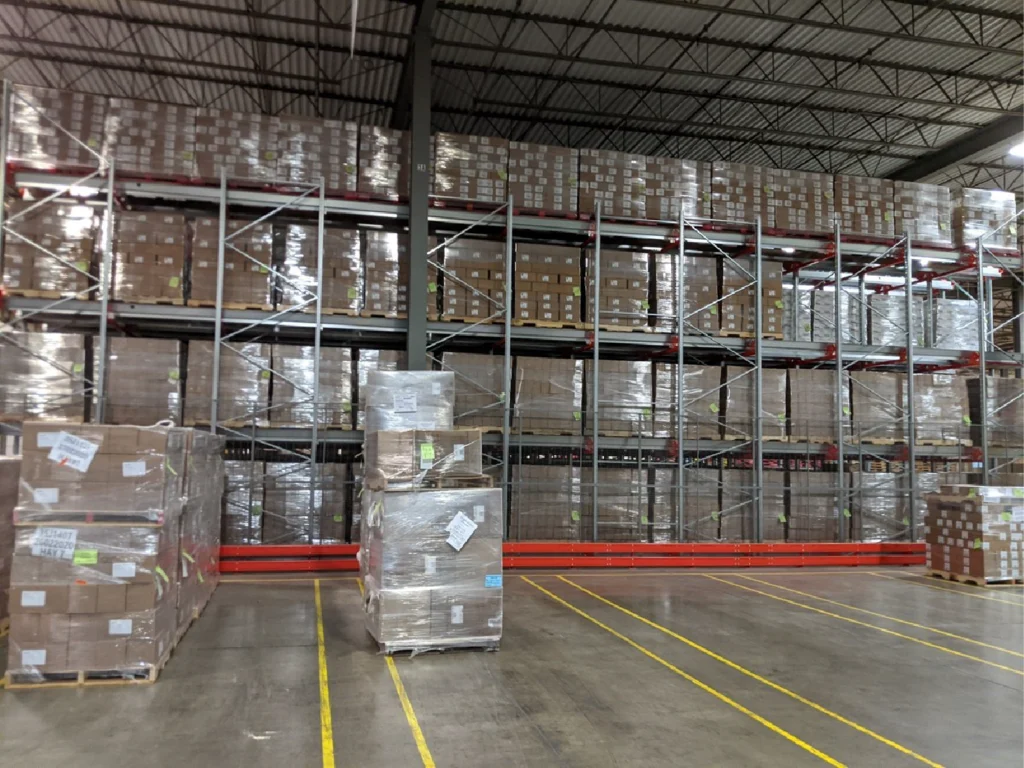
When the WIP is palletized and needs to sit between major production steps, pallet shuttle automation is a strong fit. It provides operations with a structured buffer with greater storage capacity than floor staging and is more controlled than leaving pallets around production equipment. Shuttle systems are designed for high-density storage and can increase storage capacity while streamlining loading and unloading.
The practical value usually comes down to a few things:
- It creates an organized buffer that keeps palletized materials available for the next process
- It supports production flow when one stage runs faster than the next
- It reduces floor congestion in active manufacturing areas
- It cuts manual pallet handling and unnecessary forklift travel inside the storage system
- It improves space utilization by moving WIP into a denser storage zone
- It gives teams more control over in-process inventory without overcomplicating the solution
ASRS Systems For Non-Palletized WIP Buffering Needs
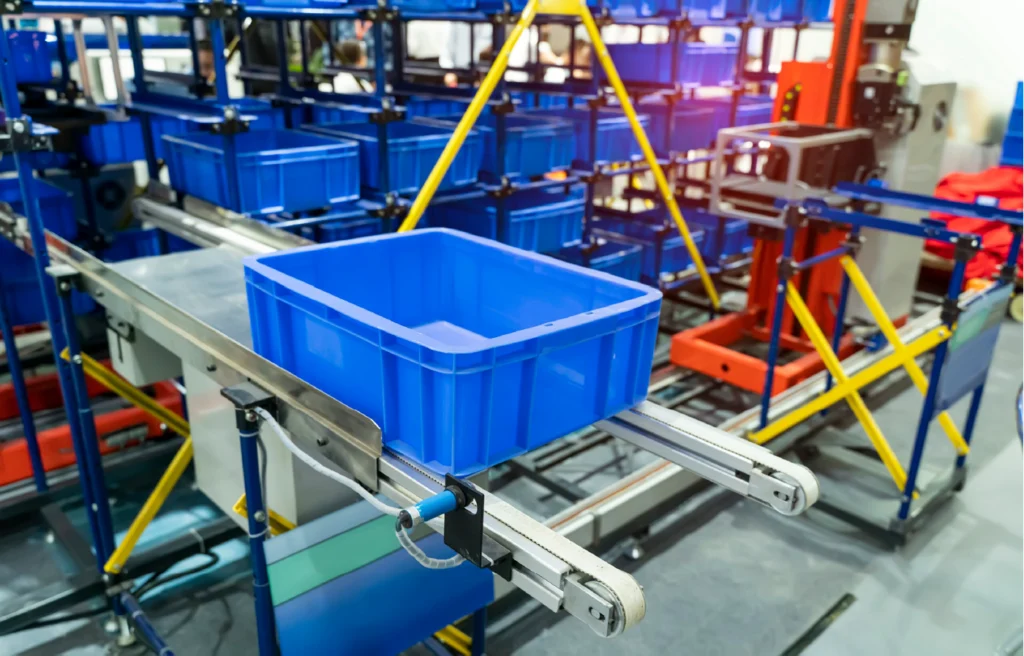
Sometimes the material moving between stages consists of cartons, totes, components, subassemblies, or tooling. In those cases, the better fit may be a different ASRS format. Here, mini-load ASRS, horizontal carousels, vertical carousels, and vertical lift modules are established automated solutions for smaller loads and parts handling.
For non-palletized WIP, leaders should think in terms of load type and access pattern:
- Mini-Load ASRS can be a strong fit for cartons, totes, trays, and smaller components that need to be buffered in a compact, organized footprint. These systems automate storage and retrieval, then deliver inventory to an operator using a goods-to-person approach for efficient item picking. In high-volume applications, this approach can significantly reduce manual labor and support very high picking accuracy.
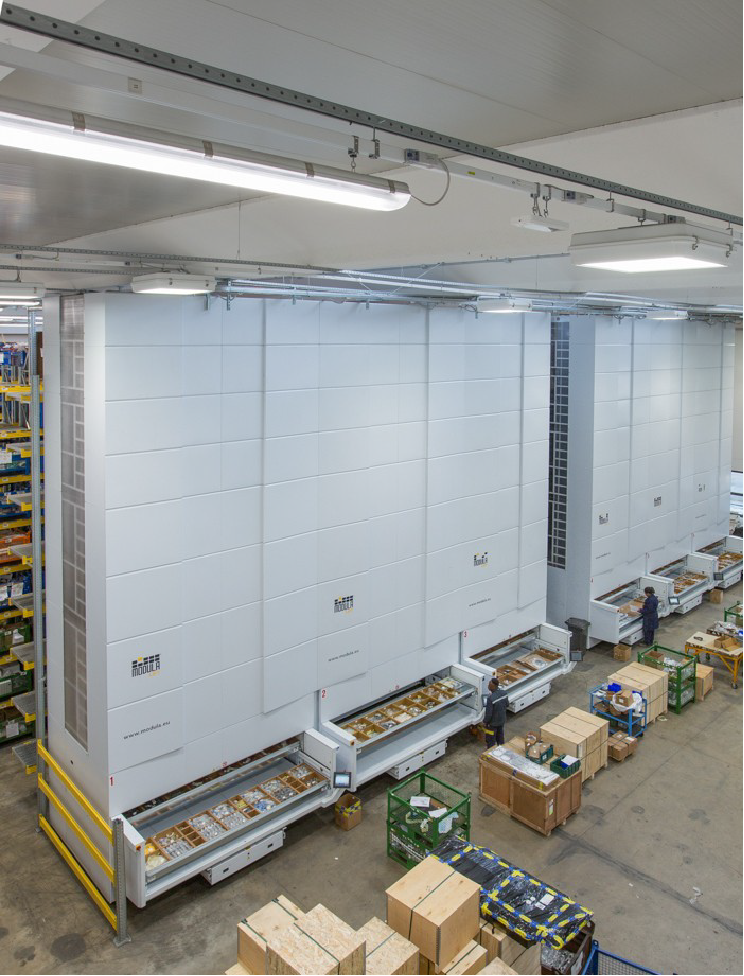
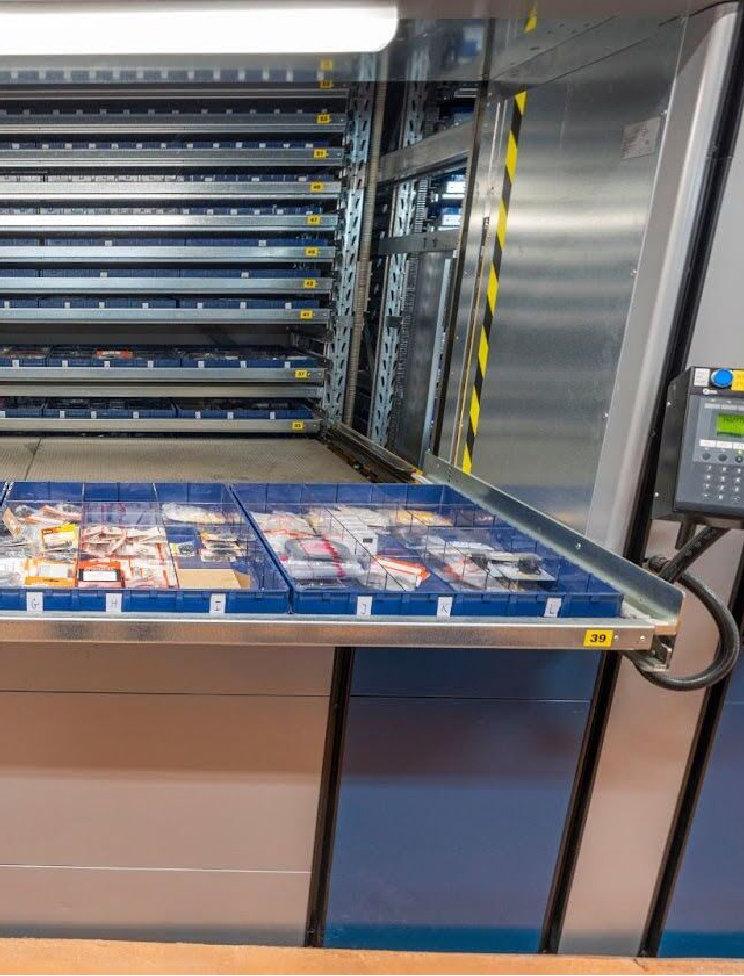
- Vertical Lift Modules can support buffering for parts, tooling, and controlled inventory that need to stay close to production without taking up valuable floor space. These automated vertical systems deliver items directly to the operator and can adjust tray spacing to the height of stored items, helping maximize vertical space while keeping materials organized, accessible, and better controlled between process steps.
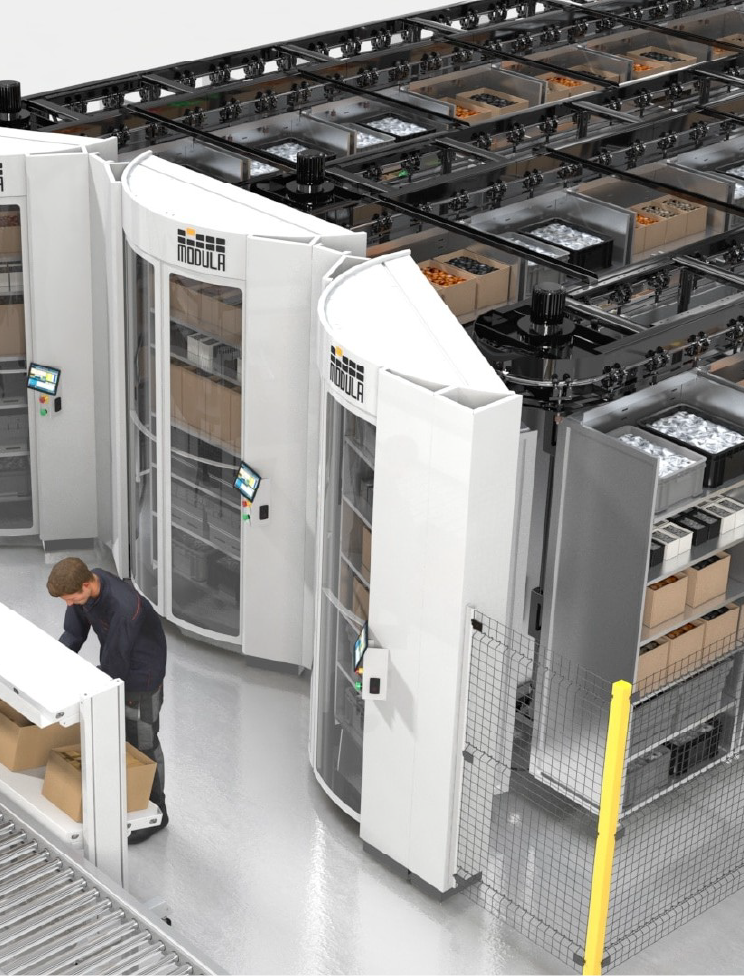
- Carousel-Based ASRS Systems can support buffering for small parts and components that need to stay organized, accessible, and close to production. Available in horizontal and vertical designs, these goods-to-person systems help maximize space while delivering items directly to workers for quick retrieval and smoother production flow.
The right buffering approach depends on what is moving through the production process. For palletized material between major stages, shuttle automation is often the clearest fit. For smaller parts and components, other ASRS systems may align better with the process.
In some operations, the storage system is only one part of the solution. A warehouse execution system (WES) software layer can help manage the timing of order release and material flow between stages, reducing the risk of bottlenecks, congestion, or inventory buildup in downstream zones. For manufacturers looking to optimize WIP buffering more holistically, that coordination layer can be an important part of the overall application.
Signs The Current Process Is Under Strain
Automated buffering becomes more compelling when unmanaged in-process inventory starts disrupting flow instead of supporting it. That usually shows up in a few familiar ways:
- Production stages run at different speeds and need a controlled buffer between them
- WIP is building up in staging lanes, aisles, or around work cells
- Manual movement is creating delays, congestion, or inconsistent replenishment
- Floor space is under pressure, and dense or vertical storage could improve flow
- Leadership needs a more reliable way to support continuity between departments or cells
When those issues become routine, buffering is no longer just a storage concern. It becomes a production-flow issue.
What To Evaluate Before You Choose
Not every buffering challenge calls for the same ASRS approach. Once the need for automated buffering is clear, the next step is to evaluate which system fits the material, access needs, and surrounding process.
Before choosing an automated buffering approach, leaders should evaluate:
- What is being buffered: pallets, cartons, totes, parts, or tooling?
- How should those materials be stored and retrieved?
- Is the priority dense storage, fast access, controlled presentation, or a combination?
- How much variation exists between upstream and downstream production stages?
- Will the buffer support one production area or a broader manufacturing workflow?
- Does the solution need to stand alone or connect to a larger automation strategy?
These questions help keep the decision grounded in operational fit rather than forcing one type of automation onto every buffering need.
FAQs
What Is WIP Buffering In Manufacturing?
WIP buffering in manufacturing is the practice of holding work-in-process inventory in a controlled zone between production stages. It helps maintain a stable flow when one process runs faster than the other.
How Do ASRS Systems Support WIP Buffering Between Production Stages?
ASRS systems support WIP buffering by turning in-between inventory into organized, accessible storage rather than floor congestion. They help reduce unnecessary handling, improve space use, and keep materials available for the next step.
Which ASRS Systems Are Best For Different Types Of WIP?
The best ASRS system depends on what is being buffered. Pallet shuttle systems fit palletized WIP well, while mini-load, VLM, and carousel-based systems are often better for smaller parts, totes, cartons, or tooling.
When Is Pallet Shuttle Automation The Right Fit For WIP Buffering?
Pallet shuttle automation is a strong fit when palletized WIP needs a dense, organized buffer between major production stages. It works especially well when floor congestion, forklift travel, and staging inefficiencies become operational problems.
Can Mini-Load, VLM, Or Carousel Systems Support Manufacturing Buffers?
Yes, these systems can support manufacturing buffers when the material consists of smaller components, cartons, totes, subassemblies, or tooling. The right fit depends on load type, access needs, throughput, and available space.
Get Help Evaluating Automated Systems For Your Production Flow
Deciding to improve production flow with automation is a major first step. Choosing the right system is the next challenge. With multiple ASRS options and varying levels of automation, manufacturers need a solution that fits the material, the process, the space, and the people using it.
Apex automation experts help evaluate those factors to identify the right-fit approach for your operation. Contact our team for a free consultation and on-site evaluation.
