
Automated Pallet Shuttle Safety: Planning Built-In Safety Protections

Guarding, Gates, And Access Control for ASRS Pallet Shuttle Systems
Automated pallet shuttle systems can transform pallet storage by dramatically increasing storage density, reducing reliance on forklifts, and supporting faster, more consistent pallet handling. But even the most efficient system needs a safety strategy built into the layout from the beginning, especially around access points, barriers, gates, and maintenance zones.
This is an important consideration because adding automation does not necessarily remove people from the picture. In some shuttle systems, operators are still actively loading shuttles and pallets. Maintenance teams still need service access. Supervisors still need visibility into how the system functions during normal operation, fault recovery, and planned maintenance. In other words, automated pallet shuttle systems reduce manual activity, but workers may still be active in and around the system during normal operations.
When safety planning starts early, barriers, gates, and protected access points can help create a controlled work area, support performance, and minimize risk.
What Safety Risks Need to Be Controlled Around a Pallet Shuttle System?
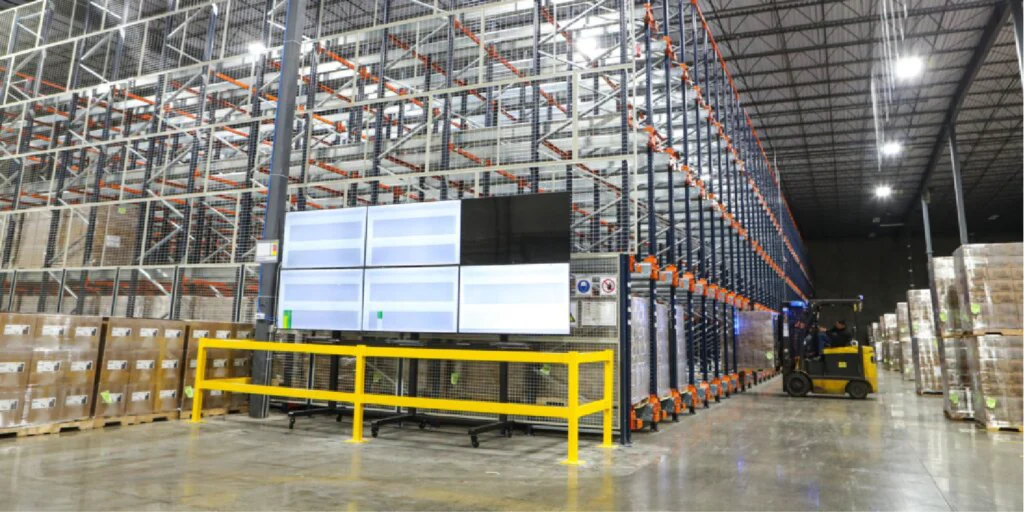
Perimeter Barrier for Pallet Shuttle Rack System
An ASRS pallet shuttle system uses powered shuttles to move pallets within deep-lane, multi-level rack structures. In semi-automated systems, forklifts typically position shuttles into designated lanes and then add the pallet for the shuttle to place into a storage bay. Extracting pallets reverses those activities. In fully automated configurations, shuttles may work with lifts, transfer cars, conveyors, and software controls to move within the system and place and extract pallets without manual intervention.
That operating model creates real advantages. Pallet shuttle systems can increase storage density, reduce forklift travel in lanes, and support high-volume SKU handling. Still, human interaction does not disappear. Safety planning has to account for:
- Shuttle movement inside deep-lane, multi-level rack systems
- Potential forklift interaction at load and retrieval faces, whether on the same side or opposite sides of the rack
- Access for inspection, troubleshooting, shuttle battery service, and maintenance
- Potential overlap between pedestrians, lift trucks, and automated motion
- The increased need for controlled entry points in dense storage environments
- Protection around conveyors, if used to feed pallets into the rack system
- Barriers for fully automated systems loaded and extracted by AGVs
These types of touchpoints are where barriers, gates, line-of-demarcation, and access control become critical.
Where Barriers Belong in an Automated Pallet Shuttle Safety Plan
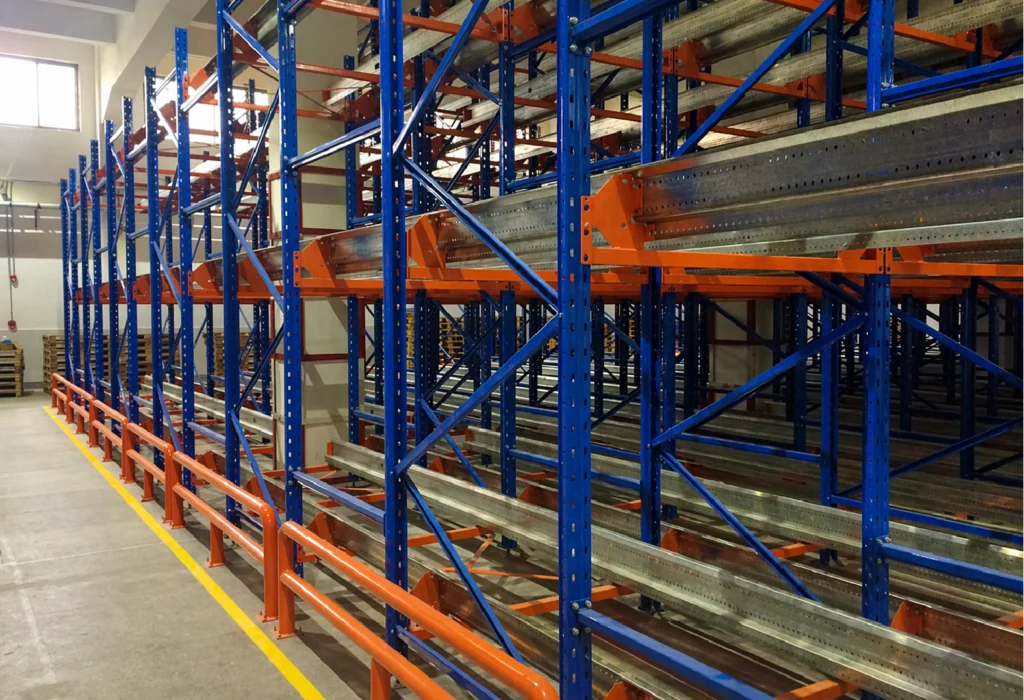
Shuttle System with Guardrails
Barriers should be incorporated into the system design. Their job is bigger than just impact protection. A well-planned barrier strategy helps control movement, separate hazards, communicate access rules, and support uninterrupted operation.
In automated pallet shuttle systems, barrier planning often starts with the perimeter. Where automated equipment, conveyors, lifts, or shuttles operate in restricted areas, physical separation helps define where authorized entry begins and where routine traffic must stop. Safety partitioning is often comprised of metal fencing that marks off the perimeter of the racking block and the operating area of automatic handling equipment and conveyors. Fall-protection safety netting can also serve as a barrier along transit areas and above pedestrian work areas to help prevent loads from falling into occupied zones.
Within the system footprint, barrier and guarding solutions may include:
End Row Protection on Shuttle Rack
Perimeter Barriers Around Automated Travel Zones
Wire mesh panels, cages, and partition systems can help separate active automation from surrounding traffic and define where authorized access begins. In many applications, wire mesh is especially useful because it creates physical separation while still allowing visibility into the protected area. That can help operators, supervisors, and maintenance personnel maintain sightlines without opening the area unnecessarily.
Controlled Access Gates at Service Or Maintenance Entry Points
Some access points need more than a basic swing gate. Where personnel may need to enter an active automated zone, gate placement and access rules should align with how the system is shut down, isolated, and returned to service.
End-Of-Aisle And Rack Guarding At Forklift Interaction Points
Where forklifts place or retrieve pallets, guarding should help protect rack columns, rail structures, and other vulnerable impact points.
Pedestrian Separation From Shuttle Operating Areas
Guardrails, bollards, floor markings, and designated walk paths help reduce overlap between people, lift trucks, and automated motion.
Rack Backing And Falling-Item Protection
Safety netting can also be used along rack structures to help prevent pallets, product, or loose material from entering adjacent travel or work areas. This can be especially important where occupied spaces, pedestrian routes, or other equipment sit near the storage structure.
How Barriers, Gates, And Access Zones Are Specified
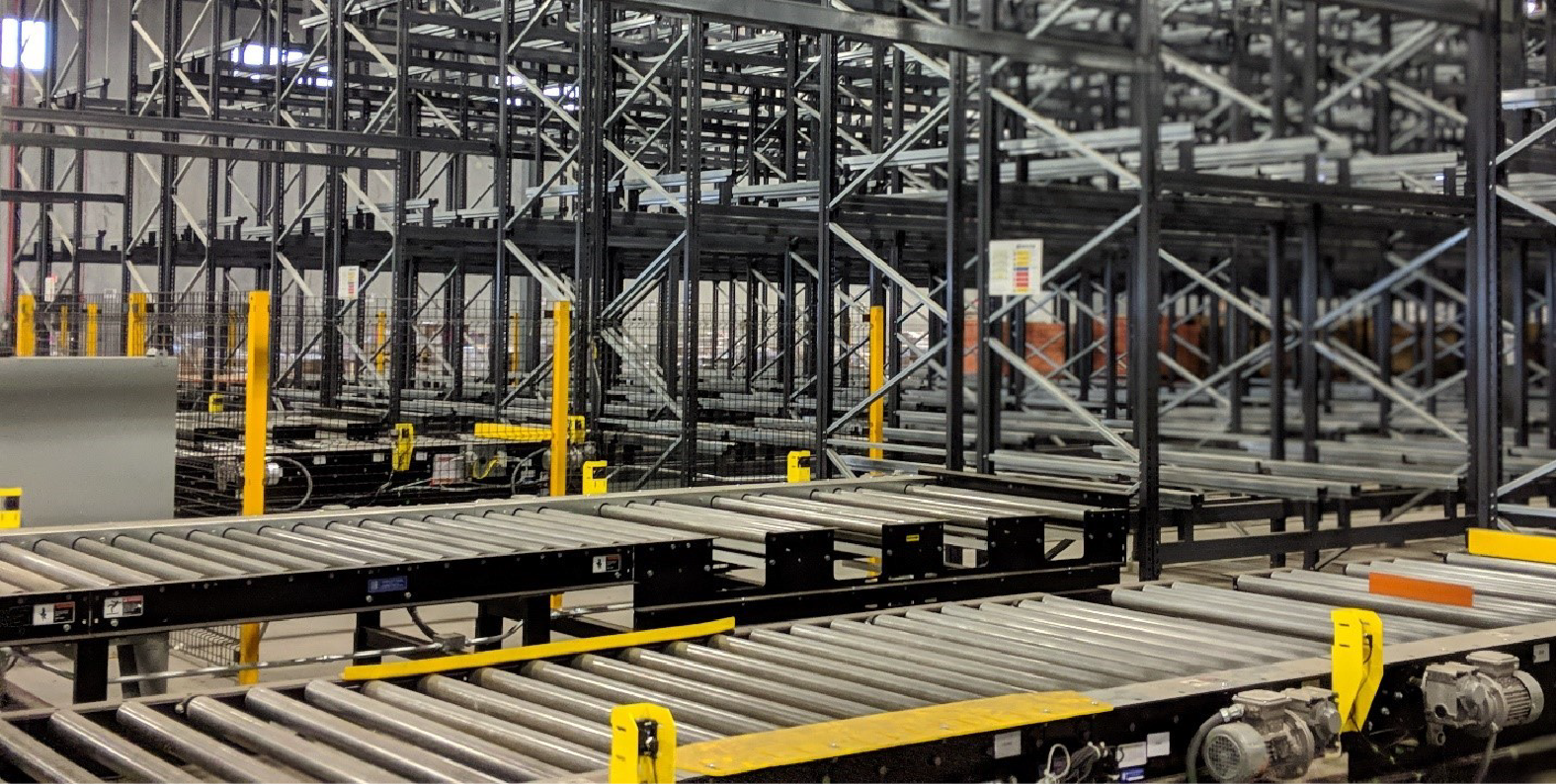
Mesh Safety Barrier Around Conveyor-Fed ASRS
Specifying barriers, gates, and access zones starts with understanding how the pallet shuttle system will actually operate day to day. It should be customized to the system layout, automation level, how pallets enter and leave the system, and where people may still need to interact with equipment.
A few key factors shape how to plan for guarding products and protected access points.
Lane Count And Rack Depth
As lane depth and storage density increase, it becomes even more important to control where personnel can approach the rack system and how they access service areas. Dense storage environments leave less room for informal movement, which makes clearly defined guarded zones more important.
Shuttle Type
A 2-way shuttle system will create different access needs than a 4-way or mother-child configuration. Systems with more automated movement across lanes or levels may require more structured guarding, controlled entry, and coordination with adjacent equipment.
Forklift Approach And Extraction Patterns
If forklifts are used to place shuttles, load pallets, or extract loads, barrier placement should reflect those travel paths. End-of-aisle guarding, impact protection, and clear separation between truck operating space and pedestrian routes all need to be planned around real equipment movement, not just the drawing.
Pedestrian Travel Paths
Workers should be able to move through the area without crossing into active shuttle zones or equipment travel paths unnecessarily. Walkways, visual line-of-demarcation, and guardrails should help define where pedestrian movement belongs.
Maintenance Frequency And Service Points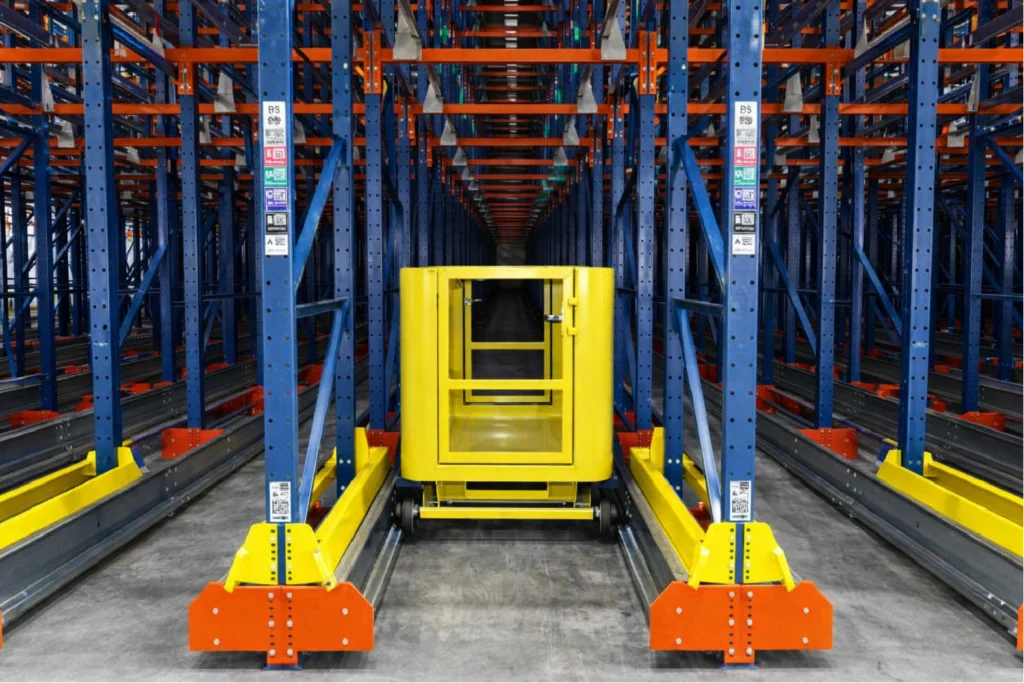
Maintenance access should be planned around the actual tasks likely to happen within the system. That may include inspection points, battery service, troubleshooting areas, conveyor access, or locations where lifts and transfer equipment need to be reached safely.
In deep-lane pallet shuttle ASRS applications, a dedicated Pallet Shuttle System Maintenance & Recovery Cart can support both planned service and unexpected recovery work. Because the cart travels within the shuttle rails, technicians can reach storage lanes to inspect equipment, retrieve disabled shuttles, or recover fallen or misaligned pallets without unloading entire lanes. This helps improve technician safety, reduce downtime, and minimize disruption to surrounding system operations.
Use Case Scenarios
- Shuttle failure mid-lane due to battery, communication, or mechanical issues
- Pallet collapse or product spillage within storage lanes
- Routine inspection or preventive maintenance access
- Emergency recovery without full lane evacuation
Integration With Other Automation Or Adjacent Equipment
When the pallet shuttle system connects to conveyors, lifts, AGVs, or other automated equipment, guarding and access control need to account for those handoff points as well. A safe design should consider how one automated zone affects the next.
Future Scalability And Retrofit Planning
Facilities often expand automation over time. Guarding systems that can be adapted or extended later may help reduce the need for major redesigns if throughput increases, SKU profiles change, or new equipment is added.
For Engineering And Operations Teams
- Document access needs for operators, maintenance personnel, supervisors, and service teams separately
- Review exception scenarios, not just normal operation
- Consider how faults, stoppages, inspections, and restart procedures may affect protected access needs
- Coordinate barrier placement with fire protection, egress, and code requirements early in the project
- Plan for future expansion so that guarding and access control do not need a full redesign later
Common Planning Mistakes That Create Safety Gaps
Many pallet shuttle safety gaps arise when guarding and access control are treated as late-stage decisions rather than as part of the original system design.
7 common planning mistakes include:
- Adding barriers after the layout is already set
- Failing to separate forklift and pedestrian movement
- Underplanning maintenance and service access
- Installing gates without clear access and shutdown rules
- Overlooking conveyors, transfer zones, or AGV interaction points
- Ignoring future expansion needs
- Waiting too long to coordinate with fire protection, egress, and safety requirements
A strong layout should support safe, predictable interaction with the system during operation, maintenance, and recovery.
When To Bring Apex In During The Planning Process
The best time to bring Apex into the conversation is at the beginning of the automation planning process, when key decisions about automation level, space use, and throughput are still being made.
Starting early also makes it easier to design the pallet shuttle system around the realities of the facility, including pallet characteristics, SKU movement, load handling, forklift interaction, and maintenance access. Guarding, barrier placement, and protected access can be planned simultaneously, helping create a system that protects the investment, supports efficient work, and is better prepared for future growth.
When you’re ready to get started, the Apex team is ready to walk you through the possibilities. Contact Apex today to explore automation solutions to meet your operational goals.
