
ASRS Pallet Shuttle Maintenance: Schedule + Complete Checklist

Practical Maintenance Plan for ASRS Pallet Shuttle (2-Way, 4-Way, Mother-Child)
Pallet shuttle ASRS are known for their efficiency, storage density, and relatively low maintenance requirements. Like any automated system, they perform best when routine checks and preventive maintenance are built into normal operations.
A practical ASRS maintenance plan helps teams keep shuttles moving reliably and address issues safely if they occur. In this guide, we walk through a preventive maintenance checklist, recommended service cadence, safe recovery procedures (including maintenance cart use), and the warning signs that it’s time to bring in the Apex Rack Repair PROs.
While specific procedures vary by manufacturer and system configuration, the maintenance framework below reflects common operational practices used across pallet shuttle ASRS installations.
Why ASRS Systems Maintenance Matters for Pallet Shuttles
A good PM plan is about protecting the three things ops teams measure:
- Uptime: Fewer faults and less unplanned downtime.
- Performance: Stable cycle times and predictable flow.
- Safety: Controlled recoveries instead of risky shortcuts and “workarounds.”
- Cost control: Longer shuttle life and less damage to rails, racks, and transfer points.
Know Your Architecture: Maintenance Differences by System Type
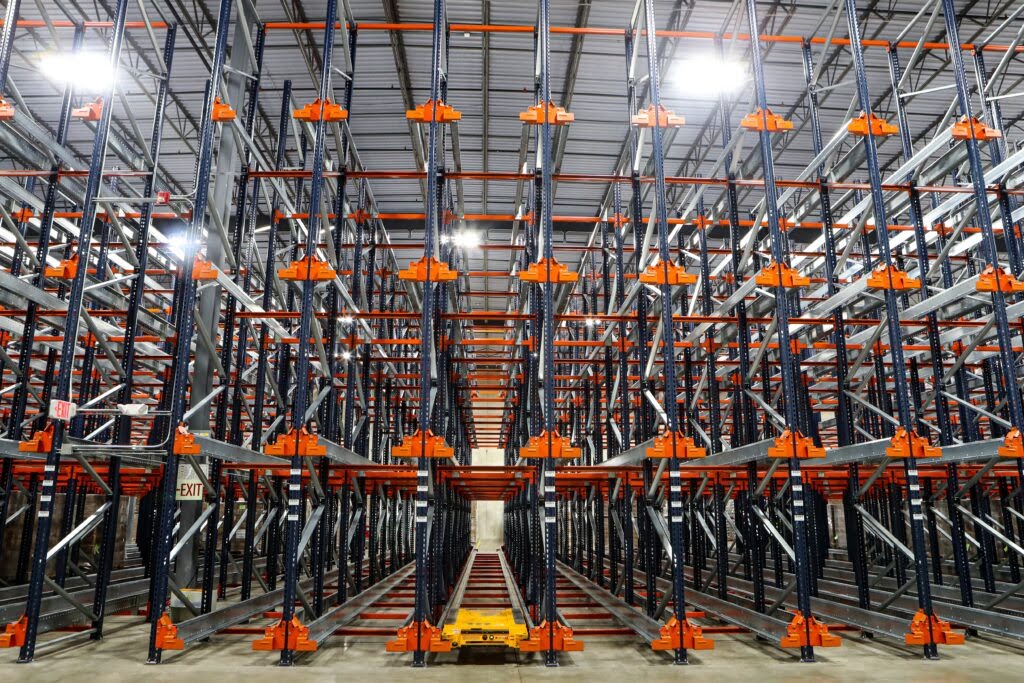
The goal is simple. It’s to know what’s universal, and what gets added as automation increases (more interfaces, more handoffs, more things that can drift out of spec).
Let’s take a look at the differences between the three design types of ASRS systems: 2-way, 4-way, and mother-child ASRS pallet shuttle systems
2-Way Pallet Shuttle Systems
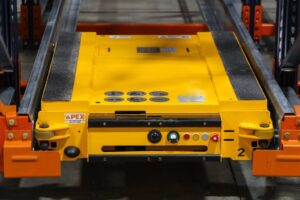
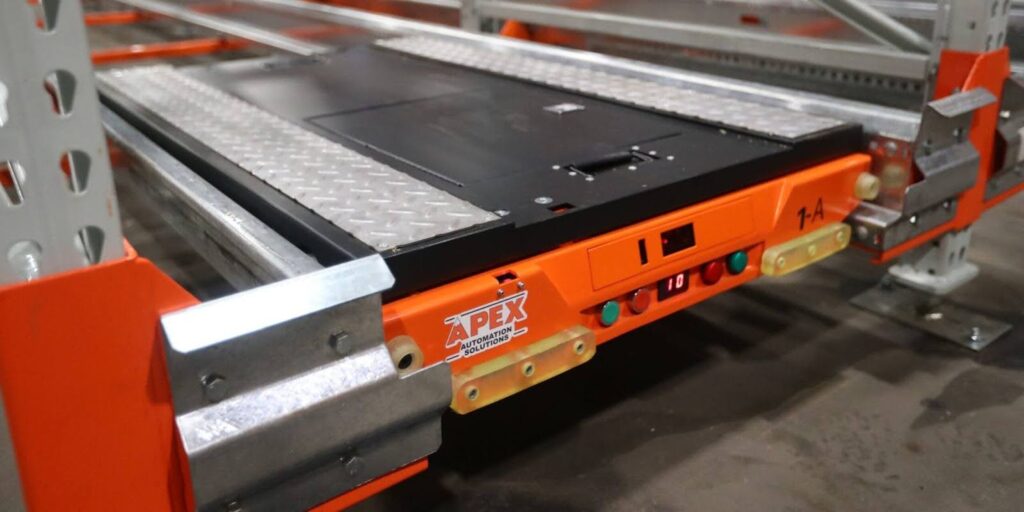
A semi-automated 2-way pallet shuttle system uses a motorized shuttle to move pallets along rails within a racking lane. An operator places the shuttle into the rack using a forklift, and the shuttle then automatically transports pallets to and from storage positions within the lane. Because pallets move two directions (in and out) along a single lane, the system significantly increases storage density while reducing forklift travel and improving operational efficiency.
Maintenance Focus:
- Shuttle health + lane condition + forklift interaction points – Core focus is wheels/rollers, lift/load handling, rails/end stops, and the lane entrance where pallets and forklifts interact.
- Common maintenance drivers: pallet condition, lane entrance impacts, debris in travel path – Poor condition pallets, repeated forklift impacts, and debris dragged into lanes drive most system faults.
- Recovery readiness: safe access and retrieval procedures – Plan for controlled access and retrieval. Avoid repeated restarts and improvised tools when a shuttle stops mid-lane.
4-Way Pallet Shuttle
A 4-way pallet shuttle system is a fully automated solution that uses robotic shuttles capable of moving forward, reverse, cross-aisle, and vertically across a grid of storage lanes. Integrated with warehouse control and execution systems, the shuttles work with lifts and conveyors to automatically store, retrieve, and transport pallets, maximizing space utilization while reducing forklift use and manual handling.
Maintenance Focus:
- Added subsystems: lifts/elevators + transfer interfaces + conveyors (typical) – 4-way shuttles add more handoff points and often vertical movement via elevators, which expands the inspection scope.
- Expanded inspection scope: more sensors, more handoff points, more calibration/verification – Maintenance becomes less “just the lane” and more “lane + interfaces + confirmation logic.”
- Troubleshooting emphasis: transfer-point faults, lift interface issues, repeated location-based faults – Most persistent issues cluster at handoffs (transfer zones) and at specific locations where alignment or cleanliness has drifted.
Mother-Child Shuttle
A mother-child shuttle ASRS system uses two coordinated vehicles to move pallets efficiently through the warehouse. A mother vehicle travels along the main aisle, carrying and deploying a child shuttle that enters storage lanes to place or retrieve pallets. Elevators move pallets and shuttles between levels, while WES and WCS software coordinate movements, track inventory, and ensure precise pallet alignment. This layered transport approach improves
efficiency, reduces travel distances, and supports scalable, high-throughput storage as additional levels are added.
Maintenance Focus:
- Two-vehicle system considerations (mother carrier + child shuttle) – You maintain two assets plus the coupling/handoff behavior between them.
- Transfer points and coordination checks (mother/child handoff behavior) – Small inconsistencies in handoff alignment or confirmation can create repeat stops and recoveries.
- Charging approach considerations (e.g., charging zones/behavior) and what that means for cleanliness/alignment – Charging is less forgiving: dirty, obstructed, or misaligned charging points show up as runtime drops and unexpected stops.
Maintenance Checklist for Pallet Shuttle ASRS Systems
Lane & Rail Housekeeping (Debris Prevention)
- Travel path cleanliness standards – Keep the lane face and travel path free of wrap tails, banding, labels, wood chips, loose product, and ice/frost. If it can get under a wheel or in front of a sensor, it counts.
- Check for lane/rail defects – Look for loose/missing fasteners, shifted rail segments, damaged joints, bent rails, uneven transitions, and worn contact surfaces, especially at lane entrances and end stops/guides.
- Environment-specific notes (dusty facilities, cold storage, packaging debris)- Dust builds rail film and sensor haze fast, cold storage adds ice/condensation grime, and packaging-heavy operations produce constant wrap/cardboard fragments.
- Rack condition matters to shuttle reliability – Alignment drift and impact damage manifest as shuttle hesitation, positioning errors, and repeat faults at the same lane/location.
- Visual indicators that require escalation – Bent uprights/bracing, missing or loose anchors, visibly shifted rails, and recurring impact marks are “stop and escalate” signals.
- When to involve the Apex Rack Repair PROs – Call when faults repeat in one lane after cleaning, when any rack/rail damage or missing anchors are found, or when entrance impacts keep happening and need protection improvements.
Shuttle Mechanical Health
- Wheels/rollers and wear indicators – Watch for flat spots, uneven wear, embedded debris, slipping, or rough travel. These usually appear before a failure.
- Lifting Mechanism – Slow/uneven lift, unusual noise, or inconsistent raise/lower behavior is a maintenance trigger, not a “monitor it” item.
- Fasteners, housings, and “listen/look/feel” cues – New vibration, scraping, rattling, or hesitation often means looseness, rubbing, or damage that should be corrected before it becomes downtime.
- Transfer mechanisms and load handling surfaces – Wear, contamination, and scuffing at contact surfaces commonly indicate alignment drift or inconsistent pallet presentation.
Sensors, Positioning, and Pallet Presentation
- Keep sensor faces/targets clean – Clean on schedule (not only after alarms) and check mounts for looseness—vibration creep creates repeat faults.
- Verify consistent pallet seating and positioning behavior – Pallets should enter straight, centered, and fully seated; poor pallet condition and overhang are frequent root causes.
- Watch for repeat faults in the same lane/location – Same spot, same fault usually means lane/structure/marker/interface. Inspect that exact location and escalate if it persists.
- Verify sensor repeatability when diagnosing repeated location faults – Alignment drift or mounting vibration can shift detection thresholds over time.
Battery & Charging Health
- Daily charging behavior checks – Charging starts and completes consistently, with no damaged connectors, heat marks, loose contacts, or recurring errors.
- Monthly battery health review trends – Trend runtime and charge behavior by shuttle ID; sudden drops or repeated low-battery events should trigger investigation.
- Charging area condition – Keep charging zones clean, dry, unobstructed, and aligned. Misalignment plus contamination is a common reliability killer.
ASRS Pallet Shuttle Maintenance Schedule (Quick Reference)
| Frequency | Focus Areas |
| Daily | Debris removal, lane entrance inspection, pallet condition checks, fault log review |
| Weekly | Rail cleaning, shuttle visual inspection, repeat-fault lane review |
| Monthly | Full PM audit, battery health trends, deeper mechanical inspection |
| Quarterly | Transfer interfaces, lift/elevator alignment verification |
| Annual | Rack inspection, protection upgrades, SOP refresh and training |
Preventive Maintenance Cadence (Daily → Annual)
Daily Checks
- Visually inspect rack faces, lane entrances, and transfer points to confirm they are clear, undamaged, and free of debris. Note any impact marks, pallet overhang, or shifted rack components that could interfere with shuttle or pallet movement.
- Remove debris and clear obstructions before the next cycle so they don’t turn into traction issues, misreads, or stuck shuttles.
- Scan the fault log for new repeats, especially anything recurring in the same lane or location, and document what you found.
Weekly Checks
- Spot-check rail condition and do targeted cleaning where buildup is visible or where faults have clustered, then record the lane IDs inspected.
- Visually inspect the shuttle for wear, damage, loose covers, and unusual residue or contact marks that suggest rubbing or misalignment.
- Review repeat-fault patterns by lane/location to identify “hot spots,” then document the top offenders and the corrective actions assigned to them.
Monthly Checks
- Run a full PM audit with a performance review using downtime minutes, fault frequency, and cycle-time drift, then log trends and anomalies.
- Review battery health and charging behavior trends to catch runtime drops or charge irregularities early, and document any outliers by shuttle ID.
- Perform a deeper mechanical inspection focused on wheels/rollers, lift components, and transfer/load-handling surfaces, then record wear indicators and replacements needed.
- Verify sensor cleanliness and basic function using your standard checks, and document any sensors that require cleaning, adjustment, or replacement.
Quarterly Checks
- Validate system interfaces and handoff points, especially in 4-way and mother-child systems, and document any repeated transfer-related faults.
- Inspect lift/elevator interfaces and transfer-point alignment and condition where applicable, then record verification results and any adjustments made.
- Complete preventive adjustments with documented verification to confirm changes are repeatable and traceable in the maintenance record.
Annual Checks
- Complete a formal rack inspection and protection plan review, then document repairs, reinforcement needs, and any recommended impact protection upgrades.
- Refresh SOPs, recovery procedures, and training touch-ups so operators follow controlled recovery steps and don’t drift into unsafe workarounds.
Recovery Procedures: Using the Maintenance Cart Safely and Effectively
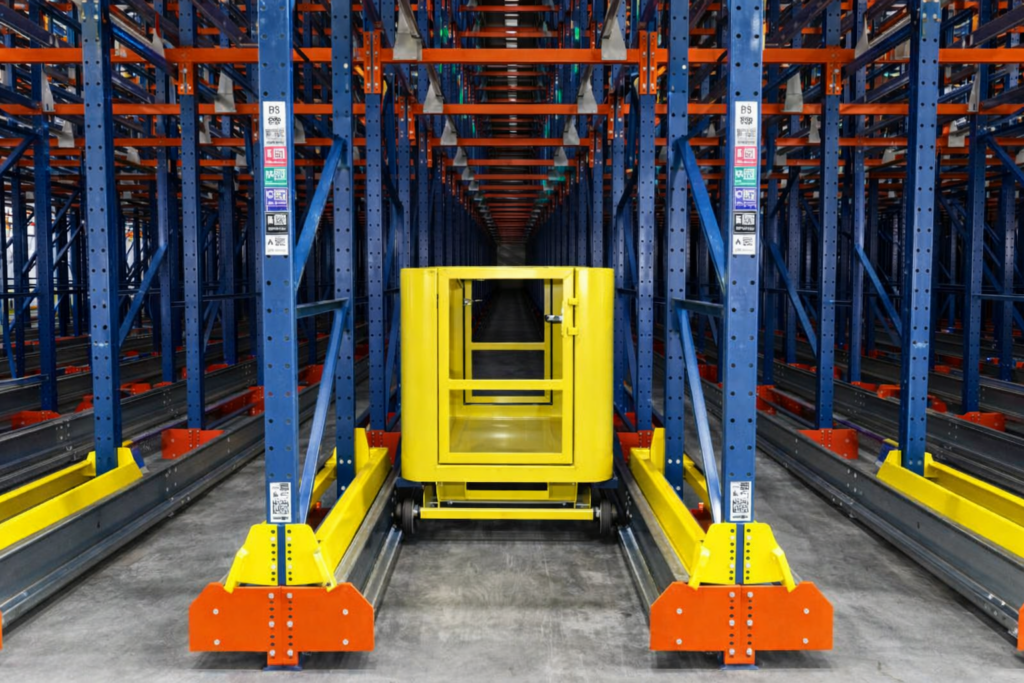
When to Deploy the Cart
Use the maintenance cart when you need controlled, stable access inside the system, and there’s no safe way to resolve the issue from the aisle or lane face.
Common triggers include:
- A shuttle is stuck mid-lane and won’t recover through normal controls.
- Debris needs to be removed from within the travel path.
- You need close access to rails, lane components, or the shuttle itself for inspection.
Step-by-step Safety Approach
Recovery should be conducted in a methodical process.
A simple, repeatable approach:
- Follow your facility’s Lockout/Tagout (LOTO) procedure before anyone enters
- Stop the system and confirm the shuttle is not able to move unexpectedly.
- Secure the area so no one can enter the hazard zone or restart operations “to test it.”
- Use controlled access points and follow site rules for authorized entry only.
- Deploy the cart as designed and position it for stable, hands-free access.
- Clear the issue, then inspect the lane and the shuttle before returning to service. Confirm the system is in a safe state before anyone reaches into lanes, rails, or transfer zones.
“Do Not” List
This is where small problems become injuries or expensive damage.
Do not:
- Improvise access tools (forks as platforms, makeshift hooks, “just reach in”).
- Bypass interlocks, guards, or safety steps to save time.
- Repeat restarts, hoping it clears. If you don’t remove the cause, you usually make it worse.
- Pull or force the shuttle through resistance (that’s how rails and rack components get damaged).
Post-recovery
Once the shuttle is recovered, don’t treat the job as finished until you’ve confirmed why it happened.
Minimum closeout steps:
- Document what happened, where it happened, and what action resolved it.
- Inspect the lane, rails, and nearby structure for fresh impacts, shifted components, loose fasteners, or recurring debris sources.
- If the fault repeats in the same lane/location, escalate for a deeper lane/structure inspection rather than cycling the same recovery again.
Troubleshooting by Symptom (Fast Answers for Ops Teams)
- Shuttle stops mid-lane – Most often, it’s debris/obstruction, traction/drag, a positioning/sensing issue, or power/battery conditions. First, check the stop location for debris/impact/rail shift; review the fault type; clean relevant sensors/targets; and see if it repeats in the same spot.
- Pallet not seating correctly – Usually, pallet condition/overhang, lane entrance damage, or dirty/misaligned detection. Start by removing the pallet variable, inspect the entrance and first rail section, clean/check seating sensors, and note whether it’s lane-specific or follows a shuttle.
- Frequent sensor faults – Typically, contamination, loose mounts, cable issues, or drift at one location. Clean and inspect the mounts, then determine whether the fault follows a single shuttle or clusters in a single lane/location.
- Battery drains faster than normal – Often, battery aging, charging contact/alignment problems, or increased rolling resistance. Compare runtime trends by shuttle ID, inspect charging zone condition/alignment, and look for drag indicators like new noise/hesitation.
- Transfer-point issues (for fully automated systems – Most problems occur at handoffs: dirty sensors, misalignment, debris at transfer surfaces, or interface communication/timeouts. Inspect/clean the transfer zone first, check alignment/contact marks, and confirm if failures are tied to one interface point.
- Recurring faults in the same location: how to isolate lane vs shuttle vs structure – If multiple shuttles fault in the same spot, assume lane/structure/marker/interface; if one shuttle faults everywhere, assume shuttle; if it correlates to pallets/SKUs, assume pallet/load. Inspect that exact location and escalate if it persists after cleaning.
What to Track + What to Stock (So PM Becomes Predictable)
Maintenance Metrics that Matter
To make PM predictable, track what fails, where it fails, and how performance drifts over time. Start with fault frequency by lane/location to clearly identify repeat-problem zones rather than treating them as “random faults.”
Log recovery events with how often they happen, where they happen, and the confirmed cause once you find it. Keep a simple view of downtime minutes and cycle-time drift so you catch slow degradation before it becomes a shutdown.
Finally, trend battery runtime by shuttle ID. Runtime drops and charge anomalies are often the earliest signal of a battery, charging, or drag issue.
Spares Strategy (right-sized)
Stock spares around what stops operations and what wears first. In most pallet shuttle systems, that means high-wear and critical categories like wheels/rollers, load-handling or transfer wear parts, common sensors and their mounts, charging/contact components, and basic guards/hardware that tend to get damaged or lost during recovery work.
Just as important, keep documentation tight and usable. Keep inspection logs, document corrective actions, and clearly define escalation triggers for when a repeat fault, visible rack/rail damage, or recurring impacts should move from “maintenance” to “repair and protection.”
Keep Uptime Predictable
Consistent pallet shuttle ASRS performance comes down to three basics: clean lanes, healthy shuttles, and a reliable rack structure.
When those stay in spec, faults drop, recoveries become rare, and throughput stays predictable.
If you’re seeing repeat faults in the same lanes, visible rack/rail damage, or recurring impacts at lane entrances, call the Apex Rack Repair PROs for rack inspection, repair, and safety recommendations that protect shuttle uptime.
