
Prevent Pallet Rack Damage with System-Specific Forklift Training | Apex Safety Spotlight

On-Site Training & Videos Are the Right Tools to Protect Against Pallet Rack Damage
Your pallet racking is a critical component of a productive warehousing operation. It’s also a significant capital investment. Those are two good reasons to do what you can to protect against forklift strikes that can lead to pallet racking damage.
Your forklift operators should be trained on the proper techniques for loading and unloading each system type in your facility. While single-deep selective rack is the most common rack system, many facilities also rely on high-density systems that require a different approach for accessing inventory. To help you, the Apex team created system-specific forklift training videos, and we offer on-site forklift operator certification classes.
Apex Forklift Operator Training Videos:
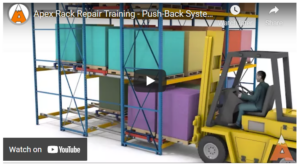 Push-Back Rack |
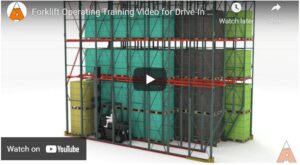 Drive-In Racking |
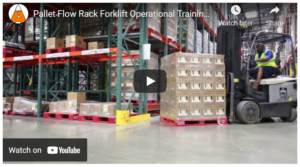 Pallet Flow Rack |
Each of these high-density storage systems use lanes to store pallets for a single SKU. The density varies by system type from 2 to 3 pallets up to 10. Here is a brief overview of each system to highlight their differences.
Push-back rack is a system that stores 3-4 pallets per lane. The pallets are placed on wheeled carts that sit on slightly pitched rails in an enveloping pattern at the face of the lane. The first pallet is loaded on the top cart, and as more pallets are loaded, the driver gently pushes back the pallet at the aisle to reveal a cart for the new pallet. Unloading happens in reverse, with the driver controlling the advancing pallet speed while slowly backing away from the lane. It has single-aisle access for loading and uploading.
Drive-in rack is a unique storage system that requires the driver to advance into the lane and place the pallet on horizontal arms protruding on the left and right sides. The driver must back out of the lane after depositing or extracting a pallet. This extreme forklift interaction with the rack system makes drive-in highly vulnerable to forklift strikes. Proper training is imperative to prevent pallet rack damage and for warehouse safety.
Pallet flow rack uses wheeled rails to flow pallets from a load side to an opposite extraction aisle. Forklift operators gently place the pallet into the lane. It may take a nudge to begin the flow, and when extracting pallets, drivers may need to restart the flow of the rear pallets with a nudge before backing away. The system depth can go up to 10 pallets deep.
 Push-Back Rack |
 Drive-In Rack |
 Pallet Flow Rack |
The system design of your racking should include proper column and end row guards to protect vulnerable components from a forklift strike. However, even with comprehensive training, accidents can happen. That’s when it’s time to turn to the Apex Rack Repair App.

Don’t Let Pallet Rack Damage Slow You Down
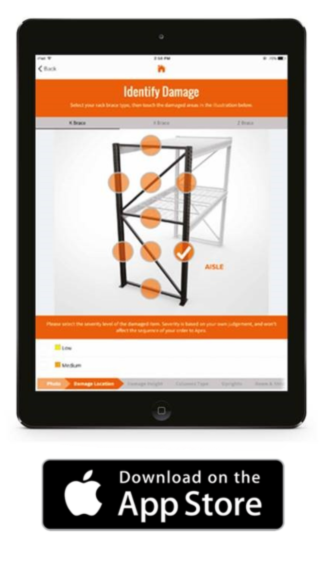
The Apex Rack Repair App is a rack inspection and damage assessment tool that you can download onto your smartphone or tablet. The App will guide you through your damage inspection, prompt you for all the necessary specs to evaluate the severity, and enable you to order a repair kit if needed. Simply upload your findings from the App to the Apex PROs, and we will get back promptly with the next steps.
Each damage location is reviewed, and an independent repair solution is suggested if necessary. Our repair solutions offer the safest and most long-term resolution to your pallet rack damage.
Download the Rack Repair App and give it a try! It’s free to download from the App Store.
If you’d prefer to call the Apex PROs and let them handle rack incident reviews or complete a full warehouse safety inspection, just give us a call.
