
10 Tips for Pallet Rack Safety Training Success | Apex Safety Spotlight

Pallet Rack Safety Training Tips from the Apex PROs
Pallet racks are a well-known commodity in most warehousing and distribution centers, maximizing vertical space and efficiently storing inventory and supplies. Vertical pallet rack systems open up floor space for safer, more orderly operations. The steel-framed structures withstand significant capacities with years and years of useful life. However, one of the best ways to safeguard your reliable storage racking is to ensure your team knows how to use it properly.
Use our 10 Tips to round out your worker training and protect your valuable asset from damage and your team from injuries.
10 Pallet Rack Safety Training Tips
1. System Familiarity
All pallet rack systems are not created equal. Racking systems vary dramatically from static single pallet depth to 20+ fully automated… and everything in between. Review the safety guidelines particular to your racking systems with all warehouse employees.
Common Pallet Rack System Designs
| Static Racking | Dynamic Racking |
Safety Areas to Cover:
 Basic structure — uprights connect to beams to create the storage levels. This helps workers understand that if they see something not securely attached, missing, or damaged, they need to bring it to the attention of warehouse management.
Basic use — review how the pallets are supposed to fit into the storage slots to make workers able to discern dangerous misalignments, at-risk pallets, and loose materials that can risk workers below or potentially destabilize the system.
Flue Spaces
Longitudinal flue space is an open space behind a row of rack. Whether between two back-to-back rows or when positioned against a wall.
Transverse flue space is the opening between pallets in double-wide storage bays.
Both types of flue spaces are required for fire safety compliance. It is important to train employees to keep the area open and report any compromised flue areas. For more information, check out our blog on the topic.
Load capacities — more on this below, but ensure that load capacity signs are clearly visible for each system configuration and that workers understand what is indicated on the signs. Consider placing additional capacity labels right on the beams for extra coverage.
Guarding — note the types of rack guards and guardrails that may be in place to protect the rack system from forklift damage, as well as designate vehicle or pedestrian-only spaces. Empower employees to notify warehouse management if they see damaged guards or dangerous traffic patterns in and around the rack systems.
Moving parts — a dynamic storage rack system means something in the racking moves. These racking systems pose a particular risk to workers unfamiliar with the rack design.
- Gravity-fed systems (push-back, pallet flow, carton flow) automatically flow items on wheels or rollers from the rear loading side of the rack to the front picking side.
- Automated and semi-automated ASRS storage systems contain multiple moving parts and are programmed to move items that may catch an unsuspecting worker by surprise.
- Mobile racking systems shift entire rows of racks to open access to storage locations.
2. Proper Lift Truck Operator Training
We can’t emphasize enough that forklift and lift truck operators must be trained on the material handling equipment that they will operate AND the racking systems they will access. As detailed above, storage racking systems vary significantly by design and are customized to each facility based on the inventory specifications.
For example, some systems are accessed for loading and unloading via a single aisle; others use separate load and extraction aisles. Very tall storage racking risks overloading forklift capacity as capacity drops the higher the mast is raised. Pallet flow systems require a tilt of the forks to place pallets, while push-back and selective racking require precision pallet placement… speaking of precision, drive-in/drive-thru racking allows zero room for error in either pallet placement or driving into and exiting the rack system.
The Apex team covers you from all angles on forklift and lift truck operator training. We conduct on-site group training using your equipment and your racking, and we provide a free video library with system-specific videos (in English & Spanish) to use for refreshers.
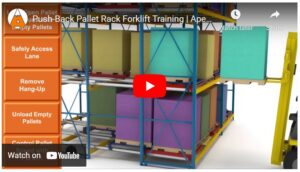 Push-Back Pallet Rack |
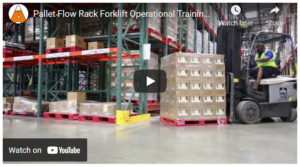 Pallet Flow Rack |
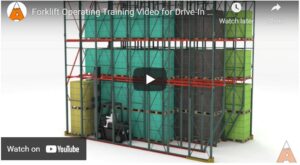 Drive-In Rack |
3. Load Capacity & Rack Safety Signs
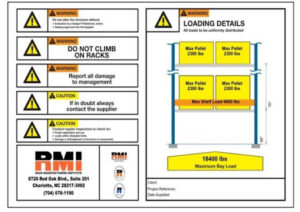 Pallet rack capacity signage communicates the maximum load a rack can safely bear, preventing overloading and potential structural failures. This information is vital for warehouse staff to optimize storage space while adhering to safety standards.
Rack safety signage informs workers about proper handling procedures, safety protocols, and potential hazards associated with the system. By educating your team as to the content of the signs, you minimize unnecessary risk to your team and your operation. Both pallet rack capacity and safety signage contribute to a well-organized and secure warehouse environment, enhancing productivity, reducing the likelihood of accidents, and ensuring the longevity of your pallet rack equipment.
4. Hand Loading Cases, Eaches, Totes
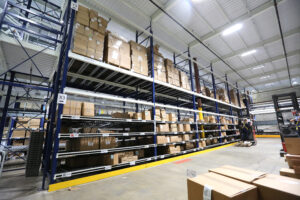
Carton Flow Bottom Levels, Pallet Flow Storage Above
When hand-loading inventory into pallet rack systems, it’s essential to follow proper procedures to ensure safety and efficiency. Start by confirming the pallet rack’s load capacity using capacity signage. Place heavier items on lower shelves to maintain stability and lighter items on higher levels. Distribute weight evenly across the pallet to prevent imbalances.
Risks arise when exceeding load capacities, improperly stacking goods, or neglecting weight distribution. Overloading can lead to structural failure, compromising the integrity of the rack and posing serious safety hazards. Workers should be trained on proper lifting techniques to reduce the risk of personal injury. Regular inspections and maintenance of pallet racks are crucial to identify potential issues. Adhering to these procedures mitigates risks, enhances workplace safety, and preserves the longevity of both the inventory and the pallet rack system.
5. Reconfiguring Storage Racking
Never reconfigure your racking without a licensed engineer’s approval. Moving beam levels or adding additional shelving without a licensed engineer’s review is unsafe… full stop. Clearly inform workers that if there is a concern with how the rack is configured to satisfy current inventory, they must alert warehouse management to devise a safe, compliant solution.
What can spark a system design to require reconfiguring?
- Change in inventory quantities
- Change in inventory specifications –sizes, shapes, load weights
- Change in load heights — e,g., double stacking
For a deeper dive and to learn the 5 Do First Tips for reconfiguring your storage racking system, check out our blog on the topic.
6. Clutter Free Aisles
It is imperative to maintain uncluttered access to your pallet rack. Aisles free from clutter and unattended inventory ensure efficient and safe movement of forklifts and personnel, preventing accidents and optimizing workflow. Clear aisles enable quick access to stored goods, reducing retrieval time and enhancing overall productivity. Additionally, unobstructed aisles facilitate emergency evacuations and firefighting efforts, which are crucial for workplace safety.
Regularly monitoring and enforcing aisle-clearing practices contribute to a well-organized and hazard-free warehouse environment, minimizing disruptions and enhancing the overall operational effectiveness of pallet rack systems.
7. Storage Racking is NOT Made for People
Standing on a pallet rack bay is not acceptable outside of experienced repair/installation crews. Pallet racks are designed to support palletized loads, not the weight and movement of a person. Standing on a pallet rack poses significant risks, including structural failure, collapsing shelves, and the potential for severe injury or fatality.
Additionally, the narrow and elevated design of pallet rack bays increases the likelihood of falls. For tall racking, it is essential to use proper lift vehicles to access upper levels. Maintenance issues like clearing stuck pallets or debris in dynamic systems require adherence to specific processes to ensure the safety of your team and equipment. The Apex PROs are only a call away. When in doubt, give us a call to ensure your warehouse safety.
8. Proper Storage for Hazardous Materials
While suitable for many goods, your pallet racking may not be designed to hold certain hazardous items safely. Some materials pose risks such as flammability, corrosiveness, or toxicity, demanding specialized storage solutions like dedicated cabinets or shelving containing containment features.
Pallet racking lacks the specific design elements necessary to contain spills, mitigate chemical reactions, or prevent cross-contamination. Using inappropriate storage for hazardous materials increases the risk of accidents, jeopardizing worker safety and environmental compliance.
9. In-Rack Fire Suppression Systems

In-rack sprinklers enhance fire safety by rapidly suppressing flames within pallet racks, preventing fire spread. Their targeted and swift response helps protect inventory, minimizes damage, and aids in containing the fire, which is crucial for safeguarding personnel and assets in a warehouse or storage facility. Train employees to understand the location and function of in-rack sprinklers, emphasizing the importance of not obstructing them. Also, stress reporting any damage or obstructions noted.
10. Reporting Chain
A well-established reporting structure ensures prompt communication of safety concerns to relevant supervisors or safety personnel. Quick reporting prevents accidents and structural failures. Empower employees to report safety concerns found during their workday, demonstrating the organization’s commitment to maintaining a secure workplace and encouraging collaborative efforts to uphold pallet rack safety standards.
Pallet Rack Safety — Inspections, Repairs & Training
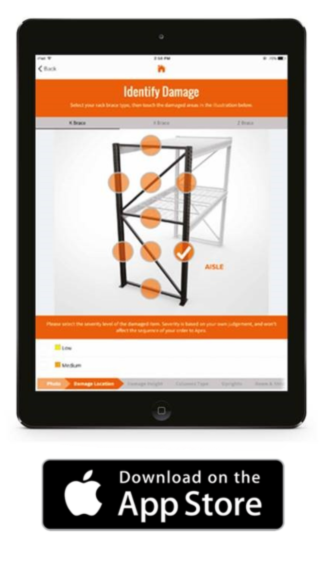 The Apex team is here to help you with your warehouse safety goals. We encourage you to download the Free Rack Repair App to help you conduct pallet rack damage assessments. With the app on your tablet or smartphone, you are equipped with the same tool our certified rack inspectors use. The Apex Rack Repair App prompts you to capture photos and precise specs of damaged areas, enabling our team to evaluate the severity and, if needed, design a customized repair solution.
You can also schedule the Apex PROs to conduct a thorough pallet rack and warehouse safety inspection annually or more regularly. We provide comprehensive reporting of areas of concern and independent repair solutions.
Try the Apex Rack Repair App today!
