
What You Need to Know About Reconfiguring Pallet Racking

Address Inventory Changes with Pallet Racking Reconfiguring
With the built-in durability of pallet racking and the tidal wave of warehousing changes, particularly these past few years, you may be wondering what it takes to reconfigure your rack system to fit new inventory specs and changing SKUs. We hear you, and you’re not alone. It is possible and cost-effective to modify your pallet rack to get efficient access and sufficient storage, but it is not as easy as simply moving some beams up or down.
Per the Rack Manufacturer’s Institute (RMI), rack frame capacity is determined by the vertical distance between shelf beams and the load weights placed on the beams. Additionally, the shelf beams provide critical structural bracing. Therefore, shifting or adding beams –without careful examination and mitigation efforts will likely alter your system’s capacity and structural integrity.
So, before you start shifting or adding beams, etc., take a look at these Do First Tips.

Reconfiguring Pallet Racking — Do First Tips
So first things first…
- Take a look at the manufacturer-supplied Load Application and Rack Configuration (LARC) drawings and original documentation for your rack design. You may find that the drawings provide alternative elevation configurations.
- Be sure to look for in-rack sprinklers or electrical that could impact the reprofiling.
- Have a licensed structural engineer review your proposed reprofile against the drawings to confirm that the new layout will meet capacity and system integrity requirements. This is a critical step due to the fact that even if you are removing levels, it could impact the stability of the frame. Larger unsupported spans in the rack could negatively affect the capacity of the rack.
- Inspect the rack to identify any damaged, missing, or compromised components. Make repairs before reconfiguring the rack.
- Ask your engineer to supervise the rack repairs or hire a professional rack inspection and repair team like the Apex PROs.

What Can You Accomplish by Reconfiguring Your Pallet Racking?
- Reduce wasted space by minimizing vertical gaps. With two pallets per bay in a typical configuration, you can add valuable pallet positions with just one additional beam level.
- Add multiple beam levels for partial or low-profile pallet loads. Again, maximizing vertical space based on new inventory specs.
- Expand the rack system height to increase storage capacity. Yes, pallet rack extensions are a thing, and if you have the ceiling height, it’s a good way to use your cube space. As a side note, ensure your forklift equipment can accommodate the mast height and load capacities at the expanded level.
- Save costs vs. relocating. Often, reconfiguring your facility is the more cost-effective solution to moving or splitting up your operation.
- Extend the life of your pallet racking system. Your rack is built to last –with careful planning and a creative approach, that investment will repay you time and time again.
It May Not Be Simple, But It Doesn’t Have to Be Difficult
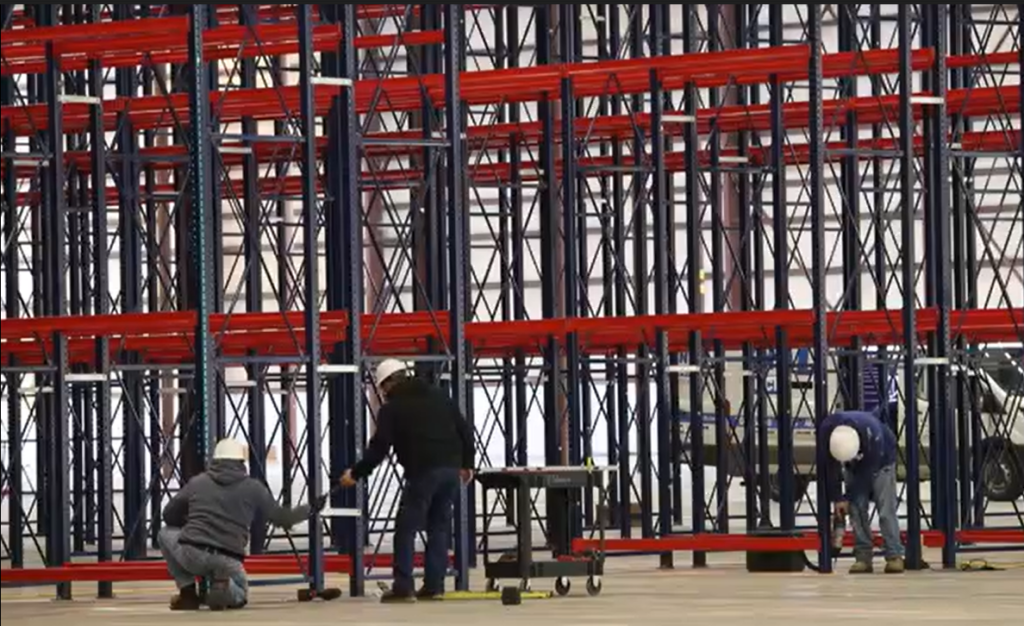
The Apex team is here to help you find the best approach to meet your changing warehousing needs. Whether expanding SKU lines, SKU volumes, or new customer delivery needs, we’ve got the team to deliver full-service support. From engineering and design to expert project management, professional installation, rack inspection & repairs, vehicles & equipment, and more. We have several warehouses strategically located throughout the U.S. to quickly access new and used pallet rack components and accessories and help you meet ambitious timelines and budgets.
Call the Apex team for a free consultation and to set up an on-site inspection.
