
Pin Down South Carolina Warehouse Safety with Pallet Rack Safety Pins

Little Pins, Big Impact For South Carolina Warehouses
In any busy South Carolina warehouse, from Charleston to Columbia or Greenville, the small steel safety pin plays a huge role. A pallet rack safety pin (also called a locking pin or drop pin) locks each horizontal beam into the upright column to prevent accidental removal.
Its job is similar to a clothing pin, but on a much grander (and heavier) scale. It stops beams from popping off when hit by forklifts or bumped by pallets. These tiny clips or bolts hold the weight of huge loads and forklift jabs without bending or twisting so they can stabilize your storage racking system.
In fact, industry codes require each pin to resist at least a 1,000-pound upward force. Properly installed, a safety pin creates positive pressure, holding the beam tight to the column.
This simple step greatly reduces the chance of shelf collapses or falling inventory, which can cause expensive damage or injury in a warehouse.
Why Every South Carolina Rack Needs Safety Pins
Stacking pallets high demands stable racks. Many roll-formed beam connectors rely on gravity and friction to stay locked, so a violent lift can pop a beam loose.
Safety pins act as a backup lock to keep beams from lifting off their slots.
Regular inspections in Carolina distribution centers should always check that every beam connector has its safety pin in place. The Rack Manufacturers Institute and rack safety experts emphasize that all clip-in beam systems require drop pins whenever forklift trucks or other handling equipment are used.
In other words, any rack that trucks load or unload should have safety pins installed on every beam end.
Varieties of Pallet Rack Safety Pins
Pallet rack systems come in many styles, and each has its own safety pin design. Below are common connector types, organized by rack style:
Teardrop rack clips
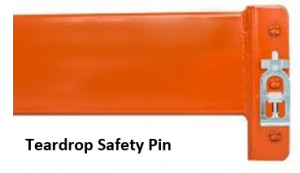
Teardrop selective pallet racks are among the most common systems in South Carolina warehouses. They rely on spring clips or pins that slide into place through the beam and the upright’s teardrop-shaped holes.
- Standard teardrop safety clip: Installed by pressing the clip through the aligned beam and column holes, locking them together.
- Pull-pin lock (J-hook): A horseshoe-shaped clip goes in from the back, and a J-hook locks it from the front.
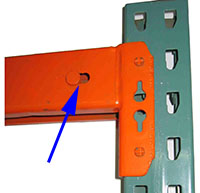
- Rifle-slide lock: A bar slides across the beam face and drops into side holes on the upright, creating a secure latch.
These connectors are designed for fast assembly and easy reconfiguration, making them a popular choice for busy warehouses that frequently change layouts.
 |
 Rifle Slide Lock |
Speedrack connections
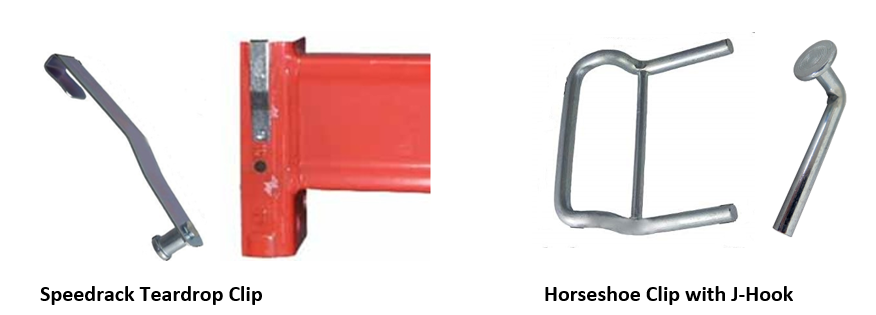
Older Speedrack systems use a combination of connectors to secure beams. One common approach is the teardrop clip that hooks over the top flange of the beam connector and snaps through a small hole.
For extra stability, warehouses often pair this with a horseshoe clip and J-hook combination:
- Horseshoe pins are pushed through from the back of the upright.
- A J-hook is inserted from the front to lock everything into place.
Together, these ensure the beam remains fully engaged with the upright, even under repeated forklift impacts.
Ridg-U-Rak spring clips
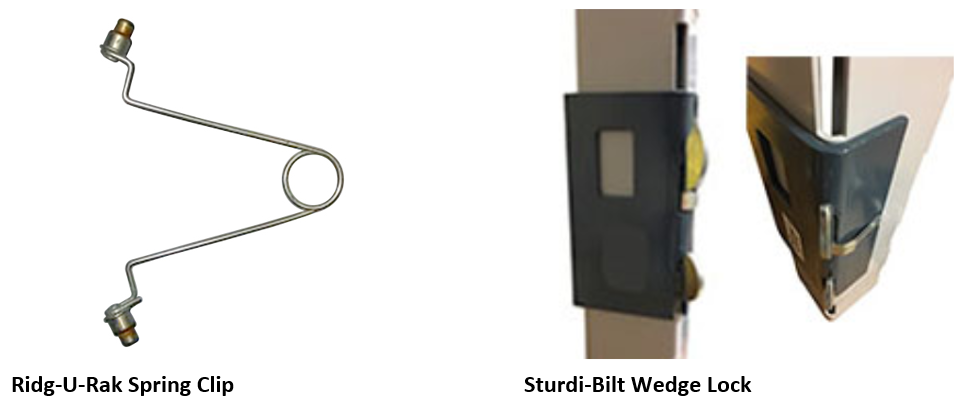
Ridg-U-Rak racks, whether slotted or teardrop, usually use spring-loaded pinch clips. To install:
- Squeeze the clip’s sides together.
- Insert it into the back of the upright.
- Once aligned with the beam connector, the tabs snap into place.
This design makes it quick to install or remove, but it holds beams firmly until intentionally disengaged. The spring clip is a trusted solution in many distribution centers.
Sturdi-Bilt wedge locks
Sturdi-Bilt racks secure beams with a hook-style clip that pairs with a separate wedge. The process is simple:
- The hook connects onto the beam end.
- A wedge lock slides down to press the clip tight.
This “wedging” action creates a solid hold that keeps the beam locked into the upright until the wedge is removed.
Universal or aftermarket pins
Some safety pins are not brand-specific and can fit a range of rack styles. Two common universal fixes are:
- J-hook or bent nail: Inserted through the connector hole, one end catches the beam while the other prevents movement.
- Bolts (⅛″ or 3/8″): Passed through side holes in the column to fasten the beam in place.
These universal solutions can be useful when original parts are missing, though they make reconfiguring racks slower compared to factory clips.
Bolted rack systems
Unlike clip-in racks, some structural and engineered roll-formed racks use permanent bolts at every connection. Examples include Unarco T-Bolt and Redirack systems.
- The beam is bolted directly into the upright.
- No separate safety pin is required.
- Regular torque checks are important to ensure bolts remain tight and secure.
Bolted systems are extremely stable and durable, but they trade off flexibility. This makes them better suited for facilities where rack layouts don’t change often.

J-Hook
Choosing the right pallet rack safety pins
By matching the right pin to your rack style, you ensure every beam stays securely engaged. When in doubt, always follow the manufacturer’s recommendations for pin type. A properly fitting pin prevents beams from unclipping if struck by a forklift or lifted by a pallet. This is a common risk in busy South Carolina warehouses from Greenville to Charleston.
Why rack inspections in South Carolina must include safety pins
Whether you run a large regional distribution center or a smaller warehouse, safety pins should always be part of your inspection checklist. Our in-house experts stress that inspections must verify beam connectors and safety pins.
- Any missing, bent, or loose pin should be replaced immediately.
- Even a short bump from a forklift prong can lift a beam enough to unhook it if the pin is missing.
At Apex South Carolina, we emphasize pins because they’re one of the most cost-effective safeguards against serious accidents. That’s why we offer the Apex Rack Repair & Safety Program, available in two ways:
- DIY inspections using the free Apex Rack Repair App.
- Professional inspections from our certified rack safety team.
Both options deliver a full assessment and unbiased recommendations for repair or replacement. From Columbia to Charleston, we help ensure beams, uprights, anchors, and safety devices meet industry standards.
Whether you’re focused on pallet rack safety or overall warehouse safety, Apex South Carolina has your back. Call today to schedule an inspection or request a repair quote- We’ll help your crew stay safe, trained, and ready.
