
Pallet Rack Design For Clean Environments: When Closed-Tube Columns Make Sense

A Practical Look At Closed-Tube Rack Columns In Clean Warehouse Environments
A strong pallet rack design starts by knowing the fundamentals: pallet load specs, capacity requirements, rack layout, lift equipment, aisle access, and product flow. However, in food, beverage, pharmaceutical, cold storage, and other clean environments, another factor should move higher on the list: how the rack system supports cleanliness and long-term maintenance.
In these facilities, rack columns are not just structural components. They sit directly in the path of debris, moisture, cleaning activity, and lift truck traffic. Closed-tube columns can help by reducing open areas where dust, residue, or packaging debris can collect while also supporting durability in demanding environments.
Closed-tube columns are available in several sizes and styles, including roll-formed rack columns and structural rack boxed columns. When cleanliness, washdown exposure, moisture, or inspection access are part of the application, this column style may shape the pallet rack design conversation in a meaningful way.
For this article, “closed-tube” refers broadly to this enclosed rack-column style.
What Is A Closed Tube Rack Column?
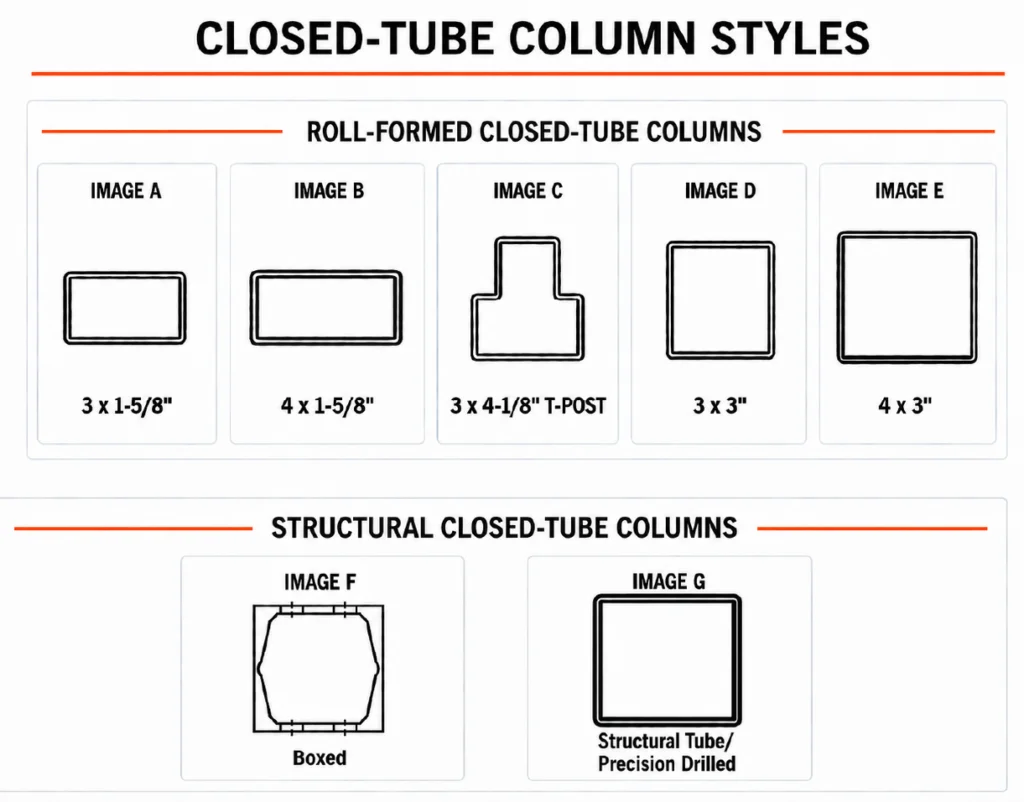
A closed-tube rack column is an upright profile with a closed or boxed shape rather than an open-back design. The exact construction depends on the rack type and manufacturer, but the defining feature is the enclosed column profile.
Closed-tube columns are available in different rack styles. In roll-formed rack, the column may be manufactured as a tube-style upright with punched connection holes for beams and accessories.
In structural rack, the closed-tube concept is often achieved with a boxed column, created by welding two C-channel columns back-to-back to form a stronger enclosed profile. Some structural closed-tube columns are seamless and precision drilled, meaning the enclosed column is drilled only where beam or accessory connections are needed, leaving smoother column faces with fewer exposed openings where dust, debris, or residue can collect.
Why Closed-Tube Columns Are Useful In Clean Warehouse Environments
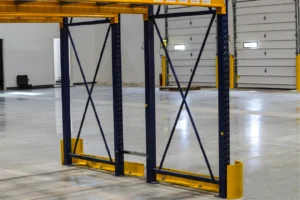
Closed Tube Pallet Rack Design for Clean Warehouse
In clean or high-maintenance environments, fewer open areas along the rack column can make a practical difference. Closed-tube columns reduce exposed spaces along the column body where dust, dirt, packaging fragments, or product residue may collect. That cleaner column geometry can support housekeeping routines and make the rack area easier to inspect.
The enclosed profile can also support durability in high-traffic rack aisles. Structurally, a closed-tube or boxed column provides greater resistance to torsional movement, making it less likely to twist when exposed to impact. Twisting can affect how the upright transfers load, how beam connections remain aligned, and how easily the rack can be inspected or repaired after contact. Depending on the rack type, column size, reinforcement, and application, this added resistance to twisting and deformation may support higher-capacity or more demanding storage requirements.
Rack Systems And Beam Connections For Closed-Tube Columns
Closed-tube columns can be used across multiple pallet rack configurations; they are not limited to one storage method. Closed-tube or boxed column designs may be considered for systems such as:
- Selective pallet rack
- Drive-in or drive-through rack
- Push-back rack
- Pallet flow rack
- Pallet Shuttles
- Pick modules
- Rack-supported mezzanines
Beam connections can vary by manufacturer and column style. In roll-formed closed-tube columns, beams may connect through punched holes using manufacturer-specific connectors or compatible beam connection hardware. In structural racks, beam connections are often bolted, using structural connection plates designed for the column profile.
Compatible beam types may include standard pallet rack beams, structural beams, step beams, box beams, or specialty beams, depending on the rack system and manufacturer. The important point is that the beams, connectors, column style, load capacity, and adjustability must be designed as a matched system.
For warehouse teams, the key question is not whether a closed-tube column can work with a certain rack type in theory. It is whether the selected manufacturer’s column, beam, connector, and rack configuration are engineered to work together for the load, layout, and operating environment.
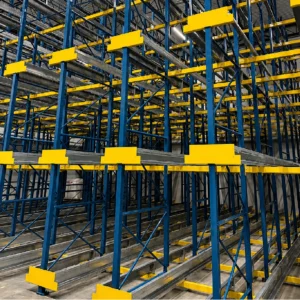 Closed Tube Precision Drilled Structural Uprights for Shuttle Racking |
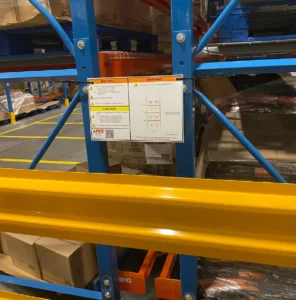 Precision Drilled Structural Column |
What To Confirm Before Choosing Closed-Tube Columns
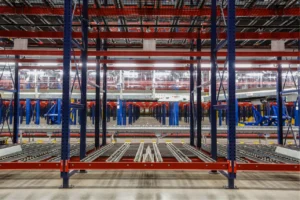
Pallet Flow Rack on Closed Tube Columns
Closed-tube columns can be a smart fit for clean and demanding warehouse environments, but they should still be evaluated as part of the full pallet rack design. The column profile needs to match the load, rack configuration, lift equipment, cleaning process, and long-term maintenance plan.
Before specifying closed-tube columns, review:
✔ Cleaning frequency and sanitation procedures
✔ Moisture, condensation, or washdown exposure
✔ Finish requirements for the operating environment
✔ Lift truck type, aisle width, and impact risk
✔ Rack protection needs at the column face, aisle ends, tunnels, and high-traffic areas
This review helps confirm whether the closed-tube column is solving a real operating challenge or whether another rack column style would be a better fit.
Get Help with Pallet Rack Design For Clean Environments
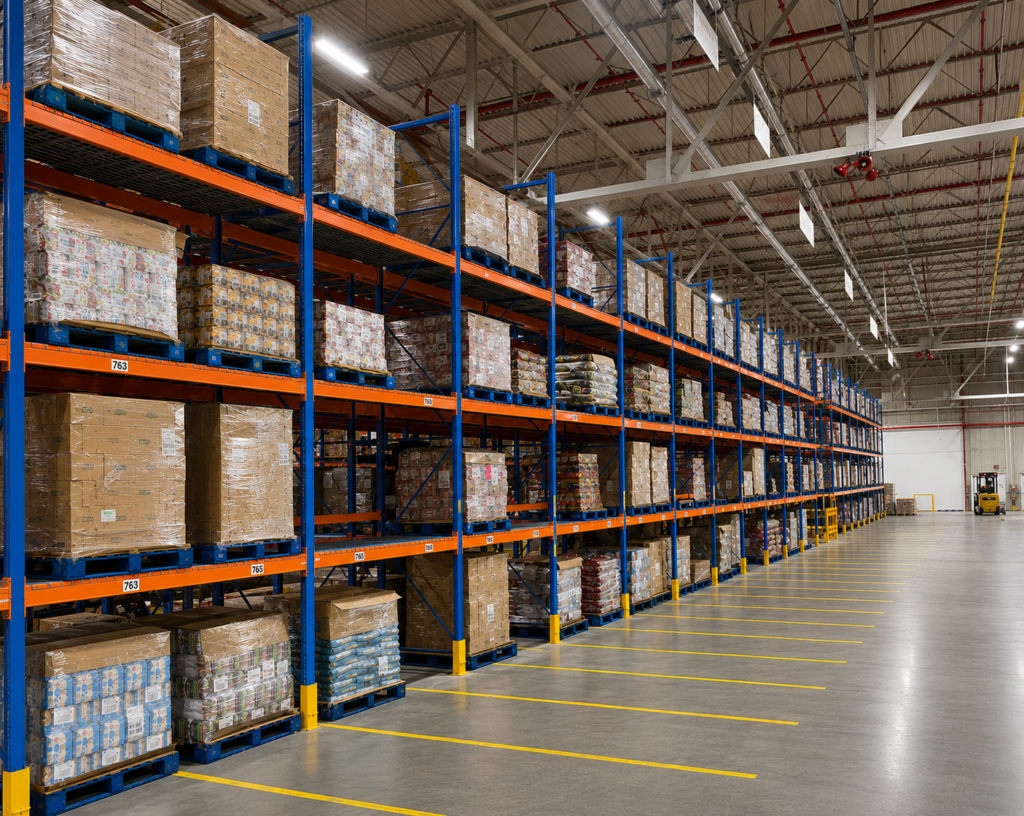
Closed Tube Uprights
Choosing the right column style is one part of a larger storage system decision. Apex helps warehouse teams evaluate pallet rack design around the way the facility actually operates, including load requirements, rack configuration, lift truck access, sanitation needs, durability concerns, installation requirements, and long-term maintenance.
For food, beverage, pharmaceutical, cold storage, and clean warehouse environments, Apex can help review whether closed-tube columns make sense for the application and how they should be incorporated into the overall rack system.
If your facility is planning for new rack, reviewing an existing storage layout, or trying to improve cleanliness and durability in a high-maintenance area, request a project review with Apex.
