
Mastering Forklift Techniques for Pallet Flow Rack Systems in Your Colorado Warehouse

Protect Your Pallet Flow Rack with Proper Loading & Unloading Training
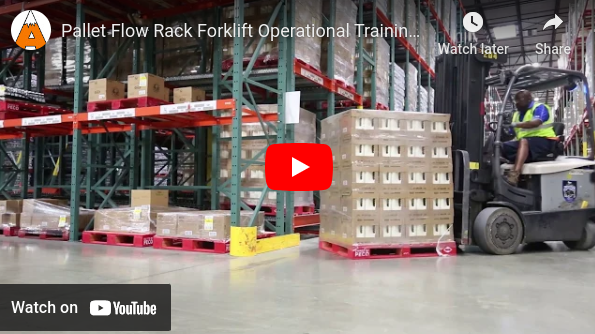
In the bustling world of warehouse management, efficiency, and safety are paramount. As you navigate the demands of your Colorado-based operations, mastering the proper load and unload, techniques for pallet flow rack systems can significantly enhance productivity and workplace safety. Our detailed instructions and companion video will provide the instructions your forklift operators need to safely load and unload your pallet flow rack, minimizing any costly damage or downtime to your system.
Understanding Pallet Flow Rack Systems
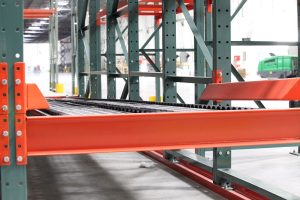
Pallet flow rack systems are the unsung heroes of efficient warehouse storage. They are designed with wheeled rails or rollers installed on a slight pitch between the front and rear rack beams. Pallets flow automatically along the pitched rails from the load side to the opposite extraction side, facilitating productive First-In/First-Out (FIFO) storage. These high-density, low-maintenance systems are ideal for various industries, including food distribution, automotive, retail, and more.
 Loading Best Practices
Loading pallets onto a pallet flow rack system may seem straightforward, but adhering to proper procedures is crucial for the safety of your workers and the integrity of your inventory. Here’s a step-by-step guide to ensure smooth loading operations:
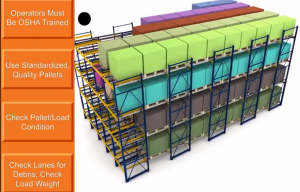
- Safety First: Ensure all operators are OSHA-trained and equipped with the necessary safety gear before loading.
- Quality Check: Always use standardized, high-quality pallets. Avoid using damaged pallets with broken or splintered runners.
- Weight Management: Check that the load weight is within the rated
capacity of the system to prevent overloading and potential accidents.
 Precision Loading: Square the forklift with the opening of the lane on the charge side of the system. Lift the pallet to a height of 3 to 4 inches above the rails and carefully lower it onto the rails, ensuring it is centered in the lane. Never “toss” the pallet onto the rails.
Mindful Retreat: After securely placing the pallet, slowly back out of the lane, taking care not to damage the system or nearby inventory.
Entry Guides: Your system may have entry guides affixed to the left and right sides of the lane opening. These guides facilitate loading by ensuring pallets are correctly aligned within the lane.
Pallet Hang Up: Once loaded, pallets should naturally progress without intervention. However, if a pallet becomes hung up in the lane, the forklift operator can gently push back before removing the front pallet to restore flow, a practice known as “Charging the System.”
Unloading Guidelines
Efficient unloading is just as critical as loading when it comes to pallet flow rack systems. Here’s how to ensure a smooth unloading process:
Alignment: Square the forklift with the discharge side of the system, also known as the pick face.
Elevation Check: Load the pallet onto the forks and raise it 3″ – 4″ above the rails before slowly backing out, maintaining proper elevation to avoid collisions.
Controlled Retreat: You can control the flow by adjusting the speed at which you back away from the system, ensuring a steady and safe unloading process.
Push-Back Pallet Flow
For those seeking even greater efficiency, consider configuring your pallet flow system as a push-back system. This setup requires only a single aisle for both loading and unloading, supporting a last-in/first-out (LIFO) inventory rotation.
Local Support / Expert Assistance
At Apex, we understand the importance of proper pallet flow rack utilization. Your local Colorado team is always available to answer your questions, provide guidance on system use and maintenance, and evaluate the safety and efficiency of your operations.
By adhering to best practices and leveraging expert guidance, you can enhance efficiency, ensure workplace safety, and maximize the potential of your warehouse space. Should you have any questions or require assistance, don’t hesitate to reach out to the Apex team. Your success is our priority.
