
Can You Run A Conveyor Through A Pallet Rack Frame?

Yes, Conveyor Lines Can Pass Through Pallet Rack Frames – Here’s What to Know…
Pallet rack frames can be engineered to accommodate warehouse conveyor systems to pass through the rack structure. In the right application, this approach can save considerable floor space, shorten conveyor travel paths, and support more efficient material flow throughout the facility.
However, creating an opening in a rack frame is not as simple as removing a brace or modifying the frame after installation. Because pallet rack frames rely on their columns and bracing to support loads and maintain stability, conveyor pass-through openings must be incorporated into the rack design and engineered to maintain the structural performance of the system.
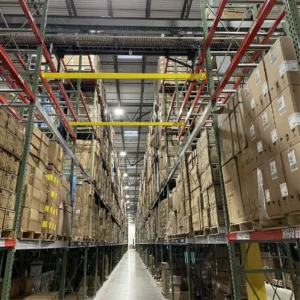
In-rack Conveyor with Overhead Guards
Why Would A Conveyor Need To Pass Through A Rack Frame?
Warehouse conveyor systems are often routed around storage equipment, workstations, and production areas. In some facilities, however, routing a conveyor around the rack system can consume valuable floor space, increase conveyor length, and create unnecessary travel paths.
Designing a conveyor to pass through a rack frame can help:
- Preserve valuable floor space
- Shorten conveyor travel distances
- Connect storage, picking, packing, shipping, or production areas
- Improve product flow between work zones
- Support integrated material handling system designs
These applications are often found in distribution centers, manufacturing facilities, fulfillment operations, and other environments where efficient product movement is a priority.
How Are Conveyor Pass-Through Openings Designed?
A conveyor pass-through opening—sometimes referred to as a conveyor window—is an engineered opening within the rack frame that allows a conveyor line to pass through the structure.
Because upright frames depend on horizontal and diagonal bracing for stability, these openings must be carefully planned. The location and size of the opening, the rack loading requirements, and the overall frame configuration all influence the final design.
Depending on the application, the rack manufacturer may modify the frame bracing pattern or incorporate reinforcement components to maintain the frame’s load-carrying capacity. Some designs may include structural header members that help transfer loads around the opening while preserving the integrity of the frame.
Additional engineering considerations may be required when the conveyor is supported by or connected to the rack structure. In these applications, the design may need to account for conveyor weight, live product loads, movement, vibration, and how those forces are transferred through the rack system. Evaluating these factors early helps ensure the rack and conveyor systems perform as intended over the long term.
The exact solution depends on the rack manufacturer, the conveyor layout, and the operational requirements of the facility.
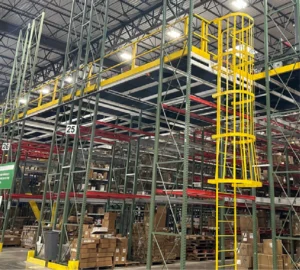
Access for Conveyor Inspection, Maintenance, Service
Conveyor Protection and Access Considerations
Designing a conveyor pass-through opening is only one part of the integration process. The conveyor path, support structure, maintenance requirements, and safety features should also be considered during system planning to ensure the conveyor can be operated and serviced safely throughout its life cycle.
Additional design considerations may include:
- Overhead guarding for conveyors near forklift traffic
- Ladders, platforms, or catwalks for routine maintenance
- Conveyor guarding at pinch points and transfer areas
- Safety netting or containment where product could fall
- Clearance for lift trucks, personnel, pallets, and stored product
- Coordination with sprinklers, lighting, and building systems
Planning these details early helps prevent access, safety, and clearance issues from becoming installation or maintenance problems later.
What Else May Need To Pass Through A Rack Frame?
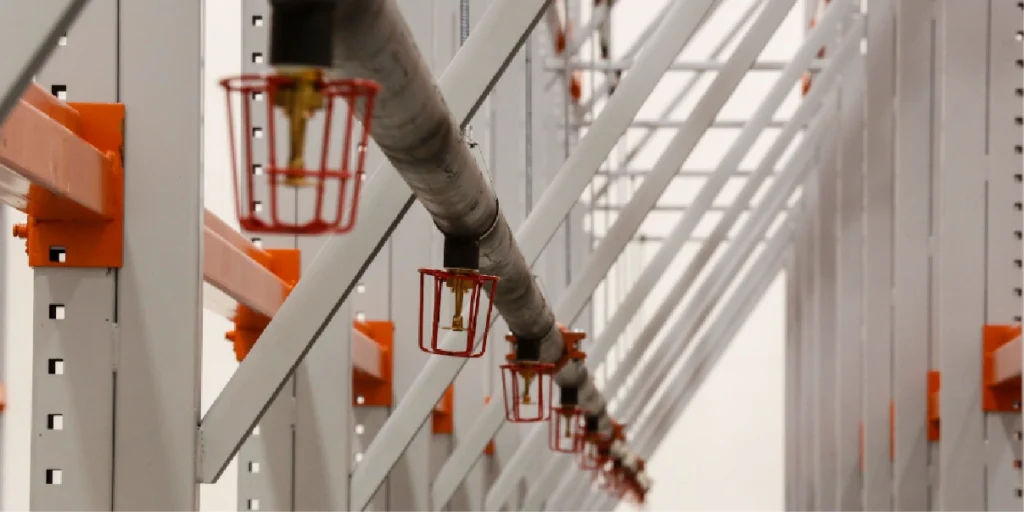
In-Rack Sprinklers
Conveyors are not the only reason engineered openings may be incorporated into pallet rack systems.
Other examples may include:
- Fire sprinkler piping
- Electrical conduit
- Communication and data cabling
- Utility services that must pass through portions of the rack structure
Identifying these requirements early in the design process can help avoid conflicts later and reduce the need for costly redesigns during installation.
Why Field Modifications Are A Bad Idea
One of the most common misconceptions is that a conveyor opening can be created by simply cutting or removing a brace after the rack is installed.
Because rack frames are engineered systems, even seemingly minor modifications can affect how loads are distributed through the structure. Altering the frame without manufacturer approval may reduce load capacity, affect stability, and create compliance or safety concerns.
If a conveyor line needs to pass through a rack frame, the best approach is to involve the rack manufacturer or a qualified rack engineer during the planning phase so the opening can be incorporated into the original design.
Planning Conveyor Integration The Right Way
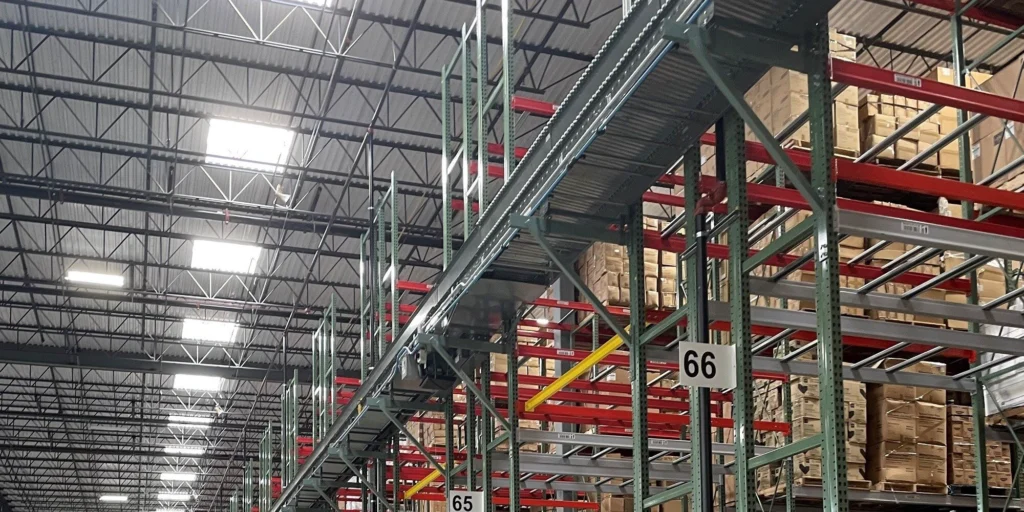
Rack Supported Conveyor
Running a conveyor through a pallet rack frame is often possible, but successful integration requires more than finding space for the conveyor. The rack structure, conveyor layout, load requirements, maintenance access, and future operational needs should all be considered together.
When planned correctly, conveyor pass-through openings can support efficient material flow while preserving the strength and performance of the pallet rack system.
For additional ideas on integrating warehouse conveyor systems with storage structures, explore our guide to Rack & Automated Conveyor Integration to see how conveyors can be routed through, above, alongside, or supported by pallet rack systems.
Contact the Apex team for help designing rack systems and integrating warehouse automation solutions that support safer, more efficient material flow.
