
Manual Vs. Automated Conveyor Sortation: When To Make The Switch

Know When Conveyor Sortation Automation Makes Sense
As order volumes grow and shipping demands become more complex, manual sorting processes can become harder to scale without adding labor, space, or operating cost. That is often when warehouse teams begin to consider conveyor sortation to improve product flow, routing accuracy, and outbound performance.
The right approach depends on the operation. Manual sorting may still fit lower-volume or evolving operations, while automated sortation may be a better fit when product movement is consistent and destinations are clearly defined. The decision comes down to whether the current process can continue meeting throughput, labor, accuracy, and shipping demands—or whether automation is needed to support future performance. Understanding the strengths and limitations of each approach can help clarify when it is time to make the switch.
Key Takeaway:
The switch from manual to automated conveyor sortation usually makes sense when labor, throughput, and order accuracy become ongoing operational constraints rather than occasional challenges.
What Is Conveyor Sortation?
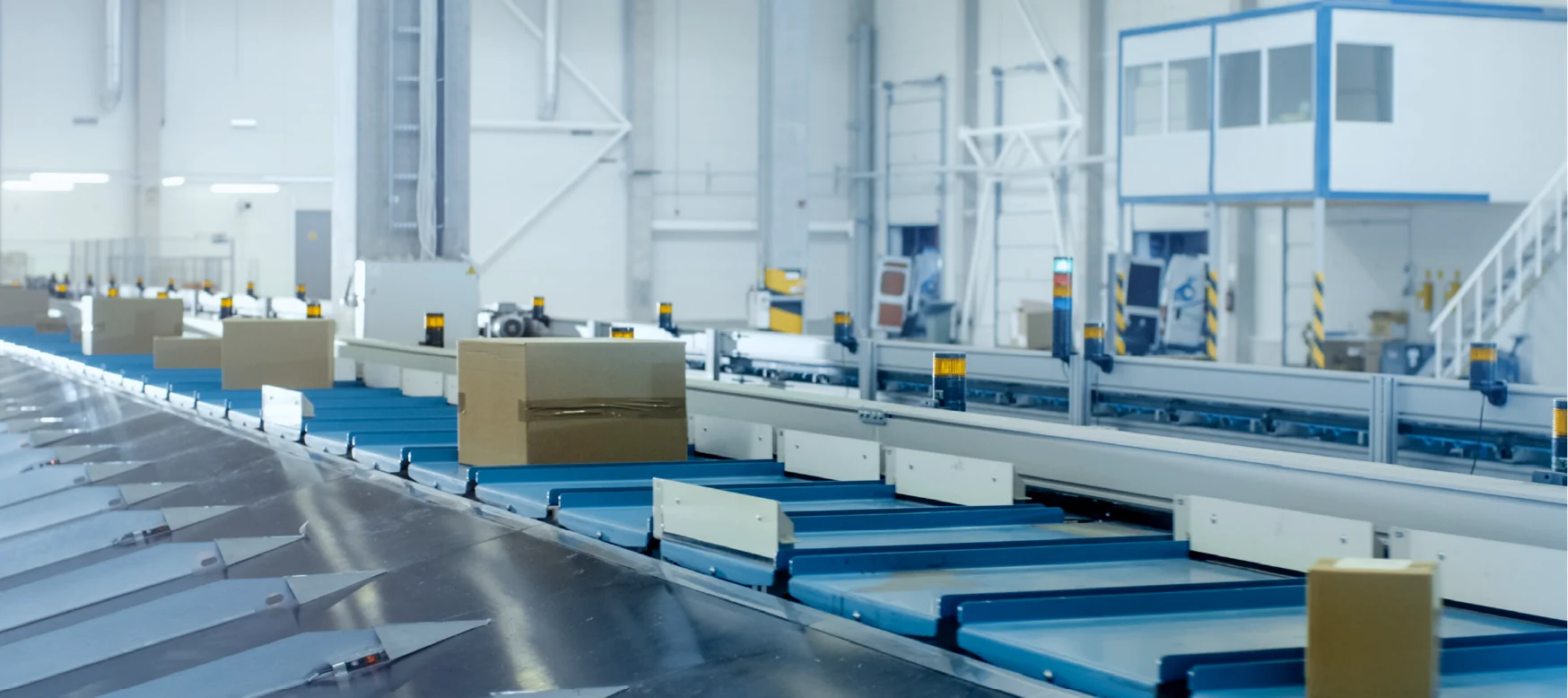
Conveyor sortation generally refers to the process of moving cartons, totes, parcels, or cases along a conveyor system and directing them to their designated destinations. Depending on the facility, the destination may be based on order, SKU, carrier, service level, route, zone, customer, dock door, or production step.
Sortation can be manual, semi-automated, or automated depending on how products are identified, moved, and diverted.
The system should be designed around warehouse flow. A conveyor system that moves product quickly but does not align with picking, packing, labeling, staging, and shipping may simply shift the bottleneck elsewhere in the operation.
Apex’s sortation conveyors are planned around product details, available space, destination points, and throughput goals so the equipment supports the broader operation.
Manual Vs. Automated Conveyor Sortation
Manual and automated sortation can both fit warehouse operations. The right choice typically depends on volume, product consistency, labor availability, and workflow consistency.
Conveyor Sortation Comparison
| Evaluation Point | Manual Sortation | Automated Conveyor Sortation |
| Labor Requirements | Often requires more people as volume increases. | Can reduce repetitive routing tasks, but still needs supervision, maintenance, exceptions handling, and system support. |
| Throughput Capacity | Often scales by adding labor, shifts, carts, lanes, or floor space. | May support higher throughput within defined paths when product flow is consistent. |
| Accuracy | Depends heavily on associate attention, training, labels, and process discipline. | Can improve routing consistency when scan data, barcodes, and divert logic are reliable. |
| Scalability | Can stay flexible, but may become harder to scale during growth or peak periods. | Can support growth when future capacity, destinations, and controls are designed into the system. |
| Operating Costs | May cost less upfront, but labor, overtime, turnover, training, and rework can increase over time. | Typically requires higher capital investment, but may reduce repetitive manual sorting labor in the right application. |
| Flexibility | Can adapt quickly to unusual items, process changes, and exceptions. | Often works best when product types, routes, and destinations are well-defined. |
| Planning Requirements | May require less system design, but still needs clear process standards. | Requires layout planning, controls integration, maintenance access, safety planning, and implementation timing. |
Manual Sortation
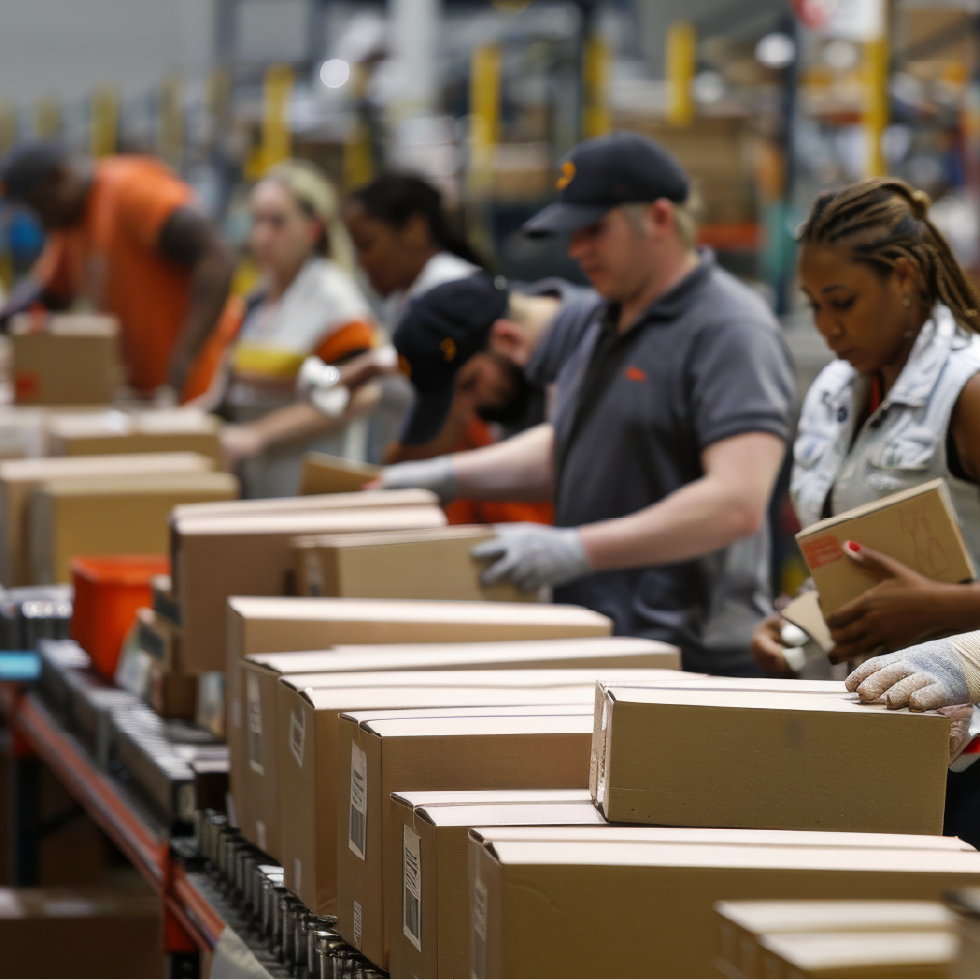
Manual sortation relies on associates to identify items and route them to the correct destination. It can be a practical choice for lower-volume operations, variable product profiles, temporary processes, or facilities that are still refining workflows.
Its main advantage is flexibility. Associates can often respond quickly to unusual items, routing changes, or exceptions without requiring system modifications. Its limitations become more apparent as volume rises, particularly when the operation must add labor, space, or overtime to maintain shipping performance.
Automated Conveyor Sortation
Automated conveyor sortation uses product identification, controls, conveyors, and divert devices to route cartons, totes, parcels, or cases to assigned destinations. It is generally better suited to higher-volume operations with repeatable product flow and clearly defined routing requirements.
The system depends on reliable data, consistent product characteristics, proper induction, and coordinated upstream and downstream processes. It can reduce repetitive manual handling and support more consistent routing, but it also requires maintenance, technical support, training, and a plan for products or conditions the system cannot process automatically.
How Conveyor Automation May Help Reduce Injury Risk
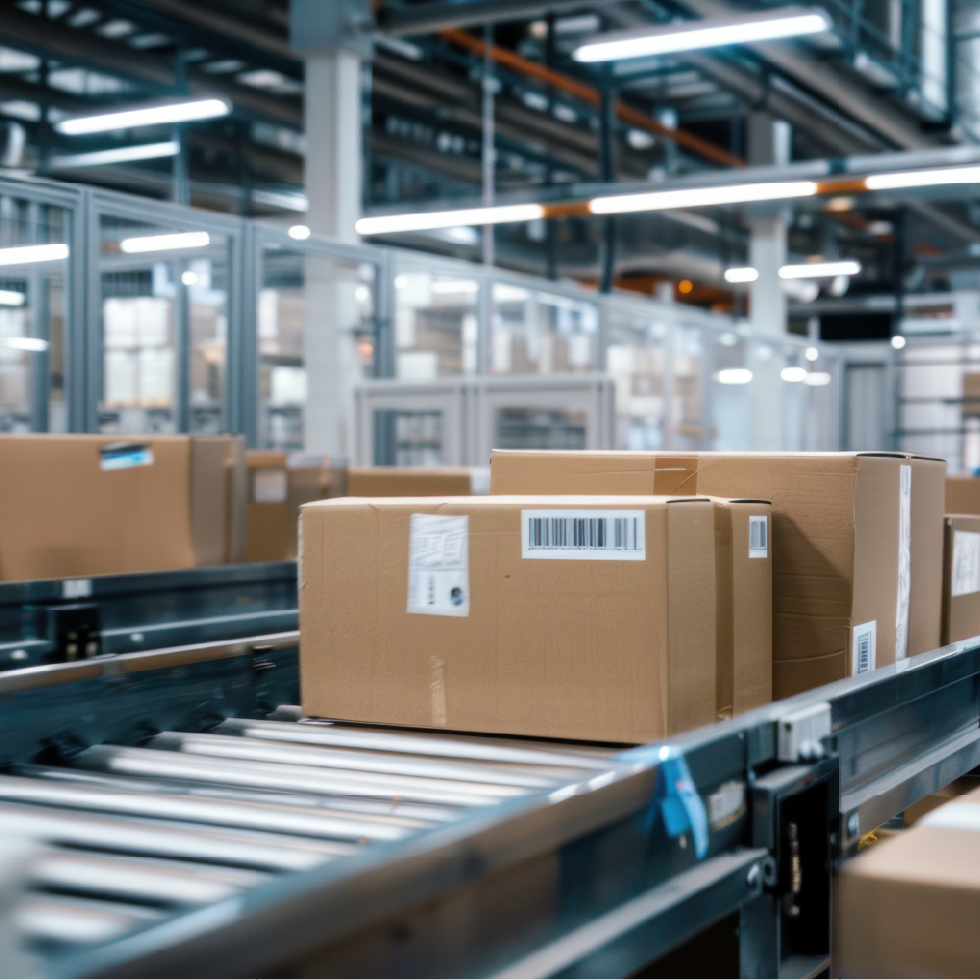
A well-planned conveyor sortation system may reduce the frequency of lifting, carrying, pushing, pulling, reaching, twisting, or redirecting cartons, totes, parcels, and cases by hand. When those motions are reduced at the sort point, the operation may reduce ergonomic strain tied to force, awkward posture, and repetitive handling. The potential benefit depends on system layout, load characteristics, working heights, induction and discharge design, operating pace, and how exceptions are managed.
This should be treated as a design consideration, not a standalone promise. Conveyor automation still requires guarding, emergency-stop access, lockout/tagout procedures, safe maintenance clearance, employee training, and attention to any hands-on work that remains in the process.
What Challenges Push Warehouses Toward Automation?
Conveyor sortation is often considered when the same bottlenecks recur and begin to affect labor planning, shipping performance, or customer commitments.
Common automation triggers may include:
- Rising labor costs or limited labor availability
- Overtime becoming a routine method to meet shipping deadlines
- Supervisors frequently move associates into sorting to keep up
- Product backing up between picking, packing, staging, and shipping
- Shipping lanes become congested during normal volume or peak periods
- Missed or difficult-to-protect carrier pickup windows
- More sort errors, misroutes, rework, reships, chargebacks, or customer complaints
- Order growth that makes the current manual process harder to manage
- Peak-season demand exceeds what the existing process can reasonably support
These challenges do not automatically mean automation is the right answer. They do suggest that the operation may need a closer review of product flow, labor use, sort accuracy, available space, and outbound capacity.
When Does Automated Conveyor Sortation Make Sense?
Automated conveyor sortation may make sense when the facility has moved beyond isolated bottlenecks and has a stable enough process to design around. The operation needs enough consistency in product flow, destinations, data, and volume to support an engineered system.
Automation may be worth evaluating when:
- The operation has defined sort destinations, such as carrier lanes, route lanes, dock doors, zones, order consolidation points, or customer order types.
- Average and peak order volumes are sufficiently predictable to support a business case.
- Product dimensions, weights, packaging quality, and barcode placement are consistent enough for reliable conveying, scanning, and diverting.
- The same product paths repeat often enough to justify a designed conveyor layout.
- Upstream processes, such as picking, packing, labeling, and induction, can feed the system at the required rate.
- Downstream areas, such as staging, dock doors, and shipping lanes, can handle the volume the system delivers.
- Growth projections suggest the current manual process may reach capacity limits.
- The business can support the capital investment, implementation timeline, maintenance requirements, training, and controls integration.
- The team has enough operational data to compare the current manual process against a potential automated solution.
The decision should start with a clearly defined product flow or sorting problem. When volumes are predictable, routes are repeatable, destinations are defined, and the current process is limiting capacity or shipping performance, automated conveyor sortation may be a practical next step.
Plan Conveyor Sortation Around Warehouse Flow
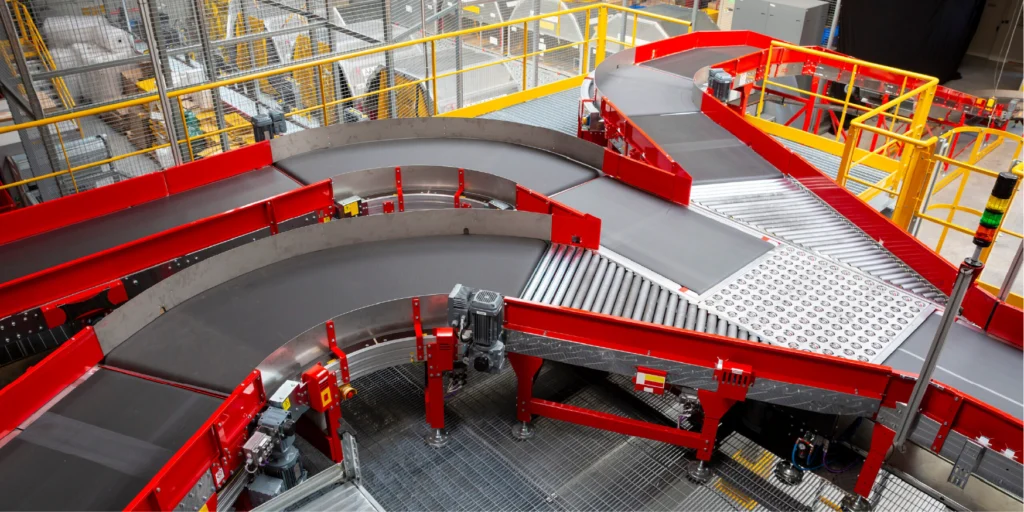
If your operation is adding labor simply to maintain throughput, struggling to meet carrier cutoffs, or planning for sustained growth, it may be time to evaluate automated conveyor sortation. Apex Companies provides integrated storage and automation solutions that help align product movement, equipment, facility layout, and long-term operational goals.
Request a site evaluation to discuss whether conveyor sortation is a good fit to reach your facility’s throughput goals and long-term warehouse plans.
