
Let’s Talk Flue Spaces – Everything Your Carolina Business Needs to Know.

Understanding Transverse and Longitudinal Flue Space Regulations Makes Designing Your System Easy
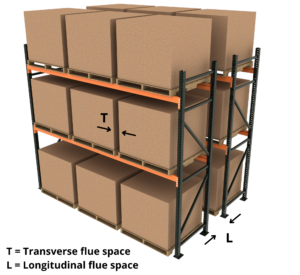
When designing a pallet racking storage system for your warehouse in North and South Carolina, it’s crucial to consider the two perspectives on flue spaces identified by the National Fire Protection Association (NFPA): Transverse Flue Space and Longitudinal Flue Space. By understanding these concepts, you can optimize the safety of your storage system. Let’s delve into each type:
- Transverse Flue Space: This refers to the space between the stored products, running parallel to the loading direction when you face the racking. It ensures proper airflow and facilitates fire ventilation.
- Longitudinal Flue Space: When you are positioned at the end of the racking row, the longitudinal flue space runs perpendicular to the loading direction. It separates back-to-back rows of pallet racks, allowing clear vertical lines of sight.
In rack storage systems, NFPA defines flue spaces (whether Transverse or Longitudinal) as crucial for maintaining clear lines of sight from the floor up to the ceiling. These spaces serve a vital purpose during a fire incident by enabling upward venting, which helps the sprinkler system effectively mitigate the fire. By containing the risk to a more confined space, the fire’s potential impact is minimized, reducing the chances of it spreading across multiple bays or rows of pallet racking. For your North and South Carolina warehouse, ensuring compliance with NFPA guidelines on flue spaces is essential for the safety of your inventory and employees.
Understanding Transverse Flue Space and Its Impact on Your Storage System
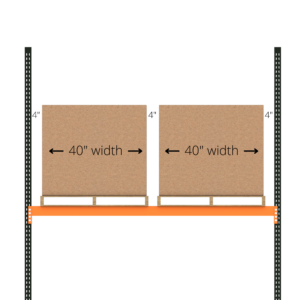
In many storage systems, the arrangement of commodities and uprights has traditionally involved uniform spacing. In the example below, a 92″ beam typically utilizes a consistent 4″ transverse flue spacing, assuming a standard 40″ wide load.
As per the NFPA regulations, it is crucial to maintain a 6″ transverse flue space between loads within a rack structure. Although a 92″ long load beam can potentially be accommodated, certain adjustments in load placement, as illustrated below, will be necessary to ensure compliance.
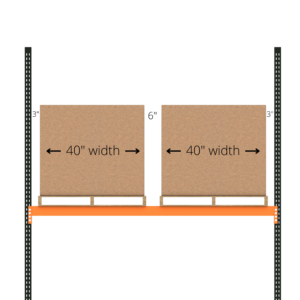
In most scenarios, a typical bay opening of 96″ is employed. While the fundamental concept remains unchanged, it’s worth mentioning that this adjustment results in an augmented transverse flue space of 5″, 6″, and 5″ consecutively.
Solutions for Enhancing Transverse Flue Space
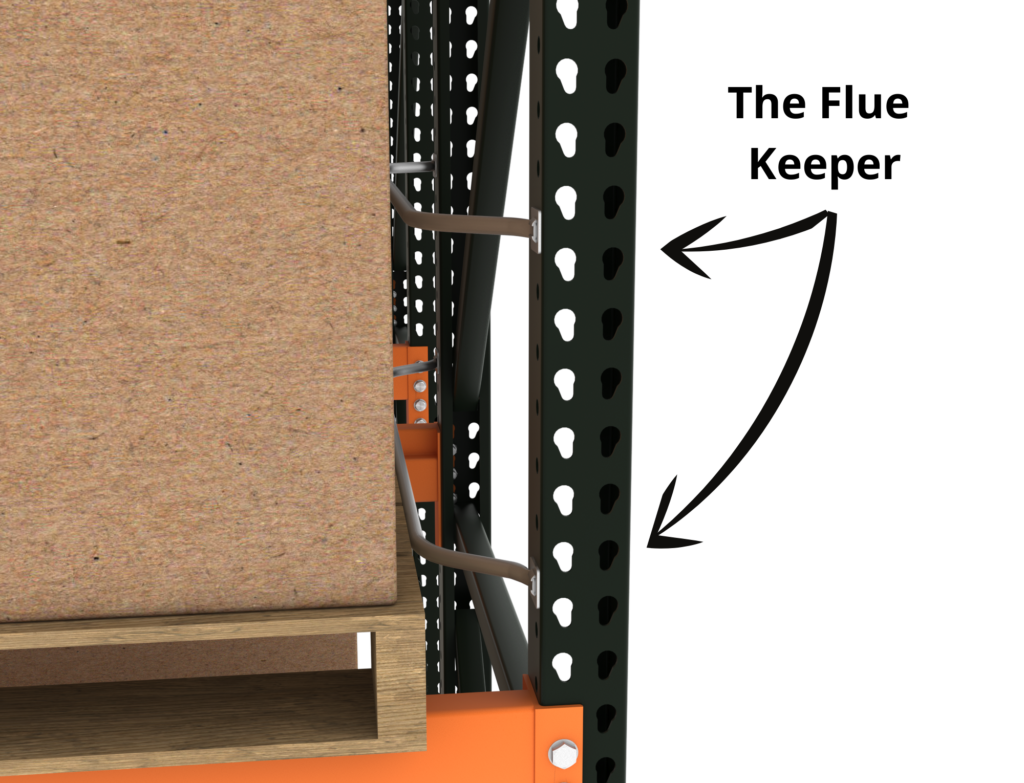 |
The innovative Flue Keeper is precisely engineered to prevent boxes and pallets from infringing upon the transverse flue space, thereby enhancing the sprinkler system’s access to products stored within the pallet rack structure. These flue stops fulfill NFPA standards and optimize safety and compliance. |
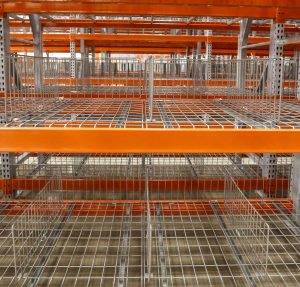 |
Crafted from heavy-duty steel wire, these snap-in dividers securely attach to traditional wire mesh decking. While commonly utilized in case picking operations, these dividers can serve as valuable visual aids for forklift operators, ensuring the smooth loading of standard-sized pallets into a racking system. Count on their durability and versatility to streamline your warehouse operations. |
Optimizing the Design of Your Longitudinal Flue Space
When developing back-to-back rows of racking incorporating a longitudinal flue space, it is essential to adhere to local fire safety regulations. While we can provide a general guide, you should always consult your local city ordinances for specific guidelines.
The NFPA sets the minimum requirement for a longitudinal flue space at 6″, ensuring proper fire ventilation and allowing water penetration from the sprinkler system above. Furthermore, your design considerations should be influenced by the nature of the product you’re storing. In cases where highly combustible items are stored, a larger longitudinal flue space might be necessary to accommodate in-rack sprinklers.
Another significant factor to consider is the depth of your loads. While the standard pallet/load depth is 48″ deep, longer pallets/loads may require alternative longitudinal flue spacing to maintain a standard operating aisle at the front end of the system.
Some storage system designs allow the pallet to slightly overhang the back beam in a back-to-back row of racking. Although the specific spacing may vary depending on local municipal codes, the most commonly adopted practice is to maintain a 6″ space between loads. Consider a typical configuration of a 42″ deep upright with 48″ deep pallets/loads. In this scenario, the pallet will overhang 3″ off both the front and rear beam in a back-to-back arrangement. By applying simple math, we can calculate a 3″ overhang multiplied by two pallets (front and rear) and add a 6″ longitudinal flue space. The resulting space between rows amounts to 12″. Need help designing your solution? Apex Carolina’s offers handy Engineering and Installation services.
Practical Solutions for Longitudinal Space Optimization
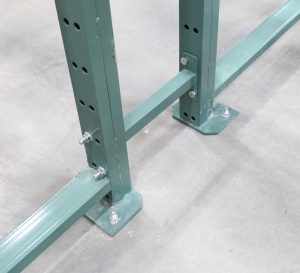 |
Row spacers are invaluable tools during installation to maintain the desired longitudinal flue space. Typically available in 2″ increments, manufacturers can also create custom sizes upon request. While specific requirements for the number of row spacers may vary among manufacturers, the most prevalent guideline is to utilize (1) row spacer for every 10′ of frame height—trust row spacers to streamline your installation process and promote compliance. |
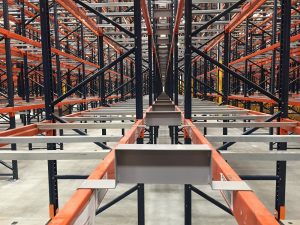 |
Load stop beams play a crucial role in upholding the intended longitudinal flue space, preventing operators from inadvertently placing pallets deeper into the system than designed. Manufacturers offer load-stop protection products with various offsets to cater to specific requirements, ensuring precision and adherence to flue space standards. |
Load stop beams play a crucial role in upholding the intended longitudinal flue space, preventing operators from inadvertently placing pallets deeper into the system than designed. Manufacturers offer load-stop protection products with various offsets to cater to specific requirements, ensuring precision and adherence to flue space standards.
Apex Carolinas is Your One Stop Solution Shop
Optimizing flue space in your storage systems is critical to ensuring safety, compliance, and efficient operations. By understanding and implementing guidelines set by organizations like the NFPA, you can enhance the protection of your products and staff during fire incidents.
Utilizing solutions such as Flue Keepers, snap-in dividers, row spacers, and load stops can make a significant difference in maintaining proper transverse and longitudinal flue spaces. These solutions improve sprinkler system access and water penetration and aid in visual guidance for forklift operators, streamlining loading processes.
Apex Carolina’s has all the resources and experience you need to streamline your design and installation process. With warehouses in Charlotte and Hickory, North Carolina, and Greenville, South Carolina, we have full-service options to help you design your flue space to the safest NFPA standards. Call today to get started.
