
Gravity & Automated Conveyor Systems
Custom-Configured | Expertly Integrated Conveyor Systems

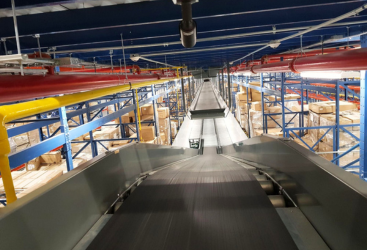
Automated Conveyor Systems for All Inventory Sizes & Applications
Your facility is unique, and your needs are specific. That doesn’t mean you must start from scratch to design automated conveyor systems to optimize throughput and meet your ROI goals. The automation boom has given rise to conveyor products and solutions that are scalable and customizable for nearly any budget and project scope.
Working with the Apex Warehouse Design & Automation teams, you can design and build the “Right Fit” conveyor system to maximize space and minimize reliance on labor resources. As a unique automation solutions integrator, we are vendor agnostic, with our primary focus on helping you find the “right solution,” not one that tries to sell you conveyor. We offer a streamlined process to deliver a seamless yet client-collaborative project experience from design, integration, installation, and ongoing support.
Common Applications
Powered Conveyor Uses
- Receiving (dock or production line)
- Case, tote, and pallet transport and buffer accumulation
- Pick modules & tunnels for case and tote picking applications
- Manufacturing production
- ASRS integration for pallet and tote systems
Non-Powered Gravity Conveyor Uses
- Truck unloading and loading
- Queueing for production & assembly lines
- In and out queueing for order packing & repacking operations
- Sort line takeaways for pallet building or order assembly
Automated Conveyor Systems
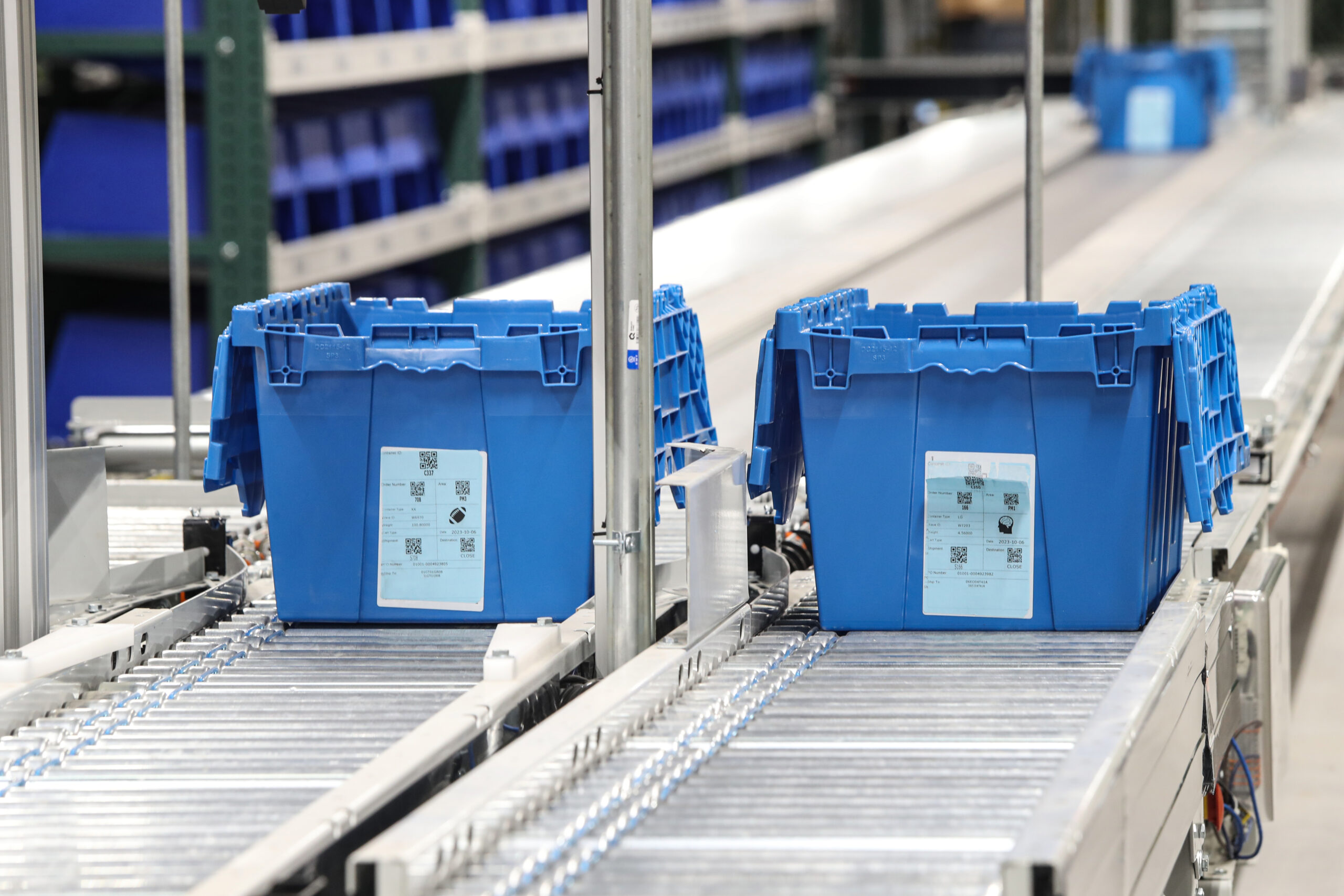
Automated conveyor systems can operate using pre-programmed control cards, which can be edited easily for basic transport and accumulation conveyor systems. PLC controls are typically used for more advanced systems where functionality involves scanning, diverting, sorting, and print-and-apply integration. PLC-controlled (programmable logic controller) systems can be integrated with your warehouse control system (WCS) or warehouse management system (WMS) when data exchanges are desired. Whether you are conveying straight ahead, to the side, or up and down mezzanine levels. These systems are excellent warehousing tools for maximizing space and productivity. Choose the exact features you need to complete the job at each stage and for every application.
Types of Automated Conveyors:
Accumulation conveyors
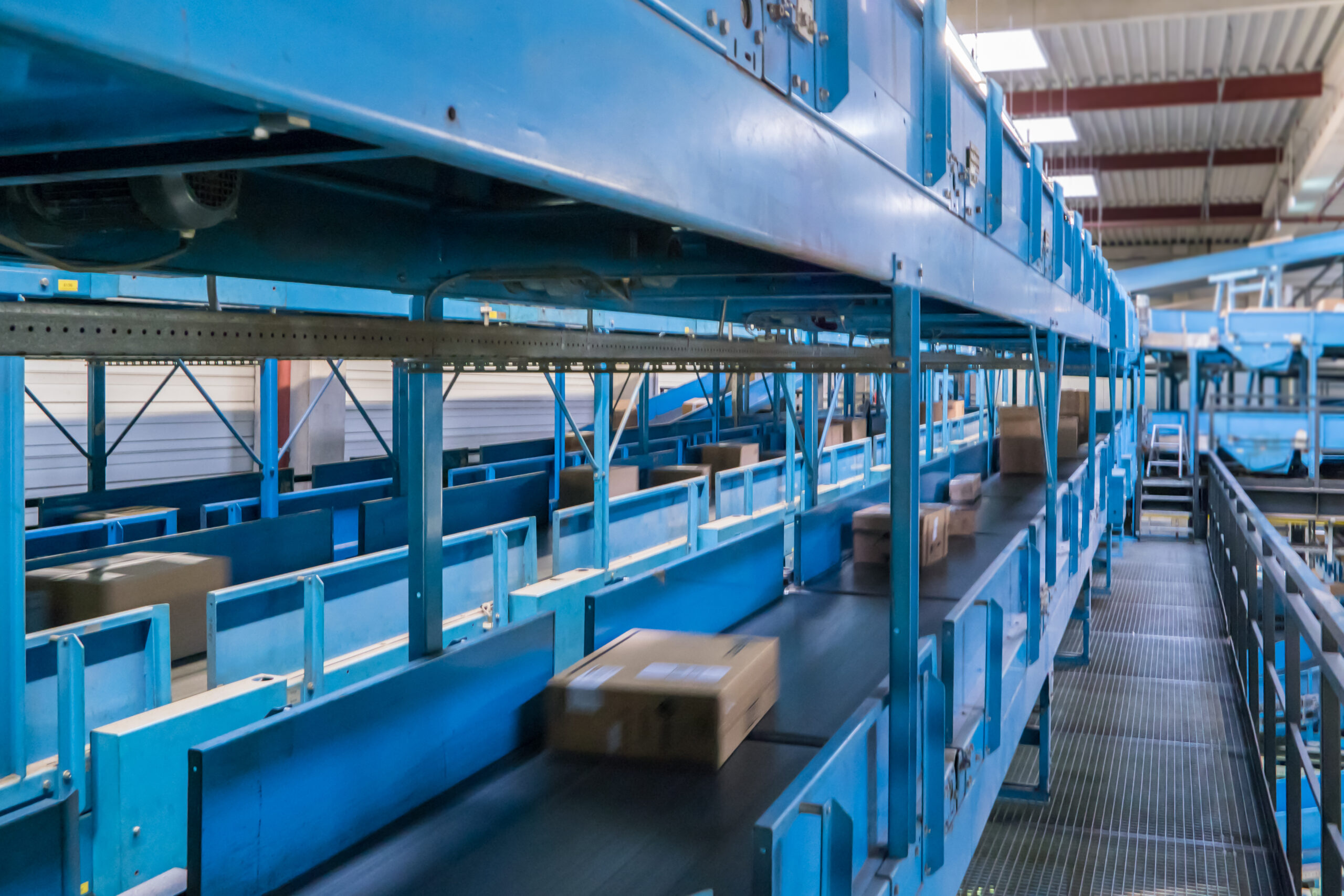
Accumulation conveyors are intelligent machines used to feed inventory for the “next step,” --whether that is sorting, palletizing, packaging, etc. Accumulation conveyors offer buffer zones to queue up for continuous processing without inventory pileups and product damage.
Two options include:
- Minimum pressure for items of consistent size & weight. Items may touch in the conveyance process.
- Zero pressure allows for mixed sizes and weighted products, and multiple zones. Photosensors ensure zone spacing between items to prevent contact. Zoned accumulation systems allow for stop and release options (slug, cascading, singulation).

Sortation Conveyors
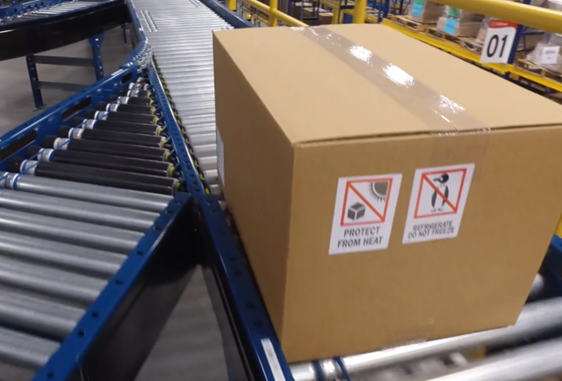
Sortation conveyors come in a variety of styles and sizes depending on the product characteristics and throughput rate that is needed.
- Right-angle transfer: Good for low to medium-rate applications for pick module zone diverting for shipping cartons and pick totes activated by pop-up wheels perpendicular to transport roller conveyor.
- Swing-arm divert: Typically used in manufacturing as an economical method to separate products using a pivoting arm with a smooth flat face or poly-wheeled face to reduce product friction allowing the force of the main conveyor line to guide product to the secondary conveyor line.
- Pop-up wheel divert: Ideal for medium-rate sorting of parcel packages using sets of pivoting wheels that raise and rotate when the product reaches the desired divert takeaway.
- Slat or shoe sorter: Ideal for high-speed sorting a very wide range of product sizes and shapes using divert shoes that move across an aluminum slat conveyor to gently guide the product diagonally to the divert takeaway.
- Tray sorter: Suited for flat packaged goods, especially apparel, and textiles. Items are inducted at high speeds associating a tray to an item by scanning item/package barcodes. Sortation occurs by releasing or opening the tray as it passes by the divert medium (a container or carton or divert chute).
Transportation Conveyors
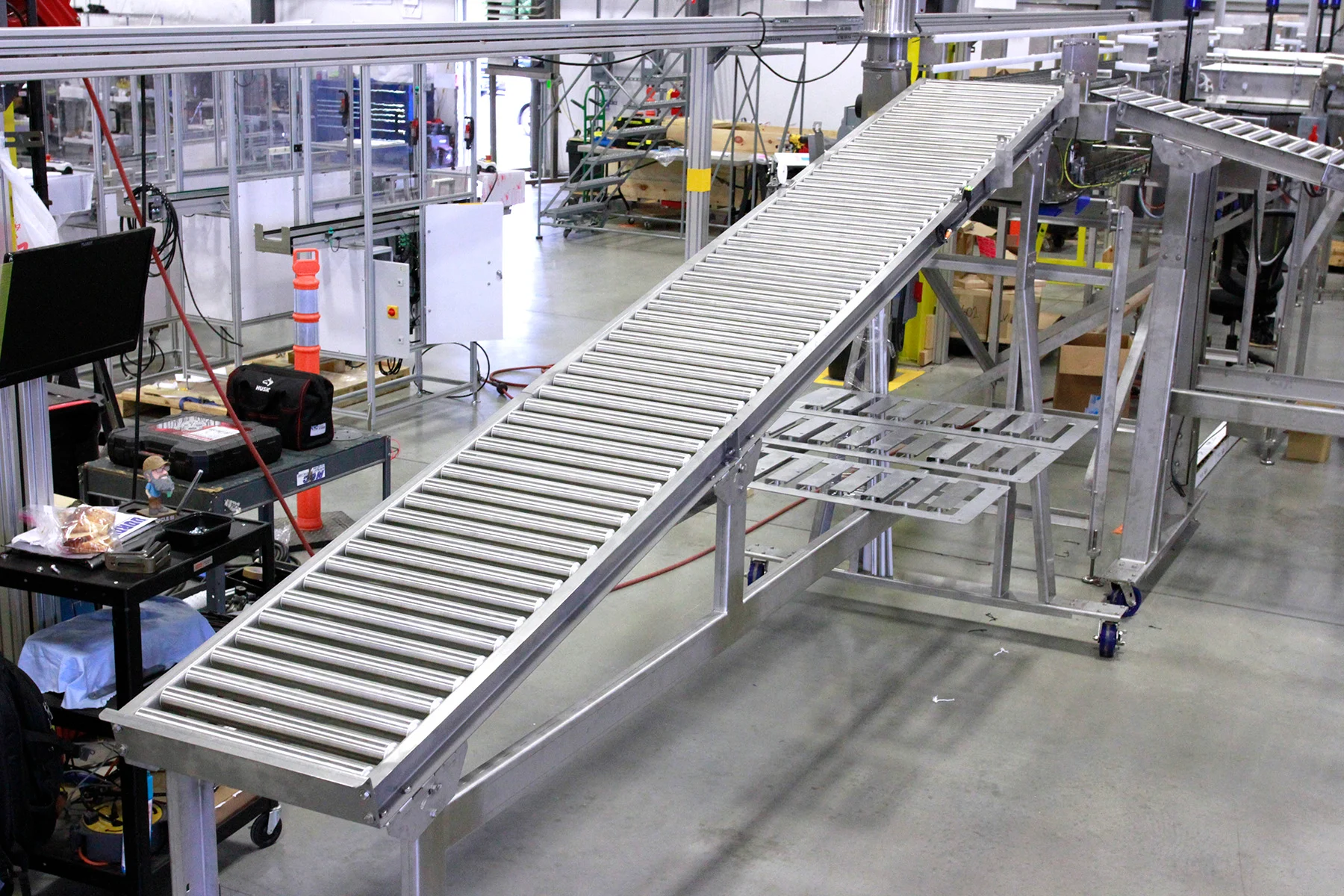
Transportation conveyors move stock from point A to point B. Belt or roller conveyors are most common and can transport straight ahead, up overhead, on an incline, and even spiral.
- Belt: Used for transport of odd-shaped, small cartons (less than 9” length), soft goods and apparel, and trash lines. Typically used on decline, incline, and overhead transport where the belt provides secure product control.
- Live Roller: Good for handling a variety of product widths, lengths, and weights and can be driven by chain, belt, or V-bands.
- Motor Roller Driven: Great for lighter-duty applications using low-voltage power to save on electrical draw using a motorized roller and o-ring bands to slave drive adjacent rollers.
- Line-Shaft: Rollers are powered by o-ring bands using a shaft that runs inside the frame below the rollers. U-joints can be added to easily power curves and angled conveyors.
Pallet Conveyors
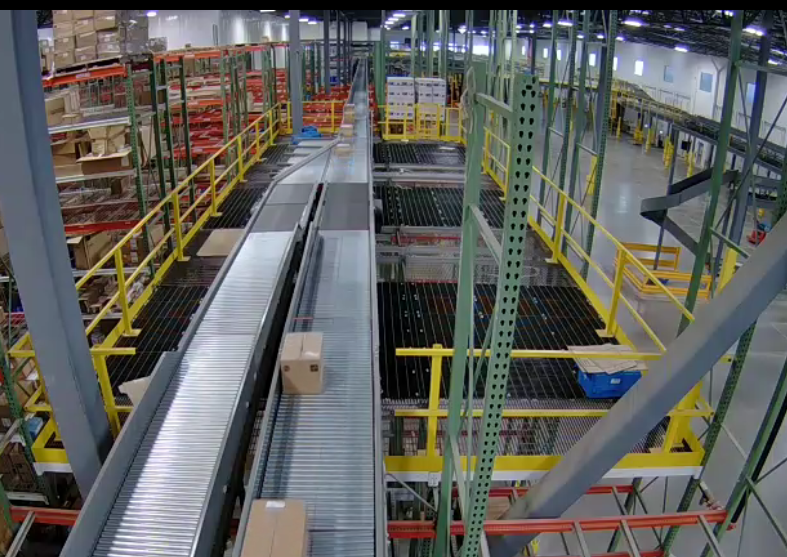
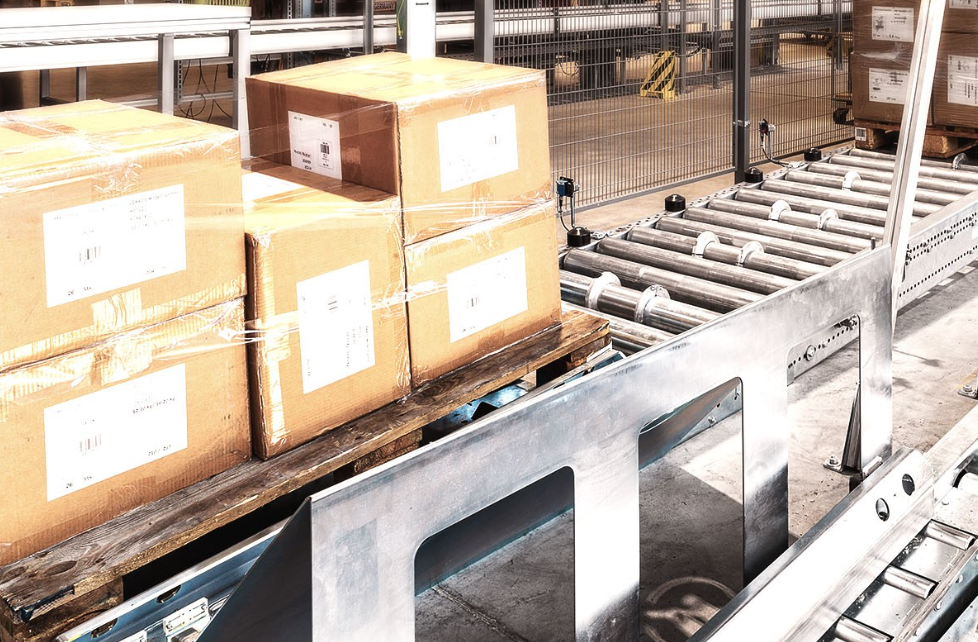
Pallet conveyors, roller or chain style, are the heavy hitters of warehouse conveyance carrying palletized loads up to 6,000 lbs.
Pallet conveyors can be connected with turn tables, ball transfer tables, lift stations, monorails, and machinery to smooth processing and minimize forklift and crane activity.
Gravity Conveyor Systems
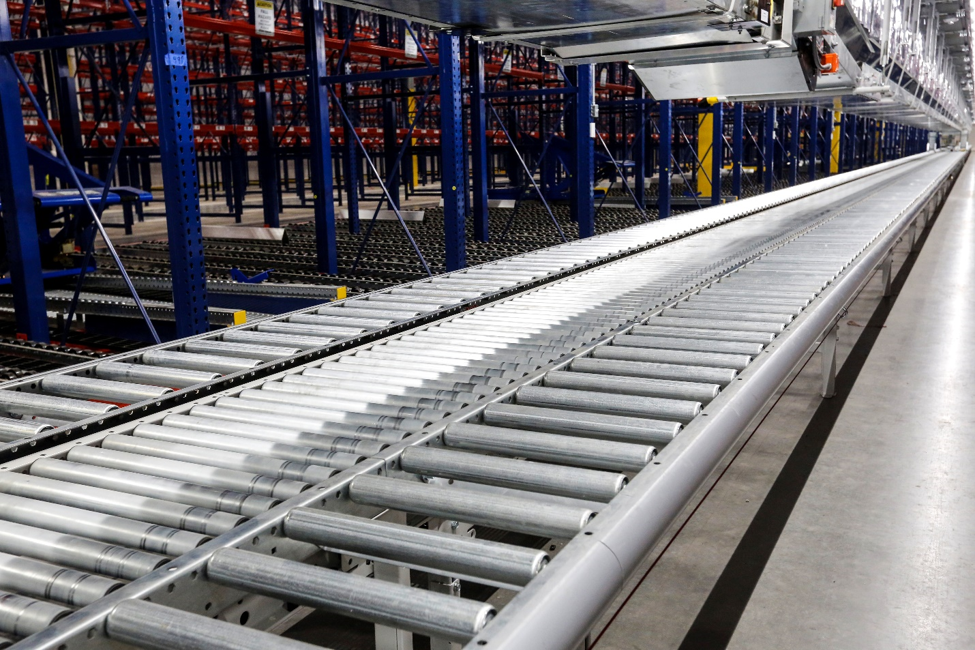
Don’t overlook this simple warehouse tool. Gravity flow systems are durable, highly efficient, low maintenance, and easy to use. You won’t need batteries or complicated training, just a reliable source to ensure adequate system design to handle the workload --and you’ve got that with Apex.
 Gravity Conveyor Types
- Floor mounted
- Pitched
- Push-assisted
- Mobile
The Apex team has extensive experience configuring gravity conveyor systems that deliver for our customers. Steel roller and skate wheel products can be mounted on adjustable legs to create an ergonomic work position. You can also secure your gravity conveyor to the floor for quick access with a pallet jack or lift truck.
Configure your gravity conveyor with ball transfer tables or mats to create the most efficient path for inventory flow with the least amount of worker strain. Call Apex to speak with a warehouse solutions expert.
Vertical Conveyors Up, Up & Away
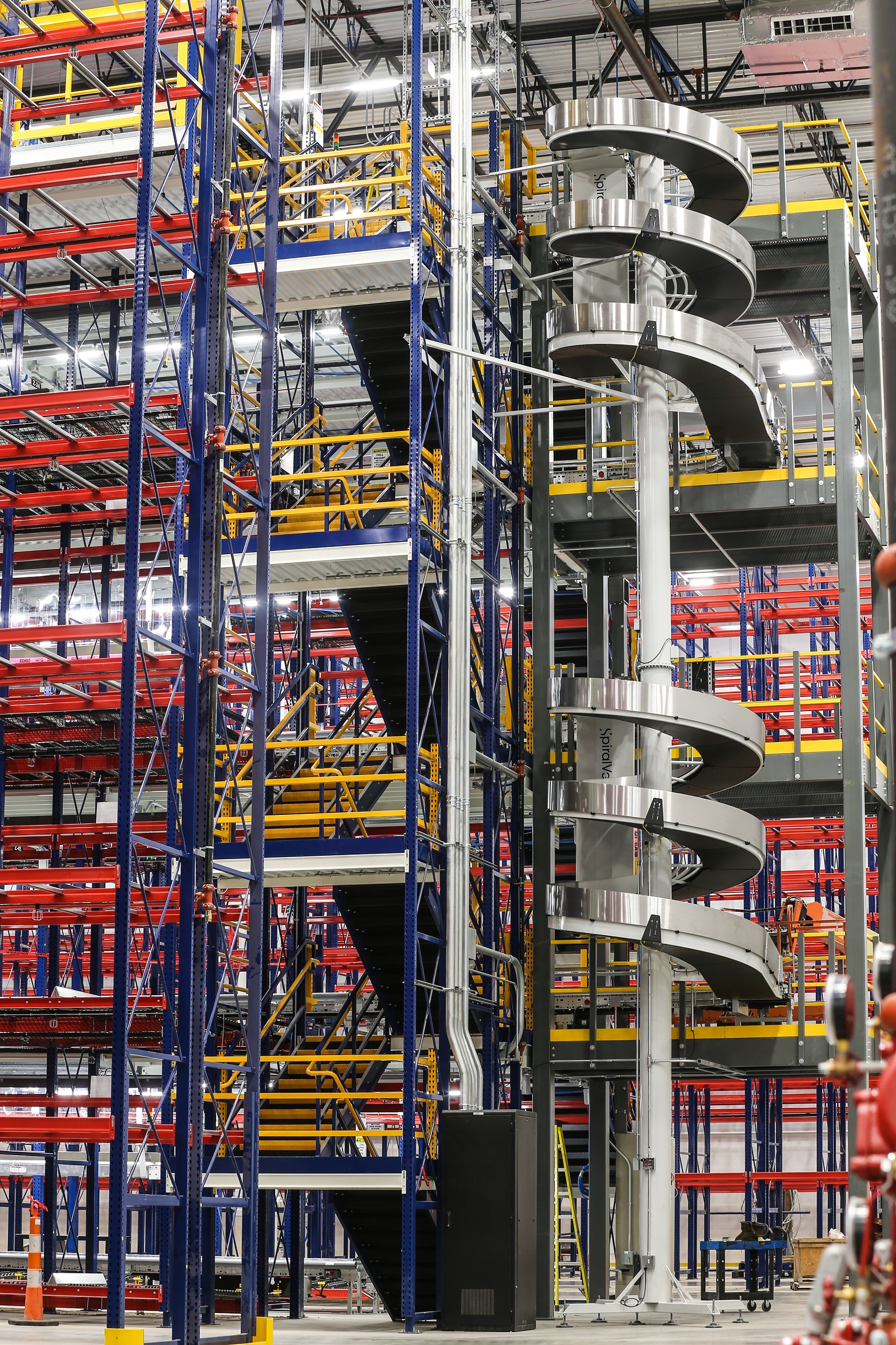
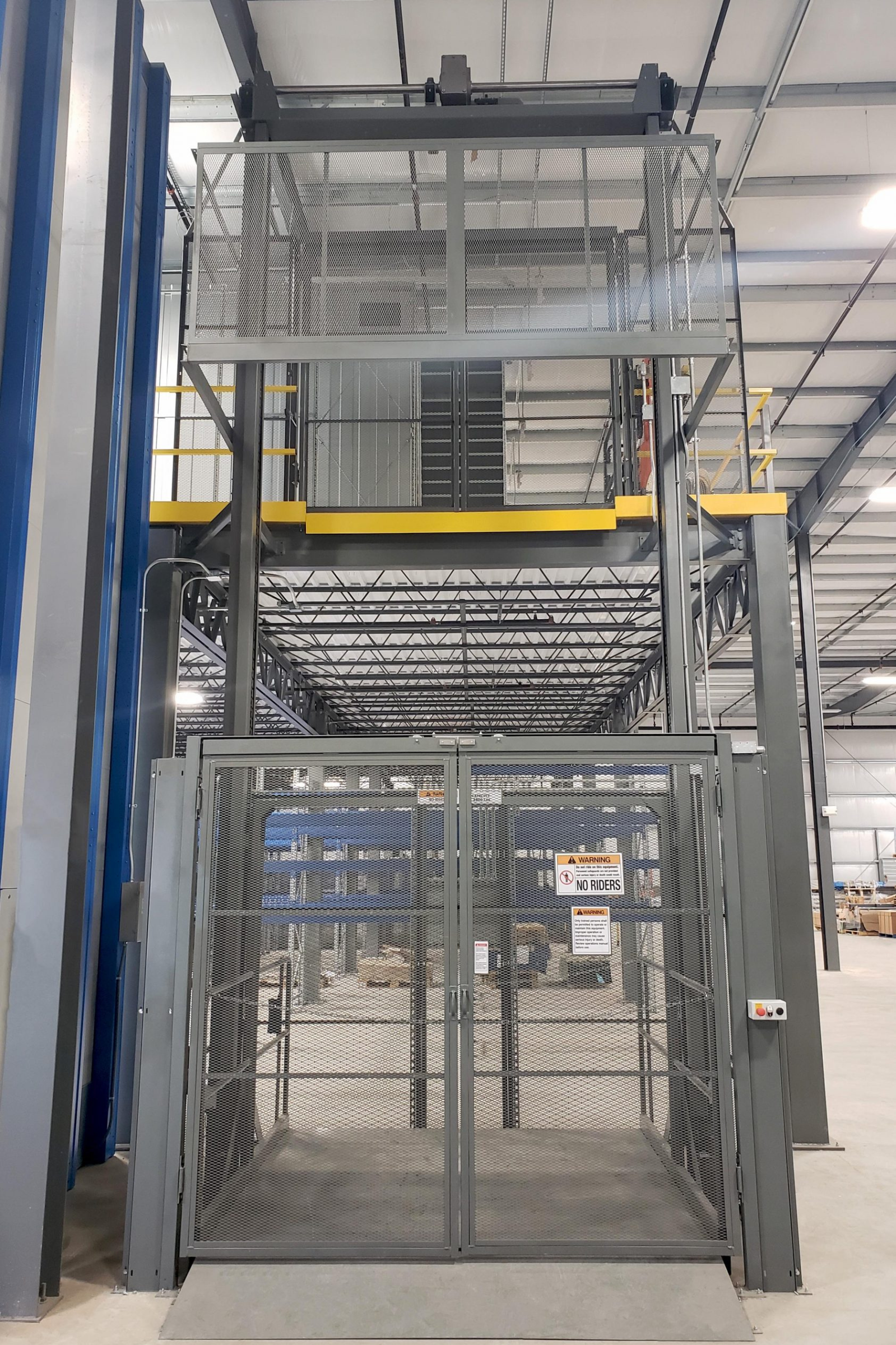
With warehouse space at a premium now more than ever, many facilities are building mezzanine levels and pick modules vs. relocating or operating satellite buildings.
- Spiral: belt, chain, helix, and slat style spiral conveyors can provide small footprints over incline and declines when conveying products to various floors or mezzanine levels of a pick module. Can be used for transport and controlled for accumulation.
- Belt: incline and decline belts can be provided of various material grit to improve positive product control during the conveyance.
- Gravity: spiral chutes are economical for declining soft goods and sturdy products.
- Vertical reciprocating conveyors (VRCs): If safety and efficiency had a shape, it would look like a VRC. These lifts are exclusively designed to shuttle heavy equipment and materials, such as bulk stock and pallets, up, down, and between mezzanine levels. Your VRC is built to handle the load, literally --up to ten stories high with a load capacity as high as 200,000 lbs. Built-in safety features and additional optional features will keep your team safe as they operate the lift.
Call Apex for a customized lift solution that is right for your needs.
The Solutions You Need to boost warehouse productivity

Automation Solutions
Warehouse automation for optimal efficiency
Warehouse Storage Equipment
Pallet racking, warehouse design & installation

Rack Inspection & Repair
Pallet rack inspection and repair services

Quick Ship Inventory
New and used pallet rack & components & accessories
Contact Us To Get Started
Fill out the form below to speak with one of our experts.
