
Fire Safety in Cold Storage: Detection Strategies That Work


Why Cold Doesn’t Cancel Fire Risk—Especially in the Carolinas
Fire and ice might seem like natural opposites, but in cold storage warehouses, the risk of fire is far from frozen. Facilities across the Carolinas still face fire hazards despite operating in sub-zero environments. When smoke or flames break out, every second matters—making early detection and fast response absolutely critical. Protecting your people and inventory starts with understanding the unique fire risks in cold storage and putting effective safeguards in place.
Fire Safety Challenges in Cold Storage Warehouses
Cold storage facilities across the Carolinas face a distinct set of challenges when it comes to fire protection. While the low temperatures may reduce the likelihood of some risks, others remain just as pressing—if not more so. Equipment reliability, condensation, system confidence, combustible materials, insulated surfaces that trap heat, and safe worker evacuation are all areas that require thoughtful attention.
Understanding the Fire Risk in Cold Environments
Even with temperatures kept well below freezing, cold storage warehouses still house plenty of combustible materials—wood pallets, cardboard cartons, wax-coated papers, and grease-treated packaging, to name a few. That’s why cold storage fire safety planning needs to differ from that of ambient temperature facilities.
Condensation remains a factor despite ongoing efforts to limit it. Moisture can compromise sensitive fire detection systems, potentially triggering false alarms or slowing detection when real threats occur. Frequent false alarms pose their own danger—if employees become desensitized, they may not respond with urgency when it truly matters. Add to that the tall ceilings and powerful airflow systems common in cold storage, which can delay smoke detection, and you have a recipe for delayed response in a high-risk situation.
Fortunately, there are proven strategies to improve fire detection and response in cold environments. Let’s take a closer look at how you can protect your people, product, and facility.
5 Tips to Support Cold Storage Fire Detection and Team Safety
Choosing appropriate detection equipment is only part of the job. The National Fire Protection Association (NFPA) requires consistent testing of fire detection and suppression systems. Be sure to stay up to date with all applicable fire and safety regulations at the state and local level. Keep these essential practices in mind:
- Fire Detection Equipment – Use detection systems rated for low temperatures. Opt for units that pull air samples from piping along both walls and ceilings to detect smoke early—before it rises to hard-to-reach heights. If applicable, consider using a light-based system to enhance early warning capabilities. Be cautious with spot detectors mounted to pallet racks, as they can be damaged by forklift activity.
- Fire Suppression – Use suppression systems that are specifically designed to function in cold environments. Protect sprinkler heads against ice blockage. Keep fire extinguishers charged and positioned in easy-to-reach areas. Make sure your team is trained to use suppression equipment properly.
- Planned Exit Strategy – Maintain clear and accessible exit paths at all times. Each employee should know the primary route out of the facility, along with any alternate options available in an emergency.
- Emergency Lighting – Layered lighting is the best way to help your team exit safely. Ensure all exit signs, walkways, and discharge areas are well-lit. Incorporate a mix of overhead, wall-mounted, and floor-level lights—all equipped with battery backups. Emergency lighting should remain active for at least 90 minutes following a power outage.
- Regular Employee Training – Fire safety should be a routine part of your cold storage operations. Whether training is done in small groups or full-team sessions, ensure your staff knows how to respond. Fire preparedness is just as critical as forklift safety, dock procedures, and equipment handling.
Keeping everyone in your cold storage warehouse is critical. If you need assistance, contact the Apex PROs They’re primed and ready to help.
Warehouse Fire Safety and the True Cost of Business
Running a fast-paced warehouse, distribution hub, or production facility comes with daily risks—from equipment damage to potential injuries. While some operations go years without major incidents, that’s usually not just good fortune. It’s the result of proactive planning, commitment to safety, and having the right resources in place.
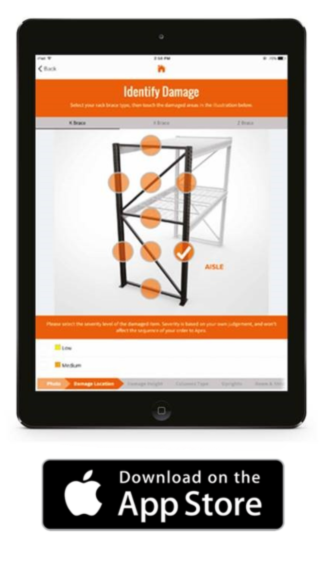
One of those tools is the Apex Rack Repair App, a free resource designed to help you stay on top of pallet rack safety. With the app, you can complete your own rack inspection, log damage, and capture critical rack specifications. This “Do It Yourself” approach enables the Apex PROs to review your findings and offer a tailored repair plan if needed. It’s a fast, effective way to reduce downtime and restore system safety.
Prefer to hand it off? No problem. The Apex PROs can come directly to your facility and complete a professional rack inspection and safety audit for you.
Whether you complete the inspection using the app or schedule a visit from our certified team, you’ll receive a detailed report and a cost-effective repair recommendation based on your exact rack system and the extent of damage.
Choose the approach that works best for you—either way, Apex is here with full-service support for every corner of your warehouse operation.
Download the Apex Rack Repair App today – available now on the App Store.
