
Pallet Rack Inspection – Gauging Out of Plumb & Height-Depth Ratio | Apex Safety Spotlight

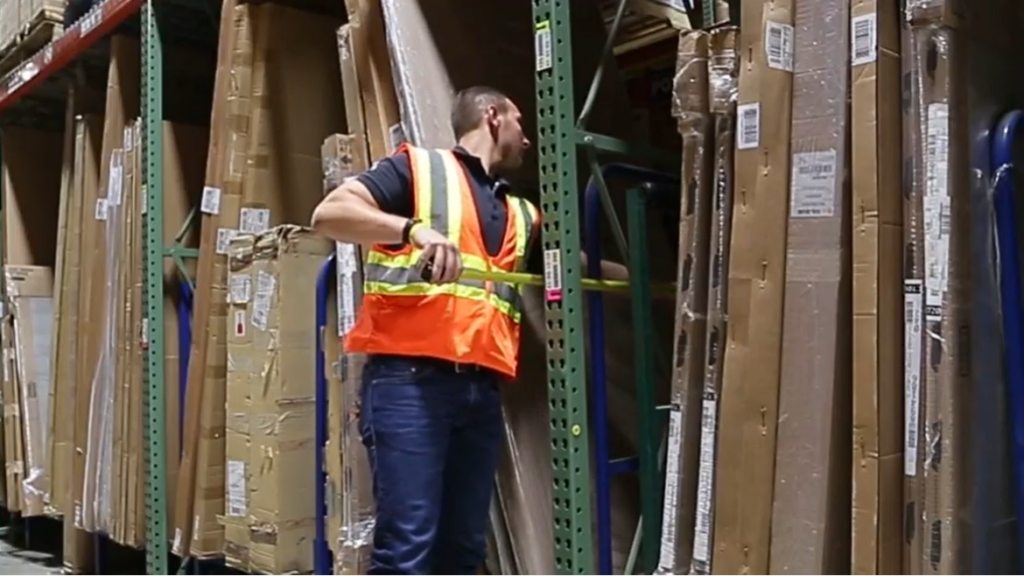
Assess Vertical Plumb in Cross Aisle & Down Aisle Pallet Racking
There’s little room for error in a pallet racking system installation. Uprights and beams are checked throughout the process to confirm the system is both level and plumb. No matter how well built your racking system is, however, it can, and will, take some abuse while in use. Regular pallet rack inspections are a great way to confirm that your rack is still up to the task and performing as intended.
Pallet rack inspection should be part of your overall safe warehouse operations. A visual inspection by a trained rack specialist will show if uprights are leaning within the rack rows. Inspectors will check up-and-down, front-to-back, and side-to-side.
Uprights that are leaning are considered out of plumb. It is vital to determine just how far out of plumb the rack is because it directly affects the load capacity that the system can safely support. A rack system with a reduced capacity is unsafe if loaded to the original load capacity.
Determining Out of Plumb
|
Cross Aisle Inspection
|
Down Aisle Inspection
|


If your visual rack inspection indicates that rack uprights are out of plumb, the next step is to determine to what extent the upright is leaning.
To Calculate Allowable Tolerance for Out of Plumb – Divide the Upright Frame Height (in inches) by the number 240. If the upright is out of plumb by more than this amount, unload the rack and replumb the frame.
For example:
Total Rack Height
240
- If the upright frame is 144”, the allowable tolerance = 0.6”
- If the upright frame is 240”h, the allowable tolerance = 1”
- If your upright frame is 360”h, the allowable tolerance is 1.5”
Individual Rack Rows & 6-to-1 Ratio
Single rows of selective pallet rack should follow the recommended height-to-depth ratio of 6 to1. Specifically, the distance from the floor to the top beam level divided by the depth of the upright does not exceed 6 to 1.
When inspecting systems installed back-to-back, if the height/depth ratio is greater than 6 to 1, row spacers should be placed between the rack systems to connect them and provide the necessary stability. Spacers should be positioned 8’ to 10’ apart at a minimum. Flue spaces 24” or wider will need heavy-duty spacers. Combine heavy-duty spacers with heavy-duty horizontal struts for maximum stability. Special anchors and footplates and/or overhead rack ties also support back-to-back rows.
|
Row Spacer
|
Height to Depth Ratio
|


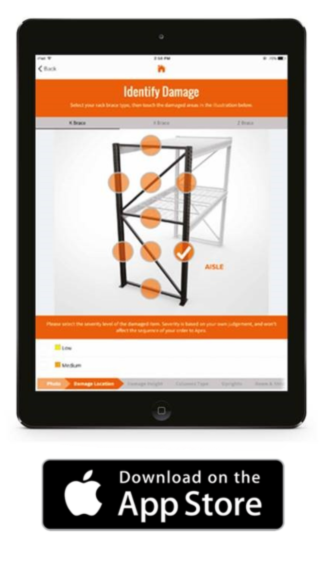 Pallet Rack Inspection? We’ve Got the App for That!
For pallet rack inspections, the Apex Rack Repair App is the best tool for the job. There are two ways to use the Rack Repair App:
Do It Yourself – Download the app and begin your pallet rack inspection. As you encounter damage, the app will prompt you to collect all the relevant specs needed to order a custom repair kit. The Rack Repair App provides comprehensive support for your entire system, including columns, struts, baseplates, anchors, and beams.
Easy point & click features and 3D graphics help you accurately identify the rack damage and each rack component affected. At the end of the audit, you can upload your findings, and the Apex PROs will evaluate your report and reply with a custom repair solution if needed. So fast, so easy… however, if you cannot spare the time or manpower, the Apex PROs will come to you.
The Apex PROs are certified, rack inspectors. They will conduct a thorough audit and warehouse safety assessment using the Rack Repair App.
Either way, you are guaranteed a comprehensive rack inspection report with an independent repair solution.
Join the Apex Safety Program today and download the Rack Repair Mobile App for free from the App Store. Call us or visit our website for more information.
