
Drive-In Pallet Racking in Utah: High-Density Storage Systems
When floor space is the constraint and SKU variety is low, drive-in pallet racking delivers more pallet positions per square foot than most conventional storage systems. Here's what you need to know to determine whether it's the right fit for your Utah operation.
For Utah operations weighing drive-in against other high-density systems, Apex engineers can review inventory profiles, facility conditions, and equipment constraints to confirm fit before design begins. Request a drive-in racking fit review to start.
Request a Fit Review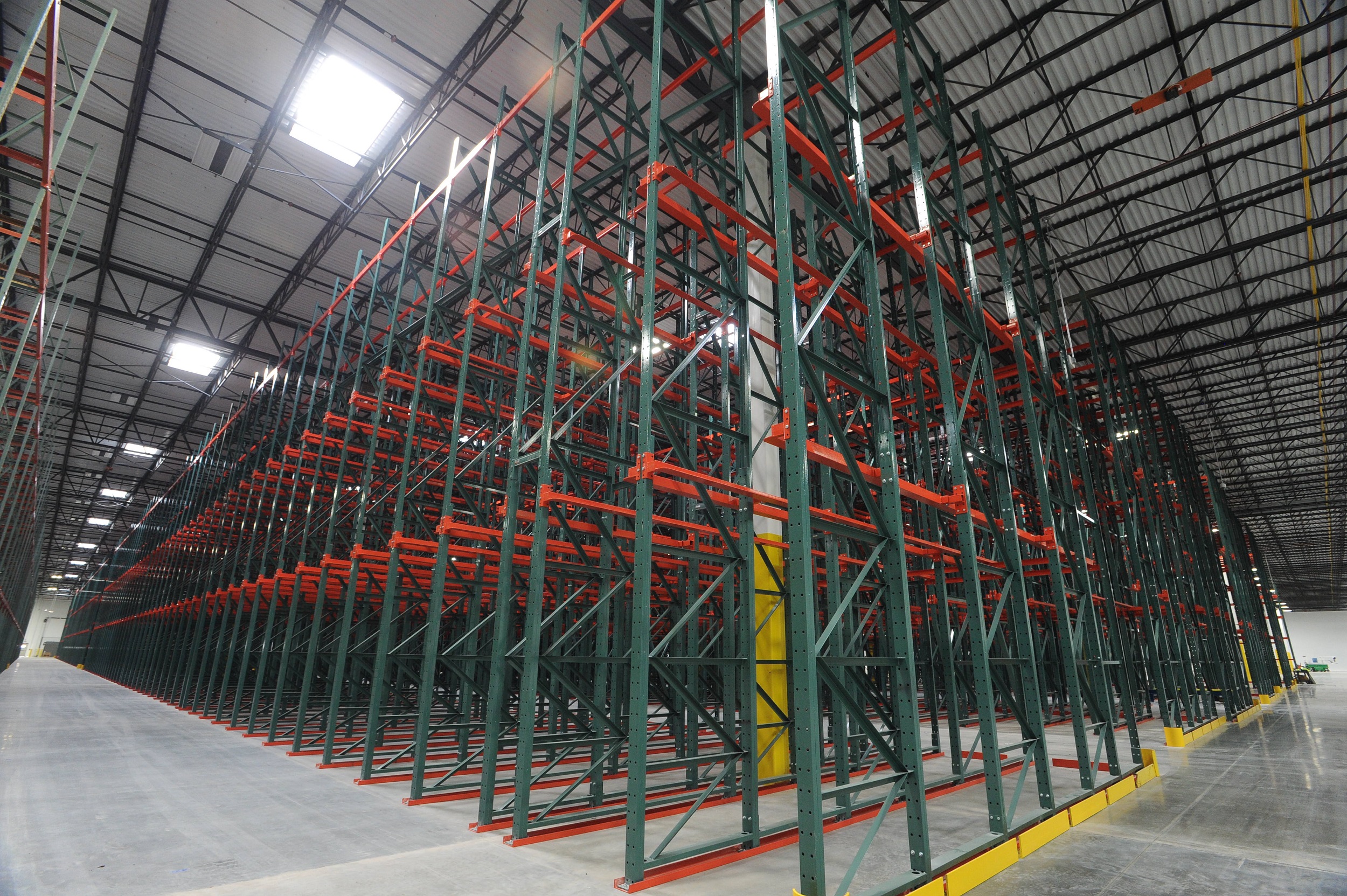
What Is Drive-In Pallet Racking?
Drive-in pallet racking is a high-density storage system built for operations that move large quantities of a single SKU. Unlike selective pallet racking, which provides direct access to every position, drive-in rack systems store pallets in open, multi-level lanes dedicated to specific SKUs. Forklifts drive directly into the rack structure to place and retrieve pallets, eliminating down-aisle space that standard racking requires.
The result is a compact, deep-lane storage system that holds multiple pallets per lane. For the right operation, it's a cost-effective pallet racking solution for operations with low SKU variety and compatible inventory profiles.
How Drive-In Rack Systems Work
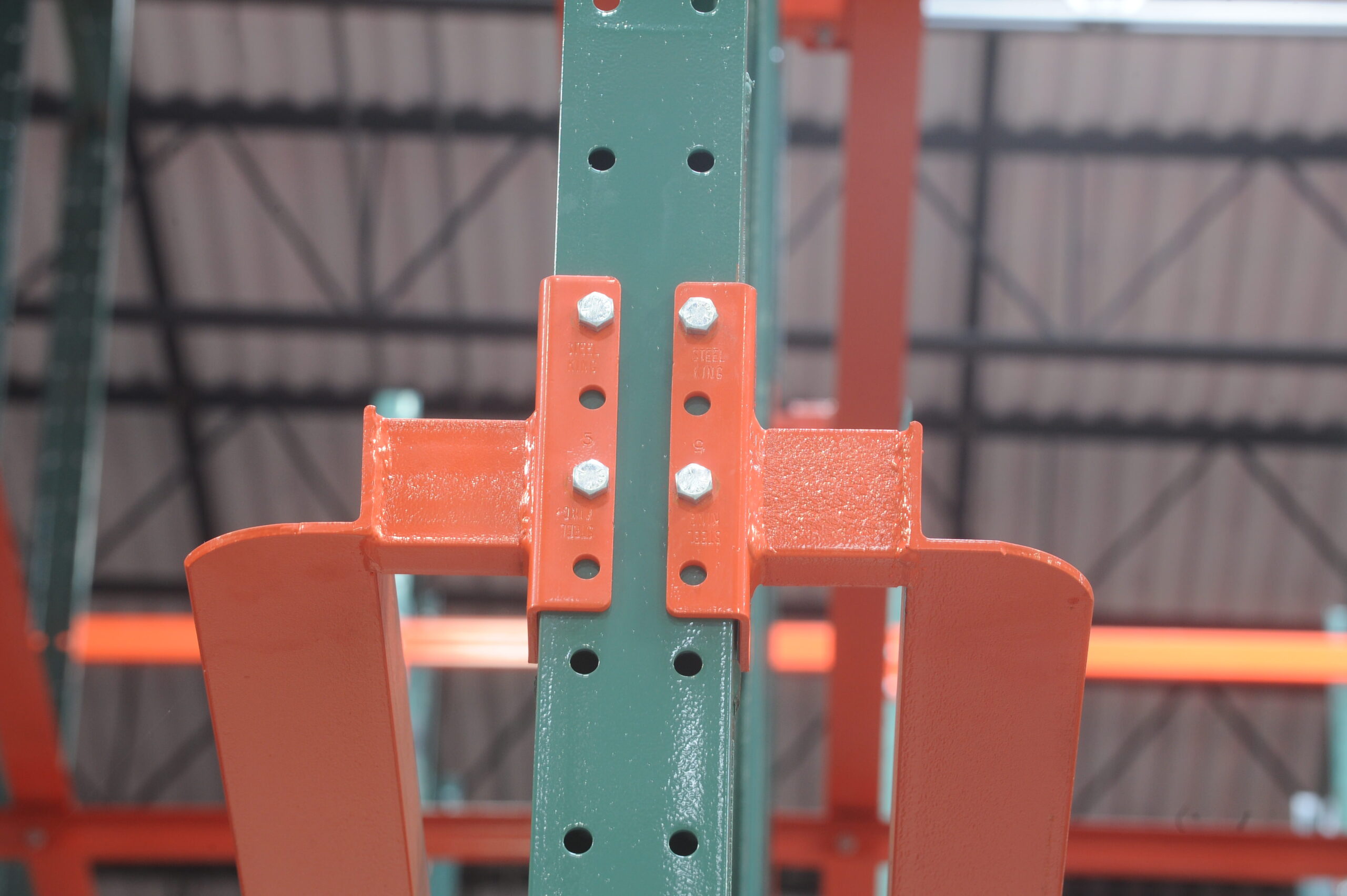
Pallets rest on horizontal arms that run the depth of the lane at each storage level. A forklift drives in, loads the pallet onto the arms, and backs out. Each lane operates on a last-in, first-out (LIFO) flow: the last pallet loaded is the first one retrieved.
Each full lane must hold a single SKU from top to bottom. This single-aisle structure is what lets you eliminate down-aisles, optimize space, push more pallets stored into your available floor space, and create orderly inventory management.
Drive-In Racking Advantages (With Operational Constraints)
High-Density Floor Space Recovery
Drive-in rack reduces the number of aisles required compared to selective racking, freeing up more floor space for high-density pallet storage. That recovered space converts directly into storage capacity and better use of vertical space.
Cost-Effective High-Density Storage
At approximately $200 per pallet position, drive-in racking is a cost-effective high-density storage solution for operations with the right inventory profile. Its density rating of 6/10 places it well above selective pallet racking while remaining below pallet flow racking or shuttle systems in overall storage density.
What Drive-In Racking Trades for Density
Higher density comes with real tradeoffs.
Selectivity Limits
Drive-in racking scores 2/10 on selectivity, meaning individual pallet access is severely limited. You’ll retrieve the last pallet loaded before accessing anything deeper in the lane.
Productivity Profile
Productivity also rates 2/10, since drive-in systems are slower to load and pick than comparable high-density systems that do not require the forklift to drive fully into the storage lanes. For operations needing fast, flexible access across many product lines, this is a significant limitation.
For operations where LIFO is acceptable and SKU variety is low, these tradeoffs are manageable. For operations needing fast, flexible access across many product lines, they're a significant limitation.
Where Drive-In Racking Fits Best
Drive-in racking is a strong match for warehouse and distribution center scenarios where floor space matters more than per-pallet access:
The system works best with consistent pallet sizes and uniform load weights. If those conditions aren't reliably met, the density advantage erodes quickly.
Not the Right Fit When...
If your inventory profile doesn't match these patterns, selective pallet racking or pallet flow racking preserves individual pallet access while still delivering meaningful warehouse storage density.
Operational Readiness Matters Too
Beyond inventory and equipment fit, operational readiness matters. Operations without stable SKU profiles, documented pallet quality standards, or a trained counterbalance operator pool often benefit from addressing those foundations before committing to a drive-in configuration. The system's density advantage depends on the supporting operational disciplines being in place. When SKU velocity is still shifting or pallet quality varies lane to lane, the business case for drive-in weakens quickly, and a phased selective or push-back configuration may be the more defensible interim step.
Utah Drive-In Racking Installation and Service Areas
Utah operations need installation partners who can show up on site, not just ship product in from another state. Apex works directly out of Salt Lake City, with installation teams covering warehouses and distribution centers statewide, including West Valley City, West Jordan, South Jordan, Eagle Mountain, Saratoga Springs, Spanish Fork, and Cedar City.
Utah's position as a growing Western U.S. logistics hub puts pressure on operations to store more without expanding their footprint. A local Apex presence means direct project coordination on the ground, backed by national resources for design, permitting, and system setup.
Drive-In Pallet Racking System Components
Before scoping a project, understand what goes into a drive-in build. Each component carries specific operational implications for your Utah pallet racking systems.
Upright Frames and Continuous Rail Structure
The backbone of any drive-in rack system is the upright frame set and the continuous horizontal rails pallets rest on. Rails run the full depth of the lane, replacing individual beam pairs used in selective racking.
Counterbalance Forklift Compatibility
Counterbalance forklifts are often used with drive-in rack, but reach truck compatibility depends on the system layout and the equipment being used.
Column Protection
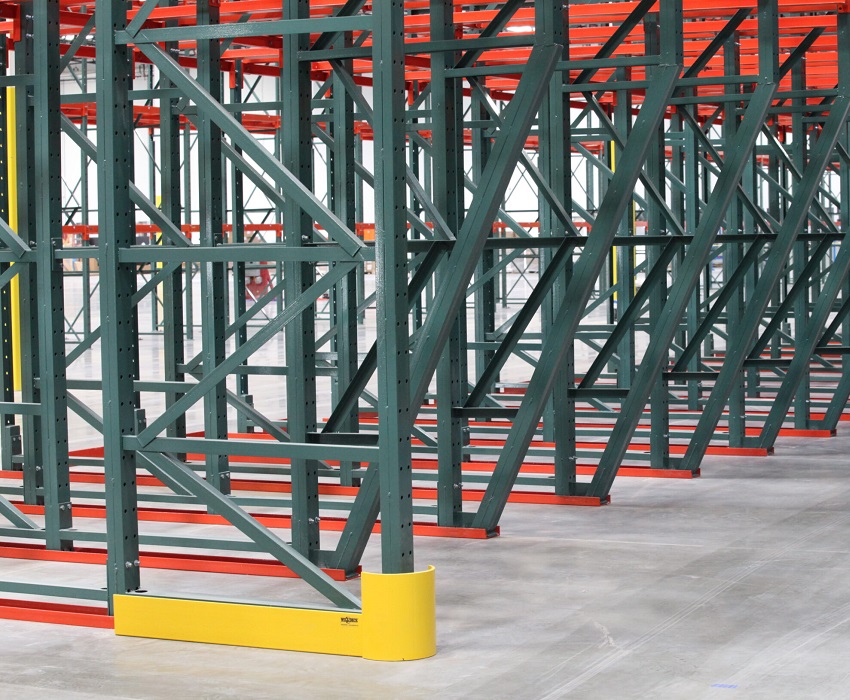
Column protectors are recommended at aisle positions to help protect against forklift strikes. Frames can also be designed with a layback or angled front column to move the upright out of the impact zone and provide additional turning clearance for the lift truck.
Floor Channel
Floor channel helps guide lift trucks as they enter and exit the lane while protecting the frame line from accidental truck contact. Bolted between the uprights and the floor, it adds a practical layer of protection in a drive-in system where frequent forklift entry makes impact prevention especially important.
Floor Anchors
Floor anchoring is required on every installation per engineering specifications.
Drive-In vs. Drive-Thru Configurations
Standard drive-in uses a single aisle access point with LIFO flow. Drive-thru uses double aisle access: forklifts load from one aisle and extract from the other side. Drive-thru supports FIFO rotation but requires open access on both ends of the rack structure.
What to Evaluate Before Choosing Drive-In Racking
Drive-in racking carries an operator training difficulty rating of 8/10, the highest of any conventional pallet racking system. Before committing, walk through these factors with your team:
To evaluate drive-in against your SKU profile and current forklift fleet, Apex can review your inventory data and facility layout before any system is specified.
Drive-In Racking vs. Other High-Density Storage Systems
For a side-by-side view of every system Apex installs, see the Apex Pallet Rack System Comparison Matrix. The summary below puts drive-in in context against the systems most often considered alongside it.
| System | Density | Selectivity | Productivity | Cost/Position | Flow |
|---|---|---|---|---|---|
| Drive-In Rack | 6/10 | 2/10 | 2/10 | ~$200 | LIFO |
| Selective Pallet Racking | 2/10 | 10/10 | 7/10 | ~$150 | Either |
| Push-Back Racking | 6/10 | 5/10 | 7/10 | ~$275 | LIFO |
| Pallet Flow Racking | 5/10 | 5/10 | 8/10 | ~$375 | FIFO |
Drive-In vs. Selective Pallet Racking
Selective rack gives you access to every pallet position. Drive-in gives you density at a lower cost per position than other high-density systems. If your operation requires frequent pallet access across many SKUs, selective is the better match.
Drive-In vs. Push-Back Racking
Both are LIFO systems, but push-back racking offers better selectivity (5/10 vs. 2/10) and higher productivity (7/10 vs. 2/10). It supports multiple SKUs within the system using dedicated SKU lanes and provides faster pallet access from the aisle. Drive-in rack can deliver greater density for lower-SKU applications, but access is slower because the truck must enter the lane. The trade-off is a higher cost per pallet position for push-back.
Drive-In vs. Pallet Flow Racking
This is the LIFO vs. FIFO decision. Pallet flow uses gravity-fed rails to rotate inventory first-in, first-out: the right warehouse racking solution for perishables or date-sensitive inventory.
Drive-In vs. Drive-Thru Racking
Drive-thru rack is a variation of drive-in with access from both ends of the storage lane. Pallets are loaded from one aisle and retrieved from the opposite aisle, which supports FIFO inventory rotation. It works best when the facility layout allows open access on both sides of the rack structure.
Utah Warehouse Storage Challenges Drive-In Racking Solves
Utah's warehouse and distribution market is shaped by seasonal swings, limited industrial real estate, and growing regional logistics traffic. Each pressure creates specific storage challenges where drive-in racking delivers practical results.
Seasonal storage peaks.
Utah's tourism, recreation, and consumer goods sectors create predictable demand swings. Drive-in racking handles large, single-SKU batch storage efficiently, letting operations load and clear in organized blocks.
Distribution center space optimization.
Distribution centers across Utah are under pressure to store more without expanding their facility. Drive-in rack's high-density storage solution reduces floor space per pallet position more aggressively than most conventional racking systems.
Cold storage density.
Drive-in racking is a practical choice for cold storage and food distribution operations where construction costs make every square foot of refrigerated space expensive.
Manufacturing buffer storage.
Utah's industrial sector often needs buffer storage for single-product runs. Drive-in systems are well-suited for facilities that produce in large batches and stage materials before shipment to docks.
Supply chain consolidation.
Operations consolidating high-volume inbound shipments before regional distribution benefit from drive-in's ability to absorb large quantities of low-SKU inventory efficiently.
Drive-In Pallet Racking Installation and Design Services
A deep-lane system engineered, permitted, or installed outside spec typically creates operational friction that outweighs the original design savings. Apex handles each stage of a drive-in project so the system performs the way it was specified.
3D AutoCAD Layout and Warehouse Design
Apex's engineering team designs a drive-in system that fits your floor plan, ceiling height, and operational flow. Every system is designed before anything is ordered.
Facility Assessment and Space Optimization
Apex evaluates your facility before design begins. Aisle requirements, column locations, dock access, and slab conditions all factor into configuration.
Permitting and Project Management
Apex coordinates scheduling, compliance, and installation sequencing, minimizing disruption to your operations and supporting timely delivery of your completed system.
Professional Pallet Rack Installation
Apex's installation teams work nationally, with Utah project support backed by the Salt Lake City location. Hundreds of racking and storage system projects are completed per year across a full range of facility types.
Post-Installation Inspection and Training
Apex reviews the completed system and confirms your operators are prepared to work safely in a drive-in rack environment before the system goes live.
Frequently Asked Questions About Drive-In Racking in Utah
Frequently Asked Questions
Drive-in racking uses a single aisle access point. Forklifts load and retrieve from the same end, so inventory flows last-in, first-out. Drive-thru has two aisle access points: forklifts load from one aisle and extract from the opposite aisle, supporting FIFO rotation. Drive-thru requires open access on both ends of the rack structure.
Request a Free Consultation for Your Utah Warehouse
Drive-in pallet racking delivers real density advantages for the right operation. Getting there starts with an honest look at your inventory profile, your equipment, and your facility before any system is specified.
A qualified drive-in project review covers inventory profile, facility conditions, forklift compatibility, and installation sequencing. Call (833) 903-5246 to schedule the review.