
Double-Deep Pallet Racking in Utah
Warehouse Storage Systems
When warehouse floor space is maxed out and selective rack has hit its limit, double-deep pallet racking is often the next practical step. The system stores two pallets in a single rack bay accessed from one aisle, increasing pallet positions in a similar footprint. One operational requirement matters: rear positions require a deep-reach forklift.
Apex's Salt Lake City team supports Utah warehouses and the wider Mountain West with system design, installation, and service. Whether you're adding pallet racking capacity across the Wasatch Front or evaluating pallet racking solutions for a regional distribution center, we can help you confirm whether double-deep is the right fit for your operation.
Not sure whether double-deep fits? Apex engineers will review your SKU mix, fleet compatibility, and floor plan against the system's constraints before anything is specified. Call (833) 903-5246 to start the conversation.
Request a Fit Review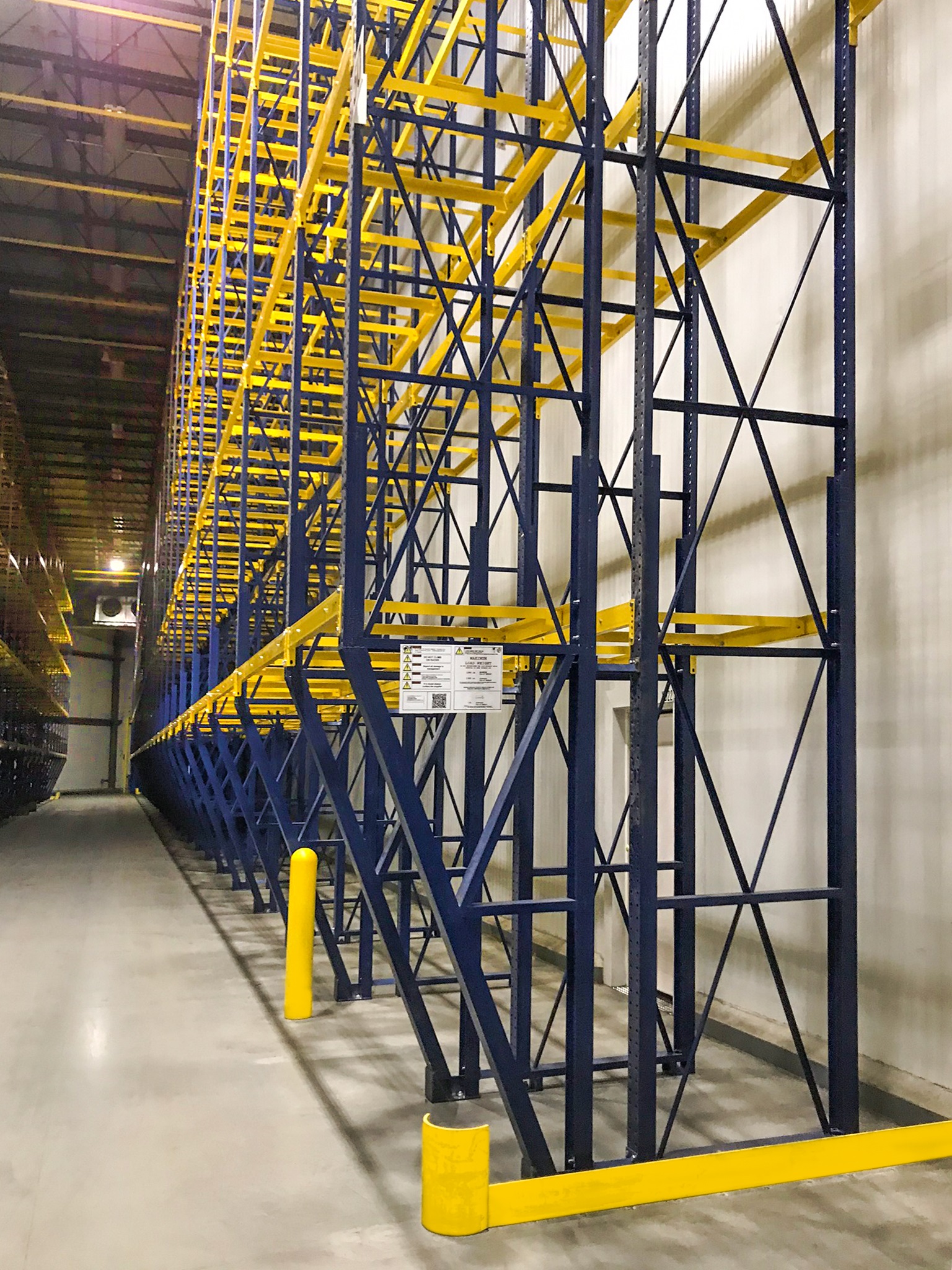
How Double-Deep Racking Works
In a double-deep system, pallets are loaded two deep into a single rack bay. The front pallet sits at the access point and the rear pallet directly behind it, so retrieving the rear load means first moving the front. Rotation per bay follows LIFO (last in, first out), which is the key inventory control constraint to confirm before specifying the system.
Deep-reach forklifts can require 12 to 18 inches more aisle space than standard trucks. The forklift outriggers and pantograph equipment used to extend the forks deep into the rack bays must be accounted for in the layout. Storage depth is the difference: you gain pallet positions without reconfiguring your floor plan or expanding the footprint.
Equipment Requirements
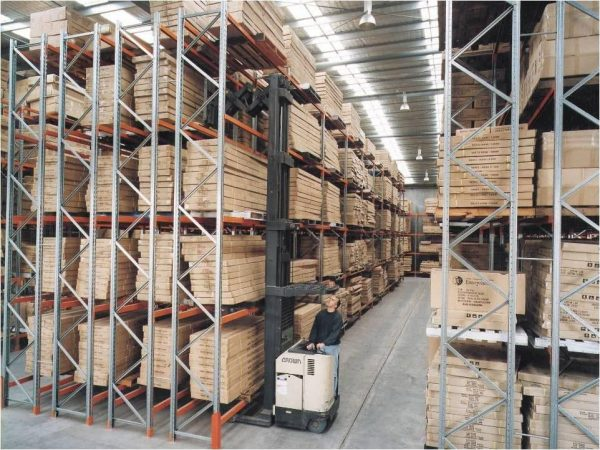
Accessing rear pallet positions requires a deep-reach forklift, a specialized unit with extended forks built to reach beyond the front pallet. Standard forklift trucks used with selective pallet racking cannot safely reach the rear position, so the fleet question needs to be answered early. Operator training is moderate, rated 4 out of 10 versus selective rack's 2 out of 10.
Operators must be instructed on using the deep-reach truck, properly positioning the outriggers, and handling the pantograph fork equipment. If your current fleet doesn't include deep-reach forklifts, Apex's material handling team can walk you through equipment options that fit your configuration and budget before the system is specified.
Storage Capacity Gains
Double-deep racking can deliver the same pallet positions in approximately 40% less space than a selective system. In density terms, selective rack rates 2 out of 10 and double-deep reaches 4 out of 10. For facilities where vertical space and floor space are the limiting constraints, that's a meaningful gain in storage capacity without stepping up to a more complex high density storage system.
Double-deep racking is a practical step up from selective rack when you need more pallet positions but still want better access than a true high-density system can offer. It is best suited to operations with higher pallet volumes, lower SKU counts, and enough inventory depth to justify storing pallets two deep. For many facilities, it provides a useful middle ground between selective rack and denser systems like drive-in.
Talk to a storage expert about your project
Where Double-Deep Racking Fits Best
Double-deep racking performs well in operations with medium-turnover inventory and a limited SKU count. It's a strong fit when:
This is a right-fit system for manufacturing plants, distribution centers, and warehouse storage environments where trading reduced instant access for pallet positions in a more consolidated footprint allows operations to reach peak efficiency.
When Double-Deep Doesn't Fit
Avoid double-deep racking when operational requirements conflict with its core constraints:
Operational thresholds also matter. When fewer than three to five pallets per SKU move through the facility in a typical week, the density gain of double-deep rarely offsets the reduced selectivity, and lane utilization stays low enough that selective rack often performs better. Operations without lane-level inventory tracking should also treat double-deep as premature: LIFO rotation per bay depends on knowing which rear positions are aging and which lanes need to be cleared, which is difficult without system visibility.
For FIFO-required operations, Pallet Flow Rack is the better-suited alternative. For high-SKU environments, selective pallet racking and industrial shelving remain the standard tools. Carton Flow Rack and gravity flow racks address case-pick and piece-pick workflows. For long-load materials such as lumber, Cantilever Racking is the appropriate racking solution, not double-deep.
Double-Deep vs. Other Warehouse Racking Systems
Buyers evaluating double-deep typically compare it to adjacent racking systems before deciding. This table provides a starting framework for that decision. Match system to SKU depth and turnover rate, not just density.
| System | Density (1-10) | Selectivity (1-10) | Best Suited For |
|---|---|---|---|
| Selective Rack | 3 | 10 | High SKU count, full pallet access at all positions |
| Double-Deep Rack | 4 | 7 | Higher volume, limited SKUs, LIFO per bay |
| Push-Back Rack | 5 | 5 | Medium density, LIFO, multiple pallets per SKU per level |
| Drive-In Racking | 6 | 2 | High-density, LIFO, single-SKU lanes, minimal access need |
| Pallet Flow Racking | 7 | 5 | High-density, FIFO, consistent throughput, high-volume SKUs |
Double-deep sits between selective rack and push-back rack: more density than selective, more flexibility than drive-in. If you're not sure which pallet racking systems fit your operation, Apex can work through your inventory data and operational flow to recommend the right racking solutions for your storage needs.
System Components and Configuration
Double-deep rack systems use beam connection types that depend on the manufacturer, rack design, and application requirements. Teardrop and bolted configurations are both common, with assembly methods varying based on structural demands, loads, and site conditions.
What matters most is that the connection method matches the overall rack design. In double-deep applications, any reconfiguration or field modification should be reviewed in the context of the load profile, lift equipment, and facility requirements before changes are made.
Upright Frames
Load-rated vertical posts that form the structural backbone of each bay; sizing depends on height, load, and seismic requirements.
Load Beams
Horizontal supports that define each storage level; connection types vary by manufacturer, including teardrop pallet racking connections and bolted configurations.
Wire Decking and Pallet Supports
Can be used together. Surface support between the rack beams to provide support for pallet loads. Improves load stability.
Specialized Column Designs
Offset, sloped, or raised I-beam designs create more space at floor level. Accommodates forklift outriggers and provides more turn space, reducing the risk of rack strikes.
Floor Anchors and Seismic Compliance Hardware
Required on all Utah installations; local seismic zone classifications govern hardware type and placement.
What to Evaluate Before Specifying Double-Deep Rack
Work through these practical checkpoints before finalizing a double-deep specification:
SKU count and throughput
How many distinct SKUs are stored, and what are the pallet dimensions, weights, and flow rates? Throughput volume determines whether LIFO per bay creates sequencing bottlenecks under your daily picking patterns.
Deep-reach forklifts in fleet
If your operation already uses deep-reach forklifts, double-deep adds density at no additional equipment cost. If not, factor equipment acquisition or leasing into your project budget.
Inventory rotation requirements
LIFO is the standard workflow for double-deep racking. Confirm your inventory mix supports it before specifying the system.
Ceiling height and vertical space
Double-deep rack height is bounded by your building's clear height and your equipment's maximum lift.
Seismic zone requirements
Utah falls within active seismic zones. Local building codes require seismic compliance in rack design and installation, affecting upright sizing, anchor selection, and structural details.
If your operation meets most of these checkpoints, the next step is a project review. Apex will walk through your facility data, fleet compatibility, and seismic requirements before any specification is finalized.
Request a Project ReviewNew Double-Deep Rack and Used Inventory Options
Customers sourcing quality new pallet rack components and accessories, including wire decking, beams, and column guards, can work with Apex's Salt Lake City sales team to confirm current availability and put together a component list matched to their layout. New pallet rack components ship from stocked facilities in Aurora IL, Denver CO, and Hickory NC for fast delivery across the Mountain West.
Used double-deep rack inventory is not typically available, though used selective rack components may be in stock depending on current inventory. If budget flexibility matters, the team can review used selective rack as an alternative pathway and confirm what fits your specifications.
Double-Deep Racking Design and Installation in Utah
Utah's seismic conditions are an important design factor for pallet racking and other warehouse storage systems. Apex engineers incorporate the applicable seismic design criteria, local building code requirements, and RMI / ANSI rack design standards into the system layout and structural details before installation begins. Every project starts with 3D AutoCAD warehouse design, so facility dimensions, column locations, dock positions, and equipment clearances are modeled up front.
Material flow analysis and aisle planning are built into that design process, so the system is optimized to your operation. Apex manages full project management from permitting coordination through installation scheduling and final inspection. With 20+ years of experience and hundreds of installations completed, we bring structured project execution and field installation experience to every project.
Why Apex for Utah
Frequently Asked Questions
Selective rack stores one pallet per lane with full individual access to every position, making it the standard for high-SKU environments where every pallet needs to be reachable without moving another. Double-deep stores two pallets per bay, requires a deep-reach forklift for rear access, and operates on LIFO rotation per bay. Selectivity drops from 10 out of 10 to 7 out of 10. Double-deep is the better choice when managing higher pallet volumes across fewer SKUs and you can accept that trade-off.
Plan Your Double-Deep Racking System
Double-deep rack installation should be evaluated in the context of the application, including pallet loads, lift equipment, layout, and site conditions. In Utah, applicable seismic and local code requirements may also affect anchoring and other structural details. Apex can review those factors before the system is installed.
With 20+ years of experience and a local team serving the Mountain West, Apex brings design expertise and pallet rack installation capacity to every project.
For a project review or component quote: