
Warehouse Automation in Utah
Solutions Tailored to Your Operation
Throughput targets are climbing, skilled labor is harder to retain, and most Utah warehouse operators are being asked to move more volume inside the same four walls. Warehouse automation can address all three pressures, but only when the technology actually fits the operation. Utah's central position between West Coast and Mountain West markets has accelerated the timeline.
Apex Companies works with Utah warehouse operations to evaluate, design, and implement automated systems matched to your throughput goals, workforce structure, and facility constraints. Each engagement starts with a look at your current state and operational needs, not a product recommendation.
Ready to assess fit? Request a Utah warehouse automation review.
Call: (833) 903-5246
Automation Solutions Built for Utah Warehouses
Utah's regional pressures show up in predictable ways: seasonal e-commerce peaks expose manual workflow gaps, Salt Lake City labor markets have tightened around picking and transport roles, and distribution centers scaling throughput face pressure to do so without adding square footage. Apex supports these operations from the Denver facility at 4250 Oneida Street, with stocked inventory and project coordination that keeps design, engineering, and installation aligned with the Utah-based team.
The methodology is the same regardless of project size: assess current state, model your throughput against business needs, and recommend technology that fits. The right system for a Salt Lake City fulfillment center looks different from the right system for a regional wholesale distributor, and the recommendations reflect that.
Core Automation Technologies Apex Integrates
The right combination of automation depends on your current workflow gaps, volume patterns, and facility constraints. Below is an overview of the automated warehouse systems Apex configures and deploys, with notes on where each tends to fit best.
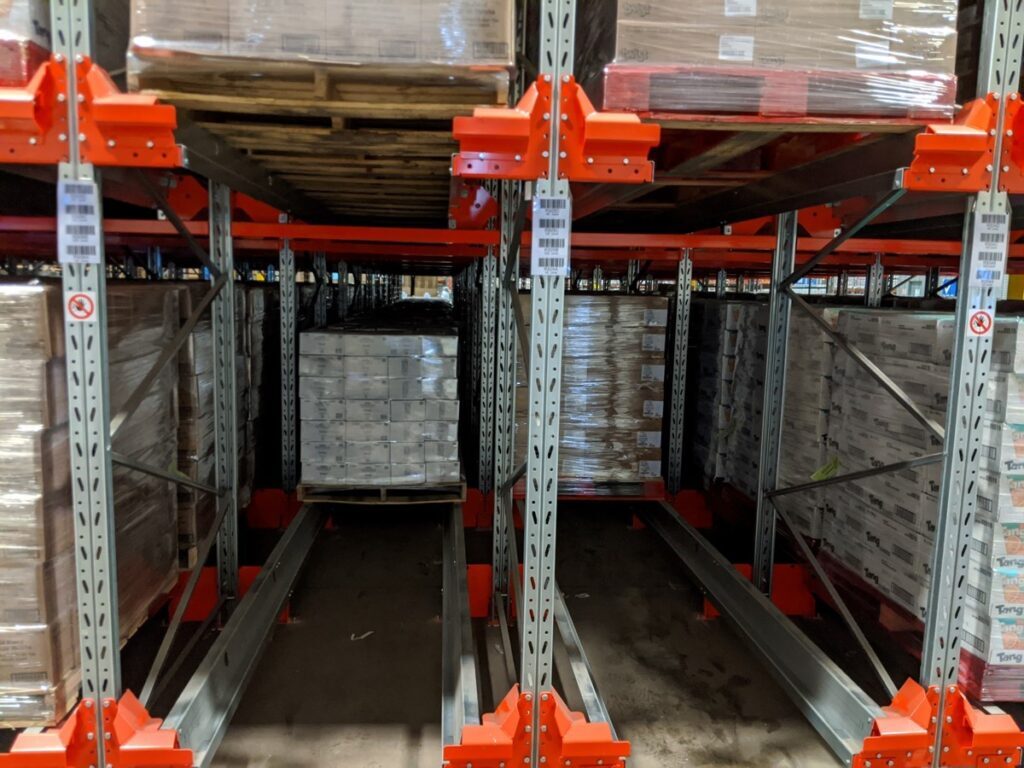
PEAK Pallet Shuttle
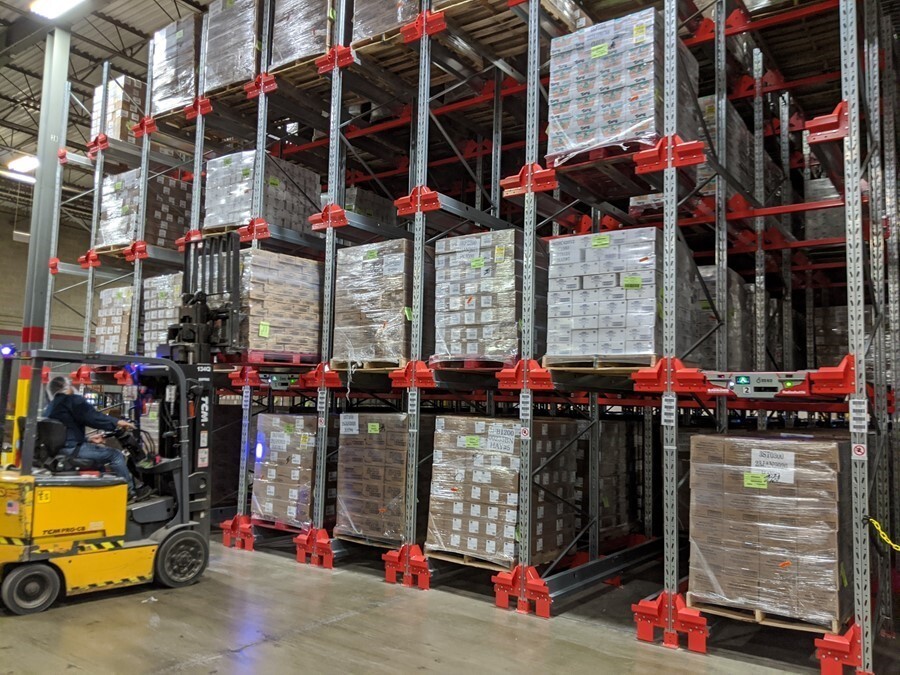
The PEAK Pallet Shuttle is Apex's flagship branded pallet storage and retrieval system, available in semi-automated and fully automated 4-way configurations. PEAK is designed for high-volume pallet storage. In the semi-automated version, a forklift loads the shuttle into the lane and the shuttle positions pallets independently. The fully automated 4-way variant moves pallets through the rack system without forklift involvement, supporting heavier throughput and tighter labor profiles. PEAK fits high-volume operations with stable pallet types, limited SKU variation, and space constraints that demand more from every storage position. It is less suitable for operations with highly mixed pallet dimensions or low SKU turnover.
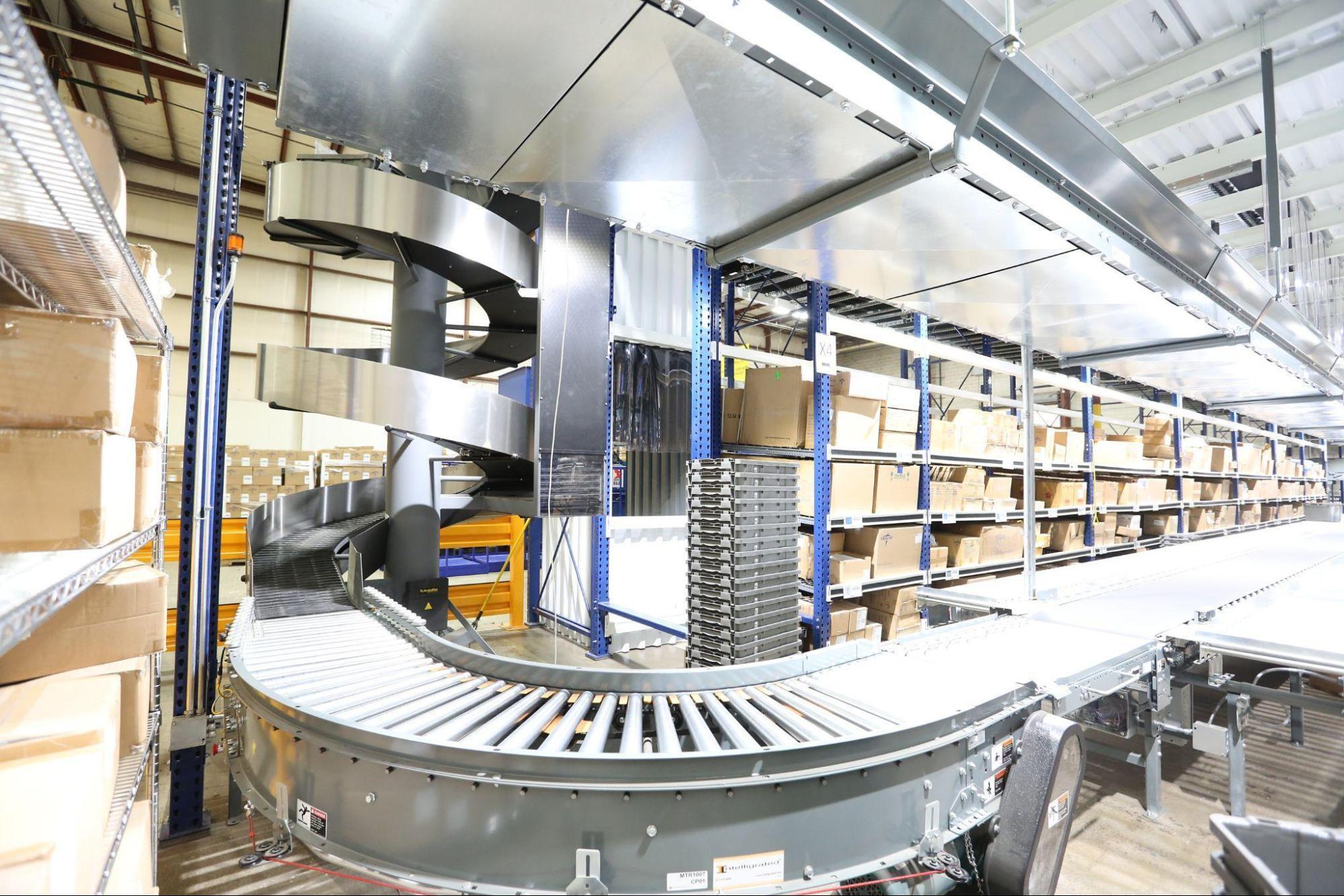
Conveyor Systems
Conveyor Systems streamline movement of goods through your facility, eliminating manual transport between receiving, storage, picking, and shipping zones. Apex integrates accumulation, sortation, pallet, transportation, and gravity conveyors based on your product mix, application, and throughput. Conveyors perform best when volume is high enough to justify fixed infrastructure and flow patterns are predictable and consistent. They are typically premature when volume is inconsistent, product dimensions vary widely, or layout changes are expected in the near term.

Automated Guided Vehicles (AGVs) and Autonomous Mobile Robots (AMRs)
Automated Guided Vehicles follow fixed paths or floor guidance to transport loads through your facility. Autonomous mobile robots navigate dynamically, routing around obstacles in real time without requiring infrastructure changes. Both reduce dependence on manual lift equipment, cutting labor costs and freeing employees to focus on higher-value tasks. In most installations, AGVs make sense where transport routes are stable and high-volume, while AMRs offer more flexibility when routes or workflows change frequently. Neither is a strong fit when transport distances are short, task volume is low, or the operation lacks the data and process maturity to support automated dispatching.
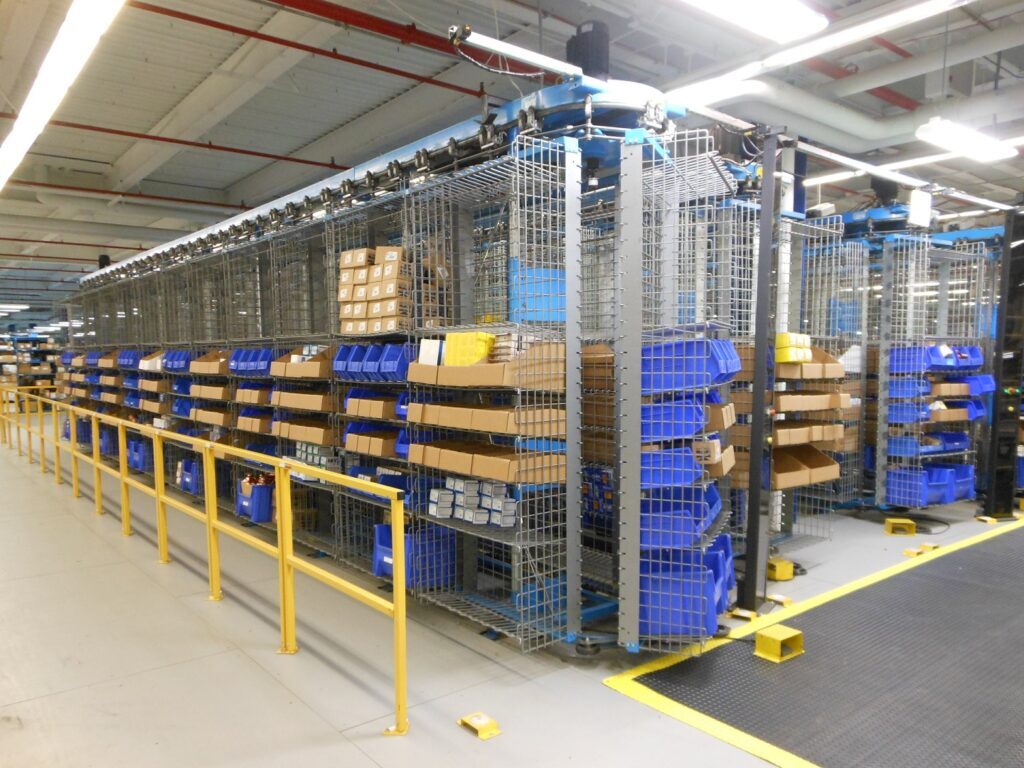
Vertical Lift Modules (VLMs)
Vertical Lift Modules store items in a compact vertical column and retrieve them automatically at an ergonomic access point. VLMs maximize vertical space where floor footprint is limited and reduce the time employees spend walking and searching for inventory. They suit parts, tools, and high-value items requiring secure retrieval with full inventory control. VLMs are less suited to operations with high-throughput case picking or irregularly sized items that exceed tray capacity.
Automated Storage and Retrieval Systems (ASRS)
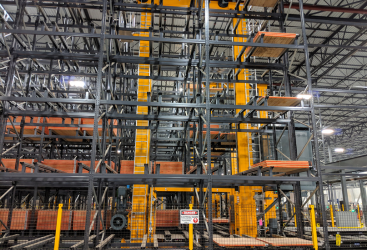
ASRS systems use automated cranes or shuttles to manage storage and retrieval within a dedicated structure. Depending on configuration, these systems deliver high throughput with real time visibility into inventory and consistent retrieval accuracy. They require meaningful upfront planning and infrastructure investment, and they perform best in operations with stable, high-volume SKU profiles.
ASRS Carousels
Horizontal and vertical ASRS Carousels rotate stored items to the operator, compressing pick paths and reducing travel time in high-pick-frequency environments. Inventory management tightens when retrieval is automated, manual errors are reduced, and operator travel is minimized. Order fulfillment speed and productivity both improve. Carousels are less appropriate when SKU counts are very high or items vary widely in size beyond the bin envelope.
Every technology is evaluated for fit before any recommendation is made. Apex does not apply a one-size approach. Accuracy, throughput performance, and operational costs all factor into which combination of systems we propose.
Where Automation Fits Best (and Where It Doesn't)
Before evaluating specific systems, assess honestly whether your current environment is positioned to benefit, or whether foundational process improvements need to come first.
Automation tends to deliver the most value when:
Automation may not be the right fit when:
Phased automation may be the right path when your volume is growing but throughput data needs time to stabilize before committing to a full system. Apex identifies which workflows to automate first, builds in scalability from the start, and expands automation systems as your business grows.
What to Evaluate Before Implementing Warehouse Automation
The most successful automation projects start with complete, accurate data before any technology selection happens. Gathering this upfront streamlines the evaluation and helps the right solution surface faster.
Operational Data
Current throughput, peak versus average volumes, and error rates by process. This baseline defines the performance gap automation needs to close and helps size the right solution.
Facility Constraints
Ceiling height, floor slab condition and rated PSI, column spacing, dock access, and overhead obstructions all affect which systems can be installed. Some technologies require specific floor flatness tolerances or structural reinforcement.
SKU Profile and Inventory Behavior
How many active SKUs you carry, how often they turn, and how consistent your pallet or carton dimensions are. Conveyor and ASRS installations perform best with consistent load profiles.
Workforce Readiness and Training
Operators need training and maintenance staff need technical competency to support automated equipment. Evaluate your team's capacity to absorb those changes before committing to a timeline.
Integration Requirements
Most automation systems need to communicate with your WMS or ERP for inventory, order, and labor data. Understanding your software environment early prevents gaps that slow implementation.
Budget and Payback Expectations
Costs vary based on scope and the technologies selected. Establishing a realistic budget range and a reasonable payback window before vendor conversations keeps the project grounded.
Work through these evaluation inputs with Apex's engineering team to surface which automation technologies match your operation before you commit to a vendor path.
Call: (833) 903-5246Industries and Applications Apex Serves in Utah
Utah's warehouse and logistics market spans multiple industries, each with distinct automation needs and operational priorities. Apex delivers comprehensive services across these applications.
Distribution and 3PL Operations
Distribution centers and third-party logistics providers run high-volume, mixed-SKU environments where throughput speed and order fulfillment accuracy are foundational to delivering exceptional customer service. Conveyors, sortation, and AMRs reduce pick-to-ship cycle times and lower reliance on manual transport labor. Pallet shuttles also support dock staging.
E-Commerce Fulfillment
E-commerce fulfillment centers in Utah face peak demand compression, high pick frequencies, and demanding accuracy requirements. ASRS carousels, VLMs, and goods-to-person systems reduce pick travel time and increase accuracy in high-velocity environments, improving customer satisfaction at scale.
Manufacturing Support Storage
Manufacturers use automation to manage WIP storage, kitting, and buffer inventory adjacent to production lines. High-density warehouse storage solutions and ASRS shuttle systems improve material handling flow between receiving, storage, and the production floor without adding labor to transport tasks.
Food, Beverage, and Cold Storage
Temperature-controlled environments benefit from automated solutions by reducing the time personnel spend in cold or freezer zones and by improving pick accuracy in conditions where PPE slows manual workflows. From rack-supported structures to cold-room shuttle systems, ASRS is a strong option for improving efficiency in extreme-temperature warehouse environments.
Wholesale and Regional Distribution
Regional wholesale operations across Utah often serve a broad customer base with variable order sizes and frequent reorder cycles. AMRs and conveyor configurations handle mixed order profiles efficiently without requiring rigid fixed infrastructure.
Frequently Asked Questions
Implementation timelines vary based on the type of automation, project scope, integration requirements, and facility conditions. A stand-alone system will not follow the same schedule as a large ASRS or multi-system project. Apex works through design, engineering, installation, and commissioning with the project requirements in mind so teams can plan around the right implementation path.
Talk to Apex About Your Utah Warehouse Automation Project
Schedule a Utah facility review with Apex's automation team. We'll assess your current processes, identify where automation may fit, and provide grounded guidance on what makes sense for your operation.
Call (833) 903-5246 or visit Contact Us to schedule. Early in the evaluation process is the right time to engage.