
Small Footprint, Big Opportunity – 10 Tips to Maximize Your Small Warehouse

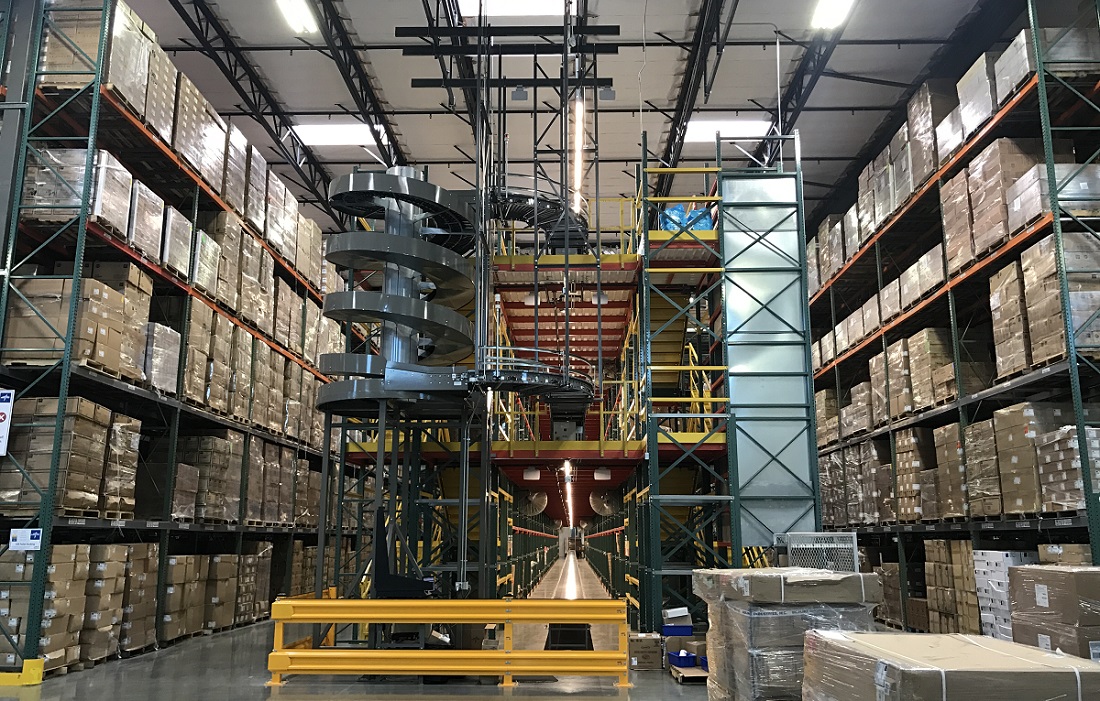 Maximize Your Small Warehouse Space Before Considering Expansion
Everyone knows that optimizing your warehouse or DC space for storage and efficiency just makes good business sense; however, it isn’t as easy as rearranging the furniture in your house. It takes a skilled designer/team to maximize your small warehouse space to cost-effectively and productively fit your needs.
Following is a list of ten design tips to help you prioritize warehouse functions and meet your optimization goals.
Ten Tips to Maximize Your Small Warehouse Space
- Warehouse capacity is not 100%
- Implement an inventory management system
- Take a strategic approach to inventory slotting
- Right-size your storage mediums
- Pick the process & process the right pick
- Control the spread
- Go vertical
- Go narrow
- Use signage to your advantage
- Set your SOPs and stick to them
1. Warehouse capacity is not 100% – This is one of the rare times in life when 80% to 85% is the goal. A warehouse at capacity uses approximately 80%-85% of the available space. Anything more than that leads to an overly congested workspace –The result of which can include a slower work pace, more travel –i.e., more labor cost, processing mistakes, and a greater risk of injuries, damage, and downtime.
2. Implement an inventory control system – Maximizing your small warehouse space centers around optimal use of the floor plan. To do that, you need to know, in detail, the specs, the frequency, and the quantity of your inventory to ensure you have the amount of space available to meet your needs. The added financial benefit of precise inventory tracking is also a value.
 Optimized Slotting, Sizing, Picking |
 Voice Picking |
3. Strategic inventory slotting – One of the best tools to maximize your small warehouse space is to use a slotting methodology for your storage positioning and systems. Slotting takes the inventory specs and then defines the best storage location for each SKU and the type and size of storage medium. It is not a one-and-done tool, however. You should regularly revisit the process depending on your particular inventory and processing needs.
4. Right-size your storage mediums – Wasted space is wasted dollars –Convert empty pallet storage bays, under-utilized shelving, and over-/under-sized bins into useable space by matching inventory specs and turn rates with customized storage solutions. For example, converting under-utilized lower level pallet storage into carton flow rack delivers a highly efficient order picking solution. Also, consider high-density pallet racking for high-volume SKUs and selective for a large volume of different SKUs. You gain usable space and create a more productive flow by tailoring your rack to your inventory.
5. Pick the process & process the right pick – Order picking is elemental to meeting your operational metrics. In addition to inventory slotting, consider how your order picking is executed. High-volume order picking systems such as pick-to-light, voice picking, or goods-to-person vastly improve pick accuracy and speed over traditional paper processes. They are easy to learn, often cutting employee training time in half. There are also vertical carousels as a type of goods-to-man system that is ideal for storing a lot of small SKU items in a small amount of space.
6. Control the spread – Going back to the house analogy, doesn’t it seem that the longer you’ve lived somewhere, the more you collect things? The same applies to a warehouse. It’s easy to overlook the creep of things that are simply out of place, out of date, out of use… you get the picture. Make sure your SOP dictates clear aisles, regular cleaning & maintenance, consistent evaluation of dead stock, and removal of outdated equipment.

Utilize Wasted Space
7. Go vertical – Maximize your cube space to maximize your small warehouse space. This doesn’t just apply to your storage racking systems, however. Consider if a mezzanine is a way to optimize storage and picking, personnel space, or equipment storage. Additionally, don’t overlook over-the-door storage as a great way to reclaim otherwise wasted space.
8. Go narrow – Narrow aisle pallet racking gives you two opportunities to optimize your operation. First, it condenses storage rack space into a smaller footprint –same density, just less space, and you can use automated guided vehicles (AGVs) for put-a-way and extraction activities. AGVs are highly productive and less likely to damage racking than traditional forklifts.
9. Use signage & safety products to your advantage – Maximizing your small warehouse means having warehouse vehicles, moving equipment, and pedestrians in close quarters. Clear delineation of pedestrian and vehicle areas is one easy way to prevent warehouse accidents and all the resulting fallout. Floor markings, safety guardrails, and good lighting are cost-effective solutions that payout big in warehouse safety.
10. Set your SOPs and stick to them – Standardizing repeat processes saves time and prevents mistakes. Train your team, set up quantifiable metrics, and regularly monitor progress to ensure your plan is optimized. Activities such as inventory intake, quality control, staging, reverse logistics, etc., should follow the same process day after day and shift after shift, barring any unexpected changes. If adjustments are needed, make them.

Ten Tips, One Source – Apex Full-Service Warehouse Design
Equipping your facility with the right tools and processes is the best way to maximize your small warehouse space and meet your operational goals. However, the perfect rack systems and order picking solutions don’t just materialize; you need an experienced team that can take you from your expectations to your goals. Apex is a full-service provider offering expert design, slotting, integration, and installation. With just one call, you get it all. Call our team today for more information or to simply get started making your space work better for you.
