
Warehouse Storage Solutions and Industrial Racking Systems

Selective Pallet Rack
Single-deep racking with direct access to every pallet position. Each pallet loads and unloads independently, giving your team full inventory visibility and 100% SKU selectivity. It’s the most common racking type in warehouse and distribution environments, works with standard counterbalance or reach forklifts, and scales as your inventory grows.
Best for: High SKU count, frequent stock rotation, mixed product sizes
Double-Deep Pallet Rack
Stores pallets two positions deep per lane, increasing storage density without a full deep-lane conversion. The rear position is accessible only after the front pallet is removed, requiring a deep-reach truck. It reduces aisle count and gains more storage positions per square foot compared to selective, making it practical when you have multiple pallets per SKU.
Best for: Operations looking to increase density within an existing footprint without a full system conversion
Drive-In Racking
A deep-lane LIFO system where forklifts drive directly into the rack structure to load and retrieve pallets from the same entry aisle. It maximizes storage density in a small footprint but is not suited for FIFO rotation or frequent cross-SKU picking. Works best for high-volume, low-SKU inventory where selectivity is less critical than space efficiency. Counterbalance forklifts required.
Best for: Cold storage, frozen goods, high-volume commodity inventory with low SKU counts
Selective Pallet Rack
Single-deep racking provides full pallet access and maximum SKU selectivity. It is the most common racking type in warehouse and distribution environments, with a straightforward design that works with standard counterbalance or reach forklifts.
Best for: High SKU count, frequent stock rotation, mixed product sizes
Double-Deep Pallet Rack
Stores pallets two-deep per bay. The rear position is accessible only after the front pallet is removed, requiring a deep-reach truck. For many facilities, it offers a middle ground between selective rack and denser systems like drive-in.
Best for: Operations looking to increase density within an existing footprint without a full system conversion
Drive-in rack stores pallets in deep lanes accessed from a single aisle, with the forklift entering the rack structure for loading and retrieval. It is a high-density LIFO system best suited to high-volume, low-SKU storage and requires a counterbalance forklift.
Best for: Cold storage, frozen goods, high-volume commodity inventory with low SKU counts
Push-Back Pallet Rack
A dynamic LIFO system that stores pallets 2–6 deep on wheeled carts set on inclined rails. Loading pushes pallets back; unloading brings rear pallets forward automatically. Storage lanes are segmented by SKU, allowing product variety within the system. Compatible with standard forklifts.
Best for: Food, beverage, and retail operations with moderate SKU counts and high pallet volume per SKU
Pallet Flow Racking
A gravity-fed FIFO system that uses pitched wheel or roller rails to move pallets from the charge aisle to the opposite pick face. Supports 2 to 20 pallets deep per lane, with lanes organized by SKU for consolidated high-density storage. Compatible with standard forklifts.
Best for: Strict FIFO compliance requirements, perishable goods, date-coded inventory
Carton Flow Rack
Uses pitched roller or wheel rails to gravity-feed cases, totes, and cartons from the load side to the pick face at the case and piece level. Reduces picker travel distance, improves pick accuracy compared to static shelving, and can meaningfully cut labor costs in high-velocity pick environments.
Best for: E-commerce fulfillment, high-volume distribution centers, order assembly areas
Cantilever Storage Rack
Open-front racking with horizontal arms extending from vertical columns and no front uprights obstructing the load face. Designed for long, bulky, or irregularly shaped inventory incompatible with standard rack bays. Arm lengths and load capacities are customizable to your inventory profile.
Best for: Lumber, pipe, bar stock, furniture, building materials, and other long or irregular inventory
Industrial Shelving
Modular shelving provides organized storage for small parts, supplies, and other non-palletized inventory. It is commonly used in order-picking areas, parts rooms, and maintenance storage, with medium-, heavy-, and extra-heavy-duty configurations available to match the application.
Best for: Maintenance cribs, parts rooms, tool storage, light-duty small-item storage areas
High-Density Bin Storage Systems
Uses bins, dividers, and tiered shelving to organize large quantities of small parts in a compact footprint. Maintains item-level visibility and organized pick access while maximizing available space. Scales as part counts grow and keeps SKUs separated and trackable.
Best for: High small-part count operations requiring organized access and inventory control
Push-Back Pallet Rack
A dynamic LIFO system storing pallets 2-6 deep on gravity-fed inclined carts or rollers. Loading a new pallet pushes existing pallets back; removing the front pallet brings the rest forward automatically. Each lane holds one SKU, so it fits operations with moderate SKU counts and higher volume per SKU. Works with standard counterbalance forklifts and delivers more density than selective without forklift entry into the lane.
Best for: Food, beverage, and retail operations with moderate SKU counts and high pallet volume per SKU
Pallet Flow Racking
A gravity-fed FIFO system using pitched wheel or roller rails that advance pallets automatically from the charge aisle to the pick face. Supports 2 to 20 pallets deep per lane and fits operations where product rotation is a compliance or quality requirement: food and beverage, pharmaceuticals, perishable goods, and date-coded inventory.
Best for: Strict FIFO compliance requirements, perishable goods, date-coded inventory
Carton Flow Rack
Uses pitched roller or wheel rails to gravity-feed cases, totes, and cartons from the load side to the pick face at the case and piece level. Reduces picker travel distance, improves pick accuracy compared to static shelving, and can meaningfully cut labor costs in high-velocity pick environments.
Best for: E-commerce fulfillment, high-volume distribution centers, order assembly areas
Cantilever Storage Rack
Open-front racking with horizontal arms extending from vertical columns and no front uprights obstructing the load face. Designed for long, bulky, or irregularly shaped inventory that won’t fit in standard pallet rack bays. Arm lengths and load capacities are fully adjustable to your inventory profile.
Best for: Lumber, pipe, bar stock, furniture, building materials, and other long or irregular inventory
Industrial Shelving
Modular storage for small parts, tools, supplies, and non-palletized inventory. Installs quickly, reconfigures easily, and integrates well into maintenance cribs, parts rooms, and tool storage areas. A cost-effective solution for areas where full pallet racking is more system than you need.
Best for: Maintenance cribs, parts rooms, tool storage, light-duty small-item storage areas
High-Density Bin Storage Systems
Uses bins, dividers, and tiered shelving to organize large quantities of small parts in a compact footprint. Maintains item-level visibility and organized pick access while maximizing available space. Scales as part counts grow and keeps SKUs separated and trackable.
Best for: High small-part count operations requiring organized access and inventory control
Warehouse Storage Solutions Designed for How Your Operation Moves Product
Available space shrinks as inventory grows and order volume rises. The warehouse storage solutions you choose need to match how your operation actually moves product through your facility, not just fill square footage.
Apex designs, engineers, and installs every major storage configuration under one roof. With 20+ years solving real warehouse challenges and national installation teams across the U.S., we match your storage layout to your actual throughput requirements. Our process starts with your data: inventory profiles, pallet specs, equipment types, and operational workflow.
Not sure which system fits your operation? A storage expert can review your requirements and walk you through the options.
Pallet Racking and Storage Systems
Apex designs and installs every major pallet racking configuration, from standard selective systems to high-density dynamic solutions. The right system depends on your inventory profile, throughput requirements, and available facility space.
Quick-Reference Snapshot
| SYSTEM | WHAT IT DOES |
|---|---|
| Selective Pallet Rack | Direct access to every pallet position; standard for high-SKU operations |
| Double-Deep Rack | Two-pallet-deep storage with increased density; requires deep-reach truck |
| Drive-In Racking | Deep-lane LIFO system; forklifts drive directly into the rack structure |
| Push-Back Rack | Dynamic LIFO storage 2-6 deep using gravity-fed carts or rollers |
| Pallet Flow Rack | Gravity-fed FIFO system for strict inventory rotation requirements |
| Carton Flow Rack | Case and piece-level gravity picking for high-volume fulfillment areas |
| Cantilever Rack | Open-front arms for long, bulky, or irregularly shaped inventory |
| Industrial Shelving | Modular storage for small parts, tools, and non-palletized inventory |
| High-Density Bin Storage | Compact bin and divider systems for organized small-part access |
Space Optimization and Vertical Expansion
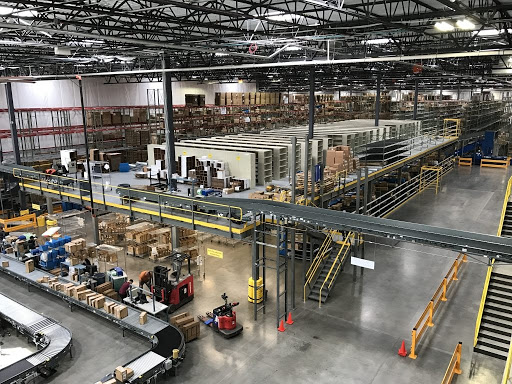
When floor space is the constraint, your ceiling is often the best opportunity for additional capacity. Apex designs and installs mezzanines, pick modules, and over-dock door storage rack that turn underused vertical space into productive square footage without expanding your building envelope.
Mezzanines are custom-engineered elevated platforms built to your building’s specific dimensions and load requirements. Common configurations include freestanding mezzanines, rack-supported mezzanines above existing pallet rack, and multi-level pick modules integrated into full fulfillment systems.
Pick modules combine multiple racking types, conveyor systems, and fulfillment infrastructure into a coordinated multi-level structure designed for high-volume order throughput. Apex designs them around your inventory profile, order patterns, and equipment.
Over-dock door storage rack installs above dock doors, reclaiming vertical space in dock areas for empty pallets, supplies, or seasonal inventory without touching your primary warehouse layout.
Warehouse Safety Products and Rack Protection
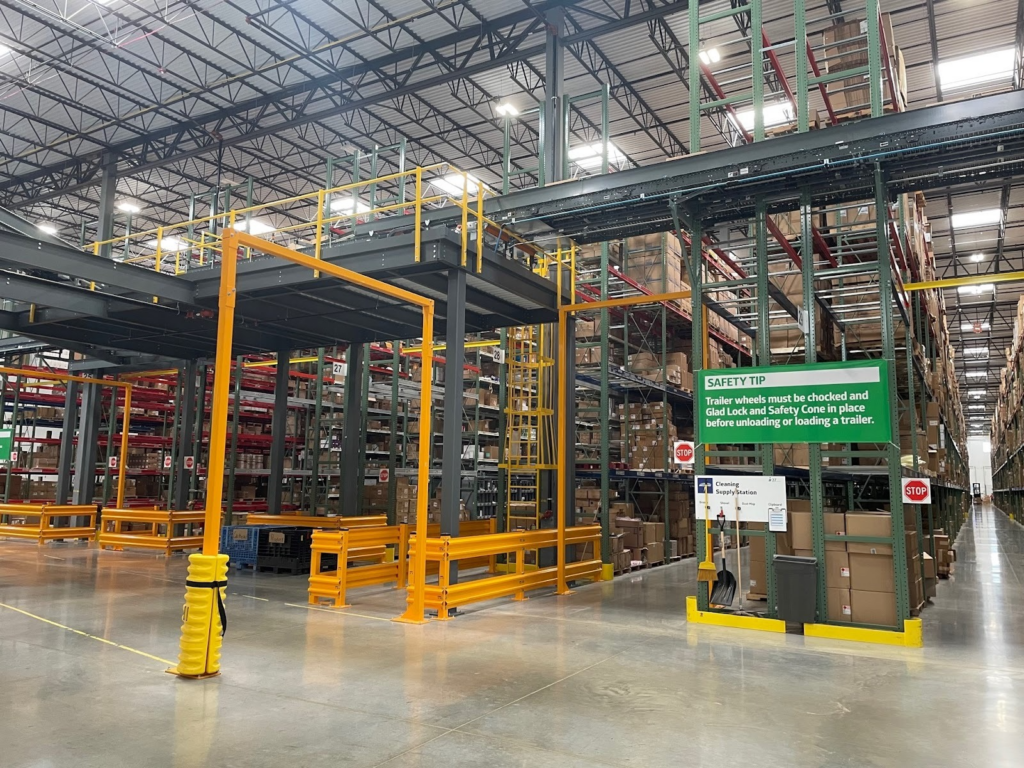
Protecting your storage investment starts at installation. Rack damage is cumulative: small hits to column bases and end-of-aisle uprights compromise structural integrity over time, and damaged components don’t always look unsafe until they’re a serious problem.
Apex supplies rack protection and warehouse safety accessories organized by zone: column protection, end-of-aisle guarding, pedestrian safety barriers, and dock zone products. Products include column protectors, end row guards, pallet backstops, wire decking, safety netting, pallet supports, bollards, dock safety gates, and overhead clearance bars. Apex’s SEIZMIC Engineering-certified inspectors can evaluate your existing system and recommend protective measures based on actual damage patterns in your facility.
Quick Ship Pallet Rack and Accessories
Apex’s in-stock inventory ships from three regional warehouse locations: Aurora, IL; Denver, CO; and Hickory, NC. New and used components are available for faster delivery to most of the country.
New components in stock
Upright frames, beams, wire decking, pallet supports, column protectors, end row guards, and row spacers. Use the Online Quote Builder to configure and price standard orders.
Used components
All used inventory is inspected to Apex quality standards. Available components include frames, beams, accessories, and complete used systems including push-back, gravity flow, and drive-in configurations. Inventory varies; call to confirm availability and spec compatibility.
How to Choose the Right Warehouse Storage System
The right system depends on your inventory profile, throughput requirements, and facility constraints. Getting those inputs right before specifying a system is what separates a layout that works from one you’ll need to retrofit in two years.
| System Type | Best For | Density | Inv. Method | Forklift Access |
|---|---|---|---|---|
| Selective | High SKU count, frequent rotation | Low | Direct access | Counterbalance / reach |
| Double-Deep | Moderate density increase | Low-Med | Direct access | Deep-reach truck |
| Drive-In | High volume, low SKU | High | LIFO | Counterbalance |
| Push-Back | Multiple SKUs, moderate depth | Med-High | LIFO | Counterbalance |
| Pallet Flow | FIFO-required inventory | Med-High | FIFO | Counterbalance |
| Carton Flow | Case/piece picking | Medium | FIFO | N/A (manual pick) |
| Cantilever | Long/bulky/irregular items | Varies | Direct access | Counterbalance / side-loader |
Start with your SKU count and pallet volume per SKU. High SKU counts with low volume per SKU point toward selective or carton flow. Lower SKU counts with high volume per SKU open the door to drive-in, push-back, or pallet flow. FIFO compliance requirements eliminate LIFO-only systems immediately. From there, ceiling height, column placement, floor condition, and forklift types narrow your options to what will actually work in your building.
What to Consider Before Choosing a Storage System
Gather this operational data before you request a quote. The more you have ready, the faster your design moves from concept to installation.
Inventory data: SKU count, pallet dimensions, load weights, pallet type, target pallet positions, and growth projections
Facility constraints: Ceiling height, column placement and size, floor condition and rated PSI, dock access configuration
Operational workflow: Shift count, forklift types and fuel, climate requirements (ambient, cold storage, freezer)
Budget and timeline: New vs. used components, leasing availability, not-to-exceed figure, and permit requirements
Safety and compliance: Seismic requirements, local building codes, OSHA standards; PE certification available for projects requiring an engineer of record
Full-Service Design, Engineering, and Installation
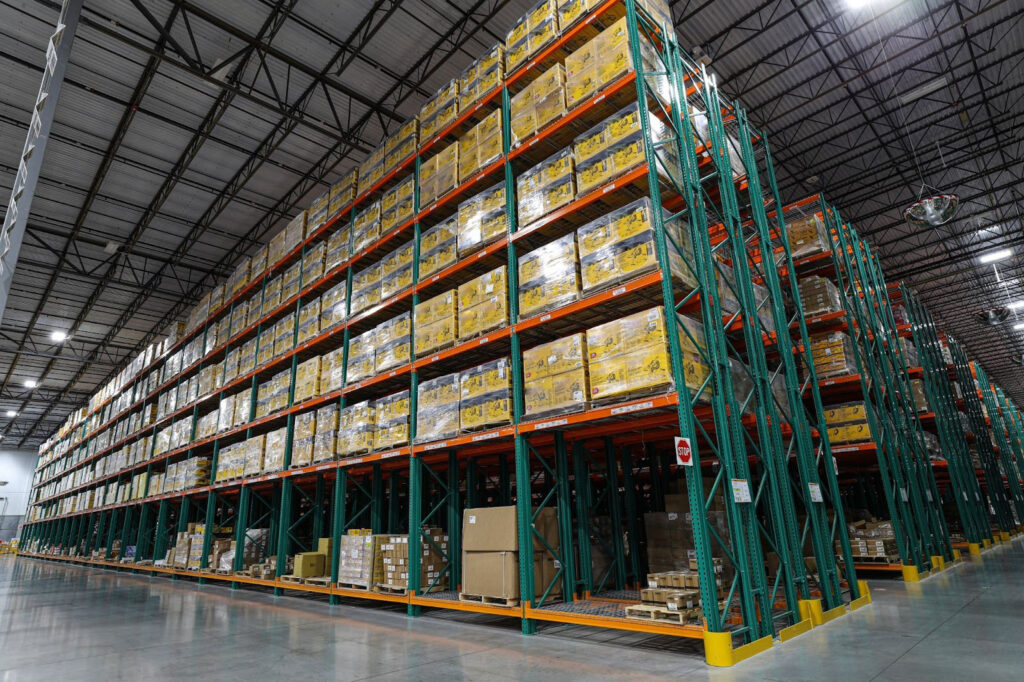
Your storage project moves from consultation through design, engineering, permitting, and installation with one team guiding the process from start to finish. Apex uses 3D AutoCAD and modeling tools to develop the layout before components are ordered, with engineering and permitting support aligned to the needs of the project. Installation is carried out by experienced Apex teams, with fabrication support available for custom components and system matching when required.
20+ years solving real warehouse challenges. 70% repeat business from satisfied customers. We Got This!
Frequently Asked Questions
What types of warehouse storage systems does Apex provide?
Apex provides the full range: selective pallet rack, double-deep rack, drive-in racking, push-back rack, pallet flow rack, carton flow rack, cantilever rack, industrial shelving, and high-density bin storage. Space optimization structures include mezzanines, pick modules, and over-dock door storage rack. The comparison table in the “How to Choose” section gives a side-by-side breakdown of system types and best-fit applications.
Does Apex handle both design and installation?
Yes. Apex provides end-to-end support from initial consultation and 3D CAD design through engineering, permitting, and professional installation. National teams cover projects across the U.S. Your project doesn’t change hands between phases.
Can Apex work with my existing racking system?
Yes. Apex evaluates existing systems, designs expansions and reconfigurations, and offers in-house fabrication and painting to match new components to your current setup. Used rack buyback is also available if you’re replacing or reconfiguring part of your facility.
How do I know which racking system is right for my warehouse?
Start with your inventory data: SKU count, pallet dimensions, load weights, and throughput requirements. Facility constraints, including ceiling height, column placement, floor condition, and forklift types, narrow the options from there. Apex offers a free consultation where a storage expert reviews your data and recommends system types that fit your actual operation.
What is the difference between FIFO and LIFO storage?
FIFO (first in, first out) means the first pallet loaded is the first retrieved. It’s required for perishable goods, date-coded inventory, and shelf-life compliance. Pallet flow and carton flow are the primary FIFO systems. LIFO (last in, first out) means the most recently loaded pallet comes out first. Drive-in and push-back rack are LIFO systems. The right method depends on your product type and any rotation requirements tied to quality or regulatory compliance.
Get Expert Input on Your Storage Project
Whether you’re outfitting a new facility, expanding an existing operation, or replacing damaged racking, Apex’s storage team can help you evaluate your options and plan the right solution.
The Solutions You Need to boost warehouse productivity
automation solutions
The right tech applied for optimal efficiency
Warehouse Storage Equipment
Extensive variety – system design & install

Rack Audit & Repair
Quick Ship Inventory

industrial fans
Warehouse Airflow Solutions
Contact Us To Get Started
Fill out the form below to speak with one of our experts.
