
Pallet Rack Maintenance Cart: Safe Access for Deep Lanes

What Is a Pallet Rack Maintenance Cart? Safe, Smart Access for Deep Lane Racking
Deep-lane storage systems (push-back, pallet flow, pallet shuttle, ASRS) are great space savers. Well, right up until a pallet tips or a cart jams. At that point, the “easy” options are usually the unsafe ones: overreaching from a lift, treating rack steel as an anchor, or improvising your way into a lane.
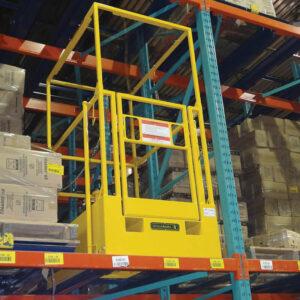
That’s where a pallet rack maintenance cart comes in. It’s an engineered access platform designed to travel inside high-density racking so trained personnel can inspect, retrieve, clean, or support repairs, without turning your rack into a walkway.
What Is a Pallet Rack Maintenance Cart?
A pallet rack maintenance cart (often called a maintenance and retrieval cart) is a purpose-built platform that rides along internal rack rails in high-density systems. The goal is to create an “engineered safe zone” so an operator can work at height and depth inside a lane. Their aim may be to clear obstructions (stuck pallets, debris, misaligned carts) and perform inspections or adjustments.
These carts are typically engineered to match a specific rack application: push-back, pallet flow, double-deep, pallet shuttle, or ASRS.
When & Why to Use a Pallet Rack Maintenance Cart
Use a maintenance cart when:
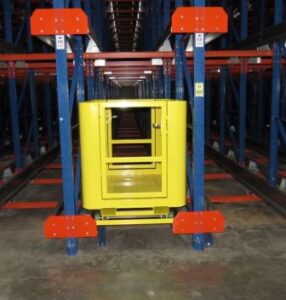
- A pallet is stuck or tipped deep inside the rack:
Traditional equipment can’t safely reach obstructions multiple pallet positions deep. Maintenance carts allow safe entry along the rails to retrieve or down-stack the product.
- Shuttle/ASRS recovery requires a controlled process:
Automated or semi-automated systems require precise, two-person operations to avoid damage to the system or safety risks. A maintenance cart provides a stable, engineered “safe zone” for the work.
- In-rack inspections or maintenance at height are needed:
Like floor-level inspections, these systems require regular audits for damage, alignment, and debris—but access is limited without a proper platform.
Cleaning or clearing debris in deep-lane systems:
Over time, dust, loose stretch wrap, or packaging debris can accumulate in deep-lane racking. Carts make it safer to access and maintain these areas without shutting down multiple bays.
How Do Rack Maintenance Carts Work?
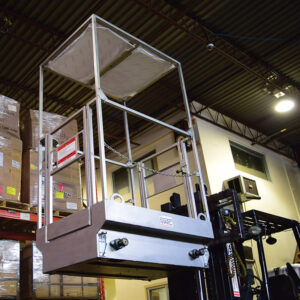
Rack maintenance carts are designed to roll along the internal rack rails. So, a trained operator can move directly into the lane and position themselves right in front of the problem. It can be a jammed pallet, a shifted load, debris, or a damaged component deeper in the system.
In practice, they’re typically used in tandem with an order picker or turret truck. The lift brings the cart into position and provides a controlled way for the operator to enter and exit the cart safely at height.
Because the operator is working at elevation and inside the rack structure, fall protection is part of the system. Operators use a harness and connect to approved tie-off points designed for that purpose, ensuring the work aligns with safety requirements and your internal procedures.
Movement is usually manual or semi-manual, depending on the rack setup. That means the cart itself rides smoothly on the rails, but the operator typically guides it by grasping the rack structure and moving slowly and deliberately until they’re positioned exactly where they need to work.
Key Features of a Pallet Rack Maintenance Cart
Deep-lane systems, “access” only helps if it’s engineered for the rack you’re working in. Here are the core features to look for in a pallet rack maintenance cart.
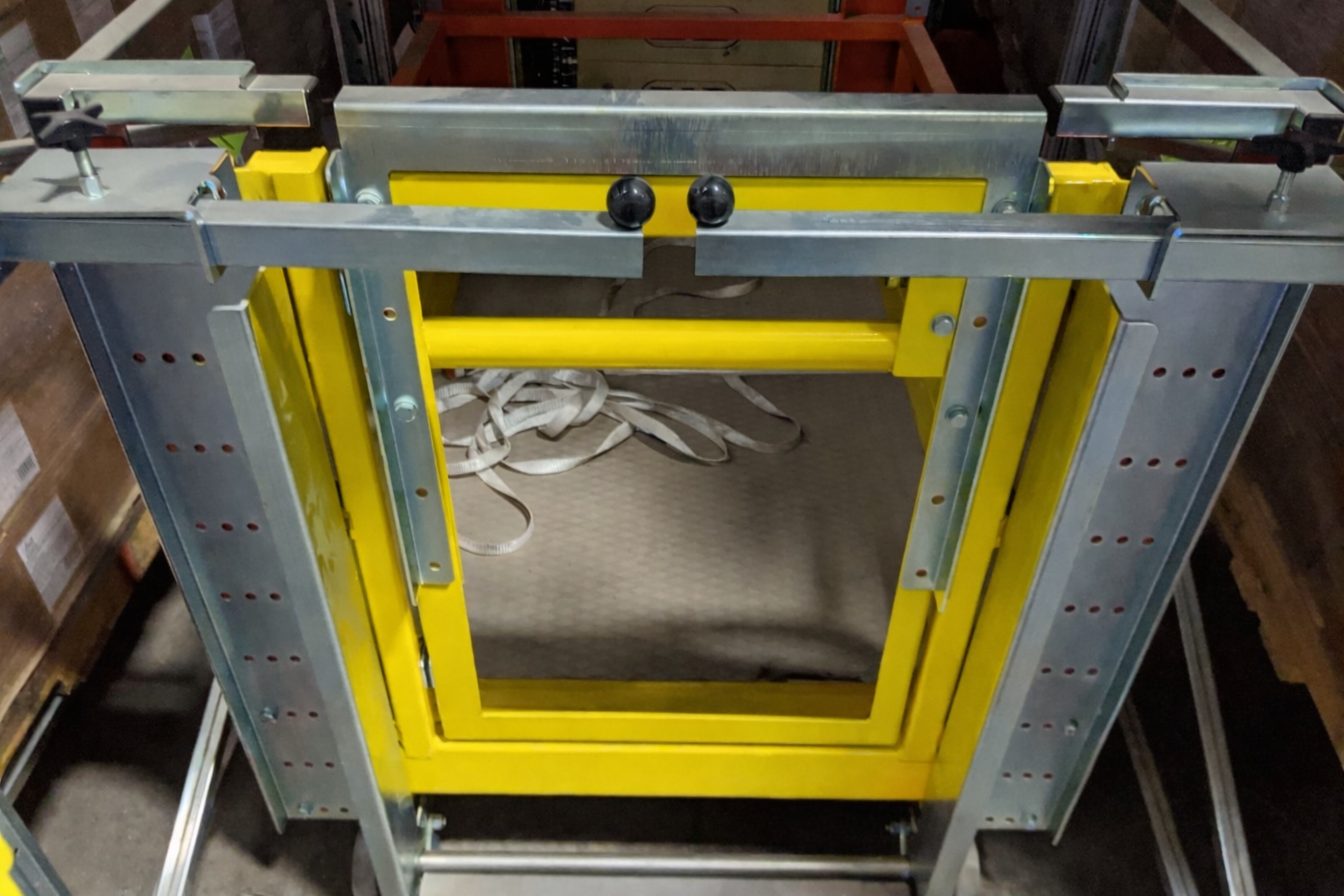
- Custom-fit to rack system: Each cart is tailored to the specific racking dimensions and structure. That matters because rail spacing, clearances, and lane geometry vary by system, so “close enough” can mean binding, instability, or damage.
- Fall protection built-in: Designed with harness tie-off points and enclosed compartments for operator safety. The point is to give operators an engineered, repeatable tie-off location and guarded workspace, rather than relying on improvised anchoring or unsafe positioning.
- Stable, mobile platform: Ensures smooth travel along rails without disturbing the rack system. A well-designed cart maintains predictable movement and load distribution, so you can reach the issue point without introducing extra stress to the rails, carts, or rack structure.
- Compact and maneuverable: Fits into even the tightest deep lane designs. That compact footprint helps it navigate narrow lanes and limited vertical clearance while still leaving the operator enough room to work safely.
Benefits for Warehouse Teams
1. Reduced downtime by enabling quick and safe access
In deep-lane systems, the real problem isn’t the first jam. It’s how long it takes to reach it safely. A maintenance cart lets trained teams get to the exact pallet position within the lane, resolve the issue, and restore flow without turning a single exception into a half-shift shutdown.
2. Improved safety compliance with engineered fall protection
When people can’t access a problem spot, they start improvising. Think of overreaching from a lift or climbing where they shouldn’t. A maintenance cart creates an engineered work zone with proper tie-off and controlled access, so the recovery process stays inside a plan instead of inside someone’s luck.
3. Protects inventory and racking during repair and inspection
A rushed recovery is how “one tipped pallet” becomes “now we have beam damage too.” Because the cart keeps access controlled and stable, it reduces the chances of bumping product, scraping uprights, or twisting components while you’re trying to fix the original issue.
4. Cost-effective maintenance support without dismantling rack systems
The expensive part of deep-lane problems is often the disruption. A cart supports faster, targeted interventions. So, you avoid the slow, costly alternatives like partial tear-downs, prolonged shutdowns, or repeated “we’ll deal with it later” workarounds that keep coming back.
Practical Safety Notes for Owners and Operators
A maintenance cart is only as safe as the process around it:
- Write rack-specific SOPs and train them.
- Use proper fall protection and approved tie-off. OSHA’s fall protection standard generally requires anchorages capable of supporting 5,000 lbs per employee, or engineered systems that provide equivalent protection. It also specifies anchorage positioning on mobile work platforms on powered industrial trucks.
Inspect gear and plan rescue. OSHA also requires inspection of fall protection components before each shift and requires employers to provide prompt rescue after a fall.
Choose the Right Partner for Rack Repair and Maintenance
Our rack repair and inspection teams are trained to use maintenance carts effectively in high-density racking environments. Whether performing proactive inspections or responding to a damaged structure, our crews ensure safety and speed without compromising your operation.
If your warehouse uses deep-lane or shuttle racking, make sure your safety protocols include proper access tools like maintenance carts. Apex offers comprehensive rack inspection and repair services, backed by the training, equipment, and expertise you need to stay safe and productive. Reach out to our team today to learn more.
Learn more about our Rack Repair & Safety Services
Need help now? Contact Us
