
Overhead Crane and Hoist Safety | Apex Safety Spotlight

How to Work Safely Around Overhead Crane and Hoist Systems
Overhead cranes and hoists are some of the hardest-working “teammates” in manufacturing, warehousing, and distribution facilities. They move dies into presses, coils into storage, molds into position, and heavy loads on and off trucks… all without tying up forklifts or manual labor.
However, anytime you’re lifting and moving heavy loads overhead, especially above active aisles, pick zones, or production cells, the risk increases significantly. One dropped or swinging load can result in serious injuries, damaged equipment, product loss, and days of downtime.
This Safety Spotlight is all about overhead crane and hoist safety and working around these systems. Whether you have bridge cranes in fabrication, monorail hoists over assembly, or workstation cranes in a busy distribution center, these best practices will help keep people, product, and equipment protected.
Know Your Overhead Cranes and Hoists
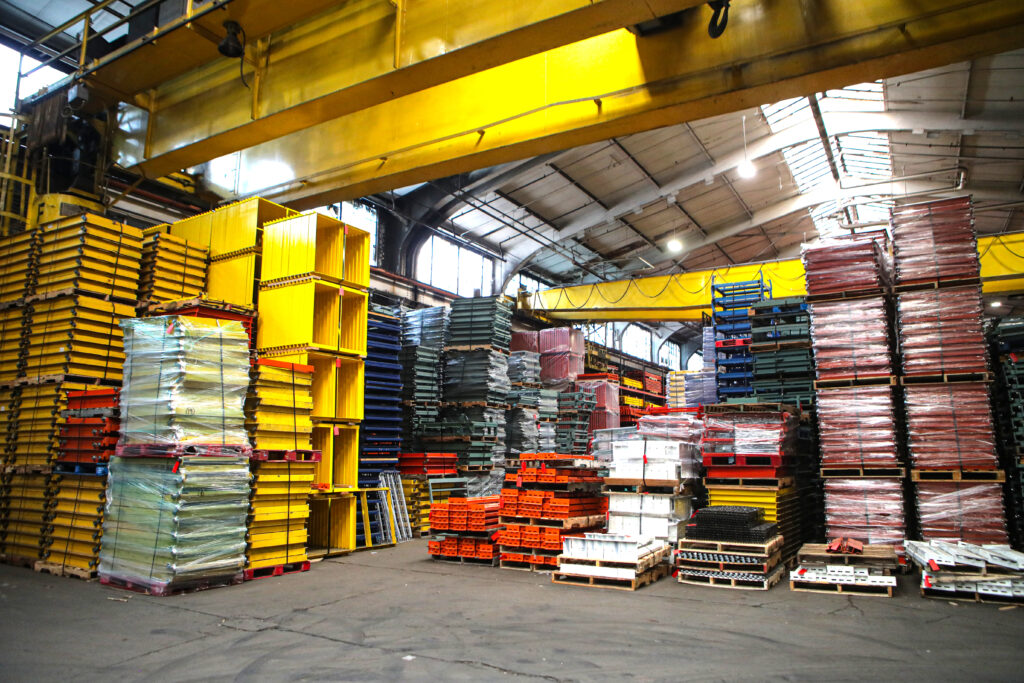
Every safe overhead lifting program begins with a clear understanding of the equipment you have in your facility and its operating locations.
You don’t need to be a crane engineer, but you should know the basic configurations. Here are a few you’ll commonly see in manufacturing, warehousing, and distribution facilities:
- Top-running bridge cranes – Overhead cranes that run on elevated runways to cover large bays. They’re typically used for heavier loads in fabrication, coil and steel storage, maintenance areas, and equipment changeouts.
- Gantry and semi-gantry cranes – Freestanding cranes that run on legs instead of relying on building structure. They’re ideal for outdoor yards, large components, and heavy loads staged near docks or in areas where runway beams aren’t practical.
- Workstation cranes – Lightweight, modular crane systems designed for repetitive lifting over a defined work area. They’re common over assembly cells, packing and kitting lines, and repair benches where ergonomics and speed matter.
- Jib cranes – Compact, flexible cranes with a pivoting boom designed for lighter, localized lifts in tight spaces. Their small footprint and precise movement make them ideal for workshops, warehouses, and manufacturing cells where a full overhead crane isn’t practical.
Each style has its own operating envelope and hazard zones. Mapping these zones in your facility is step one.
Don’t forget the hoists
Hoists are the lifting ‘engines’ of many overhead systems. In manufacturing, warehousing, and distribution, you’ll often see:
- Underhung hoists on monorail tracks – Hoists that ride on a fixed beam or track, carrying parts through a set path. They’re common on:
- Paint lines
- Wash stations
- Overhead assembly routes where product moves from one workstep to the next
- Stationary hoists – Fixed hoists mounted in one location for repeat, localized lifts. You’ll often find them at:
- Maintenance bays
- Roll-up door openings
- Engine or component rebuild stations
Even if you don’t have full overhead cranes, hoists in shipping, maintenance, or production can create the same overhead hazards as a bridge crane. They need the same level of respect and control.
Safety Reminder: Your safety procedures should match the specific cranes and hoists in your facility—not a generic checklist pulled from another operation.
Two Safety Rules You Can’t Ignore
Overhead cranes and hoists are heavily regulated for a reason. While you’ll rely on your safety team and crane service provider to interpret the technical details, here are the big-picture rules that should drive your day-to-day operations.
1. Rated capacities are not suggestions
Every crane, hoist, and piece of rigging is designed with a rated capacity—and you’re expected to stay within it.
- Make sure load ratings are clearly marked on:
- Cranes and hoists
- Hooks and below-the-hook devices
- Slings, shackles, and other rigging
- In manufacturing and distribution, watch for:
- Tooling and dies that slowly gain weight from weldments, repairs, or modifications
- “Mixed” loads on pallets or fixtures where the true weight is unknown
- Product changes that increase weight without updating documented loads
If you don’t know the weight, you don’t lift it until you do.
2. Inspection is non-negotiable
Always follow the manufacturer’s instructions and your applicable regulatory requirements for inspection frequency and criteria. Typically, that includes:
- Frequent inspections – Often daily or per shift, handled by trained in-house personnel, based on use and your written program.
- Periodic inspections – More detailed, documented inspections done at defined intervals (often monthly to annually), usually by a qualified person or outside service provider.
Inspections should be documented and include:
- Hooks, latches, and safety catches
- Wire rope or chain condition
- Limit switches and emergency stops
- Pendants and radio remotes
- Evidence of unusual noise, vibration, or behavior
Safety Reminder: A crane or hoist that “doesn’t feel right” should be taken out of service until it’s checked.
Controlling the “Fall Zone” – Staying Clear of the Load
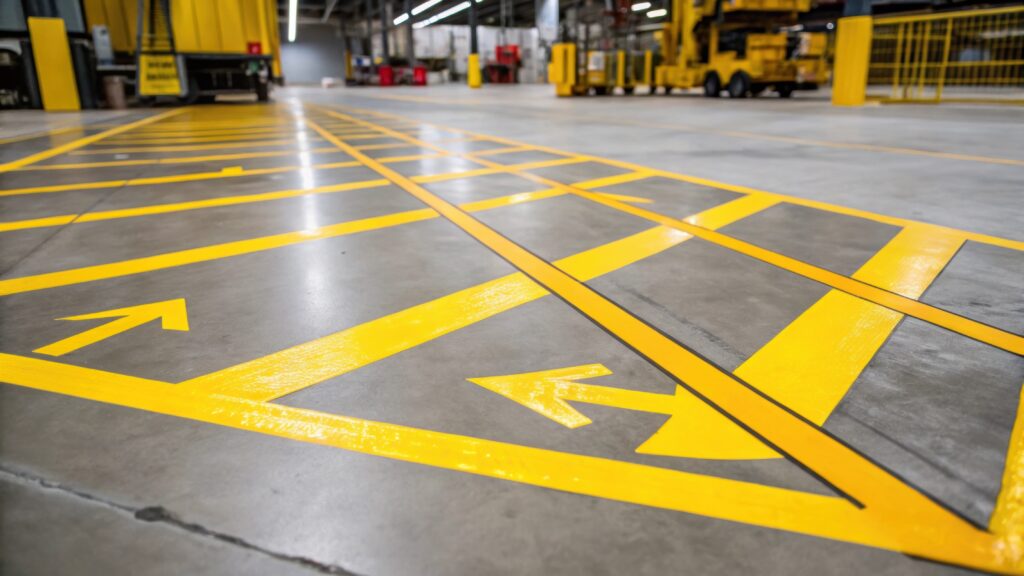
Most serious incidents don’t happen to the operator—they happen to people around the load: order pickers, assemblers, maintenance techs, or forklift operators in the area.
Define and mark the fall zone
The fall zone or line of fire is anywhere a dropped or swinging load could strike a person. In manufacturing, warehousing, and distribution, it can cross:
- Main forklift aisles
- Pick modules and packing lanes
- Staging areas at dock doors
- Maintenance bays near running equipment
Practical steps:
- Identify and map the fall zones for each crane and hoist.
- Use floor striping to outline the area where loads travel and where people should not stand.
- Add signage at key entry points: “Danger – Overhead Lifting in Progress. Do Not Enter.”
Never stand or walk under a suspended load
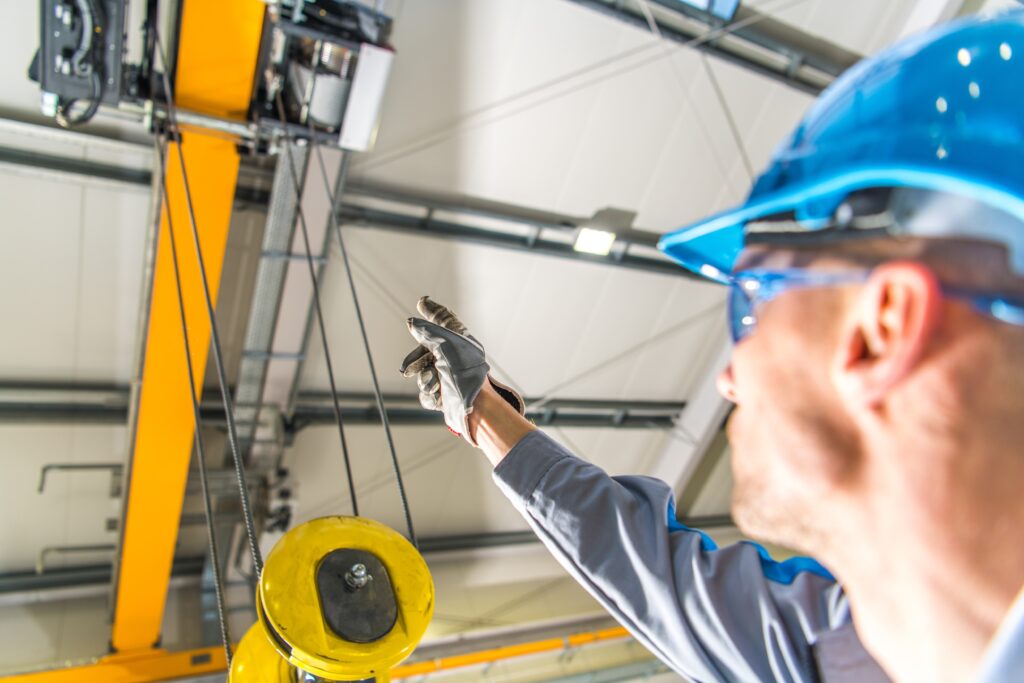
This sounds obvious, but it’s a common shortcut under time pressure:
- Associates duck under a raised coil to “get through faster.”
- A packer walks into the bay to grab paperwork while a load is traveling.
- A maintenance tech steps under a suspended component to check clearances.
Best practice is simple: If a load is overhead, people stay out.
If someone must be near a load (for example, positioning large tooling in a press), build a formal procedure around it, including:
- Taglines to control the load
- A dedicated spotter
- Clear stop points and hand signals
- Hard rules about who is allowed in the area and when
Use physical safeguards where possible
In busy facilities, lines on the floor aren’t always enough. Consider adding:
- Guardrails and bollards to separate pedestrian walkways from crane aisles
- Steel mesh safety panels or partitions to restrict entrance to crane bays, hoist work zones, and other overhead lifting areas while still allowing visibility and airflow.
- Overhead clearance bars/goal posts at entrances to protect cranes, conveyors, and other overhead equipment from forklifts and tall loads
- Warning lights and audible alarms that activate when a crane or hoist is moving
Safety Reminder: The more the environment “forces” safe behavior, the less you have to rely on constant reminders.
Pre-Use Inspections & Safe Operation Habits
Even the best-designed lifting system is only as safe as the habits of the people using it.
Start-of-shift checks
Train operators to do a quick, structured check before the first lift:
- Visual walk-around
- Hooks, latches, and safety catches intact
- No obvious deformation, cracks, or damage
- Wire rope or chain with no sharp bends, deep wear, or bulging strands—if it looks twisted, crushed, or puffed out, take it out of service.
- Controls and safety devices
- Test all motions with no load (up/down, bridge, trolley, slew)
- Confirm the emergency stop works
- Verify that limit switches stop motion at the proper points
- Housekeeping
- No loose tools, pallets, or packaging in the crane’s travel path
- No rigging or chains left hanging at head level where associates walk
Safety Reminder: If something doesn’t pass, the crane or hoist is tagged out and reported—no exceptions.
Crane & Hoist Pre-lift Checklist
Before you leave the ground:
- Confirm the load
- Check documentation, tags, or bills of material for weight
- Confirm it’s within the rating of the crane, hoist, and rigging
- Plan the path
- Identify any low-clearance areas (conveyors, mezzanines, sprinkler mains, lighting, dock doors)
- Make sure the route avoids busy pedestrian crossings or active picking zones whenever possible
- Test lift
- Raise the load a few inches to verify balance and stability
- Watch for unexpected shifting or twisting
- Communicate
- Make sure everyone in the area knows a lift is happening
- Use standard hand signals or radios so there’s no confusion
Safe Rigging & Load Handling
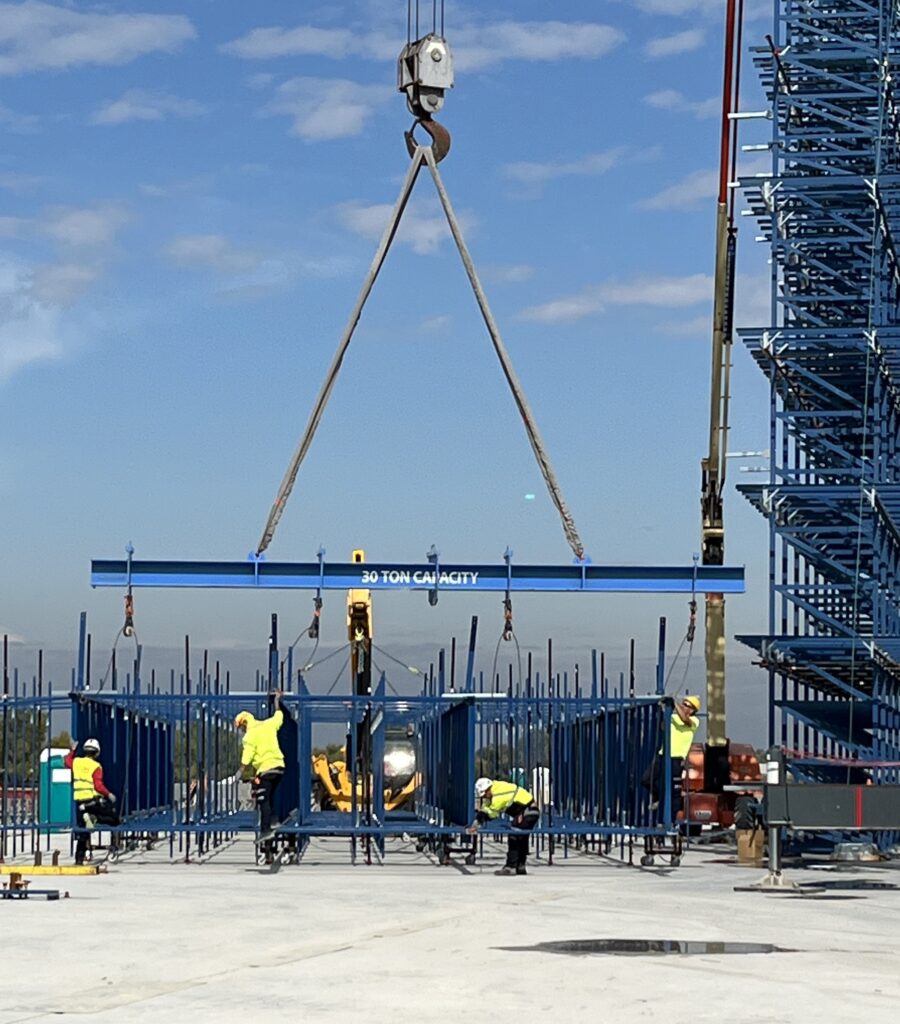
Many crane and hoist incidents trace back to how the load was attached.
Use only rated, inspected rigging
In manufacturing and warehouse environments, it’s tempting to grab “whatever’s handy” to make a quick lift. That’s a habit you want to eliminate.
- Use slings, shackles, spreader bars, and below-the-hook devices that:
- Have visible identification tags
- Show rated capacity
- Have passed regular inspection
- Remove from service any rigging that’s:
- Cut, abraded, kinked, or crushed
- Missing tags
- Showing opened or bent hooks/shackles
Keep the hook over the load
Side pulls and angled lifts are especially risky in tightly packed warehouses and production bays.
- Position the hook directly over the load’s center of gravity before lifting.
- Don’t use the crane or hoist to drag loads across the floor or pull product free from racking or fixtures.
- Use taglines to control long or awkward loads and prevent uncontrolled swing.
Move loads low and slow
In any manufacturing or distribution environment, traffic is constant—people, forklifts, pallet jacks, carts. To reduce risk:
- Lift only as high as needed to clear known obstacles.
- Travel at a controlled, predictable speed.
- Avoid sudden starts, stops, or changes of direction.
- Set the load down before making tight turns or passing through congested zones.
PPE and Training: Protecting Everyone Under the Hook
Overhead crane and hoist safety isn’t just for operators—it affects anyone who works in, walks through, or supports those areas.
1. PPE in overhead lifting areas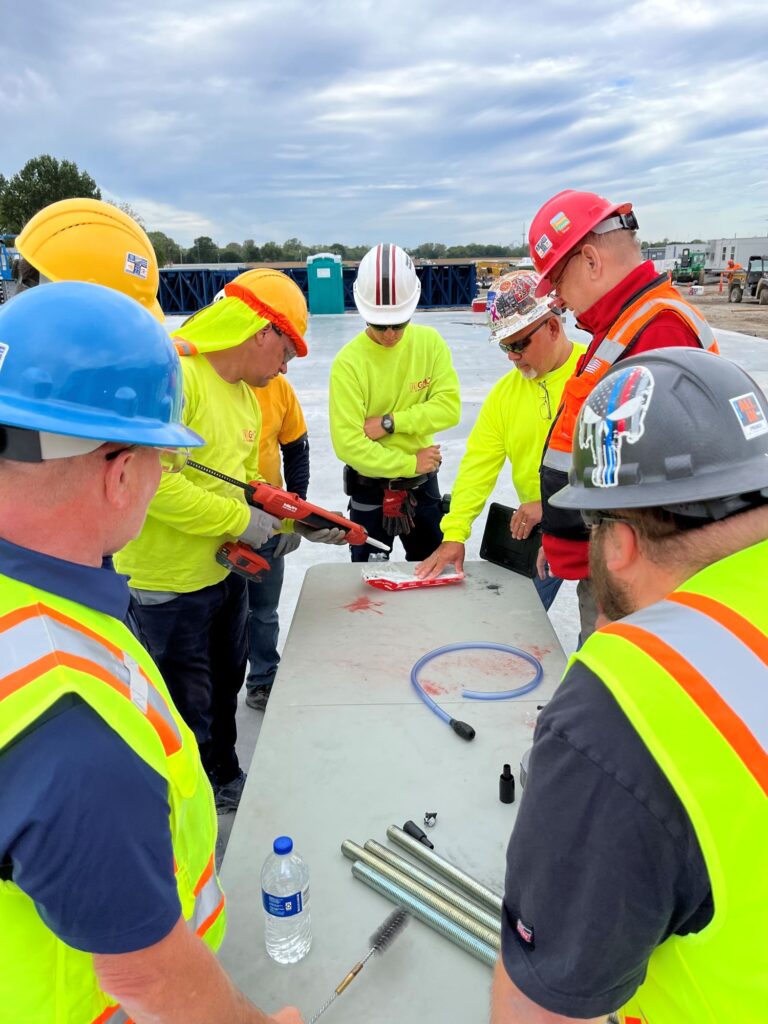
At a minimum, consider requiring:
- Hard hats are required wherever overhead lifting is performed, or overhead loads routinely travel
- Safety footwear with toe protection in production, warehousing, and shipping areas
- High-visibility vests or garments for associates working in shared spaces with overhead lifting and mobile equipment
- Eye and hearing protection based on the specific processes in the area
PPE doesn’t replace safe practices and engineering controls, but it adds another layer of protection if something goes wrong.
2. Who needs training?
You’ll typically want structured training for:
- Crane and hoist operators – Equipment operation, controls, inspection, and emergency procedures
- Riggers and signal persons – Proper rigging techniques, hand signals, and communication rules
- Support teams working in the area – How to recognize lifting zones, stay out of fall zones, respond to alarms, and report issues
Safety Reminder: Don’t forget supervisors—they’re the ones reinforcing safe behavior day-to-day and need to understand what “good” looks like.
3. Build a “see something, say something” culture
Encourage associates to speak up when they notice:
- Damaged rigging or hardware
- Unusual crane or hoist noises
- Loads traveling over people
- Shortcuts taken under time pressure
Backing this up with a simple, non-punitive reporting process helps fix small issues before they become major incidents.
Design Safety Into Your Crane and Hoist Operations
The safest facilities don’t rely on perfect behavior—they design their layout and systems to support safe behavior. By aligning crane runways and hoist paths with the way people and product actually move, keeping overhead travel out of main pedestrian walkways and high-traffic forklift aisles, and reinforcing those routes with clear floor markings and overhead signage, you reduce surprises and confusion.
Pair that with physical protection—guardrails and rack protection near crane columns and runway supports, column guards and bollards where forklift aisles meet crane zones, and overhead clearance bars or goal posts at low-clearance transitions—and you help ensure one mistake doesn’t turn into injury, damage, and downtime.
Apex works every day with manufacturers, warehouses, and distribution centers to integrate:
Pulling overhead crane and hoist safety into those conversations helps your entire operation work together—so you’re not fixing one problem while creating another somewhere else.
Connect with the Apex team to optimize the safety and efficiency of your entire operation—overhead and on the ground.
Quick-Reference Checklist: Overhead Crane & Hoist Safety
Use this with your team as a fast pulse check on your current practices:
- Verify ratings are clearly marked on cranes, hoists, and rigging, and that no loads exceed the specified limits.
- Inventory all overhead cranes, hoists, and major rigging points in your facility—and map their fall zones.
- Document start-of-shift and periodic inspections with clear criteria and responsibilities.
- Mark and protect fall zones with floor striping, signage, and (where needed) guardrails or barriers.
- Ensure PPE rules are clear and enforced in overhead lifting areas (hard hats, safety footwear, hi-vis, etc.).
- Train operators, riggers, spotters, and nearby associates on safe practices, communication, and emergency actions.
- Regularly review crane and hoist operations as part of your broader safety and layout strategy, especially when you add new equipment, change the product mix, or reconfigure production or storage.
Overhead cranes and hoists are powerful tools for productivity and ergonomics in manufacturing, warehousing, and distribution—but only when they’re managed with a safety-first mindset. With the right layout, equipment, and day-to-day habits, your “overhead” systems can keep product moving and your team protected.
