
Cold Storage, Hot Tech: Smart ASRS Storage Solutions That Deliver

Cut Energy Costs and Maximize Space with ASRS Storage
Cold storage is one of the most demanding environments for warehouse operations. Chilled rooms, controlled humidity, high energy use, tight labor markets, and zero tolerance for errors all add pressure. Every pallet move costs more than it would in a dry DC. This makes ASRS storage a practical solution for facilities where people can’t stay long and resources are limited.
In this piece, we’ll break down how ASRS systems work, which technologies perform best across chilled and frozen applications, what to consider before implementation, and how a partner like Apex can help you design a cold storage automation strategy that truly delivers.
What Is ASRS Storage and Why Is It Essential for Cold Storage Operations?
Automated Storage and Retrieval Systems (ASRS) are smart, software-driven systems that use cranes, shuttles, and lifts to efficiently store and retrieve inventory. In cold storage, every minute has a price tag. Travel time, open doors, and idle equipment all drive up costs. ASRS flips that equation by compressing the storage footprint, standardizing picks, and keeping products moving—without constant human exposure to extreme temperatures.
Built to thrive in demanding, temperature-controlled environments, ASRS systems deliver:
- People spend less time in the cold/frigid environment
- Higher accuracy and fewer errors
- Minimized product damage
- Consolidated storage – lower energy costs
To meet the unique demands of cold storage, ASRS solutions come in several specialized configurations—each designed to optimize space, speed, and accuracy.
Cold Storage-Ready ASRS Technologies
From pallet handling to small-part picking, cold storage-ready ASRS systems are purpose-built to handle a wide range of inventory profiles. Each system type offers a distinct balance of storage density, speed, and automation, providing the flexibility to meet your specific operational goals in refrigerated or frozen environments. Let’s take a look at five cold-storage-ready ASRS technologies.
1. Unit-Load ASRS – Towering Efficiency for Cold Storage Pallet Handling
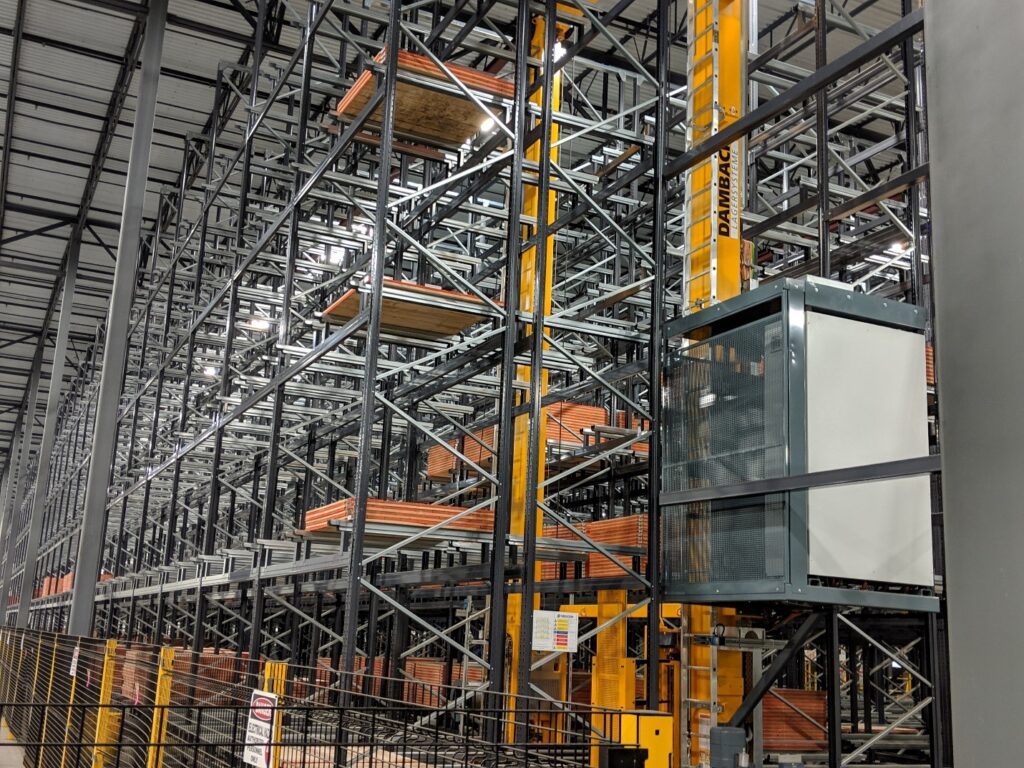
Unit-Load ASRS
Unit-Load ASRS uses stacker cranes to move full pallets into high-bay racking. Think of it as an automated forklift that never gets cold, never takes a break, and can reach 120+ feet in the air. These systems are suitable for freezer‑rated conditions down to –22 °F (–30 °C).
Unit-Load systems are a natural fit when you:
- Manage heavy or bulky loads—up to 7,000 lbs
- Store a high volume of the same or similar products
- Want to maximize cube in high-ceiling spaces
By optimizing aisle widths and increasing height, you can significantly reduce the footprint of your freezer while increasing the number of pallet positions. Fewer forklifts in the freezer means lower labor exposure, less rack damage, and more predictable throughput.
In a freezer, that smaller cube and lights-out operation translate directly into lower energy bills, fewer door openings, and more stable temperatures across every pallet position.
2. Mini-Load ASRS – Compact Automation for Small SKU Storage
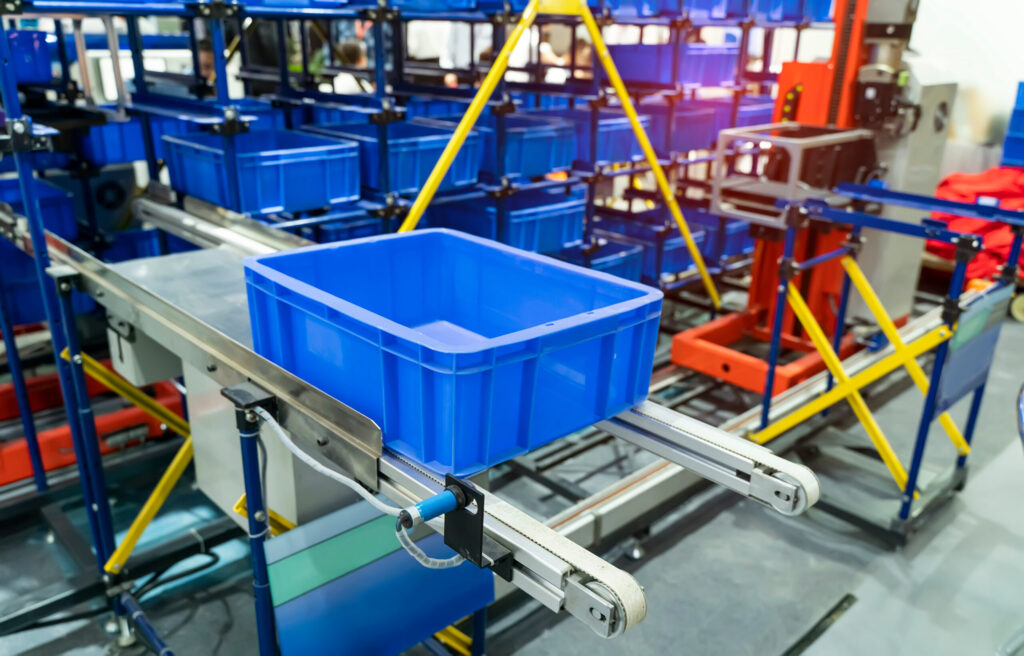
Mini-Load ASRS
Mini-load ASRS takes the same idea and applies it to totes, trays, and cartons instead of pallets, using smaller-scale cranes to handle lightweight loads with speed and precision. These systems can reach heights of up to 88 feet, making them ideal for maximizing vertical space in dense, small-item storage environments. Mini-Load systems are cold storage compatible down to ‑22 °F (‑30 °C).
Consider Mini-Load for:
- High-value, temperature-sensitive items (pharma, ingredients, samples)
- Precise inventory tracking for high-throughput goods
In a cold‑storage setting, a Mini‑Load ASRS maintains the inventory in a temperature‑controlled zone while operators work from ergonomic pick stations located just outside or at the interface of the cold zone. Because the storage area is compact, uses narrow access openings, and minimizes human travel into the cold space, the system helps reduce energy loss during picks and supports tighter temperature control. Additionally, the automation delivers strong inventory accuracy and traceability, which helps maintain a robust cold‑chain audit trail.
3. Shuttle systems – Flexible, scalable throughput for varied SKUs
Shuttle ASRS uses battery-powered carts that travel within racking to store and retrieve pallets with speed and precision. A key advantage in cold storage environments is scalability—throughput can be easily increased by adding more shuttles as operational demands grow. Shuttle ASRS systems can be configured for freezer‑rated conditions (e.g., down to ‑13 °F (‑25 °C) when designed for cold‑storage use.
-
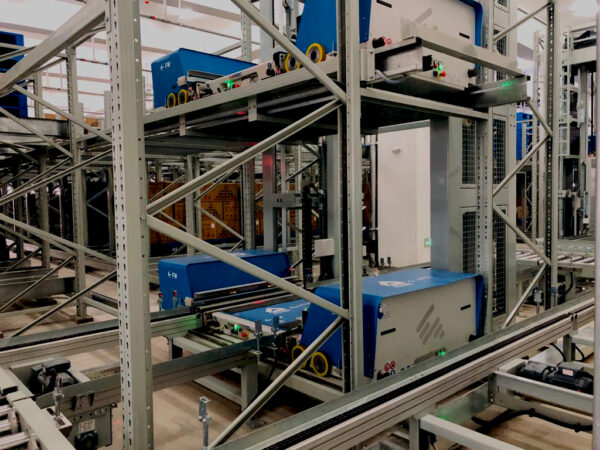
above: Mother-Child ASRS
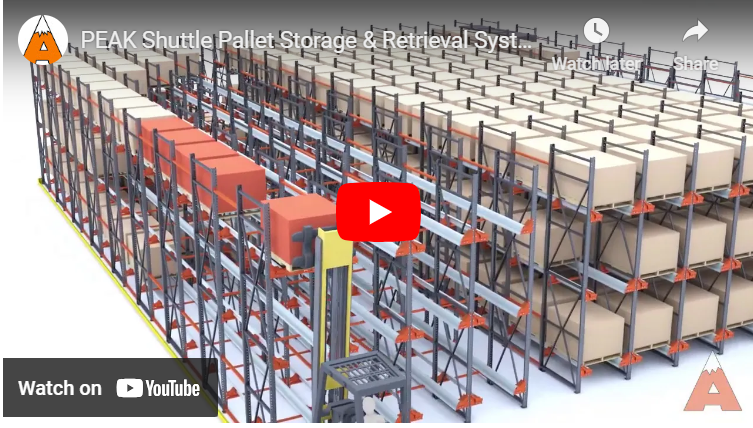
2-way shuttles: With 2-way systems, forklifts place shuttles directly into storage lanes, then load the pallet on top. The shuttle moves in a single direction within the deep lane to store it. The process is reversed for extractions. These systems are ideal for operations handling a limited number of high-volume SKUs.
- 4-way shuttles: 4-way shuttles move both longitudinally within storage lanes and laterally across levels or rows, enabling highly flexible, dense storage grids. Ideal for operations with a dynamic SKU mix and fluctuating demand.
- Mother–child shuttles: In these systems, the larger ‘mother’ carrier travels along the main aisle, stopping adjacent to the designated storage lanes. From there, the smaller ‘child’ shuttle deploys into the lane to place or retrieve a pallet. This configuration enables high‑density, fully automated pallet handling—especially advantageous in cold‑storage environments.
 |
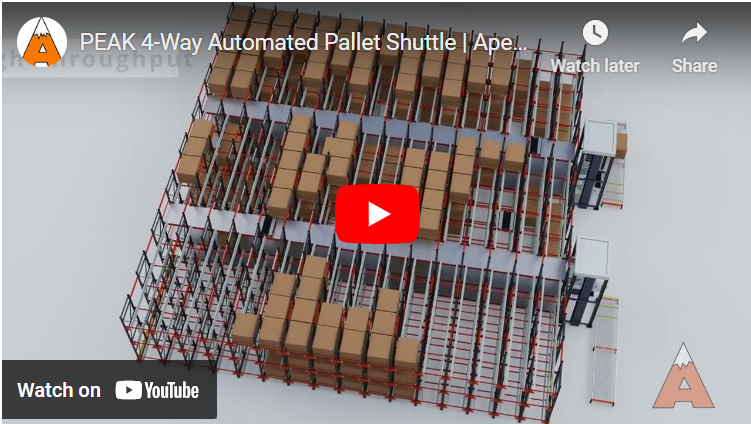 |
| PEAK 2-Way Shuttle | PEAK 4-Way Shuttle |
4. Vertical lift modules (VLMs) – Refrigerated carton and single item picking
VLMs are enclosed vertical towers designed to store high volumes of small-item SKUs in trays. When prompted, the system automatically retrieves the specified tray and delivers it to an ergonomic access window for picking.
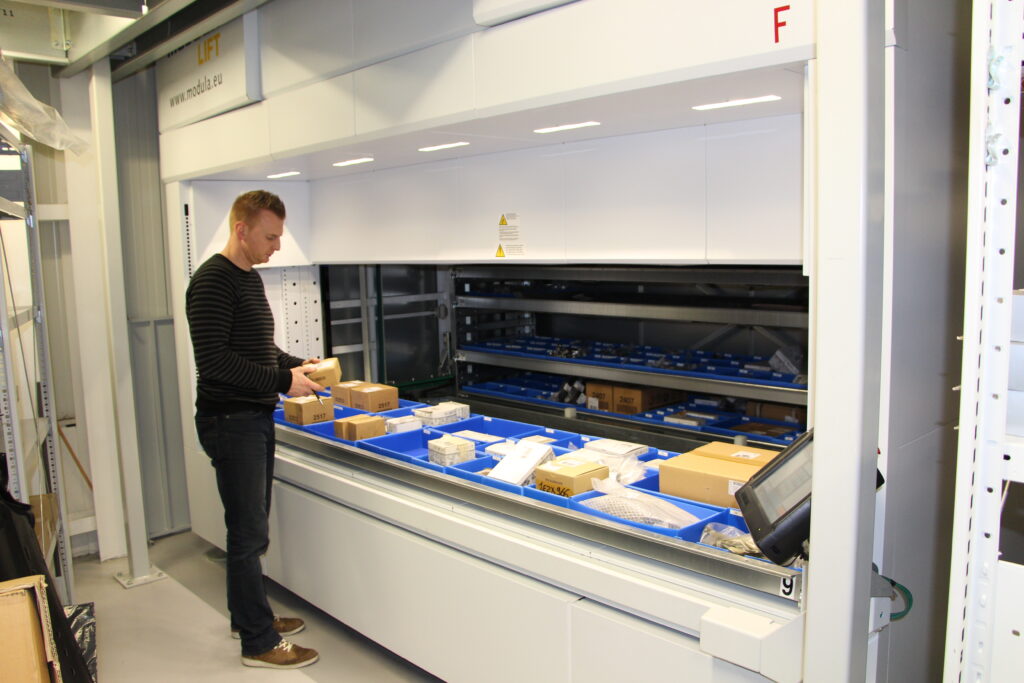
Ideal for temperature-sensitive environments, VLMs can maintain internal temperatures between 35–104°F (2–40°C) and regulate humidity levels as low as 5%, depending on operational needs. These systems can reach heights up to 52 feet and support tray loads of up to 2,200 lbs.
In cold storage applications, many VLMs are self-contained refrigeration units, cooling only the inside of the module rather than the entire room. This minimizes energy consumption and allows operators to work in ambient conditions outside the unit. VLMs offer a smart, space-saving alternative for adding refrigerated automation without expanding cooler space or building a full cold room.
Equipped with smart inventory logic, each unit dynamically adjusts tray heights to maximize internal storage—utilizing up to 95% of available vertical space. Fully loaded VLMs can deliver up to 40 trays per hour at 30-second intervals. These capabilities make them especially valuable in pharmaceutical and specialty food environments where space, speed, and temperature control are critical.
5. Horizontal carousels – Fast picking in low ceiling environments
Horizontal carousels rotate shelves or bins past a pick station, allowing operators to stay in one spot and work quickly. Compared to walking long aisles in a chilled room, carousels keep operators in one tight zone, shorten order cycle times, and reduce how often doors and dock openings leak cold air.
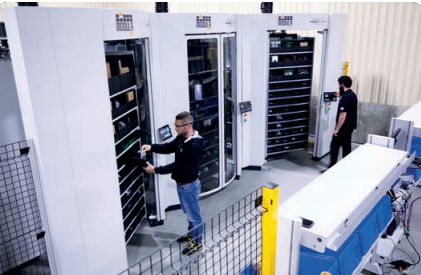
In chilled environments, they can be placed in a cooled room or built as fully contained, enclosed units, which means you don’t have to refrigerate a large surrounding area.
That makes them ideal for grocery, foodservice, and e-grocery operations that require fast, accurate picking across a wide range of refrigerated SKUs—without the cost of cooling an entire room.
What you will notice across the different technologies is that these cold-ready ASRS solutions share critical design elements:
- Engineered for low temperatures: to –20°F ( –29°C) and below
- Energy-efficient layouts that minimize openings, air loss, and refrigerated volume
- Frost and condensation management to keep rails, sensors, and conveyors reliable
With the range of options available, you can match the right ASRS design to each cold zone in your facility, rather than forcing a single approach to cover all areas.
Integration Considerations: Getting Cold Storage ASRS Right

Apex utilizes a data-driven design process to size, simulate, and configure your ASRS, ensuring it aligns with your specific volume, SKU mix, and building constraints…like ceiling heights. These are the kinds of details we’ll work through with you when designing a cold-ready system:
- Structural design and insulation – Rack layout, building height, insulated panels, doors, and floor design, so you keep temps stable while maximizing cubic storage.
- Host system compatibility – Making sure your host system and ASRS controls talk cleanly, support your inventory rotation, and give you real-time inventory and order status.
- Maintenance in cold environments – Planning access, safe work windows, spare parts, and remote diagnostics to ensure the system remains reliable without frequent trips into the freezer.
- Cold-rated components and durability – Specifying sensors, drives, cables, lubricants, and enclosures designed for low temperatures, frost, and condensation.
- Backup power and defrost contingencies – Defining how the system behaves during an outage or defrost cycle so products stay protected and the ASRS recovers cleanly.
Real-World Cold Storage Applications
If your facility handles any of the following inventory types, it’s worth exploring how ASRS technology can streamline your processes and reduce operational costs.
Common use cases include:
- Food & beverage: Frozen meats, seafood, dairy, and produce — ASRS protects product quality, supports FIFO/FEFO (first-in, first-out/first-expired-out) rotation, and reduces labor in harsh cold storage zones.
- Pharmaceuticals & healthcare: Vaccines, biologics, and lab samples require strict temperature bands and full auditability. ASRS provides secure, climate-controlled storage with precise tracking at the batch, lot, or even container level.
- Grocery and e-grocery fulfillment: Fresh and frozen SKUs need to be picked fast and accurately for store replenishment and home delivery. Automated systems shorten pick paths, stabilize service levels, and support tight delivery windows.
- Cold chain 3PLs: Third-party logistics providers manage multiple customers, each with distinct inventory and service level agreements. ASRS affords dense multi-client storage, strong inventory visibility, and the throughput needed to stay competitive.
- Chemicals and specialty materials: Certain resins, additives, and industrial products must be kept within controlled temperature ranges to maintain performance. Automated storage ensures consistent conditions and reduces exposure risk for personnel handling hazardous or sensitive materials.
- Agriculture and seed storage: Seeds, genetics, and other ag inputs often require long-term preservation in stable cold environments. ASRS helps maintain quality over time while maximizing storage capacity and simplifying seasonal throughput swings.
Why Apex: Designing and Delivering Cold Storage Automation That Performs

Choosing the right automation partner matters just as much as picking the right ASRS technology. Apex has hands-on experience designing and installing systems that perform in all warehouse climates.
Our full-service team provides complete solutions. That means racking, conveyors, safety systems, and controls are all designed together as one integrated system. We also stay vendor-agnostic on hardware. We can match you with the crane, shuttle, or robotic solution that fits your volumes, SKU mix, and budget – not force your operation into a single product line.
Most importantly, we don’t disappear after go-live. Apex supports you from initial concept and simulation, through installation and commissioning, to training and ongoing service.
If you’re exploring ASRS for your cold storage facility, reach out to the Apex team for a customized assessment and a clear, data-backed path to a smart, scalable automation strategy.
