
Order Fulfillment Tips to Survive Peak Season Madness

Avoid Common Order Fulfillment Bottlenecks This Peak Season
Independence Day, Black Friday, Cyber Monday, Christmas… Sure, most people see holidays — warehouse teams see a storm coming.
Order volumes skyrocket, and order fulfillment operations must scale rapidly to meet demand. With the right planning, your team can turn every opportunity into measurable ROI — staying focused, aligned, and ready to make the most of peak moments.
In this guide, we’ll explore how to plan for peak seasonal demand in retail and e-commerce fulfillment, with tips on inventory management, picking efficiency, labor planning, and fulfillment technology. We’ll also highlight pitfalls to avoid and explore how to thrive during peak season.
Inventory Management: Get Ahead Before the Rush Hits
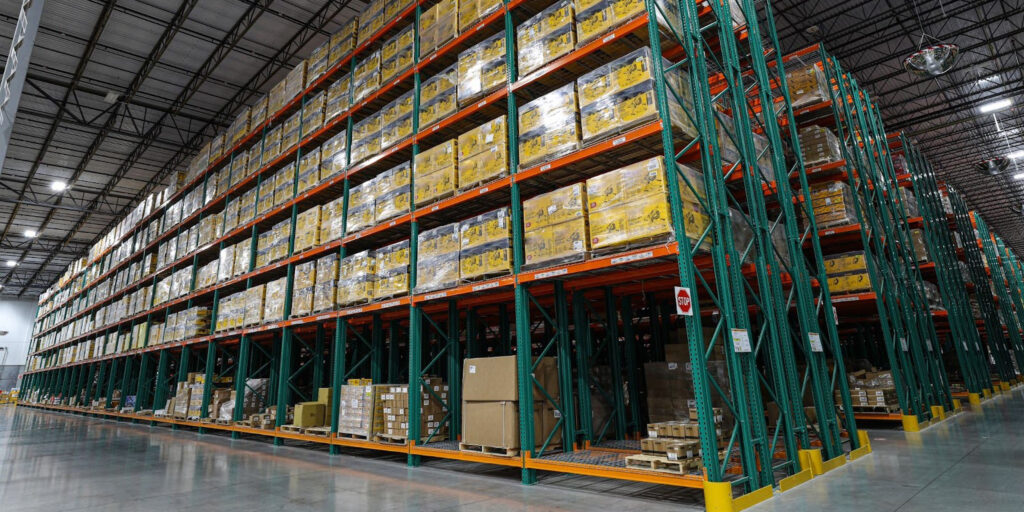 Back-to-Back Double Deep Rack with Pallet Flow for Case Pick on First Level
One of the toughest challenges in peak season planning is managing inventory. It’s a constant balancing act, and you’ll never get it perfect. Still, the goal in preparing for the uptick of seasonal order fulfillment is to have enough product on hand to fulfill orders without a large amount of excess that ties up your storage capacity… and your capital.
Here’s how to do it:
Start with Accurate Forecasting
Look back at the past 3–5 years of sales data, especially for the same season, and factor in any upcoming promotions or product launches. The more detailed you get, the better. Break it down by product type, sales channel, and customer group. If you’re selling through your website, Amazon, and retail stores, analyze each one separately to catch real surges where they happen.
Also, consider the impact of any new product launches during peak periods. These typically bring an initial spike in demand, followed by the need for timely replenishment. Use market research to estimate both the launch lift and the sustained volume, so you can plan inventory levels without guesswork.
Use ABC analysis to prioritize what matters most
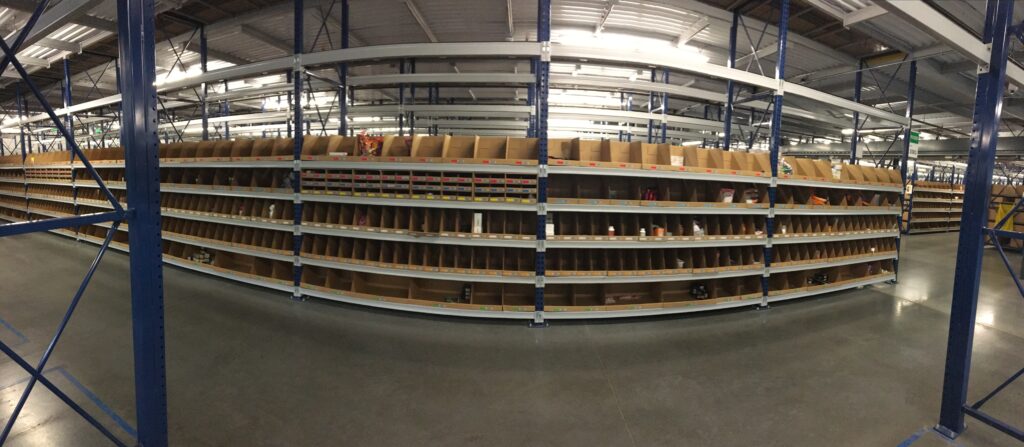
Not every item in your warehouse deserves the same level of attention. ABC classification helps you sort them out.
Your “A” items are the fast movers that drive most of your sales. You want these ones right up front, with extra stock and tight monitoring. “B” items move decently and should stay organized, while “C” items, your slow movers, can be stocked more lightly.
Build in safety stock (but be smart about it)
Even with great forecasting, surprises happen. That’s why you need a buffer. Figure out how much extra stock you need for critical SKUs based on their lead times and how quickly they sell. Then, set reorder points that trigger replenishment before you run out — ideally, earlier than usual as the holidays approach.
If you’re expecting supplier delays or longer shipping times, bump those reorder triggers up a bit. This helps you stay stocked without overdoing it. Program your WMS to send alerts when stock numbers dip below the trigger points.
Make sure your inventory visibility is real-time and reliable
Peak season moves fast, and so should your inventory updates. You don’t want to offer an item online that you just ran out of in your warehouse five minutes ago.
A good Warehouse Management System (WMS) will sync inventory across your website, marketplaces, and back-end systems instantly. That way, when something sells, your stock count updates everywhere automatically. It also lets you move products between locations when needed — say, pulling from retail to fill online orders.
Picking Efficiency: Move Faster Without Breaking a Sweat
 Order Picking Using Voice Technology
A slow or clunky picking process can cause serious delays, mistakes, and bottlenecks in your packing station. But with the right approach, you can turn it into one of your biggest wins.
Rethink your picking strategy
When order volume explodes, picking one order at a time doesn’t cut it. This is when smarter methods come into play.
- Zone picking splits your warehouse into sections. Each picker stays in one zone and handles only the items in that area. Orders move from one zone to the next, like an assembly line. It’s fast and keeps people from tripping over each other.
- Wave picking groups orders together and releases them in timed batches. You can organize waves by carrier, delivery deadline, or order size. This helps align picking with packing and shipping.
Some warehouses combine these strategies, like running waves inside picking zones, to get the best of both worlds. It’s worth testing what works best for your layout and team.
Bring in tech to make pickers faster and more accurate
Technology can dramatically lighten the load during peak season, especially for new or seasonal workers.
- Pick-to-light systems show workers exactly where to pick from using lights on the shelves. It’s fast, visual, and cuts down on errors.
- Voice picking gives workers headsets that tell them what to pick and where to go—hands-free and easy to learn.
- Autonomous Mobile Robots (AMRs) can bring products to the picker instead of the picker walking to the products. This means less wasted time and more orders packed per shift.
Set up special seasonal pick zones
When certain products are in high demand, create a temporary pick zone just for them. Stock them near your packing area so they’re quick to grab. If you’re short on space, look into mobile pick racks or modular pick carts that let you add capacity.
Use dynamic slotting to keep things efficient
Static slotting — where each SKU lives in the same place year-round — doesn’t work when demand changes overnight. Instead, keep your layout flexible by implementing dynamic slotting.
Many modern WMS platforms support dynamic slotting out of the box. So, this doesn’t have to involve complex or expensive data analysis — just the right configurations.
- Move bestsellers to easier-to-reach areas (like waist height or near the pack-out zone).
- Use your data to re-slot fast-moving SKUs weekly or even daily.
- After the peak rush, you can slot things back to normal.
Labor Planning: Staff Smarter, Not Just Bigger
 Warehouse Worker Using Handheld Scanner for Order Picking
During peak season, throwing more people at the problem isn’t the answer. What works is smart planning, early hiring, and building flexibility into your team. Here’s how to stay fully staffed without compromising efficiency or profit.
- Forecast labor based on real workload.
Don’t guess. Use last year’s order volumes, SKU complexity, and peak-week trends to calculate how many hours and roles you’ll need. Factor in indirect tasks too—like inbound receiving, replenishment, and returns. - Hire seasonal workers early and cross-train them fast.
Bring people in early so they’re trained and ready to go when it counts. If you’re using tech like Voice Picking, keep in mind that temporary workers may need 4–8 hours to train their voice profiles before they can start. Cross-training helps you shift people between picking, packing, and replenishment as needed. Also, having a backup method like RF picking (using radio-frequency scanners) for temporary staff can keep things moving, especially with typical attrition rates. - Consider a Labor Management System (LMS).
An LMS tracks productivity, shows where you’re falling behind, and helps you reallocate staff on the fly. Even simple dashboards showing picks per hour or units shipped can guide better decisions. In many cases, an LMS is already built into your existing WMS; it just needs to be configured and enabled. - Incentivize performance and reward reliability.
Offer small bonuses, gift cards, or even shift flexibility to keep morale high. Recognize top performers and reward those who stick it out through the peak. A motivated team = faster, better fulfillment. - Train seasonal staff on safety from day one.
More people on the floor means more chances for accidents. Make sure every seasonal hire understands warehouse safety protocols, equipment rules, and emergency procedures. A quick safety briefing or a walkthrough can prevent costly injuries.
Fulfillment Tech: Scale Smarter With the Right Tools
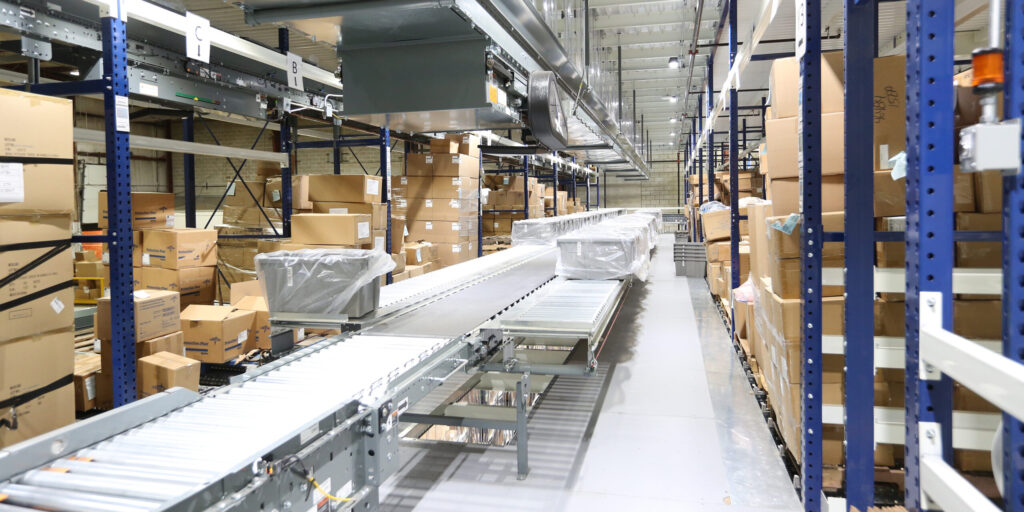 Powered Conveyor Supporting a Pick Zone
The right tech can help you move faster, avoid errors, and keep everything in sync, without needing a full-blown automation overhaul.
ERP + WMS: One Seamless Workflow
Integrate your ERP (Enterprise Resource Planning) and WMS so they work as one: the ERP connects to your storefronts, marketplaces, and carriers, funneling orders down to the WMS for efficient picking and packing. As items move, the WMS returns real-time inventory data to the ERP, which then updates stock levels and sends shipping confirmations—no manual steps, no surprises.
Add automation where it counts
Automated conveyors, sorters, and even some basic picking tech can go a long way. If you’re shipping hundreds of orders daily, tech that moves things faster (or eliminates walking) will pay for itself quickly. If your uptick is into the thousands, you may seriously want to consider an AMR goods-to-person solution… the Apex team can work up some numbers for you to help choose the most cost-effective approach to your order fulfillment.
Use voice or tablet-guided picking and packing
These tools reduce training time and error rates—especially useful when working with seasonal staff. Workers receive real-time instructions and feedback; managers receive data to spot problems early.
Track your performance live
Set up simple dashboards to monitor order flow, backlog, and productivity by zone. This helps you spot slowdowns before they become full-blown bottlenecks—and take action on the fly.
If you’re thinking about adding automation to boost peak season performance, this warehouse automation guide walks through exactly how to plan and roll it out.
Common Pitfalls: What Trips Up Warehouses During Peak

Here’s what to watch out for so your team doesn’t lose time, money, or sanity when it matters most.
Sticking with an outdated layout
What worked during slower months might fall short under pressure. If fast-moving SKUs are stored too far away from your packing areas or aisles become overcrowded, your throughput suffers, and you may compromise worker safety. Before peak hits, reorganize high-velocity items closer to your pack stations and review flow paths to reduce congestion.
Relying on manual processes that don’t scale
To borrow an analogy, build the church for Easter Sunday, not the fourth Sunday in Ordinary Time. Meaning, don’t build your warehouse for an average Tuesday; build it for Black Friday.
Manual pick lists, spreadsheet tracking, and hand-entered data might work when order volume is low. But during peak season, they’ll break fast. They’ll cost you time, accuracy, and burnt-out staff.
Scalable operations rely on automation from day one: barcode scanning, packing checklists, real-time inventory updates, and seamless order syncing. If you are using best practices, they should work for both peak and steady seasons.
Ignoring returns planning
The flood doesn’t end when orders go out; a return processing surge is coming. If you don’t plan for post-peak reverse logistics, your docks and inventory system can get overwhelmed.
Use historical data to estimate your return rate and build your plan from there. Set up dedicated return stations, train a few staffers in processing, and have a system for restocking or flagging damaged goods.
Underestimating seasonal staff needs
It’s easy to focus on filling orders and overlook how many hands you’ll need to unpack, restock, replenish, and support customer service. If you’re only hiring for pick/pack roles, you’ll end up with blind spots. Plan for the whole workload.
Waiting too long to adapt
One of the biggest traps is hoping a small problem will “work itself out.” During peak, that rarely happens. If your backlog grows, error rates spike, or a zone slows down — adjust immediately! Your flexibility is your best defense.
Apex: Your Retail Peak Planning Partner
At Apex Companies, we help retail and e-commerce businesses prepare for and thrive during peak demand seasons. From scalable racking and advanced picking technologies to labor optimization and inventory strategy, our team delivers tailored solutions that keep your operations agile, accurate, and on time.
Contact us about preparing for your seasonal peaks. Or explore our Resources for helpful planning guides and blogs.
