
Navigating the Mezzanine Marketplace: Pros and Cons of Buying Used Mezzanines

Your Guide to Used Mezzanines: What to Know Before You Buy
Just because you CAN do something doesn’t always mean you should… that caution often applies to whether or not it’s advisable to purchase used items. The reduced cost vs. new is always tempting, but the big question is whether your purchase will save you money in the long run. Apex sells used pallet racking inventory, so we support the reduce, reuse, and recycle cause. Still, an industrial structure like a mezzanine is a customized build with critical safety concerns; therefore, there is no other way to proceed than with both eyes wide open when considering purchasing used mezzanines.
Let us help you explore the practicality of such a purchase.
Benefits of Buying a Used Mezzanine
👍Cost Savings: Used mezzanines are generally more affordable than new ones, making them a cost-effective solution for increasing workspace or storage capacity.
👍Reduced Lead Time: You can often acquire a used mezzanine more quickly, reducing lead times and allowing you to address space constraints sooner.
👍Sustainability: Purchasing a used mezzanine promotes sustainability by extending the structure’s lifespan and reducing the need for new materials.
👍Budget Flexibility: Buying used allows you to allocate resources to other essential aspects of your project or facility.
Wow, that all sounds great, but before you sign on the dotted line, let’s check a few critical elements.
What You Need to Know Before Buying a Used Mezzanine

Additional cost drivers for your used mezzanine purchase span from flooring and code compliance through installation. Each element will increase the cost of your investment; therefore, it is valuable for you to establish a break-even point of new vs. used to ensure that you spend your capital most effectively.
Floor slab suitability – Before installing a new or used mezzanine, you must confirm that your floor slab can handle the structure’s weight. Typically, the floor is 6” thick with a strength of 4,000 psi, in most industrial facilities. That is sufficient for operations with a rated capacity of up to 25,000 lbs.; however, the quality of the soil or the level of the water table beneath the floor can diminish this capacity. You must confirm if footings are needed before constructing your mezzanine.
Mezzanine flooring – There are a variety of flooring options for your mezzanine, depending on the type of activity, traffic, vehicles, etc. Your used mezzanine may not have the proper flooring for your needs –thoroughly research your best options for flooring and compare. If you require new flooring, be sure to factor in that cost.
It’s also important to note that a mezzanine floor, whether brand new or previously used, must be evaluated by a structural engineer as mandated by the law to guarantee its safety and suitability for use. The ultimate responsibility for any accidents or injuries arising from an unsafe or unsuitable mezzanine lies with the employer or property owner.
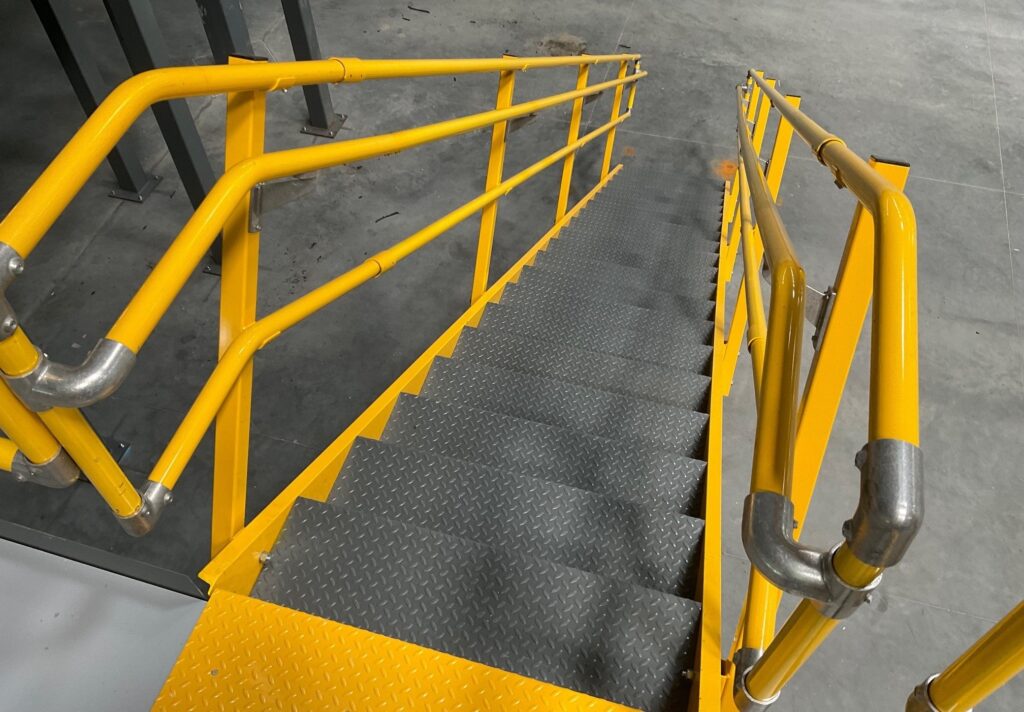
Stairs & railings – In 2000, the building code changed from the UBC to the IBC. Prior to that, the UBC code stipulated safety railing guidelines that are no longer acceptable today per the IBC. For example, the IBC requires both a handrail and a guard rail on the industrial stairs. If your mezzanine was built before 2000 and never brought into compliance, you must replace the stairs and rails at an added cost.
Hardware – You MUST replace the hardware used to construct the old mezzanine –full stop. Hardware stretches as it is tightened and cannot be reused –be sure to include this in your project budget.
Customization – You can modify stairs, railings, and flooring, but this will increase the overall expenses. However, changing the size of your structure is typically not cost-effective. Reducing the size is an option, but increasing it requires additional framing plus more flooring and railings –which must be compatible with the rest of the mezzanine. If you must significantly modify the used structure, you’re likely better off starting from scratch and getting precisely what you need.
Installation – It’s crucial to work with a trusted installer when acquiring a used mezzanine. The installer must inspect the materials to identify any concerns that would compromise the structural integrity of the equipment, and they must confirm the structure is compliant with all relevant codes.
Last Steps Before You Buy
Hopefully, you have done your homework and are buying from a reputable source –try asking these questions to help qualify the seller:
- Confirm the structure’s history – Ensure it is original to the site where it was disassembled, and you want to know if there were any safety issues with the structure.
- Who dissembled the structure? Confirm that the mezzanine was carefully disassembled at the original site, and the components were packaged to protect the structural integrity of the parts, including any railings, stairs, and flooring.
- Inspect the components – Carefully inspect the components for any structural damage or excessive wear that would compromise the safety or functionality of the reconstructed mezzanine.
- Repairs or replacements? Inquire if any components were repaired or replaced and are not original to the build. Refurbished or replaced parts may not meet the mezzanine’s structural needs.
- Call Apex!
The Apex team is here to help you make the best choices for your facility and processing needs. We have professional installation teams ready to go… and all the engineering, design, and project management support you need for a seamless project execution.
Give us a call for full-service support.
Related:
