
7 Warehouse Conditions that Can Compromise Pallet Rack Integrity | Apex Safety Spotlight

Your Team is Counting on You to Deliver Safe Pallet Rack
With so many moving parts in a warehouse or distribution center, it’s hard to identify every safety risk, especially when dealing with a strong, durable, heavy-duty pallet rack system. While, thankfully, rack collapses in the U.S. are extremely rare, rack-compromising damage can be a ticking time bomb. Not to fret –we’ve got the precautions and solutions to maintain a healthy pallet rack system and safer warehouse operations.
7 Pallet Rack Risks to Avoid
- Overloading Your Rack System
- DIY Pallet Rack Modifications
- Disregarding Regular Rack Inspections
- Neglecting System-Specific Forklift Operator Training
- Omitting Rack Protections
- Mismatching Pallet Rack Parts
- Unclear or Loose Warehouse Safety Protocols
1. Avoid Overloading Pallet Rack
 A properly designed and installed pallet rack system has a designated load capacity which must be clearly displayed. Warehouse personnel and lift truck operators are responsible for understanding the rack limitations and ensuring pallet weights are within the load restrictions.
The load capacity is most often determined based on a uniformly distributed load (UDL) –meaning the load weight is evenly distributed across the pallet. UDL is important so as to prevent undue stress on one area of the rack system that it wasn’t designed to support.
Load weights concentrated in a specific spot (point loads) or in a single line (line loads) require specialized rack design and likely a decking material to safely distribute the load weight between the rack beams.
Point load examples – materials that shift (ingredients, food items, machinery)
Line load examples – rolls of fabric, sheet metals, beer kegs
Systems must be in place to match the incoming inventory with rack system capability –and warehouse safety protocols should state a clear chain of command for instances where there is a mismatch.
Check out our blog to dive deeper into Load Considerations for Pallet Rack Design.
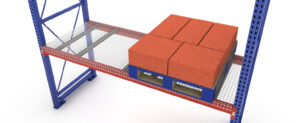 Uniformly Distributed Load |
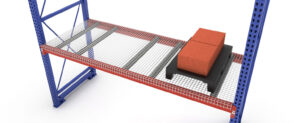 Point Load |
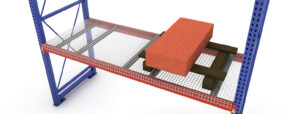 Line Load |
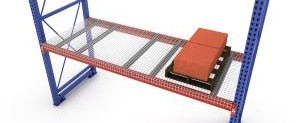 Concentrated Load |
2. Avoid DIY Pallet Rack Modifications
 This is one of those instances where the experts really do make all the difference. Remember that if you modify your rack system, you likely void any warranty and open yourself up to liability should an accident occur.
Something as simple as adjusting beam levels can significantly change your pallet rack load capacity.
The vertical space between beam levels is referred to as the summit of the rack system. The beams stabilize the rack system, so the greater the span between them, the lower the load capacity. Shifting beam levels to accommodate changes in your inventory specs is a good idea for maximizing your system use… we just ask that you give the Apex team a call to ensure a safe rack modification.
Familiarize yourself with How to Measure the Unsupported Span by checking out our blog.
3. Conduct Regular Pallet Rack Inspections

You’ve heard of “an ounce of prevention equals a pound of cure,” but in this case, we’re talking tons of cure. Regularly examining pallet racking is the best way to avoid major repairs, system downtime, and worker injuries. Scanning for damage to uprights, beams, rack guards, baseplates, anchors, decking, etc., is all part of a rack inspection. Your team will also want to look for loose anchor bolts, missing or damaged struts, row spacers, and misaligned or dangerously loaded inventory.
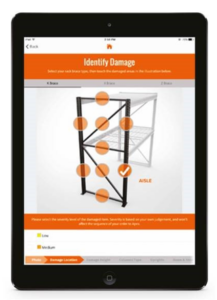 Don’t be overwhelmed by that list… Apex has the tools you need to simplify the process.
Download the Free Apex Rack Repair App to help you conduct a DIY pallet rack inspection.
With the app, you can upload pictures, precise rack specs, and location details. Better than that, just upload your findings, and the Apex PROs will evaluate them all and let you know if repairs are needed. We will also provide an independent repair solution to get your system back up and in use quickly.
Besides the free App, we also offer detailed pallet rack inspection training videos and a comprehensive checklist –found in the Resources section of our website. Additionally, you can request in-house team training with our Apex PROs –a great way to cover inspection responsibilities across multiple facilities.
What if DIY isn’t what you’re looking for? The Apex PROs will come to you! Just contact our team to schedule a comprehensive warehouse safety and rack inspection. You’ll still get a full report and independent repair solutions if needed.
Try the Apex Rack Repair App today.
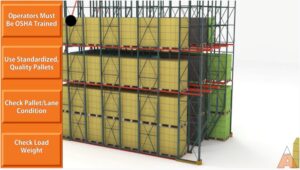
Training Video – Drive-In Rack
You may have several pallet rack systems. Standard selective is the most popular, but many facilities also have high-density systems such as drive-in rack, push-back rack, and pallet flow rack. Each system has particular loading and unloading techniques that protect your pallet rack investment and offer protection for your team and equipment.
Where can you find system-specific forklift operator training? Look no further than Apex! Our expert trainers come to you and conduct group training and OSHA-compliant certification/recertification classes.
We use your equipment and rack systems to ensure your team is properly equipped. If you need a quick refresher, we also have system-specific load/unload videos in our Resources –videos are translated into English and Spanish.
5. Is Your Rack Fully Protected?

Pallet Rack Guarding & Safety Features -Your Front-Line Protection
Safety features include:
- Column guards
- End row guards
- Heavy-duty horizontal struts
- Recessed/sloped columns
- Column backers
- Pallet rack safety netting & containment panels
- Pallet stops
These are just several examples of products and design choices that you can implement to shore up your pallet rack protection. It’s important to replace damaged components such as column and row guards to ensure your rack is properly protected –try the Apex App for a prompt solution.
6. Make a Perfect Match

Whether you’re replacing missing safety pins or adding pallet rack components, it’s critical to match them with your precise rack system. This sounds logical but can be a bit tricky when you realize how many pallet rack manufacturers there are and how many systems resemble one another.
Now, if you’re thinking, no way Apex has a solution for this as well… you’d be wrong! Check out our Pallet Rack Punching Guide. The guide helps you pinpoint your pallet rack manufacturer if you are unsure. Once you know your rack type, you can contact the manufacturer for specific components, connection parts, and system-specific details.
Check out our blog on safety pins —Securing You Rack the Right Way for more information on making the right connections.
As stated in Caution #2 — if you want to change your system design or size, please contact a professional engineer and rack experts to ensure your modification is completed properly.
7. Establish Warehouse Safety Protocols and Maintenance

Hopefully, you’ve trained your forklift operators to properly access each type of pallet rack system, as noted in Caution 4, but it’s also essential to create a clear communication channel for workers to report an incident or damage if they encounter it. The more alert your team is, the faster you can address areas of concern and protect your facility from costly disruptions.
Regular maintenance of and around your pallet rack system will also minimize more extensive repairs down the road. Again, checking bolted connections, load positioning, and removing broken or splinted pallets and debris will protect your rack system and improve warehouse safety.
Full-Service Support for All Your Warehousing Needs
The Apex team is here to help you each step of the way to safeguard your pallet-racking investment. From custom designs through installation, inspections, and repairs, you can count on Apex.
Contact our team today to discuss your warehouse needs.
