
Prevent Disaster –Tips to Address Pallet Rack Damage & Improve Warehouse Safety

Prevent Disaster –Tips to Address Pallet Rack Damage & Improve Warehouse Safety
Per RMI, pallet rack systems are often exposed to product loads more than ten times the weight of the pallet rack system itself –so to say that a lot is riding on your pallet racking would not be an overstatement. Additionally, even under the best circumstances, pallet rack systems can and often do incur damage. Forklift strikes and overloading cause most rack damage; however, daily wear and tear over the years will destroy your racking.
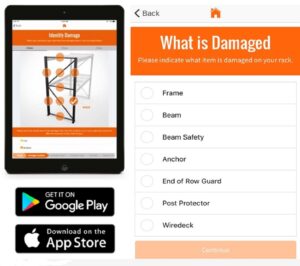 We offer a tool that helps you quickly and thoroughly document damage to assess severity. The Apex Rack Repair App can be downloaded onto your smartphone or tablet, and it prompts you to capture component specs and photos to upload to our PROs for evaluation. If a repair is needed, you already have all the specs to make ordering a repair kit fast, easy, and accurate. The Rack Repair App can also be used for regularly scheduled pallet rack inspections.
Benefits of Promptly Addressing Rack Damage
- Repairs are less costly than system replacement
- Maximizes available capacity
- Improves system longevity
- Enhances warehouse safety
With all that said, how do you know if your rack damage is just something to keep an eye on, needs repair, or is so severe it needs replacement? Looks can be deceiving, so we’re sharing the signs to look for.
Can You Read The Signs?
The tricky thing about assessing pallet rack damage is that not all of it is easy to spot. A damaged front column may also result in bent or dislodged baseplates or anchoring, struts, rear columns, and decking. Your pallet rack system is designed to work as a whole, with each component supplying strength and stability. When even one is not pulling its weight, that can be too heavy a burden on the rest.
A thorough look at all components in a “damage zone” will relay the complete account of the harm. Take it one element at a time. Note if the rack is a standalone structure, it is critical to address damaged areas immediately. Here are the five major rack areas to inspect carefully.
1.Pallet Rack Columns
Taking a front-to-back approach, start with the front columns and uprights and look for damage in front and to any backer that may be present.
Severe column damage –repair if greater than ½”:
- Creasing
- Buckling
- Bulging
- Out-of-plumb
If visual inspection of your rack determines that it is leaning, see our blog on allowable tolerance and tips for measuring for out-of-plumb. Follow the guidelines outlined in the blog for repairs.
Superficial scrapes that do not bend, crease, or buckle the column can likely be repainted to prevent rusting. Any missing or bent safety pins must be replaced.

2.Pallet Rack Baseplates
Column damage is often carried down to baseplates and anchoring. Check that the baseplate is intact, shims have not shifted, and that the baseplate is secured with at least one tightly fitting anchor bolt. If a rack or column guard is damaged, its protection is now compromised and must be replaced.
Severe baseplate damage includes
- Damaged baseplate
- Damaged or missing anchor bolts
- Shims that have shifted out of place
Note: anchors can come loose over time with just regular warehouse activity. It is recommended to check anchors as part of regular pallet rack inspections to ensure they are securely fitted.

Severe Damage
3.Pallet Rack Beams & Decking
Beams can be struck by forklifts, falling or misaligned inventory, and overloading. In the process, any decking material, such as wire decking, b-decking, or pallet supports, can also be damaged. Depending on where the damage is, the level of severity will determine the urgency. Any broken or compromised decking should be replaced to ensure rack contents sit flat and securely.
Severe beam damage includes:
- Creasing
- Buckling
- Corner (bend) damage
- Beam deflection
- Missing or compromised connectors
Bowing (beam deflection) is typically due to overloading. Allowable defection is approximately ½”; however, follow the guidelines in our blog to measure and evaluate beam deflection correctly.

Damaged Wire Decking
4.Pallet Rack Struts
The bracing between pallet rack columns that help to create the system uprights is a series of struts. The struts run horizontally and diagonally between the columns and are critical to the structural integrity of the pallet rack system. Typically, strut damage is caused by forklift strikes, but it’s essential to check all the struts in the damaged area to ensure that none are bent, loose, or dislodged.
Severe strut damage includes
- Excessive damage to one or more in frame line or row
- Strut deflection – horizontal or diagonal deflection over ½”
- Broken connections
- Missing struts

Broken Strut
5.Additional Areas of Concern
Once you’ve completed your rack component inspection and taken your required measurements, take a moment to check and see if you have a row of rack with multiple damaged components and or a pattern of failures. That may signal a more significant issue than a few minor bumps with heavy equipment.
The Apex Rack Repair PROs can help you decipher if your pallet racking is adequately configured and provides your required load capacity.
Also, if you repeatedly fix the same rack guards, columns, struts, etc., perhaps there is a design flaw or a new piece of forklift equipment that isn’t correctly sized for your space. It could even come down to poor lighting… but it’s safer and more economical to address it to prevent significant trouble down the road.
Options to Safely Repair Pallet Rack Damage

There are two options that the Apex team recommends when it comes to pallet rack repairs. Our focus is rack integrity, strength, and safety, and these repairs represent the best options to get you there. We don’t recommend interchanging similar parts or used components as they may not be compatible with the load-bearing capacity or seismic requirements of the original. We also do not recommend straightening or welding damaged rack for the same reason.
Repairing Pallet Rack Damage
Custom-fit repair kit – Repair kits are cost-effective for moderate rack damage. The kits are customized to the exact specifications of your rack system (remember you collected all your specs in the Rack Repair App –so all you have to do is order the kit!). They are fairly easy to install –check out our step-by-step installation video for a DIY project, or call the Apex PROs, and we’ll take care of it with minimal disruption to your operation.
New replacement component – This is often the best option when there are multiple areas of damage or severe damage; however, there are a few things to confirm before proceeding.
- You must know the OEM
- Ensure the system hasn’t been modified and still reflects the original documentation
- The replacement parts must be the same grade and thickness of steel and match the original design configuration
You do not have to modify or update LARC (load application and rack configuration) drawings if these conditions are met.
Tips to Avoid Pallet Rack Damage

The best way to handle pallet rack damage is to prevent it from happening in the first place. Here are a few good tips to help you keep disruptions and added costs to a minimum.
1. Team Training – ensure forklift operators are trained and certified on the equipment they use and adequately address the rack system. Some pallet racking systems require a different approach for safe loading and unloading –it’s worth it to train your team to know the difference.
Let us help —
Apex Forklift Training Videos (English & Spanish)
OSHA-Compliant Forklift Operator Training
2. Adhere to Load Capacity Restrictions – Check to ensure that rack capacity charts are up-to-date and clearly visible on the ends of each rack system. Instruct your team to confirm loads are within the rated capacity to prevent stressing the system and causing damage and a safety hazard.
3. Improve visibility – Properly illuminate the area, replace burned-out or broken bulbs, and clear debris from the area. Mirrors are also a great way to create a safer workspace for equipment operators and pedestrians.
4. Conduct regular rack inspections – Depending on how busy your facility is, you may need to conduct monthly or quarterly rack inspections –it is recommended to at least do a thorough inspection annually. Routine inspections catch potential issues before they become big, costly concerns. Use the Apex Rack Inspection Checklist to make the best use of your time. If you’d prefer, you can also schedule a complete rack and warehouse safety inspection with the Apex PROs.
5. Guard your rack – protective guarding is an economical way to protect your valuable pallet rack system from forklift strikes. From end-of-row and column guards to guard rails and more, the Apex team has precisely the safety components you need.
Check out our companion blog topics for more information about pallet rack and warehouse safety.
Related Content
To Weld or Order a Repair Kit?
Pallet Rack Inspection & Repairs
RMI – Should a Damaged Rack Component Be Repaired or Replaced?
For prompt attention to your warehousing needs — Call Apex today.
We are your source for everything warehousing, from design and installation to repairs, training, equipment, and more!
