
What’s the Difference Between Fixed and Flexible Automated Order Picking Systems?

Choosing the Right Automation for Smarter Order Picking
Automated order picking can transform warehouse performance — improving speed, accuracy, and labor efficiency. But not all automation fits every fulfillment strategy.
The real challenge isn’t whether to automate. It’s understanding when to choose fixed systems like VLMs, carousels, or mini-load ASRS, and when flexible solutions like AMRs or mobile picking technologies make more sense. Let’s break down both approaches so you can make a smart, scalable decision for your operation.
What is Fixed Automation?
 |
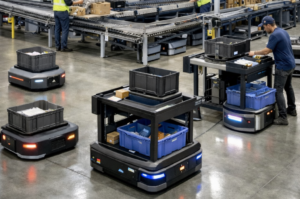 |
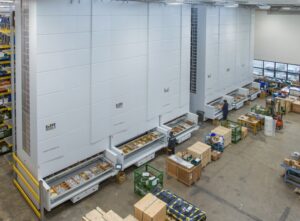
| Fixed VLMs | Flexible AMRs |
Fixed automation includes systems that are physically integrated into your facility and designed for consistent, repeatable picking workflows. These solutions are anchored in place and optimized for high accuracy and efficiency within a defined process.
They perform exceptionally well in stable environments, but require planning and infrastructure changes if your operation shifts significantly.
Examples:
Vertical Lift Modules (VLMs)
A type of Automated Storage and Retrieval System (ASRS) designed to maximize vertical space within a compact footprint. VLMs use an enclosed column of trays that are automatically retrieved and delivered to an ergonomic access opening, presenting items directly to the operator.
Modula VLM systems, offered by Apex, feature integrated control software and intuitive operator interfaces that guide picking, confirm quantities, and maintain real-time inventory accuracy. This goods-to-person design reduces travel time, improves picking accuracy, and supports secure, high-density storage for items of varying sizes and weights. VLMs are ideal for operations seeking fast, accurate picking while optimizing floor space.
Horizontal Carousels
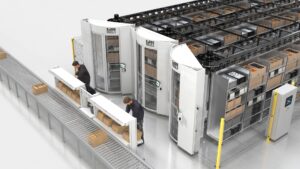
Horizontal Carousels
A goods-to-person picking solution that uses rotating storage carriers arranged on a horizontal track. When an order is triggered, the carousel automatically rotates to present the correct SKU at the operator access point.
Modula carousel systems, offered by Apex, feature integrated control software and intuitive operator interfaces that guide the picking process, confirm quantities, and track inventory in real time. By eliminating operator travel and centralizing access, horizontal carousels increase pick rates, improve accuracy, and provide secure, space-efficient storage for cases and individual items of varying sizes and weights.
Pick-to-Light Systems
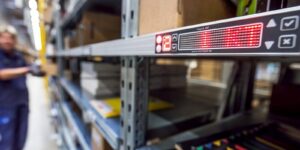
Pick-to-Light Systems (Static Installations)
A light-directed picking solution mounted to fixed shelving or racking that guides operators to the correct pick location using illuminated indicators and digital displays. The system communicates directly with the WMS or WES, signaling the exact SKU location and required quantity, thereby reducing search time and minimizing picking errors.
Static pick-to-light systems are ideal for high-volume, fast-moving SKUs in stable pick zones where speed and accuracy are critical performance drivers.
Mini-Load ASRS
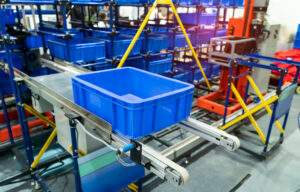
Mini-Load ASRS
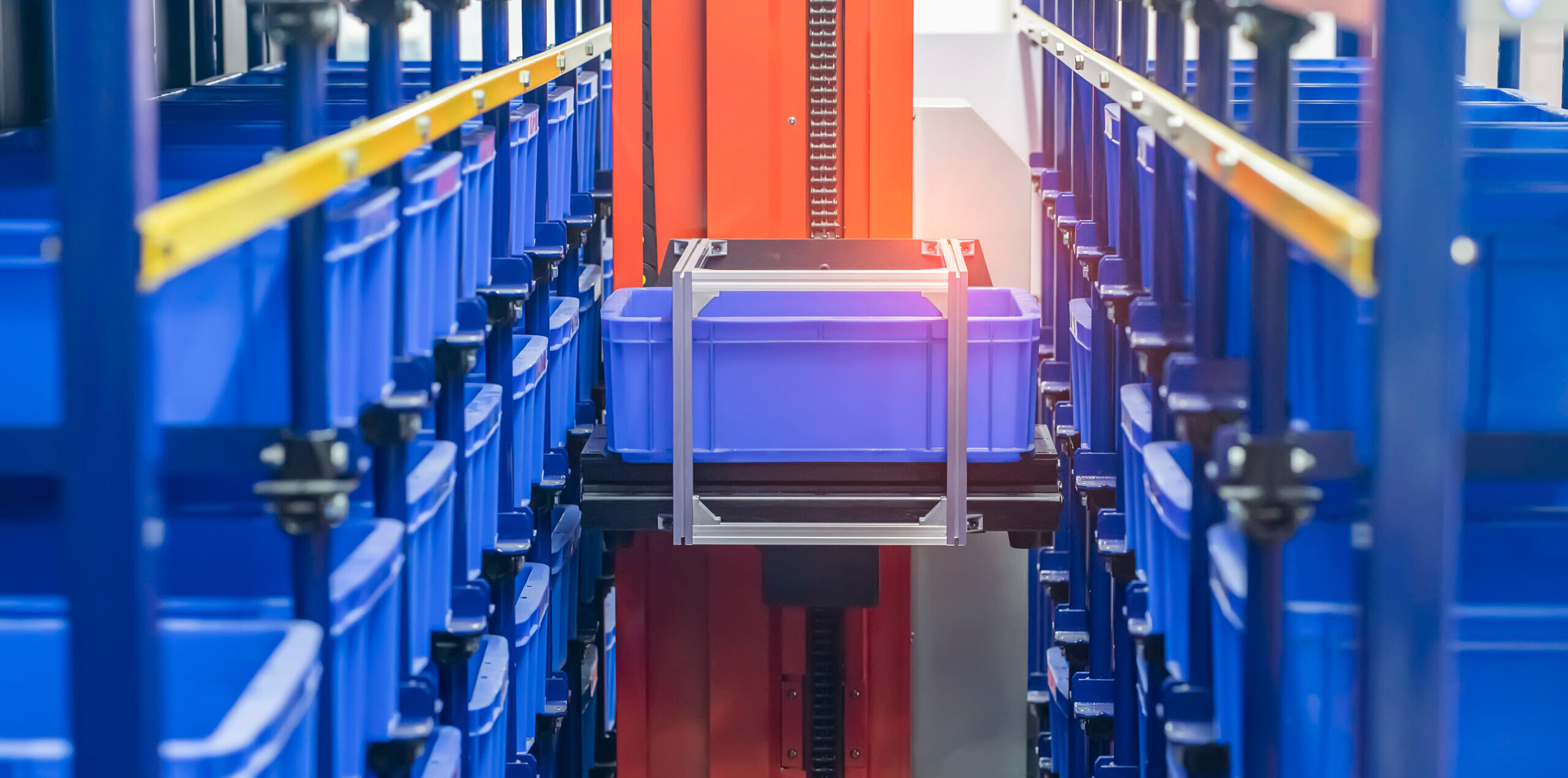
A high-speed Automated Storage and Retrieval System designed for tote, tray, or carton handling within dense rack structures. Using automated cranes or shuttle mechanisms, mini-load systems retrieve stored inventory and deliver it directly to ergonomic picking stations. This goods-to-person approach eliminates operator travel, increases picking accuracy, and supports high-throughput order fulfillment.
Mini-load ASRS solutions are well-suited for operations with consistent demand patterns, high SKU counts, and space constraints requiring vertical optimization.
What is Flexible Automation?
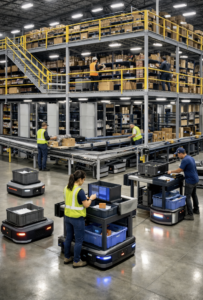
AMR Systems
Flexible automation uses mobile, modular, or software-driven technologies that can adapt to changing SKU profiles, order volumes, and facility layouts. Unlike fixed automated order-picking systems that are anchored to a defined footprint, flexible solutions are designed to scale, shift, and evolve alongside your operation.
These systems are particularly effective in dynamic fulfillment environments where seasonality, SKU expansion, or evolving customer expectations require operational agility.
Examples:
AMRs (Autonomous Mobile Robots)
AMRs are mobile robotic systems that transport inventory, carts, or completed orders throughout the facility using onboard sensors, mapping, and real-time navigation. Unlike path-dependent systems, AMRs dynamically adjust routes around obstacles and changing traffic patterns.
These systems reduce operator travel, support zone-picking strategies, and can scale quickly by adding units to the fleet — making them well-suited for evolving fulfillment environments.
Goods-to-Person Robots
Mobile robotic platforms that retrieve inventory pods, shelving units, or totes and deliver them directly to stationary picking stations.
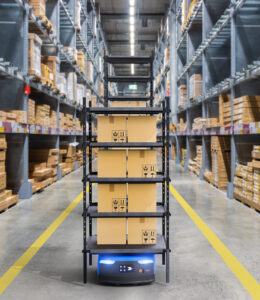
G2P Robots
This approach eliminates walking time, increases pick rates, and maintains layout flexibility. Because these systems are modular, operations can expand or contract capacity as order volumes fluctuate.
Wearable Technology (Voice & Augmented Reality)
Hands-free picking systems that guide operators through tasks using voice commands or visual overlays.
Voice-directed picking improves speed and accuracy by eliminating paper pick lists, while AR-assisted systems provide visual confirmation and training support. These technologies integrate directly with WMS platforms and are ideal for operations seeking performance gains without structural changes.

Wearable Technology
Mobile Pick-to-Light Carts
A reconfigurable picking solution that integrates illuminated pick indicators directly onto mobile cart systems. As operators move through designated pick zones, the cart provides light-directed guidance for order placement, indicating which tote or order location to pick into.
Unlike traditional pick-to-light systems mounted to static shelving, mobile pick-to-light allows pick zones to be restructured more easily as SKU counts, order profiles, or fulfillment strategies evolve, while still maintaining high accuracy and picking speed.
Fixed vs. Flexible Automated Order Picking at a Glance
Comparison Criteria |
Fixed Automation(VLMs, Horizontal Carousels, Static Pick-to-Light, Mini-Load ASRS) |
Flexible Automation(AMRs, Mobile Pick-to-Light, Wearables, G2P Bots) |
| Best Fit For | Stable SKUs and consistent order profiles | Changing SKUs and fluctuating demand |
| Throughput | High, optimized for repeatable workflows | Scalable; increases with fleet size and software optimization |
| Accuracy | Very high — guided or G2P design | High when integrated with strong WMS/WES and scanning |
| Operator Travel | Significantly reduced or eliminated | Reduced, but may still involve zone movement |
| Adaptability | Limited once installed; changes require engineering | Highly adaptable; workflows can shift quickly |
| Scalability | Expansion requires structural planning | Add robots, carts, or software licenses as needed |
| Deployment Timeline | Longer planning and installation period | Faster to deploy, especially in existing facilities |
| Upfront $$ | Higher capital investment | Often, a lower initial entry cost |
| Software Role | Integrated but hardware-driven | Heavily software-driven (WMS/WES critical) |
| Facility Impact | Requires defined footprint and layout commitment | Adapts to evolving layouts without major structural redesign |
Hybrid Order Picking: Where Stability Meets Agility
For many operations, the most effective automated order picking systems configuration isn’t fixed or flexible — it’s a purposeful combination of both.
Hybrid order picking integrates fixed automation for consistent throughput with flexible solutions that absorb variability and support growth. Supporting infrastructure connects these systems into one streamlined workflow.
What a Hybrid Picking Strategy Looks Like
A well-designed hybrid system might:
- Store high-turn inventory in a Mini-Load ASRS or VLM to maximize density and support fast, accurate goods-to-person retrieval.
- Deploy mobile pick-to-light carts or AMRs to manage seasonal or long-tail SKU profiles that require flexibility.
- Use conveyors to transport completed orders from pick stations to consolidation or pack-out.
- Implement sortation systems to direct finished orders to the correct shipping lane.
In this model:
- Fixed automation becomes the performance backbone.
- Flexible automation becomes the adaptability layer.
- Conveyors and sortation connect workflows.
- WMS/WES software orchestrates everything in real time.
Aligning Automation with Your Fulfillment Strategy
Questions to guide your planning:
- Are your SKUs stable or constantly changing?
- Do you have peak seasons that stretch your current system?
- Is your fulfillment layout fixed or evolving?
- What’s your long-term growth plan?
Apex’s automation team helps you answer these questions with tailored system design, integration, and full lifecycle support.
Automated order picking systems—fixed, flexible, or hybrid—can drive significant gains in accuracy, speed, and cost efficiency. The key is choosing the right fit for your warehouse strategy. Let’s design that future together.
Contact the Apex Automation Solutions team to get started.
