
What’s The Best Way To Optimize Your Colorado Warehouse? Strategic Warehouse Slotting!

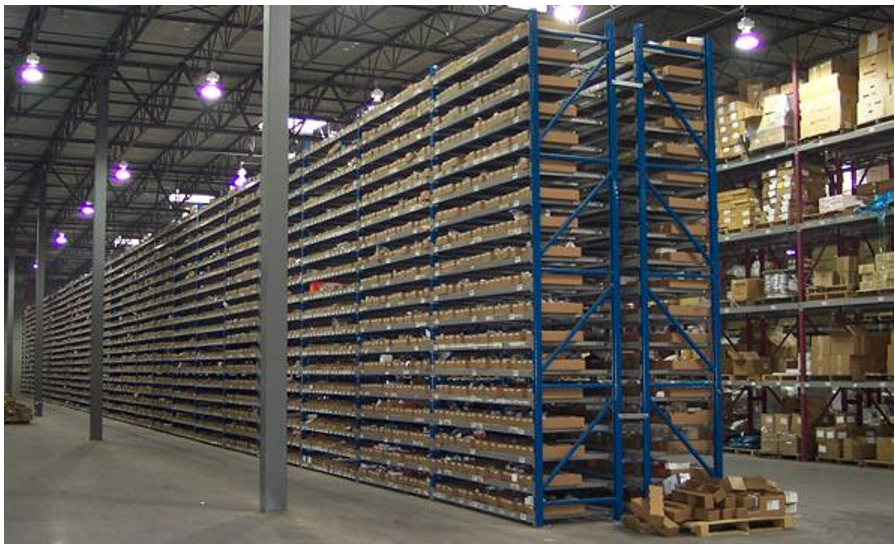
“A place for everything and everything in its place” – Benjamin Franklin
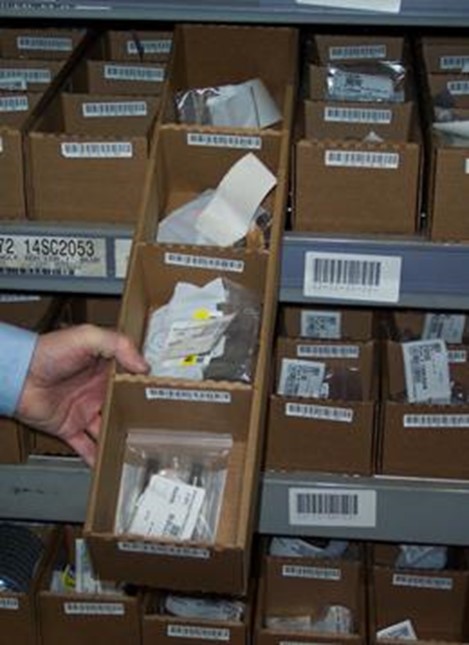
Benjamin Franklin’s age-old wisdom still rings true—especially in the fast-paced environment of modern Colorado warehouses and distribution centers. When it comes to efficiency and smart planning, strategic warehouse slotting is one of the most impactful ways to boost storage capacity, productivity, and labor effectiveness.
By aligning inventory placement with SKU movement and physical item characteristics, warehouse slotting helps you make the most of every square foot and second on the floor. With well-executed slotting, Colorado operators can reduce picker travel time, minimize search effort, and optimize both labor and space simultaneously.
What Is Warehouse Slotting?
Warehouse slotting refers to the strategic assignment of SKUs to storage locations based on how often they’re picked (velocity) and their physical size and shape (cubic movement). The goal is to use labor and space more efficiently by assigning items to the most logical locations based on frequency, volume, and handling needs.
Effective slotting considers:
- Dimensions and weight
- Stackability and fragility
- Environmental storage requirements
- Demand velocity, including seasonality and frequency
Slotting software (or manual strategies) takes these factors and determines the most logical placement for each SKU. This reduces strain on your workforce, speeds up fulfillment, and helps you get more out of your current layout—without necessarily expanding your Colorado warehouse footprint.
Why Slotting Pays Off
Labor is the most expensive part of warehouse operations. A strong slotting system can reduce labor-related costs by 15–30%, while also improving safety and productivity. Benefits include:
- Faster pick and putaway tasks
- Shorter replenishment cycles
- Even distribution of labor across zones and aisles
- Better safety for workers
- Higher storage density
- Less product damage
- Streamlined inventory control
- Faster fulfillment and stronger customer satisfaction
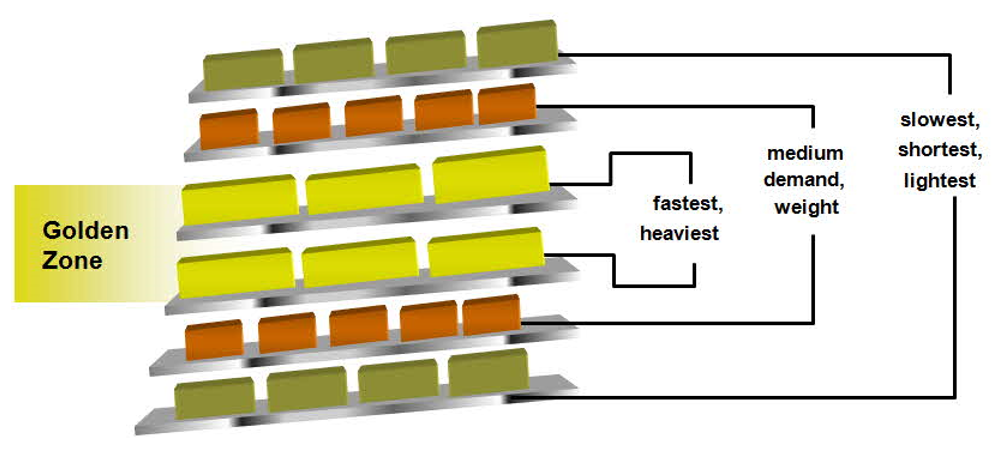
The ultimate goal is to create a Golden Zone—a zone where fast-moving SKUs are placed closest to packing stations or primary pick zones. Slower SKUs are positioned further away to reduce interference and maintain flow.
How to Implement Slotting
The complexity of your product catalog and throughput will determine how your slotting process is managed. Some Colorado warehouses can use a periodic manual approach; others benefit from a dynamic, real-time system integrated with their WMS (Warehouse Management System).
To build an effective slotting strategy, you’ll need:
- Product master data (size, weight, shape)
- Receiving history
- Order patterns
- Projected growth
- Inventory volume and storage capacity
Choosing the Right Slotting Approach
Your strategy should reflect your operational goals and product movement. Pairing slotting with a complementary picking method—such as zone, batch, or wave picking—can prevent bottlenecks and increase efficiency.
Slotting criteria may include:
- Commonality: Group items often ordered together
- Dimensions: Align items by similar size for consistent storage
- Velocity: Position high-turn SKUs in premium locations
- Cubic Volume Moved: Group by space consumed over time
- Vendor: Store by vendor line to streamline receiving
- Store Aisle Logic: Match layout to retail locations for faster restocking
Slotting examples – pick location determined by cue movement and physical item characteristics.
 Bin Boxes |
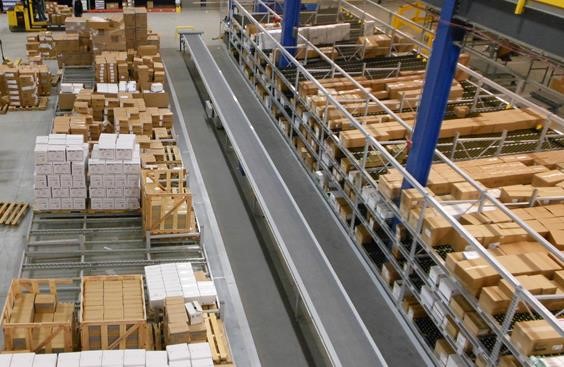 Pick Aisle – Pallet Flow (left) Carton Flow (right) |
Slotting Metrics and Variations
Several slotting models go beyond basic cube velocity to refine placement decisions. These include:
- Cube-Per-Order-Index (CPOI) – Introduced by Heskett in 1963, this metric evaluates items based on the ratio of their cubic volume to the number of order lines they appear on.
- Cube-Order-Index (COI) – Developed by Kallina in 1976, COI calculates the ratio between an item’s required storage space and how frequently it is picked or retrieved.
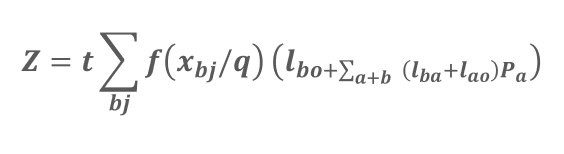
- Receipt Throughput – This metric functions similarly to pick cube throughput but focuses on inbound activity. It ranks items from A to E based on receiving volume, allowing for more efficient organization during putaway.
- Quantity Received** over “Z” time frame x Cube of Item** – Multiply the number of units received during a given period by the item’s cubic size. Including projections for upcoming purchases improves planning and slotting accuracy.
- Viscosity– Defined as the total number of picks divided by the square root of the cube volume picked, this calculation offers insight into how often an item moves relative to the space it consumes.

- Replenishments-per-Period – A high frequency of replenishment may signal that the pick location is too small for the item’s demand, pointing to a need for resizing or re-slotting to improve efficiency.

- “In Season” and “Out of Season” item velocities – These classifications help manage items with predictable seasonal demand by assigning different velocity rankings based on the time of year, ensuring appropriate slotting throughout the inventory cycle.
- For example:
XMAS7648 – Wreath SKU- In Season (Oct–Dec): Rank A
- Out of Season (Jan–Sept): Rank D
- In Season (Oct–Dec): Rank A
- For example:
- “Pick Travel” charting and “Storage Heat Maps”– These visual tools highlight inefficiencies by mapping item movement and storage activity, making it easier to spot mis-slotted SKUs and areas with excessive travel or congestion.
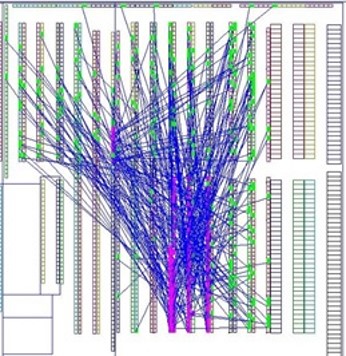 Pick Travel Chart |
 Location Heat Mapping |
Common Slotting Mistakes to Avoid

Pick-to-Light Order Picking
Like any implementation strategy, the effectiveness of a slotting plan depends entirely on the quality of your input data. Solid data leads to solid outcomes—while inaccurate or incomplete data can undermine the entire process. Keep the following factors in mind when building your slotting strategy:
- Precise item measurements – Inaccurate product dimensions will compromise your slotting results from the start.
- Skip theoretical cube-only values – Don’t rely solely on calculated cube sizes. Actual item dimensions must fit within the designated storage locations.
- Account for nesting – If items can nest, be sure to adjust the storage cube accordingly to better reflect actual space use.
- Space isn’t time – Don’t assign identical space to all SKUs; instead, allocate based on how long the pick slot should last between replenishments.
- Design for flexibility – A strong slotting system allows for changes in inventory mix, volume, and SKU velocity, supporting long-term adaptability.
- Avoid congestion – Concentrating too many fast-moving SKUs in a single zone can cause bottlenecks and reduce overall efficiency.
- Track replenishment frequency – Use replenishment data to assess whether slots are appropriately sized and placed.
- Too many – Frequent replenishment may signal slots that are too small or items with changing demand, leading to unnecessary labor.
Maintaining Effective Slotting Over Time
In material handling, one constant remains: change. Because warehouse operations are always evolving, it’s essential to revisit your slotting plan at least every 3 to 6 months. This review should incorporate reliable sales forecasts, historical trends, and any known seasonal fluctuations. A detailed slotting evaluation is also recommended following any significant operational shift—such as a facility merger, the launch of a new product line, or onboarding a major customer.
On a routine basis—monthly or even weekly, if needed—keep an eye on pick slot availability for your “A” and “B” movers. If availability drops, reassess whether certain “B” items should be downgraded to “C” status. Likewise, track activity on “C” and “D” items each month to identify those that may need to be reclassified and moved up to higher-priority locations.
Apex: Colorado’s Resource for Smart Slotting Solutions
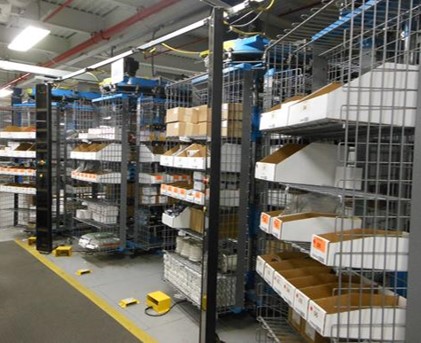
Carousel Storage Rack
Apex Warehouse Systems offers full-spectrum support for material handling and storage—from custom slotting strategies to new and used racking systems. Our experienced Colorado team starts with your data: SKU dimensions, quantities, movement, and storage needs. Then we design an approach that works with your layout, labor model, and inventory mix.
We aim to reuse as much of your current infrastructure as possible, while offering access to one of the most extensive racking inventories available in the region.
Call Apex today to discuss slotting, warehouse design, and how to get the most out of your space and staffing—especially as seasonal volume hits.
