
Understanding OSHA First Aid Requirements for Warehouses | Apex Safety Spotlight

OSHA First Aid Guidelines & Compliance for Your Warehouse
The gradual decline in reported workplace injuries in the U.S. over decades highlights our dedication to workplace safety, with numbers dropping from 3 million in 1992 to 1.8 million in 2022. However, this is no time to be complacent. Ensuring adequate medical and first aid provisions is fundamental among the regulations established by the Occupational Safety and Health Administration (OSHA). Let’s explore these requirements and how warehouses can effectively implement them to create and maintain a safe workplace.
OSHA First Aid Requirements
OSHA’s General Industry Standard 29 CFR 1910.151 instructs employers to provide adequate medical services and first aid to employees based on the nature of workplace hazards. This regulation emphasizes the importance of promptly addressing injuries and illnesses that may occur during work operations. Whether it’s a minor cut or a more serious incident, having immediate access to medical assistance can significantly mitigate risks and ensure the well-being of employees.
Establishing a Workplace First Aid Program

Warehouses should establish a comprehensive first aid program to comply with OSHA standards and enhance workplace safety. This program begins with conducting a thorough workplace hazard assessment to identify potential risks and determine the necessary first aid resources.
Designating and training employees as first aid responders is crucial, as they play a pivotal role in administering initial medical care until professional help arrives. Additionally, maintaining well-stocked first aid kits strategically placed throughout the facility ensures quick access to essential supplies during emergencies.
Key Elements of a Warehouse First Aid Kit
A well-prepared warehouse first aid kit should include a variety of essential items:
- Bandages, gauze pads, and adhesive tape for dressing wounds.
- Antiseptics and disinfectants to clean and sterilize injuries.
- CPR masks and protective gloves to ensure safe resuscitation efforts.
- Splints and cold packs for stabilizing fractures and treating injuries effectively
Regularly replenishing and inspecting these kits is essential to ensure readiness and compliance with OSHA requirements.
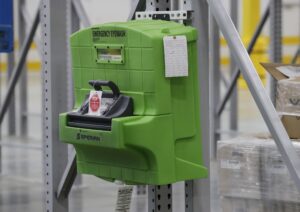
First Aid Kit Placement—To ensure quick use, Kits should be accessible on each floor/level or in each department. Ideal placement includes near personnel spaces, i.e., locker rooms or wash fountains, and by sinks for convenient handwashing before use.
In addition to First Aid Kits, wherever there is a risk of exposure to harmful corrosive materials, appropriate facilities must be available in the work area for immediate emergency use to quickly flush or drench the eyes and body.
 |
 |
Training Requirements for Safety Managers & First Aid Responders
Equally important to having the right supplies is ensuring that designated first aid responders are adequately trained. OSHA mandates training in CPR, basic first aid procedures, and the proper use of first aid equipment.
Trained first responders should be able to address the following:
- Cuts and bleeding
- Fire or chemical burns
- Crush injuries
- Fractures
- Cardiac arrest
Training sessions should be conducted periodically to refresh skills and knowledge, ensuring responders are prepared to handle emergencies effectively. Documenting these training sessions and maintaining certification records is not only a regulatory requirement but also a critical part of maintaining a safe and compliant workplace environment.
Integrating First Aid Preparedness into Warehouse Safety Culture

Creating a safety and first aid readiness culture involves more than just meeting regulatory standards—it requires ongoing commitment and employee participation.
 Regular safety meetings, emergency response drills, and encouraging open communication about safety concerns foster a proactive approach to workplace safety. Recognizing and rewarding employees for their safety initiatives and compliance efforts further reinforces a positive safety culture where everyone feels responsible for their well-being and that of their colleagues.
By implementing a robust first aid program, providing adequate training to responders, and integrating safety practices into everyday operations, warehouses can effectively mitigate risks and enhance workplace safety.
Rack Repair App & Ensuring Safe Pallet Rack Operations
Pallet rack safety and first aid readiness are critical for warehouse operations, ensuring a safe environment. Apex Companies’ Rack Repair App supports a ‘safety first’ culture by enabling proactive management of rack safety through regular inspections and prompt reporting.
Download the Rack Repair App for free to conduct your rack inspections.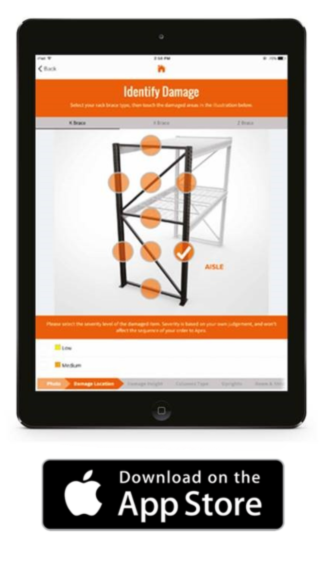
The user-friendly interface simplifies identifying and recording rack damage, with data swiftly evaluated by certified Apex PROs. Photos and critical rack specs are easily captured via drop-down menus. After inspection, simply upload your data to the Apex PROs for prompt evaluation and repair recommendations.
Alternatively, you can hire the Apex PROs for comprehensive rack assessments. Our certified rack inspectors conduct thorough on-site audits and safety evaluations. This proactive approach meets OSHA guidelines and enhances workplace safety, efficiency, and employee morale.
For personalized assistance with your warehouse safety needs, contact Apex Companies.
Download the Rack Repair App Free on App Store
Stay informed about the latest safety tips –Follow Apex on social media.
 |
 |
 |
 |
