
THE TOP WAREHOUSE AUTOMATION TRENDS FOR 2025

THE FUTURE OF AUTOMATED WAREHOUSING IS NOW
The automated warehouse equipment market reached $29.6 billion in 2024 and is projected to grow to $60.04 billion by 2031. This surge is fueled largely by advancements in automated technologies, including automated guided vehicles (AGVs), autonomous mobile robots (AMRs), conveyors, picking systems, pallet shuttles, artificial intelligence (AI), and collaborative robots (cobots). These innovations are not just on the horizon—they are actively reshaping warehouse operations today.
As businesses prepare for this wave of automation, understanding the key trends and their impact is essential. Identifying the right partners to implement these technologies effectively is crucial, ensuring success for your warehouse and delivering value to your customers.
WAREHOUSE AUTOMATION TREND #1:

AUTOMATED FORKLIFT TECHNOLOGY WILL INCREASE EFFICIENCY & SAFETY
Without question, most facilities are currently encountering two primary issues: labor shortages and increasing demand for fulfillment. To counter these two issues, warehouse operators are turning to technology such as automated guided vehicles (AGVs) and automated forklifts.
The automated forklift market is predicted to rise from $0.69 billion in 2024 to $1.52 billion in 2032. As the market’s value continues to boom, the following technologies are expected to advance consistently, enabling your warehouse to potentially increase its efficiency to levels it likely hasn’t before.
- Customized, Integrated Masts and Attachments: Manufacturers are developing automated forklifts with customized masts and attachments tailored to specific warehouse needs, enhancing operational efficiency and flexibility.
- Safety, Safety, Safety: The safety features of automated forklifts are evolving, incorporating technologies like geo-guidance and LiDAR (light sensing) navigation, along with smart sensors and cameras for obstacle detection.
- Sustainability is the Name of the Game: Automated forklifts using different technologies to extend battery life, such as: lithium-ion batteries, solar panels, and regenerative braking to reduce carbon footprints.
- Two Operating Modes: Many automated forklifts feature manual and autonomous modes that can be easily switched, providing versatility in operation.
WAREHOUSE AUTOMATION TREND #2:
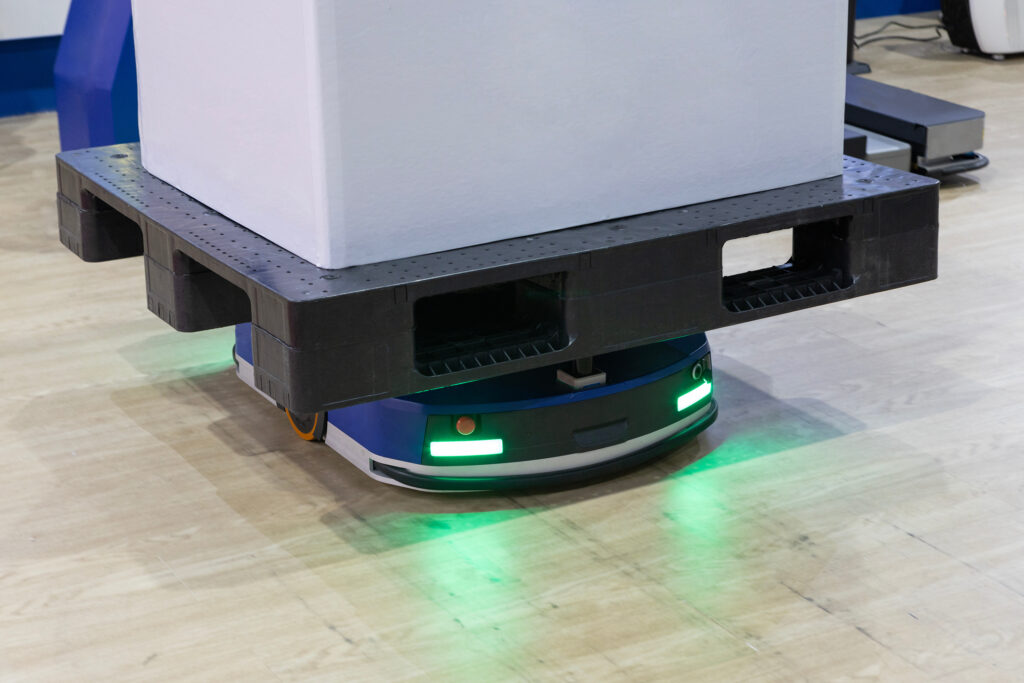
AUTONOMOUS MOBILE ROBOTS’ POPULARITY WILL STEADILY RISE
While automated forklifts play a crucial role in warehouse operations, certain tasks demand more agile solutions. Enter the autonomous mobile robot (AMR). These compact yet powerful robots have gained popularity, with a predicted market value of $4.1 billion by 2028.
Continuous innovation in AMR technology enhances functionality, ensures consistent performance, and improves usability. These advancements are not only boosting warehousing productivity but also revolutionizing logistics management.
- 5G Connectivity: Integrating AMRs with 5G enhances communication speed and reliability, reducing injuries and errors in warehouses.
- Adaptive Fieldset Technology: AMRs are adopting adaptive fieldset technology for improved visibility and maneuverability, allowing for faster and safer navigation without unnecessary stops.
- Cyber Security: To combat rising cyber threats, AMRs are increasingly equipped with advanced cyber security features to protect against vulnerabilities.
- Rerouting Capabilities: Enhanced rerouting capabilities enable AMRs to navigate alternative paths when obstacles arise, ensuring continuous task completion.
- Steadily Advancing Sensors: Traditional navigation technologies like LiDAR continue to evolve and improve AMR accuracy and safety.
- Swarm Robotics: The implementation of swarm robotics, where multiple AMRs collaborate and share data, is expected to increase efficiency on warehouse floors.
WAREHOUSE AUTOMATION TREND #3:
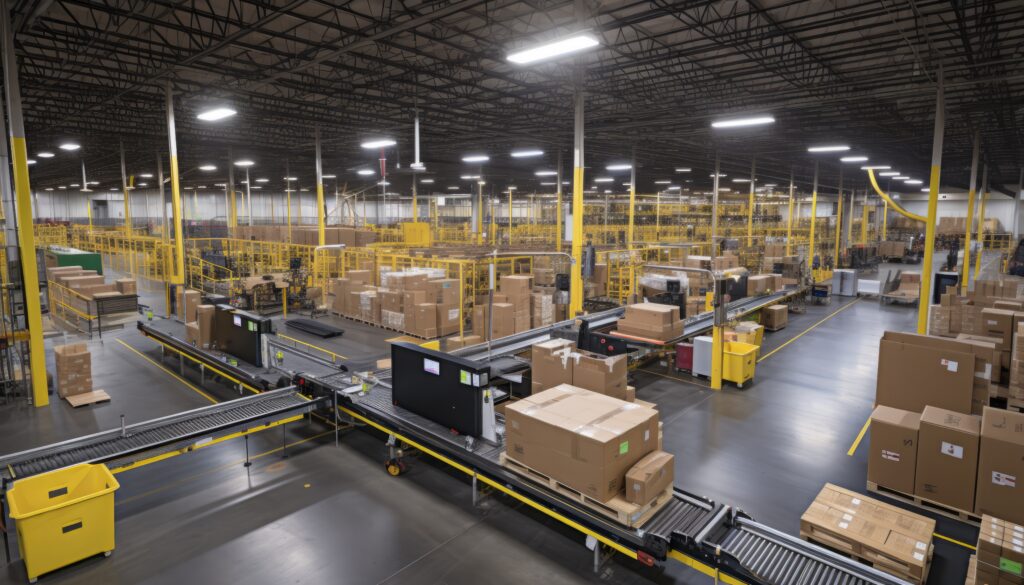
NEW AUTOMATED CONVEYOR FEATURES WILL ENHANCE MODULARITY AND SUSTAINABILITY
As robotic equipment continues to transform warehousing operations, technologically enhanced conveyors play a crucial supporting role. The automated conveyor market is projected to grow from $10.4 billion in 2024 to $14.8 billion by 2030, reflecting a compound annual growth rate (CAGR) of 6%. Designed to integrate seamlessly with robotic systems in warehouses, conveyors are evolving with new and advanced features, driving their increasing popularity.
- Environmental Friendliness: Newer automated conveyors feature energy-efficient motors, lower friction bearings, and variable speed drives, enhancing sustainability.
- Maintenance Enhancements: Automated belt-cleaning technology improves safety by preventing contact between blades and belts, extending equipment lifespan and reducing injury risks.
- Modularity: Many automated conveyors now use modular designs with pre-programmed controls, allowing for faster installation and high efficiency in transporting thousands of bins per hour.
- Sensors and AI Integrations: Advances in sensor technology will enable automated conveyors to detect obstacles and optimize item transportation for greater efficiency.
WAREHOUSE AUTOMATION TREND #4:

PICKING TECHNOLOGY WILL CONTINUE TO EVOLVE
The global industrial vision systems market is poised for steady growth. According to Verified Market Research, it is projected to reach $25.85 billion by 2031 with a compound annual growth rate (CAGR) of 8.53%. Within this market, vision-picking technology is advancing rapidly, driven by the increasing demand to optimize warehouse operations amidst shrinking labor resources.
As robotic equipment evolves to meet these challenges, innovations in augmented reality (AR), hands-free heads-up displays (HUDs), virtual reality (VR), and robotic arm picking are transforming how warehouses manage inventory and streamline fulfillment processes. These technologies promise not only enhanced efficiency and accuracy but also pave the way for scalable automation solutions that reduce operational costs.
- Augmented reality. Smart glasses enhance SKU location, improving pick rates and accuracy by facilitating precise identification and quantity selection.
- Hands-free advancements. Vision-picking solutions also rely on heads-up displays (HUDs) more than ever before, allowing a completely hands-free experience. Used alongside vision-picking software, the small HUDs free up workers’ hands for other tasks, resulting in greater efficiency.
- Virtual Reality: Virtual reality (VR) technology enhances picking capabilities by providing real and virtual imagery through headsets, leading to fewer errors and minimizing distractions during tasks.
- Robotic Arm Picking: Robotic arm picking offers a fully automated alternative to human picking. It uses advanced sensors and vision systems for precise item handling. By employing machine learning and real-time data analysis, these robotic arms can adapt to various product shapes and sizes, improving efficiency and reducing operational costs.
WAREHOUSE AUTOMATION TREND #5:

NEW PALLET SHUTTLE TECHNOLOGIES WILL BOOST PRODUCTIVITY & FLEXIBILITY
As we look toward 2030, the multi-directional pallet shuttle market is set to reach $772.8 million, fueled by a remarkable CAGR of 28.3%. Pallet shuttles operate within a high-density racking structure to place and extract inventory. As an automated storage and retrieval system (ASRS), pallet shuttles not only enhance efficiency but also handle high volumes of goods swiftly, supporting centralized operations while optimizing space. While pallet shuttles have been operating for several decades, technological advancements and strict safety code regulations have boosted interest in these systems.
- The Pallet Shuttle in 3D: The 3D pallet shuttle is an autonomous system that efficiently stores and retrieves pallets from racking structures, operating independently without additional material handling vehicles. Integrated lifts carry shuttles from one level to the next within the system.
- Fire Code Compliance: Recent fire code updates require specific spacing between pallets in high-density racking. Pallet shuttles address this by being programmable to maintain the required spacing, ensuring compliance without redesigning the rack structure.
WAREHOUSE AUTOMATION TREND #6:

Predictive Precision: AI and Machine Learning Integration
As warehouses embrace advanced automation, integrating artificial intelligence (AI) and machine learning (ML) algorithms becomes increasingly vital. These technologies optimize operations through predictive maintenance, demand forecasting, and dynamic inventory management. The adoption of AI and ML in warehousing and distribution facilities significantly enhances day-to-day operations, leading to greater efficiency and productivity.
AI and Machine learning can affect:
- Predictive Maintenance: AI can analyze equipment sensor data to predict maintenance needs before failures occur. This proactive approach minimizes downtime and reduces the likelihood of costly equipment breakdowns, thereby optimizing operational continuity.
- Demand Forecasting: AI algorithms can analyze historical data, market trends, and other variables to forecast demand more accurately. This capability helps warehouses adjust inventory levels in real time, ensuring optimal stock availability while minimizing excess inventory or stockouts.
- Dynamic Inventory Management: AI-driven inventory management systems can continuously optimize stock levels and warehouse layouts based on factors like order history, seasonal trends, and even weather forecasts. This dynamic approach improves efficiency in picking and packing processes, reducing fulfillment times and costs.
- Labor Optimization: AI can assist in workforce management by predicting peak periods and optimizing staffing schedules accordingly. This ensures that warehouses have the right number of workers at the right times, enhancing productivity and reducing labor costs.
- Data-Driven Decision Making: With AI-generated insights, warehouse managers can make data-driven decisions more confidently. They can identify trends, inefficiencies, and opportunities for improvement, allowing for continuous refinement of operational strategies.
- Scalability and Flexibility: AI systems can adapt to changes in demand and operational needs more quickly than traditional methods. This scalability and flexibility are crucial for handling peak seasons or unexpected fluctuations in business activity.
WAREHOUSE AUTOMATION TREND #7:
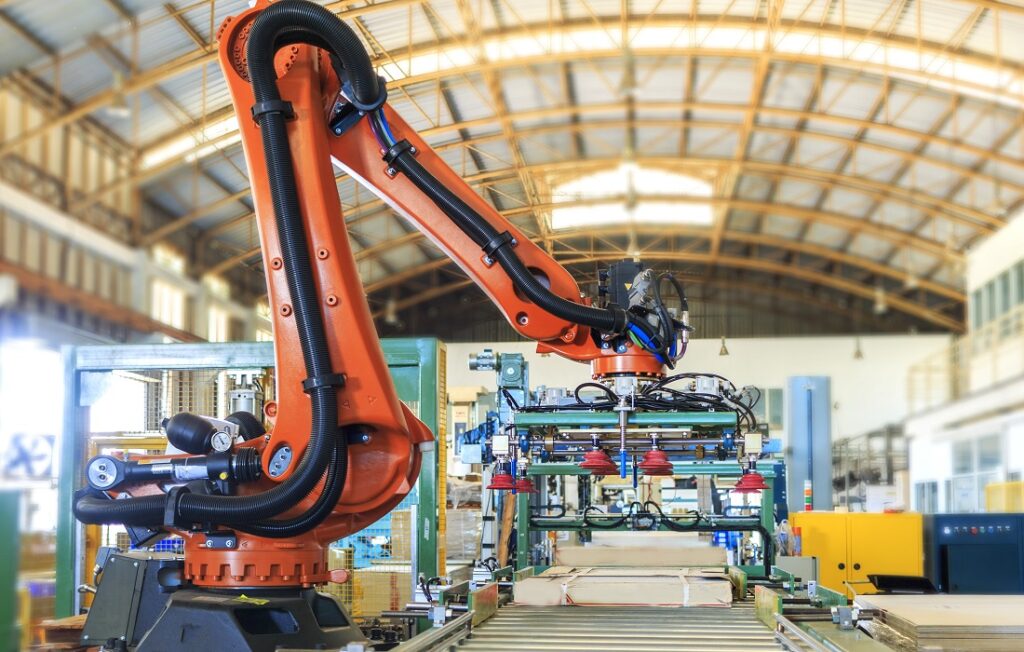
Collaborative Robots – “Cobots”
Collaborative robots, or cobots, are revolutionizing the warehousing and distribution industry with enhanced capabilities and safety features. Designed to work alongside humans, cobots prioritize safety by integrating advanced sensors and collision detection systems, minimizing risks in dynamic industrial environments. This collaboration increases productivity without compromising worker safety, which is crucial in today’s operational landscape.
Flexibility: Cobots are highly adaptable to various tasks, such as picking, packing, palletizing, and sorting, allowing for quick redeployment with minimal reprogramming. This agility enhances operational processes and responsiveness to changing demands.
- Space Efficiency: Their compact size and versatile mounting options optimize floor space utilization, enabling warehouses to maximize storage capacity without expanding their footprint and reducing space management costs.
- Cost-Effectiveness: Cobots require lower initial investments and operational costs than traditional industrial robots, thanks to simpler maintenance and energy efficiency. This makes automation accessible to smaller warehousing operations.
- Flexibility: Cobots quickly adapt to various tasks such as picking, packing, palletizing, and sorting, allowing quick redeployment with minimal reprogramming. This agility enhances operational efficiency and responsiveness to changing demands.
- Space Efficiency: Their compact size and versatile mounting options optimize floor space utilization, helping warehouses maximize storage capacity without expanding their footprint and reducing space management costs.
- Cost-Effectiveness: Cobots require lower initial investments and operational costs than traditional industrial robots, thanks to simpler maintenance and energy efficiency. This makes automation accessible for smaller warehousing operations.
WAREHOUSE AUTOMATION TREND #8:

Here Come the Drones
The rapid evolution of drone technology is paving the way for exciting possibilities in warehousing and distribution.
Drones are being increasingly used for tasks such as inventory management, where they excel in conducting rapid and accurate cycle counts. This capability not only enhances inventory accuracy but also boosts operational efficiency by reducing the time and manpower traditionally required for these tasks. Furthermore, drones offer potential applications beyond inventory, such as monitoring warehouse facilities, inspecting hard-to-reach areas, and even assisting in the retrieval and transportation of goods within warehouses. As technology continues to advance, drones are poised to play a pivotal role in optimizing logistics operations, offering substantial benefits in terms of cost-effectiveness and operational agility.
What We Could See from Drone Technolgy:
- Efficient Inventory Management: Conducting rapid and accurate cycle counts.
- Operational Agility: Facilitating quick and flexible response to inventory needs.
- Cost Savings: Reducing labor costs associated with manual inventory checks.
- Safety Improvement: Inspecting hard-to-reach or hazardous areas without endangering personnel.
- Enhanced Monitoring: Monitoring warehouse facilities and infrastructure for maintenance needs.
As drones take flight in logistics activities, they are poised to revolutionize the warehousing and distribution sector, ensuring an exciting future for the industry.
YOUR SOLUTION FOR WAREHOUSE AUTOMATION
The future of warehouse automation has unmistakably arrived, highlighted by the significant technological advancements noted above. These innovations continually enhance speed, efficiency, accuracy, tracking, and safety.
Now is the ideal time to explore solutions that align with your forecasted goals, and Apex is here to assist you every step of the way. Each warehouse automation solution is meticulously tailored to your specific requirements and driven by Apex’s comprehensive data analysis. Our vendor-agnostic approach ensures that the solution offered is the best fit for your precise goals.
Contact Apex today for a complimentary consultation. Embrace the future of automation, ensuring your warehouse is fully equipped for 2025 and beyond with Apex as your trusted automation partner!
