
Stacking or Racking — Defining Your Best Options for Super Sack Storage?

From Floor Stacking to Automated Systems –Tips for Choosing the Best Super Sack Storage
In a manufacturing facility or warehouse, space and time are always at a premium. How you store materials can make or break your operation’s efficiency and productivity. While standard-sized packed materials have plenty of storage solutions, bulk bags—better known as super sacks or Flexible Intermediate Bulk Containers (FIBCs)—introduce a whole new set of challenges. Their size and shape, while offering great storage capacity, can also be a source of instability.
These oversized, flexible containers are the unsung heroes of bulk material storage, indispensable for everything from food products to chemicals and construction materials. Super sacks are not only cost-effective but also versatile, allowing you to maximize storage space while minimizing the need for smaller, less efficient containers.
Yet, their very design—tall, flexible, and bulky—poses unique challenges in storage. Keeping these sacks stable, secure, and damage-free is no small feat. So, how do you make the most of this storage powerhouse? Let’s dive into the top storage solutions and essential design considerations to help you choose the best option for your facility.
Super Sack Storage Solutions
- Floor Stacking
- Selective Pallet Rack
- Drive-In Rack
- Pallet Flow Rack
- Automated Storage & Retrieval Systems
Floor Stacking
Floor stacking is the simplest and most cost-effective method for storing super sacks. It involves placing sacks directly on the warehouse floor, often in organized stacks. However, space efficiency, safety, and inventory integrity are important considerations.
Design Considerations:
Warehouse Layout and Space Allocation: Careful planning of the warehouse layout is essential to optimize space when using floor stacking, ensuring safe access to and movement around the stacks. If a bag on the bottom of the stack is struck by equipment or pierced with a fork, all bags above and to the side must be removed before addressing the damaged/spilled materials.
Stacking Height Limitations
The height at which sacks can be safely stacked depends on the weight and stability of the materials. Overstacking can lead to instability and potential damage to the sacks or their contents.
Stack options
- Free stacking –bags placed directly on each other.
- Pyramid style – each bag sits on at least 4 bags below, and or smaller bags are placed above larger ones below.
- Supported stacking – where bags are placed against a wall rated to handle the weight.
Accessibility and Material Flow
While floor stacking is cost-effective, it may limit accessibility to individual sacks, especially in large stacks. Floor stacking is essentially a LIFO (Last-In/First-Out) inventory rotation, as the bottom bags cannot be accessed unless the top-level bags are removed. Therefore, it is not recommended for perishable inventory.
Selective Pallet Racking Systems
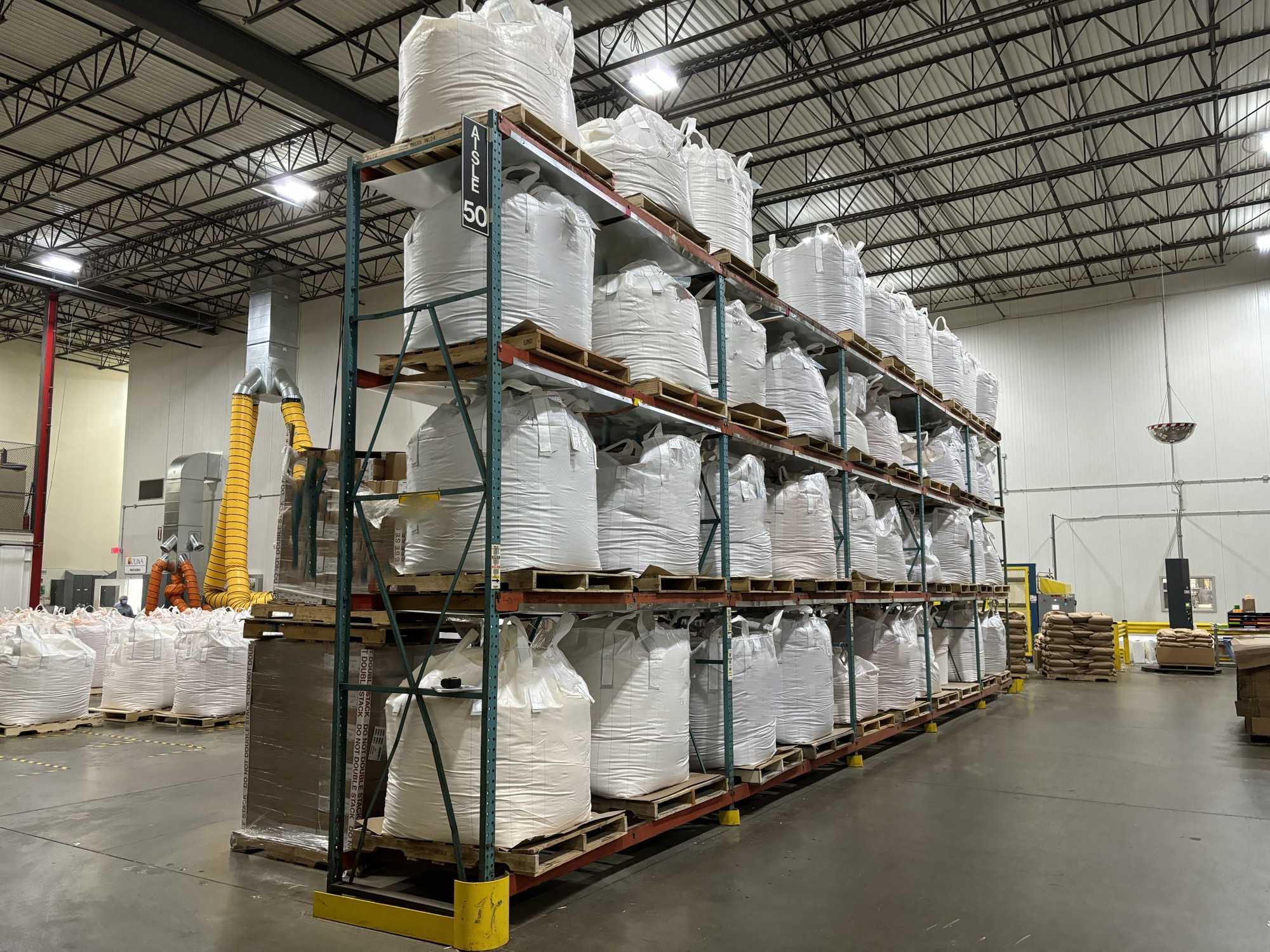
Selective pallet rack is a widely used warehouse solution, and can be easily adapted to accommodate the specific needs of super sack storage. These systems involve the use of horizontal beams and vertical frames to create multiple levels of storage, allowing for efficient use of vertical space.
Design Considerations:
Weight Capacity and Load Distribution:
Point loading is a concern when storing super sacks in Selective or any of the rack systems listed below. Point loading occurs when the load is concentrated on a small area of the racking system, which can lead to structural damage or failure of the racks. Depending on how they are filled and placed, super sacks can create uneven load distribution, primarily if the pallet or racking system does not fully support the sacks. Here are a few considerations to avoid point loading in super sack storage:
- Even Load Distribution: It’s essential to ensure that the weight of the super sacks is evenly distributed across the pallet and the racking system. This may involve using pallets that provide full coverage under the sacks or adding support boards to prevent sagging or uneven pressure points.
- Rack Design and Capacity: The racking system must handle the specific loads imposed by super sacks without risk of bending or collapsing.
- Pallet Quality: The quality and condition of the pallets used for storing super sacks are also crucial. Pallets should be in good condition, with no broken or missing slats, to prevent point-loading issues.
- Regular Inspections: Regular inspections of the racking system can help identify any signs of stress or damage caused by point loading. Early detection allows for prompt corrective actions, such as redistributing loads or reinforcing the racking structure.
Accessibility for Forklifts and Handling Equipment
The design should allow for easy access to super sacks by forklifts or other handling equipment, ensuring sufficient aisle width and clearance for safe maneuvering.
Vertical Space Optimization
Maximize the use of vertical space by stacking super sacks in multiple tiers. However, it’s essential to balance this with safety considerations, ensuring that the racks are stable and the sacks are secure.
Drive-In/Drive-Through Racking
Drive-in and drive-through racking systems are high-density storage solutions ideal for storing large quantities of super sacks. These systems allow forklifts to drive directly into the deep storage rack lanes to access the stored materials, making them efficient for high-volume inventory.
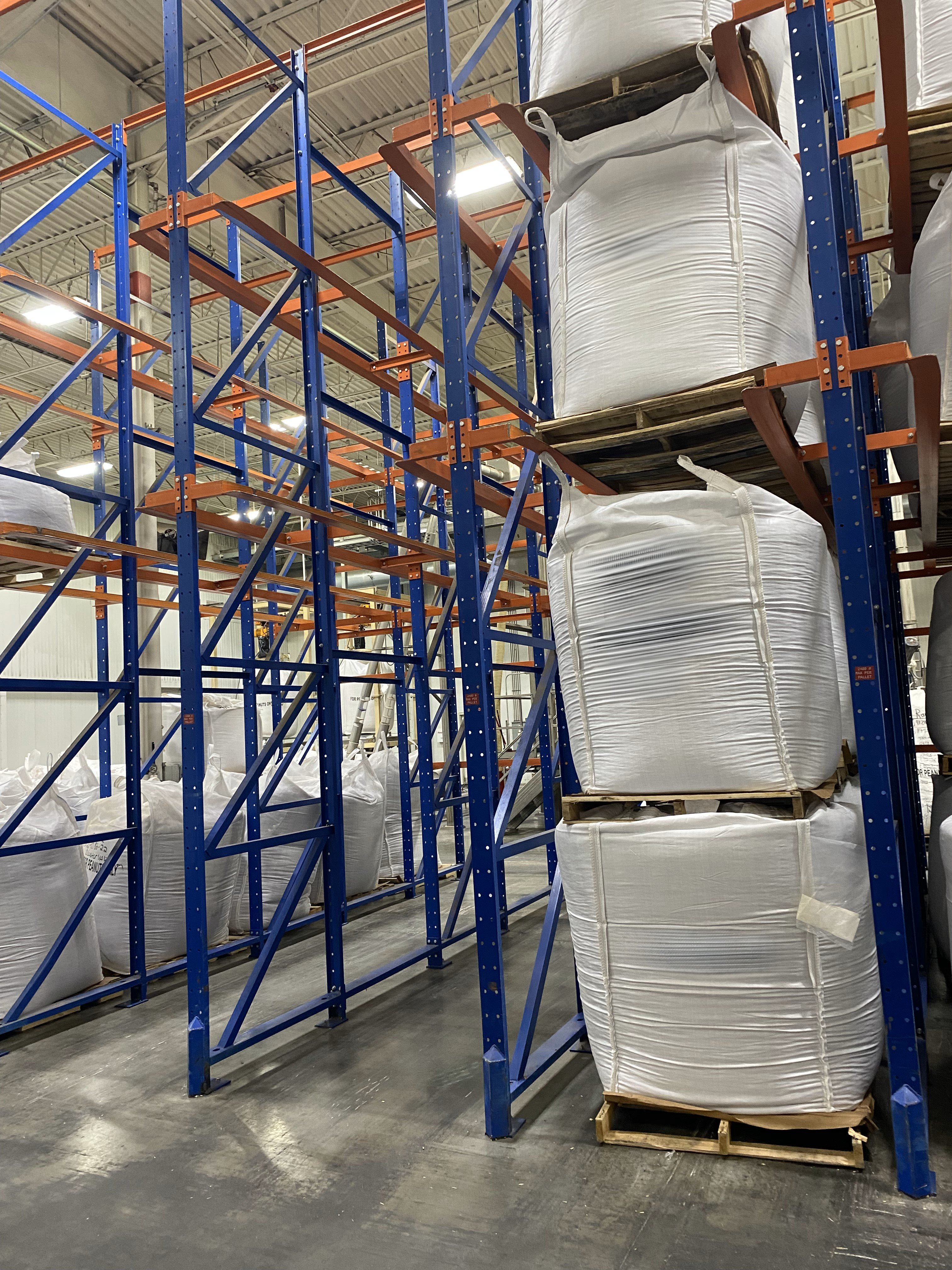 Design Considerations:
Maximizing Floor Space
These high-density storage systems maximize space by consolidating pallet storage with minimal dedicated aisle space. Drive-in is ideal in warehouses with limited floor space but significant vertical capacity.
Ensure Even Load Distribution
It’s crucial that the pallets used in the drive-in racking system are the same size and the load weight is evenly distributed across each pallet. This helps prevent point loading and avoids creating unstable loads that could compromise the racking system’s stability.
Managing Inventory Rotation (LIFO/FIFO)
Drive-in racking typically operates on a LIFO basis, while drive-through systems can support First-In/First-Out (FIFO) rotation. Choosing between these methods depends on the specific inventory management needs of the operation.
Safety and Structural Integrity Under Heavy Loads
Given the weight of super sacks, it’s crucial to ensure that the racking system is rated to handle the capacity and that the pallets are all the same size and in good or very good condition. A broken pallet can lead to a sack dropping from the rack structure. Regular inspections and maintenance are necessary to prevent accidents.
Pallet Flow Rack

Pallet flow rack is a type of gravity flow system that uses a series of rollers or wheels set at a slight pitch to move pallets from a loading point down to the opposite extraction point. As a pallet is removed, the next pallet automatically advances to the front, ensuring seamless FIFO inventory rotation. This system is particularly well-suited for the storage of super sacks because it combines high-density storage with easy access and efficient inventory management.
Design Considerations:
Ensure Even Load Distribution
Avoid point loading in pallet flow rack –ensure even weight distribution across the pallet to support system stability and reliable flow.
Durability and Load-Bearing Capacity
The pallet flow rack must be designed to handle the significant weight of super sacks, which can be as much as 2,500 lbs. per sack. The rollers or wheels should be robust enough to support these loads over extended periods without warping or degradation.
Space Utilization and Density
Pallet flow rack maximizes both vertical and horizontal space by eliminating the need for wide aisles between rows. This dense storage capability is especially beneficial in warehouses where space is at a premium.
FIFO or LIFO Inventory Rotation
One of the key advantages of pallet flow racks is their ability to support FIFO inventory management… or LIFO if the system is designed using a single aisle access point and pushback rather than flow-down pallet movement. Pallet flow is often a go-to for industries like food processing and pharmaceuticals, where product freshness and compliance with expiration dates are critical.
Ease of Access and Handling
Despite the high-density nature of pallet flow racks, they offer straightforward access to super sacks. Forklifts can quickly load and unload pallets from the racks, reducing handling time and increasing efficiency.
Safety and Structural Integrity
Given the heavy loads and continuous movement involved, it is crucial to ensure that the pallet flow system is structurally sound and equipped with safety features to prevent accidents. Regular maintenance and inspections are necessary to keep the system functioning smoothly.
Automated Storage and Retrieval Systems

Automated Storage and Retrieval Systems (ASRS) are advanced solutions for warehouses that require high throughput and efficient material handling. These systems use automated machinery to store and retrieve super sacks, often integrating with warehouse management systems (WMS) for seamless operation.
Design Considerations:
Maintain Even Load Distribution
It’s vital to ensure that the weight of the super sacks is evenly balanced across the pallet to maintain stability and prevent operational issues.
Integration with WMS
For optimal efficiency, ASRS should be fully integrated with the warehouse’s WMS. This integration allows for optimal space use, real-time inventory tracking, automated retrieval, and reduced manual intervention.
Initial Cost vs. Long-Term Efficiency Gains
While the initial investment in ASRS can be significant, the long-term benefits often include increased efficiency, reduced labor costs, and improved inventory accuracy. Careful consideration of these factors is essential when deciding whether to implement an automated storage solution.
Space Utilization and Reduction of Manual Labor
ASRS maximizes space utilization by storing super sacks in highly compact configurations, often reaching heights that manual stacking cannot achieve. Additionally, the automation significantly reduces the need for manual labor, improving both speed and safety in the warehouse.
5 Key Factors for Warehouse Storage Solutions
- Safety
- Space Utilization
- Accessibility
- Scalability
- Cost Considerations
1. Safety
Adhering to industry safety standards is crucial for minimizing warehouse risks. These regulations cover the design, installation, and safe handling of racking systems and materials. Regular safety audits and inspections help maintain compliance.
Racking systems have specific load limits to prevent structural failure. It’s essential to know the full weight of super sacks and ensure the racks can support them safely. Load plaques detailing the rack’s load design should be mounted on the rack system for easy access.
Proper stacking and secure placement of super sacks prevent accidents –i.e., even distribution, avoiding overstacking, and ensuring sacks are fastened if needed. Clear guidelines and personnel training further reduce accident risks.
2. Space Utilization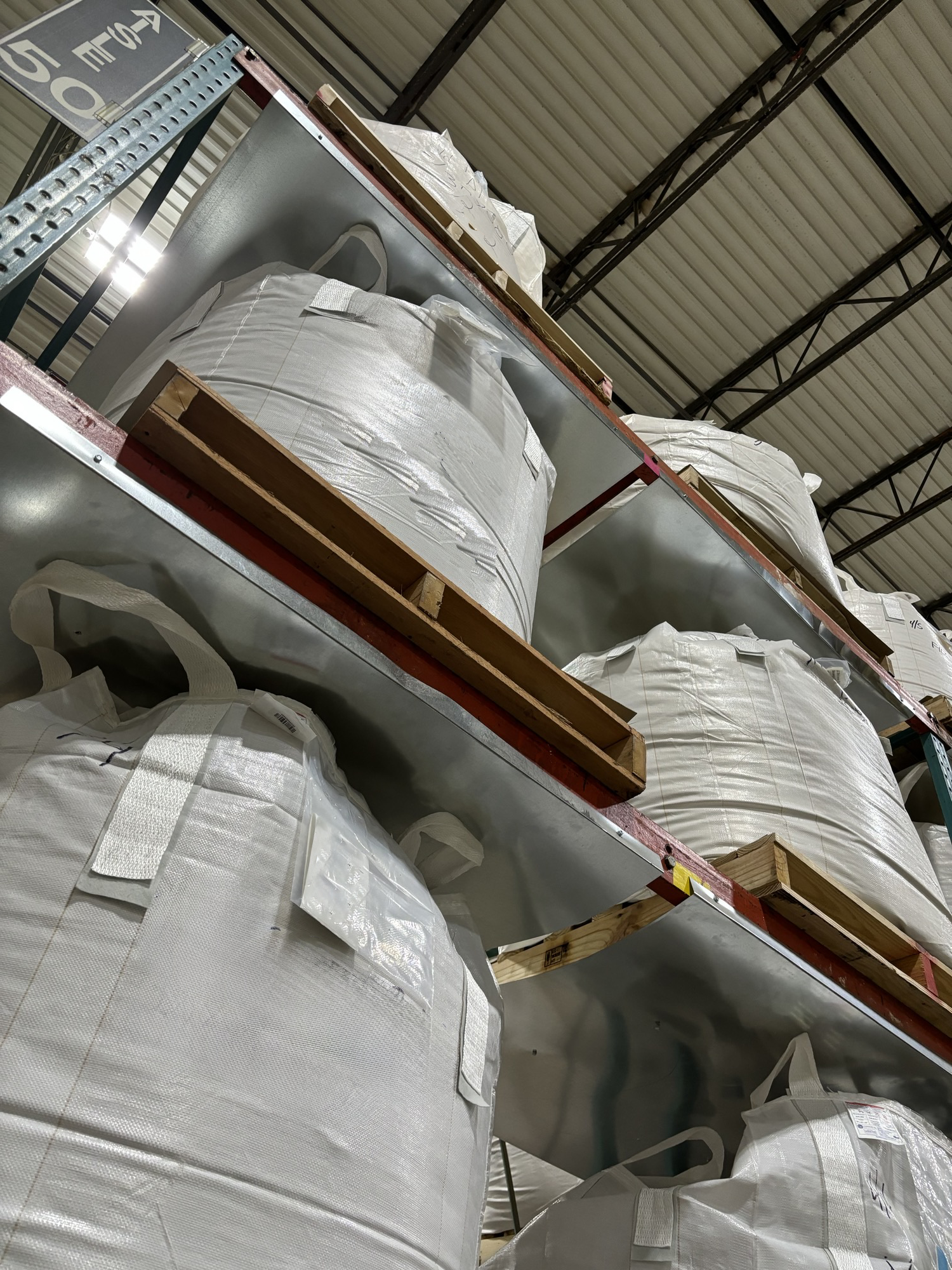
Maximizing warehouse space is crucial for operational efficiency. This involves optimizing both horizontal and vertical storage to accommodate as many super sacks as possible while maintaining safety and accessibility. Vertical storage increases capacity but can present challenges in access and safety, so it’s important to balance space use based on the warehouse’s height, available equipment, and the nature of the stored materials.
3. Accessibility
Ensure that materials can be retrieved and replenished quickly and efficiently. The storage system should allow easy access to super sacks without excessive movement or rearrangement. This involves strategic placement of storage racks, efficient organization of goods, and ensuring clear pathways for forklifts and other handling equipment. The goal is to reduce unnecessary movement and streamline the process of retrieving and storing super sacks.
4. Scalability
Scalability ensures that the warehouse can adapt to future changes in inventory levels and business growth without requiring a complete overhaul of the storage system. This can include leaving room for additional racking systems, incorporating storage options that are reconfiguration-friendly, and ensuring that the warehouse layout can accommodate increased traffic and larger volumes of materials.
5. Cost Considerations
Balancing initial investment with long-term operational costs is key when choosing warehouse storage solutions. While some systems, like automated storage, may have higher upfront costs, they offer long-term savings through increased efficiency and reduced labor. It’s important to weigh these benefits against the initial expense.
However, cost considerations shouldn’t compromise safety or efficiency. Choosing the cheapest option may save money initially, but a well-designed system that meets safety standards can prevent costly accidents and downtime.
Regular maintenance is also crucial to prevent structural failures. Designing storage infrastructure to minimize damage from handling equipment, using guardrails, and considering automation can further enhance safety and efficiency.
Expert Guidance for Optimizing Your Super Sack Storage Solutions
Super sacks are super convenient and adaptable in storing a wide range of materials, making them an economical, efficient solution for a diverse range of inventory. Whether you opt for floor stacking, selective pallet racking, drive-in racking, pallet flow racks, or advanced automated systems, each method offers distinct advantages and considerations. The key is to balance your specific needs—such as space utilization, inventory rotation, safety, and cost efficiency—against the capabilities of each storage solution.
Contact the Apex team for a thorough examination of your inventory and operation to determine the best solution for your needs. We offer full-service support from design and engineering through installation and that ever-significant rack inspection! Call today to speak with our experts!
