
Rust Never Rests: Protecting Your Pallet Rack in the Carolinas

How to Prevent Corrosion and Keep Your Pallet Racking Strong
As Kryptonite is to Superman, rust can silently compromise even the toughest steel pallet racking. While your Carolina warehouse racking might withstand the occasional forklift bump, rust is the real threat that can gradually weaken its integrity. The best way to protect your system is to stop rust before it starts—or better yet, prevent it entirely.
Rust develops when moisture settles on steel components, eventually eating away at the material. In some warehouse environments, avoiding moisture exposure is nearly impossible. That’s why the first line of defense is a durable, water-resistant coating that shields your racking from corrosion.
Step 1: Apply a Protective Coating
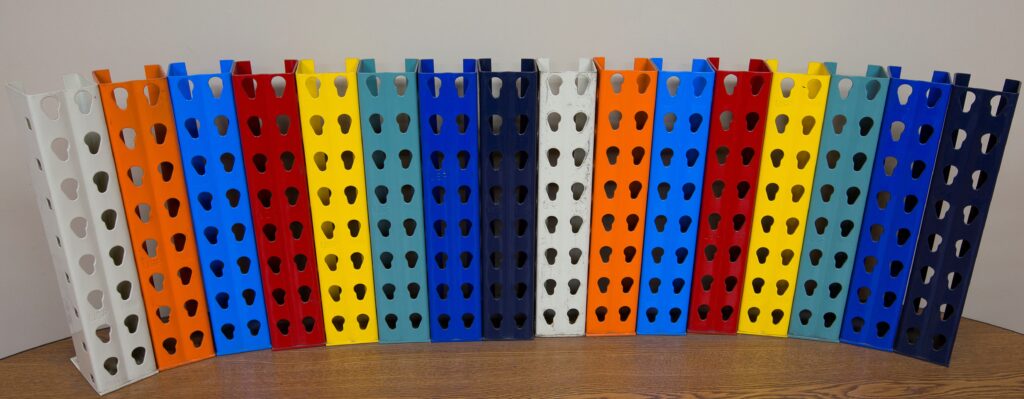
One of the most effective ways to prevent rust is by adding a durable protective layer to your pallet racking. Paint is a common choice, available in various application methods such as spraying, dipping, or powder coating. Many manufacturers also offer color customization to align with branding or warehouse design preferences.
Apex provides in-house painting and refurbishing for both new and used racking components. Our specialized paint formula ensures full coverage and a long-lasting, durable finish that helps shield your racking from corrosion.
For environments with higher exposure to moisture, chemicals, or extreme temperatures—such as freezer storage or outdoor applications—galvanization is often the best solution. Unlike standard coatings, galvanized steel offers superior protection, corroding 30 times slower than untreated steel when exposed to harsh conditions.
|
Real-World Comparison: Paint vs. Galvanization During a recent rack inspection, several rows of painted pallet racking were found to have severe rust damage due to prolonged exposure to bagged fertilizer. Meanwhile, the same customer had utilized galvanized racking in other facilities, which successfully resisted corrosion under similar conditions. This made it clear that switching to a galvanized solution would provide the best long-term protection. Fortunately, the rust damage was isolated to the lower-level storage, allowing the facility to replace only the bottom uprights with custom-fit galvanized repair kits. This targeted repair approach minimized both operational disruptions and system downtime. From initial inspection to final repairs, the entire process was efficiently managed with a single call to the Apex PROs. |
Is Stainless Steel a Viable Option?
For specialized environments such as cleanrooms or certain manufacturing operations, stainless steel racking may be the best solution. These racks are highly resistant to washdowns, extreme temperatures, and high humidity, making them ideal for industries with strict sanitation requirements. However, due to their high cost, stainless steel racks are typically used only when absolutely necessary.
While adding a protective coating is an essential first step in preventing rust, it’s equally important to conduct regular rack inspections. Areas where the finish has been worn, scraped, or rubbed away are highly susceptible to corrosion. Addressing these vulnerable spots early can prevent long-term structural damage and costly repairs.
Step 2: Assess and Address Rust Damage

Timing is critical with rust. The goal is to detect rust early—before it starts weakening the steel. Regular inspections are the best way to stay ahead of corrosion, ensuring your racks remain structurally sound.
The Apex Rack Repair App is a free tool designed to help your team document rust and other rack damage quickly and efficiently. The app walks users through the inspection process, prompting them to capture photos and key rack specifications. Once uploaded, Apex rack experts evaluate the severity and recommend cost-effective repair solutions. More details on the Apex Rack Repair Program are provided below.
When inspecting for rust, determine whether the corrosion is surface-level or penetrating. Surface rust can often be treated with one of the methods listed below, but if you see dark discoloration or etching, the steel may be compromised. A general rule of thumb: if the rust has caused a 10% or greater loss in thickness, repairs or replacements should be made immediately.
Pallet Racking Rust Removal
If you’ve caught rust in its early, surface-level stage, the next step is removing it before it spreads.
- One effective method is applying a strong acid, such as hydrochloric acid, to the affected area. This solution strips away the rust without harming the underlying steel. Once the rust is fully removed, apply a fresh coat of paint to protect the exposed metal from further corrosion.
- Another option is high-pressure water cleaning combined with abrasive scrubbing using sandpaper or diamond paper. This method helps remove surface rust efficiently, but it’s crucial to ensure that all traces are eliminated—any remaining rust can cause it to return quickly. As with acid treatment, always finish with a protective layer of paint to seal the metal and prevent future rust formation.
Step 3 – Know When It’s Time to Call in the PROs
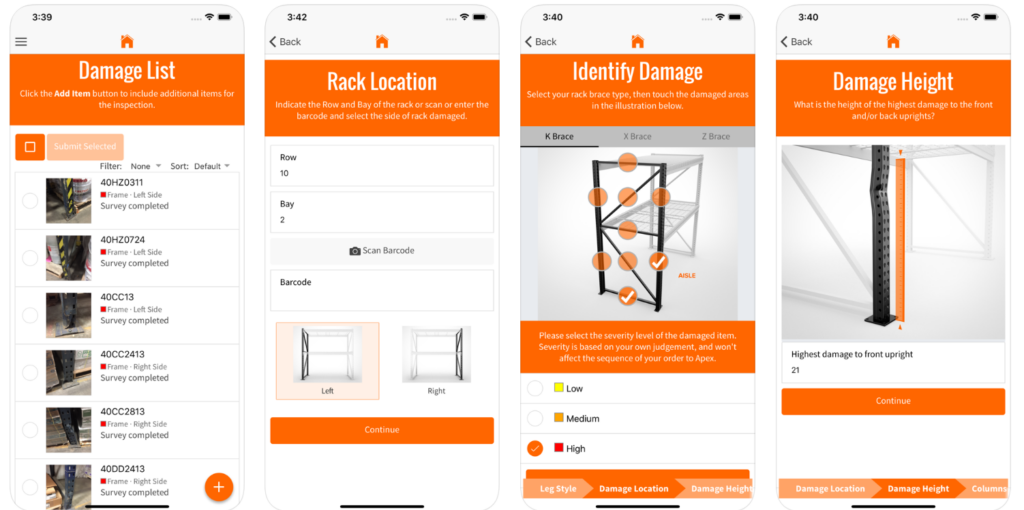
The Apex PROs are your go-to team for comprehensive pallet rack inspections and expert damage assessments. As the specialists behind the Apex Rack Repair App, they serve as the first line of defense against rack damage and warehouse safety risks.
Apex PROs conduct thorough on-site inspections, keeping track of problem areas and potential design flaws that could pose risks to your team. They also review inspections submitted through the Apex Rack Repair App, ensuring that all damage reports are carefully evaluated.
Once your team completes an inspection and uploads the results, the Apex PROs analyze the data and provide a detailed report with recommended solutions—whether that means repairs, reinforcements, or replacements. Every repair kit solution is designed to be both cost-effective and durable.
Download the Apex Rack Repair App today—it’s free and available on Google Play and the App Store.
