
Pallet Rack Design To Reduce Stand-Up Forklift Underride Risk

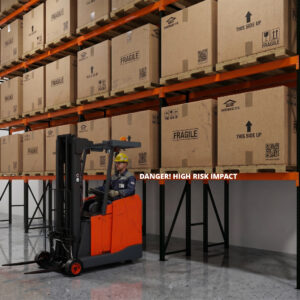
How Pallet Rack Design Affects Forklift Underride Risk
Stand-up reach trucks are valuable in high-density storage environments because they support narrower aisles, efficient pallet handling, and strong space utilization. However, the same open-back operator compartment that allows operators to enter and exit the truck efficiently can also create a serious safety concern if the truck backs into a rack system with a beam positioned near the operator area. This condition is called underride.
Underride occurs when a lift truck travels beneath or partially beneath a rack beam or other horizontal obstruction, allowing that obstruction to intrude into the open operator compartment. Rack design plays an important role in underride risk reduction because beam elevations, floor-level storage positions, aisle layout, and truck geometry all affect how a reach truck interacts with the rack system. For selective pallet rack systems in particular, the height of the first beam should be treated as both a storage decision and a safety consideration.
First Beam Height And Underride Risk
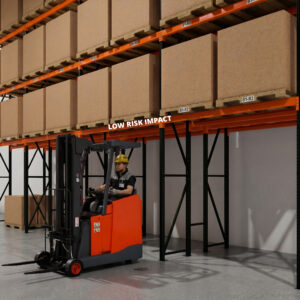
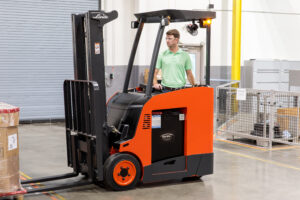
In a selective pallet rack system, the first beam elevation determines how the reach truck and rack interact at the lowest storage levels. Stand-up reach trucks typically have a lower truck body that wraps around part of the operator compartment, with an open entry/exit area at the back. Above that lower body, the operator compartment is more exposed. If the first horizontal beam is positioned near that open compartment height, a backing truck may be able to travel partially beneath the beam before the rack structure stops the truck. That creates the underride exposure.
Two common rack-side strategies are to move the first elevated beam above the lift truck height or to add a low beam to limit rearward travel.
Option 1: Position The First Beam Above The Lift Truck
When the layout allows it, positioning the first beam above the lift truck is often the preferred rack-side strategy. The floor serves as the first storage position, and the first elevated beam is placed above the top of the stand-up reach truck. By moving the beam above the truck height, the rack design reduces the chance that a horizontal beam aligns with the open operator compartment.
This approach can be especially useful in selective rack layouts where floor-level pallet storage is practical, and the next beam level can be raised without compromising pallet capacity, sprinkler clearance, or load-handling requirements.
Option 2: Use A Low Beam To Help Stop Rearward Travel
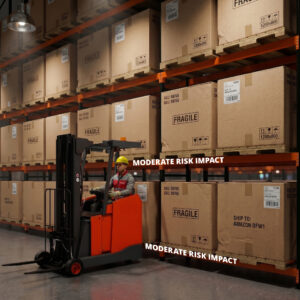
Another way to reduce underride exposure is to install a lower beam or barrier near the floor. In this configuration, the low beam can help act as a physical stop, limiting how far the reach truck can back into the rack bay before a higher beam could reach the operator area.
This option may be suitable for applications where the first elevated beam cannot be placed high enough above the lift truck, or where the rack layout requires a defined lower rack member. However, the low beam must be planned as part of the rack design. It should not be added, relocated, or modified without review and approval by a qualified pallet rack engineer.
What To Consider Before Changing First Beam Height
First beam height should be evaluated as part of the overall rack design, not adjusted as a standalone field change. Moving, adding, or removing beams in an existing rack system can affect the rack’s structural integrity, stability, load distribution, and posted capacity. That is why beam changes should not be made without review and approval from a qualified pallet rack engineer or rack design professional.
Before changing beam elevations, consider:
- Reach truck dimensions, including overall height, lower truck body height, and operator compartment position
- Pallet load height, pallet overhang, and required load clearances
- Whether the floor level will be used as a storage position
- Beam capacity, upright capacity, and the rack system’s posted load rating
- Aisle width, turning patterns, and how operators approach the rack
- Rack anchoring, column protection, and impact exposure
- Sprinkler, lighting, ceiling, and code clearance requirements
- Mixed forklift fleets, where different truck models may interact with the rack differently
The goal is to reduce underride exposure without compromising the rack system’s stability, capacity, code compliance, or day-to-day usability.
What Not To Do When Addressing Underride Risk
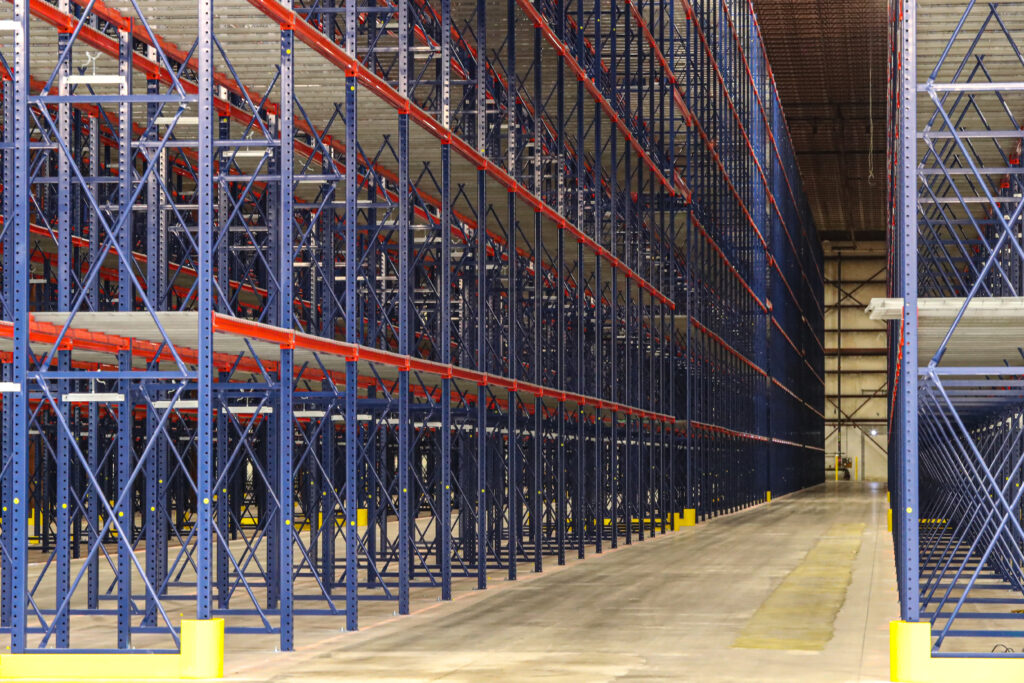
Underride risk should not be addressed with quick field changes or assumptions about beam placement. Avoid moving beams based only on operator preference, pallet height, or available openings in the upright frame. A beam height that works for storage density may not be appropriate for the reach truck operating in that aisle.
Facilities should also avoid relying on pallet loads, loose barriers, or informal operating practices as the primary means of protection. Operator training is important, but rack geometry should also support safe, consistent movement through the aisle.
Forklift-Side Protection Can Support Rack-Side Risk Reduction
Rack design is an important part of reducing underride exposure, but it should not be the only consideration. OSHA also recommends evaluating stand-up forklifts with corner posts, extended backrests, rear post guards, or other protective features that help prevent a rack beam or horizontal obstruction from entering the operator compartment.
Some newer stand-up rider and reach truck models include additional posts or backrest extensions behind the operator, and aftermarket guard options may also be available for certain trucks. Any forklift-side guard, rear post, or manufacturer-approved retrofit should be reviewed with the lift truck manufacturer or dealer before installation to confirm compatibility, visibility, operator access, overhead guard performance, and compliance with applicable requirements.
Work With Apex To Evaluate Rack Design And Forklift Clearance
Apex can help evaluate selective pallet rack layouts, beam elevations, floor-level storage positions, and reach truck clearances before a system is installed or reconfigured. By looking at the rack system and lift truck together, Apex helps facilities reduce underride exposure while maintaining the storage capacity and handling efficiency their operations require.
