It’s a Forklift; It’s a Robot; No – It’s a Robotic Forklift!

What is a Robotic Forklift, and Why You Should Want One?
In less time than it takes to interview a forklift operator, much less train them, your self-driving robotic forklift could be up and running. Yes, that is the reality in today’s lightning-fast technology race, and it’s not simply out of the desire to innovate. The companies producing these vehicles are trying to solve a pack of urgent needs in the warehousing and distribution industries –and they are delivering.

What is a robotic forklift? Isn’t it an AGV with forks? No, robotic forklifts are a separate automated vehicle class that may look like an automated guided vehicle (AGV) and share some features. Here is the difference between AGVs and Autonomous Forklifts, sometimes referred to as AMRs (autonomous mobile robots):
An AGV, automated guided vehicle, consists of a master control, units for data communication, and loading stations. The vehicles, typically electro-mechanically designed forklifts move on defined routes and use the free natural feature navigation (geocoordinates) for orientation. Some older technology AGVs still use laser-guided navigation systems with external targets.
An AMR, autonomous mobile robot, or autonomous forklift, on the other hand, relies more heavily on flexible navigation (SLAM, AI, or perception learning systems) with LiDAR (Light Detection and Ranging) and camera technology, which does not require additional infrastructure. QR codes affixed to warehouse floors can also be used for fine positioning.
The 411 on Robotic Forklifts
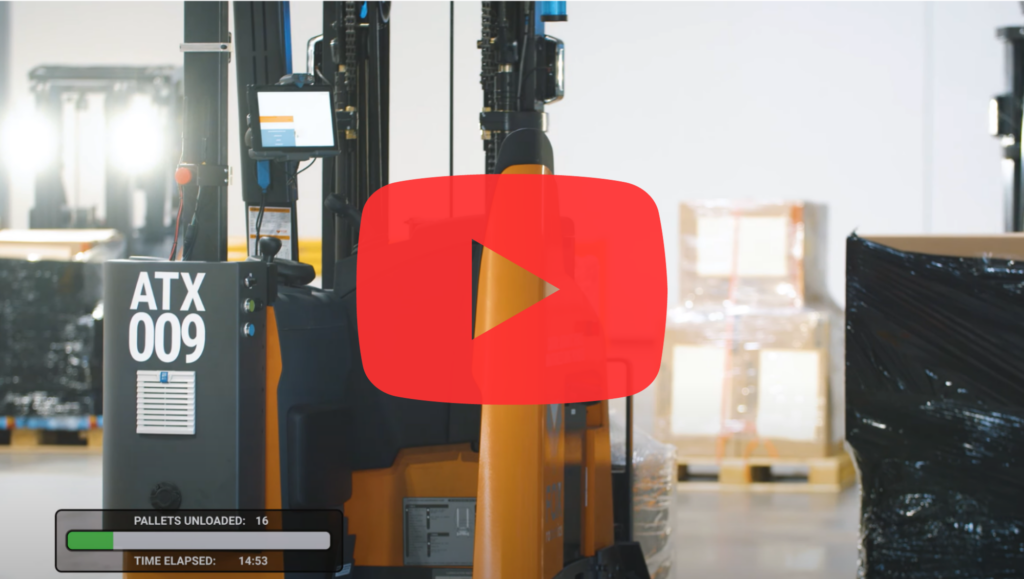 Vehicle types – counterbalance stacker, reach, tow tractor, pallet jack, platform lifts
- Functions – pick up, transport & drop off pallets or tow carts
- Advantages – one worker oversees multiple vehicles, fast deployment, flexible routes
- Operator duties – open trailers, verify loads, remove airbags & load bars, handling exceptions (collapsed pallets, debris), recharging, clear fault conditions
Robotic forklifts represent a cost-effective alternative to forked AGVs in several ways — they install in about an hour and do not require IT or WMS integration. However, before you shout, “Cha-Ching,” understand that robotic forklifts may not provide the exact scope of function as an AGV. Ultimately, your choice of vehicle must depend on your operational needs.
Robotic Forklift Features

Robotic forklifts can pick up, transport, and drop off pallets. They can also tow carts. While they are designed to function automatically, they have a manual override feature that allows an operator to take control at any time.
They are not restricted to fixed routes and instead use sophisticated self-driving technology to maneuver throughout the facility, around people, objects, fixtures, and operator-driven forklifts –including onto docked vehicles for loading and unloading.
Single tasks like trailer unloading allow operators to instruct vehicles where to collect and deposit items via a smart tablet paired with the robotic forklift. Eliminating the need for IT and WMS integration and cumbersome programming enables some vehicles to be up and ready to work within an hour or less.
Self-Driving Technology:
|
Safety Features:
|
Robotic forklifts are equipped for safe function around pedestrians, inventory & equipment, and, of course, other forklifts. The vehicles use an onboard camera and LiDAR sensor to detect and react to obstacles in real time.

Automated forklifts are also reliable regarding adherence to speed limits and safety protocols, thus eliminating concerns common to human drivers. Additionally, the vehicles follow standard driving etiquette and safety protocols, such as using the horn to signal when entering or exiting a truck.
Robotic Forklift Limitations
These vehicles are a marvel of modern technology, but like all things, they have limitations that may or may not affect your application. Take a look at these considerations.
- Intranet Capability – You must have a strong internal WiFi network to allow the vehicles to communicate with the host.
- Closed System Software – The automated forklift control software may operate on a closed system. Therefore, if you have a selection of vehicles from different manufacturers, you may need to conduct separate installations, fleet management, and establish separate routes. This may not be an issue depending on the application for your vehicles, but it’s valuable to consider it before making a final decision.
- Designated Course – A robotic forklift is flexible and can safely change its course to go around obstructions. Typical AGVs cannot change course at will like a human. They will stop if there is an obstruction but cannot weave around and go off the designated path, some having to be manually reset.
- Environmental Concerns – Low light, slippery, or uneven floors and slopes may be too steep a challenge for your vehicles.
Are Robotic Forklifts the Way to Streamline Your Operation?
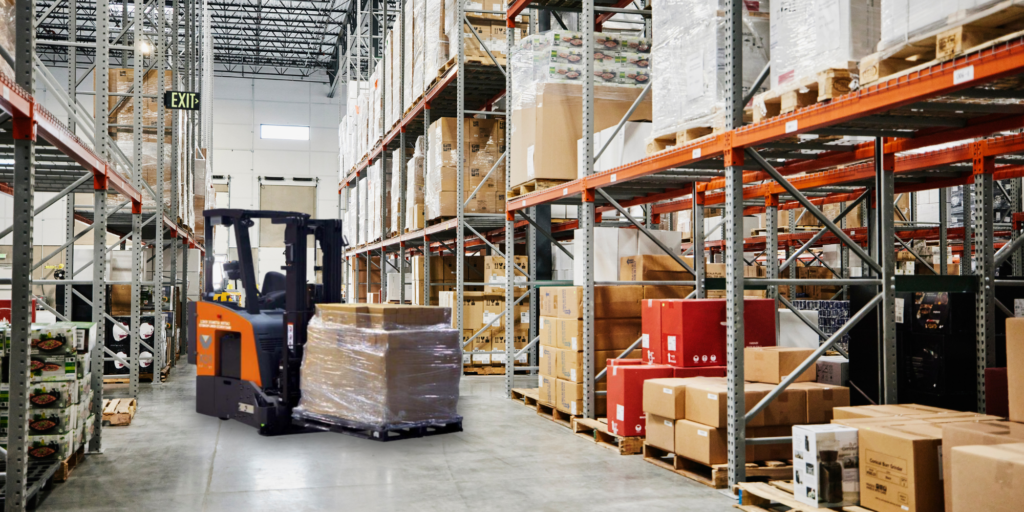
These vehicles answer the needs of many warehouse managers –but they come at a cost. Robotic forklifts are significantly more expensive than comparable standard forklifts. BUT, once you factor in the labor savings, you start to see a much closer comparison. Add to that an increase in productivity, and now you’re talking. Depending on the application, in multi-shift operations, the ROI can be as short as 6 months!
The Apex Automation Solutions team is ready to walk you through the product options and applications to evaluate if a flexible robotic forklift (AMR) or perhaps an automated guided vehicle (AGV) is your best choice. We also offer favorable-term leasing and financing.
If automation doesn’t make sense for your operation, our material handling equipment specialists will provide alternative recommendations to suit your needs. Our goal isn’t to sell any particular product or solution; it’s to serve our customers to the best of our abilities.
With one call to Apex, you receive 500+ years of expertise in the full breadth of warehousing products and services. Call today to connect with our specialists.
Apex full-service support:
- Warehouse Design & Engineering
- Automation Solutions
- Project Management/Permitting & Installation
- Rack Inspections & Repair
- Material Handling Equipment
- Forklift Operator Training & Certification
- Forklift Service & Fleet Maintenance
- Equipment Financing, Leasing & Rentals
…with Apex, One Call Does It All.
