
Go Big And Get Small–a Look At Micro-fulfillment Centers

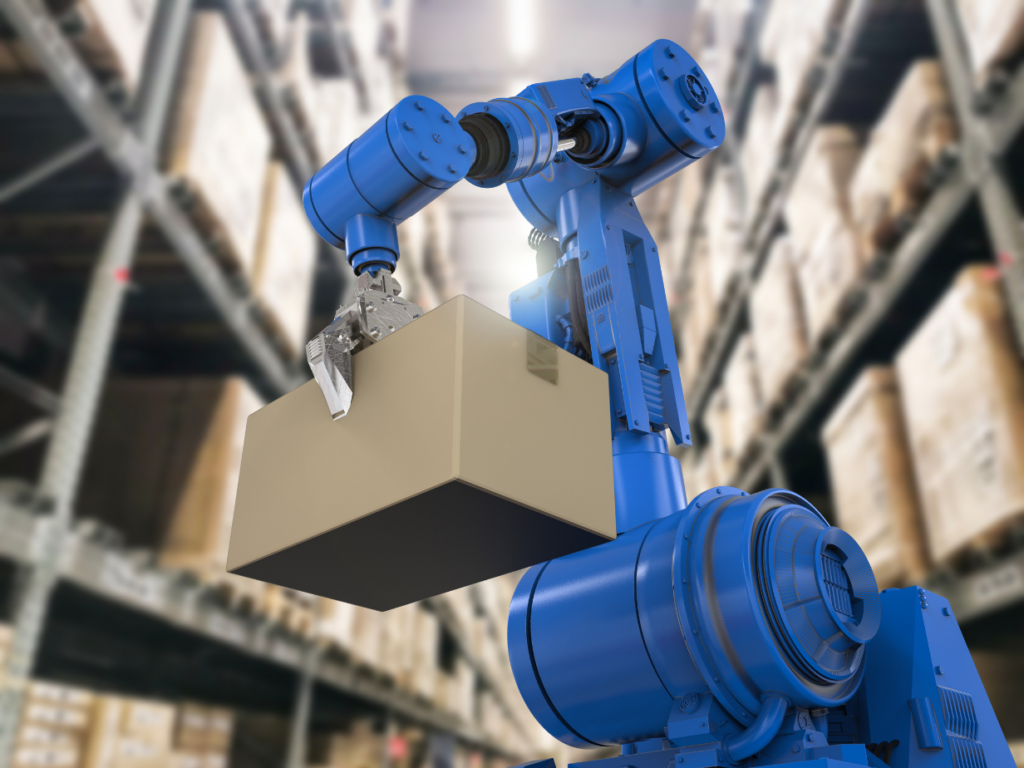
E-commerce Growth & Last-Mile Delivery Spark Large Micro-Fulfillment Trend
To say that the retail commerce business has changed drastically over the last ten years is an understatement. The web has become the go-to shopping platform. Many people, including most under 40, wouldn’t even think about going to a retail store to buy something.
Additionally, customers’ expectations have increased with free shipping and next-day delivery offers. But delivering products in a timely fashion from distant, large distribution centers turns out to be a thorny, expensive logistical problem… now known as the “last-mile” problem. Large distribution centers located in industrial parks strategically located at the intersection of major highways and rail crossings, or near airports or water ports are a bit too far away from the population centers.
If that isn’t challenge enough, layer it with a global pandemic and supercharge the flight of customers from retail stores to e-commerce. Suddenly, customers purchase a whole range of new items online that they formerly picked up at a local store.
Retailers with an extensive legacy brick and mortar infrastructure had a built-in advantage and could maintain their fastest selling items at the local store level. Fulfilling from the nearest store enabled them to deliver in a timely manner and simplify the last-mile shipping dilemma. This worked especially well in dense, urban areas.
E-commerce retailers, manufacturers, and distributors seeing the edge that retailers had by having widely dispersed, mini-distribution centers got in on the action by starting to build their own, smaller, strategically-located facilities in densely populated areas. To achieve the order accuracy and speed needed to make the economics of this scenario work, the facilities had to be highly automated.
Thus the micro-fulfillment center was born.
What Is Micro-Fulfillment?
 What is a micro-fulfillment center(MFC)? It’s a smaller version of a distribution center or a warehouse, typically 10,000 to 30,000 sq. ft. with approximately 5,000 to 15,000 high-velocity SKUs. MFCs are highly automated, with state-of-the-art AS/RS, inventory management, and automated intelligence (AI) systems. An MFC can be built onto the back of an existing retail store, like Walmart or Target, or stand-alone –an approach that Amazon and other e-commerce-only retailers are taking. 3PLs (third-party logistics providers) are also building MFCs that retailers who don’t want to roll their own facility can rent as fulfillment hubs.
Today’s retail customers have shown a preference for a variety of delivery options, including same-day delivery, next-day delivery, or so-called “click and collect,” a.k.a. BOPIS (buy online, pick-up in store). MFCs make all those scenarios possible. They can also be used as product hubs to manage inventory of specific products that get fulfilled to other distribution centers. With their high level of automation, MFCs need fewer human pickers, reducing labor costs.
The e-grocery market is where the widest adoption of MFCs is occurring. The combination of fast-moving, perishable items that customers want to pick up or have delivered on the same day makes MFCs ideal for this application. While MFCs have found their widest use in the direct-to-customer retail landscape, sellers of industrial tools and MRO products can also adapt the technology.
MFCs are not a fit for all applications, however. MFCs are not cost-effective in rural areas or in fulfilling orders of large, slow-moving inventory like furniture, appliances, or TVs.
Big Services to Get Your Micro-Fulfillment Center Running
The Apex team is ready to help you get your micro-fulfillment center up and running. We offer full-service support including warehouse design, automation solutions, installation, equipment, and training. Apex is your nationwide source for all the products and services your warehouses and distribution centers require. As we like to say, one call does it all with Apex.
