
Design Dynamics & Advantages of Transportation Conveyors

Introduction to the World of Transportation Conveyors
In the bustling arenas of manufacturing, distribution, and logistics, the movement of goods is a vital cog in the machine. This is where transportation conveyors, pivotal yet perhaps underappreciated material handling tools, shine. Essentially, these conveyors are sophisticated systems designed to move loads—often pallets and cartons—from one point to another. Think of them as the arteries of a distribution center, constantly propelling products to their next destination.
Custom configuring your transportation conveyor enables a broad spectrum of solutions, from transporting lightweight items of varying sizes to heftier, full-pallet loads, speed adjustability, and unique product handling protocols.
Transportation Conveyor Advantages:
- Productivity Enhancing – Save time, reduce labor reliance & costs, and minimize error rates vs. manual handling
- Versatile – Adaptable to loads of varying sizes and weights separately or together.
- Economical – Transportation conveyors require the lowest investment compared to more specialized conveyor systems.
- Programmable – Control belt speed as needed.
- Space optimizing – Fill otherwise unusable space; set on an incline, decline, or at multiple heights.
3 Transportation Conveyor System Options
Several types of transportation conveyors enable you to tailor your system to your particular inventory specs and applications.
-
Belt Conveyors
The first image that often comes to mind when thinking of a conveyor system is a belt-type design. These conveyors feature a continuous looped belt moving over two or more pulleys. They are versatile, handling everything from small, delicate items to larger, bulkier goods.
There are two main types of belt conveyors: slider bed and belt over roller (BOR). Both systems use pulleys at the ends of the conveyor, but they differ in their middle sections.
- Slider Bed Conveyors: These have a flat, smooth surface over which the belt travels. They are well-suited for applications where the belt needs to handle high friction, such as on declines where additional friction helps slow the belt down. Slider beds are also ideal for situations where products are dropped onto the conveyor, such as in a “slapper line,” as the flat surface can better withstand the impact.
- Belt Over Roller (BOR) Conveyors: In this type, the belt moves over rollers in the middle section, which reduces friction. This design is advantageous for inclined conveyors, making it easier to pull the belt uphill due to the lower friction. BOR conveyors are also more cost-effective for long, level runs due to their efficient roller-based system.
Each type is selected based on the specific requirements of the application, such as the direction of incline or the nature of the product being transported.
-
Roller Conveyors
Conveyor system utilizing a series of rollers to efficiently move items. They come in two primary types: powered and non-powered.
- Powered Roller Conveyors: These motor-driven conveyors are ideal for handling a wide range of items, including boxes and pallets, with consistent speed and control. They are beneficial in applications where precise movement and positioning are required, such as in sorting systems or assembly lines.
- Non-Powered Roller Conveyors: Also known as gravity conveyors, these rely on the force of gravity to move items along a slight decline or manual push assistance along a level grade. They are cost-effective and suitable for applications where items are rigid enough to maintain their shape, such as boxes, totes, and pallets.
Roller conveyors are versatile and can be used in various configurations, including straight sections, curves, and merges. However, they are best suited for items that can retain their shape during transport. For inclines, declines, or more complex handling needs, powered roller systems provide greater adaptability and efficiency.
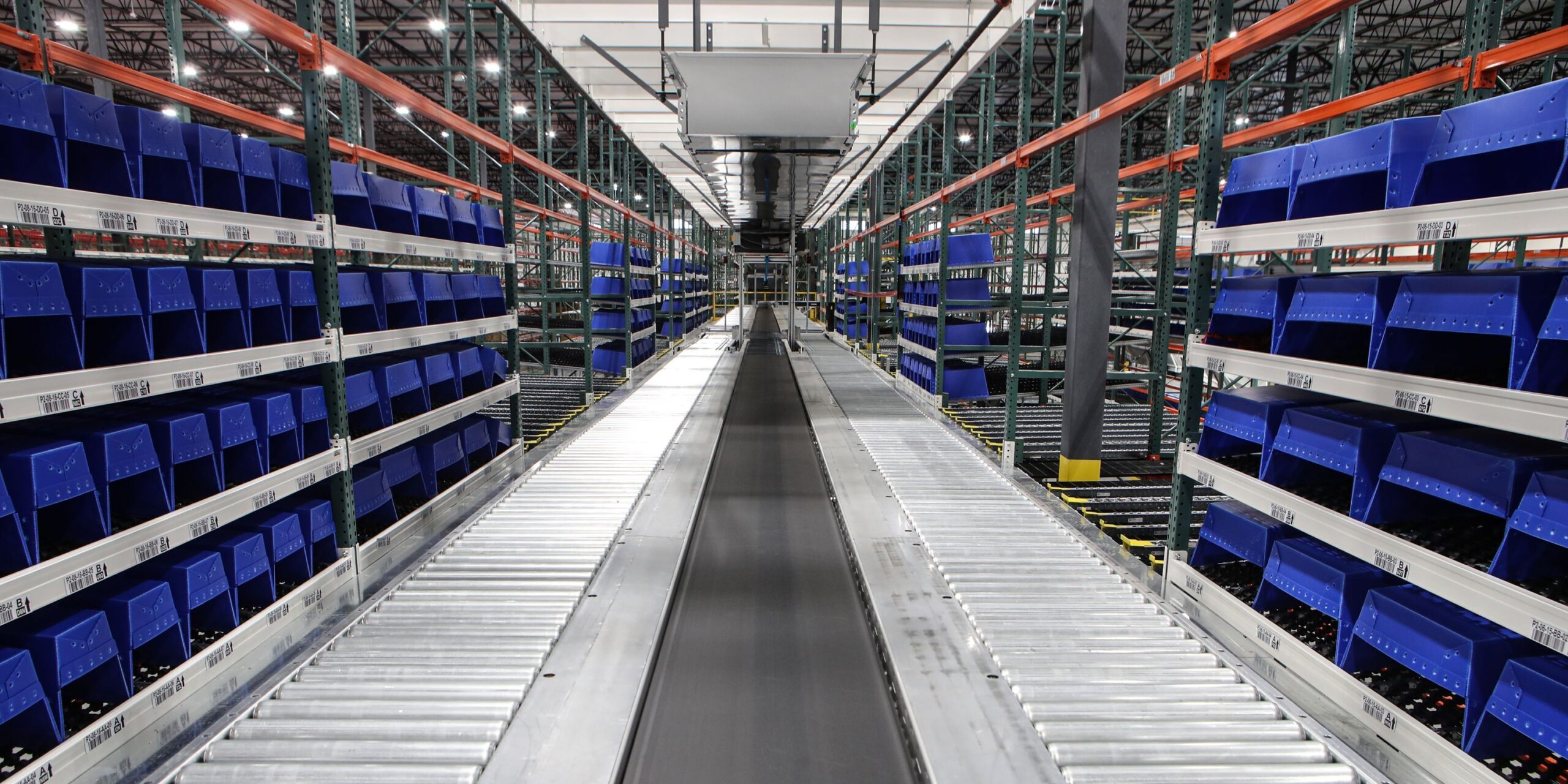
Belt Conveyor (center) with Gravity Flankers (left & right) and Empty Carton Conveyer (ECC – above)
-
Line-Shaft Conveyors
Line-shaft conveyors are known for their energy-efficient and straightforward design. They are effective for transporting items like boxes and totes over long distances and can drive both straight sections and curves with just a single drive. However, line-shaft conveyors are limited because they do not handle inclines or declines and use rollers instead of belts.
Maintenance can be challenging with line-shaft conveyors, as replacing spools and bands requires dropping the shaft, which is a cumbersome process. This difficulty in maintenance has led to a decline in their use, with many manufacturers now focusing on more modern alternatives.
Today, line-shaft conveyors have largely been replaced by MDR (Motor-Driven Roller) conveyors, which offer similar capabilities but enhanced features and greater flexibility. The rollers in MDR systems are powered using easily replaceable bands, and belts can be integrated with MDR rollers for inclines, declines, or speed adjustments.
Key System Components

Powered Conveyor Streamlines 3rd Story Pick Module
The efficiency of your conveyor system hinges on these key components.
Conveyor Belts/Rollers: These are the core elements of belt and roller conveyors. Conveyor belts are chosen based on material, texture, and strength to suit different applications. Rollers, on the other hand, come in various sizes, roller centers, and materials, each selected to match the specific needs of the transported goods.
Motors and Drives: These are the powerhouses of conveyors. Motors provide the necessary power to move the conveyor belts or rollers, and they come in various types to match the conveyor’s speed and load requirements. Drives control the speed, allowing for the adjustment of the conveyor’s movement to suit different operational needs.
Control Systems: Control systems are the brains behind the operation, allowing for precise management of the conveyor’s speed, direction, and item flow. They can range from simple manual controls to sophisticated automated systems integrated with sensors and software for real-time monitoring and adjustments.
Design Dynamics of Transportation Conveyors
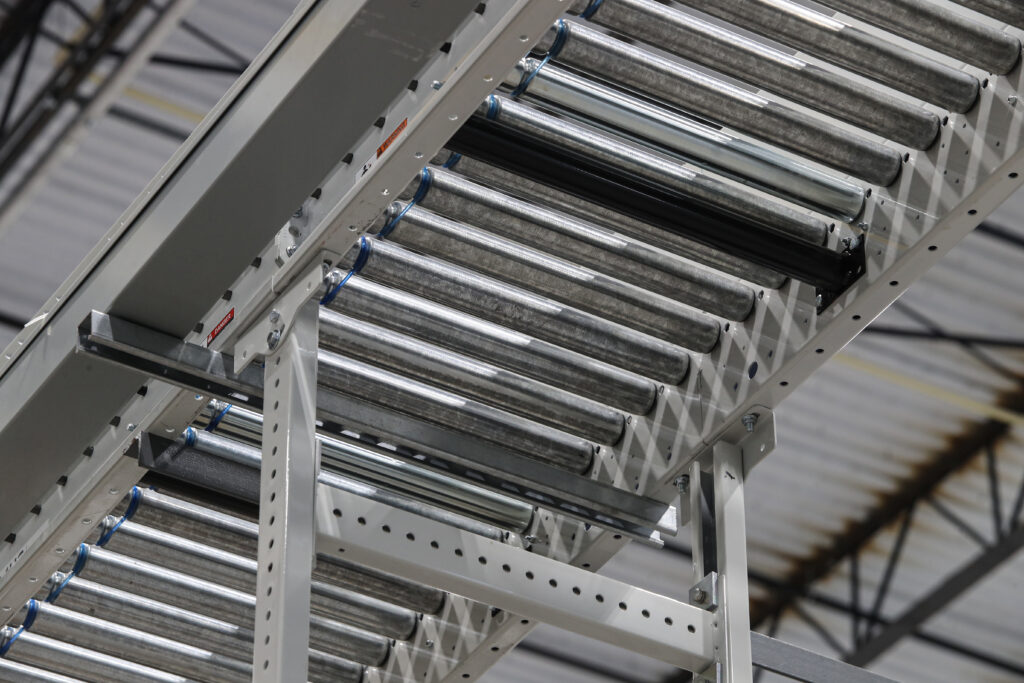
Steel and aluminum materials are commonly used in the construction of transportation conveyor systems. Steel provides high strength and durability, making it well-suited for heavy-duty applications. In contrast, aluminum is lightweight and corrosion-resistant, making it ideal for harsh environments. Additionally, your conveyor system can be equipped with washdown-compliant features, making them suitable for food handling applications.
Conveyors are often designed with adjustable heights and angles to accommodate different operational needs. This flexibility allows them to be used in a variety of spaces and for diverse purposes, enhancing their utility. Customizable lengths and widths make them ideal for diverse industrial environments and adaptable to existing workflows.
Mixing the Old with the New
Modern conveyors are increasingly integrated with advanced technologies to boost efficiency and automation. Sensors optimize the conveyor’s operation, detecting and managing the flow of goods. This automation reduces the need for manual intervention, increasing efficiency and reducing the potential for error.
Integrating the Internet of Things (IoT) and Artificial Intelligence (AI) transforms conveyors into smart systems. They can predict maintenance needs, adapt operations based on real-time data, and improve overall system performance, paving the way for more intelligent and responsive material handling solutions.
Common Applications for Transportation Conveyors
Transportation conveyors are vital across industries, each tailoring the technology to specific needs. In manufacturing and warehousing, they are key for optimizing assembly lines and enhancing efficiency, especially in sorting and packaging. The food and beverage industry utilizes them for hygienic, swift transportation of perishables, ensuring quality and freshness. Conveyors handle heavy-duty material in harsher environments, capable of moving large volumes and enduring harsh conditions.
|
|
Transportation conveyors could be a game-changer for your industrial operation, enhancing efficiency, productivity, safety, and cost-effectiveness. Apex Automation is your ideal partner in harnessing these advantages. We provide comprehensive support for your conveyor system needs, from initial analysis and design to professional installation, training, and support. Trust Apex to help you reach your operational goals and ensure your business stays ahead in the fast-paced materials-handling world.
